
Affiliate Disclosure:Home Vacuum Zone is reader-supported. When you buy through links on our site, we may earn an affiliate commission at no additional cost to you. This does not influence our reviews or recommendations — we only recommend products we genuinely believe in.
Stairs present unique cleaning challenges: tight spaces, varying angles, and the need to safely carry equipment up and down. For detailed cleaning technique, see our companion guide on how to vacuum stairs properly. The right stair vacuum balances lightweight design with effective cleaning power.
Whether you’re dealing with carpeted stairs that trap pet hair, hardwood stairs that show every speck of dust, or runner-covered stairs with debris trapped along the edges, choosing the wrong vacuum can turn stair cleaning from a routine chore into an exhausting ordeal. Heavy, bulky vacuums are unsafe on stairs, while underpowered models leave dirt behind. The ideal stair vacuum combines portability, maneuverability, and cleaning performance to make this challenging task manageable.
Quick Comparison
| Model | Type | Weight | Cord | Tier | Best For |
|---|---|---|---|---|---|
| Shark Rocket Ultra-Light | Corded Stick | 7.6 lbs | 30 ft | Mid-range | Best corded stick |
| Dyson V15 Detect | Cordless Stick | 6.8 lbs | N/A | Premium | Best cordless |
| Bissell Pet Hair Eraser | Handheld | 4.2 lbs | 16 ft | Budget | Best handheld |
| Shark Wandvac | Cordless Handheld | 1.4 lbs | N/A | Affordable | Most portable |
| Eureka WhirlWind | Canister | 8.3 lbs | 16 ft | Budget | Best budget |
| Black+Decker Dustbuster | Cordless Handheld | 2.6 lbs | N/A | Budget | Best budget handheld |
What Makes a Good Stair Vacuum
Lightweight: Under 8 lbs for easy carrying Maneuverable: Swivel steering and compact head Versatile: Converts to handheld for detail work Appropriate Power: Strong suction for concentrated dirt Safe: Good balance and grip for stair use
Weight Considerations for Stair Cleaning
Weight matters significantly when choosing a stair vacuum. While upright vacuums weighing 15-20 pounds work fine on flat floors, carrying that weight up and down stairs while simultaneously trying to clean becomes exhausting and potentially dangerous. Stick vacuums typically weigh 6-8 pounds, making them manageable for stair work. Handheld vacuums weigh even less, typically 1.5-5 pounds, offering maximum portability but sometimes sacrificing dust capacity and cleaning width.
The weight distribution also affects usability. A vacuum with balanced weight distribution feels lighter and provides better control on stairs compared to top-heavy or front-heavy designs. Models that convert to handheld mode offer the best of both worlds - you can use the full stick configuration for long stair runs, then switch to the lighter handheld mode for detailed cleaning or when fatigue sets in.
Power Source Impact on Stair Cleaning
The choice between corded and cordless significantly affects your stair cleaning experience. Corded vacuums provide unlimited runtime and consistent suction power, but the cord creates an additional hazard on stairs. You’ll need to carefully position the cord to avoid tripping, and you may need to switch outlets for long staircases or homes with multiple stair runs.
Cordless vacuums eliminate the cord management issue entirely, offering complete freedom of movement. However, battery life becomes a consideration - most cordless vacuums provide 15-60 minutes of runtime depending on the power setting. For typical residential staircases, this is usually sufficient, but larger homes with multiple stair runs may require mid-cleaning recharging or a second battery.
Suction Power and Brush Design
Stair vacuums need concentrated suction power rather than the wide cleaning path of full-size uprights. The smaller cleaning head focuses suction into a tighter area, which can actually improve performance on stairs despite a potentially lower wattage rating. Many effective stair vacuums use 150-200 watts of power, compared to 600-1200 watts for full-size uprights.
Motorized brush rolls are particularly valuable for carpeted stairs, where they agitate carpet fibers to release embedded dirt and hair. However, bare stair treads or hardwood stairs benefit from suction-only modes or soft roller designs that won’t scatter debris. The best stair vacuums offer both options, either through tool attachments or adjustable brush settings.
Best Corded Stick: Shark Rocket Ultra-Light
Tier: Mid-range | Rating: 4.5/5
The Shark Rocket Ultra-Light converts to a 4.6-pound handheld, making it ideal for stair cleaning. The 30-foot cord provides enough reach for most staircases from a single outlet.
Why It Works for Stairs:
- Converts to handheld mode for tread cleaning
- Long cord eliminates outlet switching
- Under 8 lbs full weight for easy carrying
- Swivel steering navigates tight turns
Best For: Homes wanting corded reliability with versatile stair cleaning.
Performance Details
Shark’s two-speed motor adjusts suction for different surfaces, providing powerful cleaning on carpeted stairs while being gentle enough for area rugs or runners. Swivel steering lets you navigate around banisters and railings without awkward maneuvering. When you convert to handheld mode, the motorized brush roll continues operating, maintaining deep cleaning performance even in the more compact configuration.
That 30-foot cord is particularly advantageous for stair cleaning because most residential staircases fall within a 20-25 foot range from a single outlet. This means you can typically clean an entire staircase without unplugging and moving to a different outlet, maintaining your workflow and reducing safety hazards associated with cord management.
The dust cup holds 0.68 quarts, which is adequate for several stair cleaning sessions before requiring emptying. The easy-empty design allows you to dispose of collected debris without touching it, particularly useful when dealing with accumulated dust, hair, and allergens from stairs.
Best Cordless: Dyson V15 Detect
Tier: Premium | Rating: 4.5/5
The Dyson V15 Detect offers 60 minutes of cordless runtime with powerful suction and versatile attachments for complete stair cleaning.
Why It Works for Stairs:
- No cord to manage on steps
- Converts to handheld instantly
- Laser reveals hidden dust on dark carpet
- Lightweight at 6.8 lbs
Best For: Premium buyers wanting cordless convenience and advanced features.
Advanced Features for Stair Cleaning
Laser dust detection proves particularly valuable on stairs, where concentrated traffic deposits fine dust that’s invisible to the naked eye, especially on darker carpet or stair treads. A green laser illuminates microscopic particles, showing exactly where cleaning attention is needed rather than vacuuming blindly.
An acoustic piezo sensor counts and measures particles as you clean, displaying real-time data on the LCD screen. While this might seem like a gimmick, it provides useful feedback on heavily soiled areas of your stairs, letting you know when each tread is thoroughly clean rather than guessing. This prevents both under-cleaning (missing hidden dirt) and over-cleaning (wasting battery life on already-clean surfaces).
Intelligent power management adjusts suction automatically based on floor type and debris level, optimizing battery life. In Auto mode, the V15 can clean typical staircases while preserving battery power for other areas of your home. The three power modes - Eco, Auto, and Boost - give you flexibility to prioritize either runtime or cleaning power based on your specific needs.
Attachment Versatility
Multiple attachments enhance stair cleaning capabilities. The combination tool switches between a wide nozzle for stair treads and a brush tool for delicate surfaces like stair runners. The crevice tool extends to reach deep into corners where stairs meet walls, capturing the dust and debris that accumulates in these tight spaces.
Dyson’s hair screw tool proves particularly effective for homes with pets or long-haired residents, as stairs often trap hair that wraps around traditional brush rolls. This specialized tool uses a spiral design that channels hair directly into the bin rather than wrapping around the brush.
Best Handheld: Bissell Pet Hair Eraser
Tier: Budget-friendly | Rating: 4.5/5
Purpose-built for handheld use, the Bissell Pet Hair Eraser includes specialized tools for removing hair and debris from stairs effectively.
Why It Works for Stairs:
- Designed specifically for handheld operation
- Specialized pet tools remove embedded hair
- 16-foot cord provides good reach
- Ergonomic grip for stair work
Best For: Homes with pets needing focused stair cleaning.
Pet Hair Management Features
A motorized rubber nozzle creates static electricity to attract and capture pet hair more effectively than standard brush rolls. Rubber construction prevents hair from wrapping around the brush, eliminating the maintenance hassle that plagues many vacuums used for pet hair. Its contoured nozzle design follows the angles of stair treads and risers, maintaining consistent contact with surfaces for thorough hair removal.
The triple-level filtration system captures pet dander and allergens, not just visible hair. For households where family members spend time on stairs (reading, playing, or simply sitting), this allergen capture becomes particularly important. The washable filter reduces ongoing costs and environmental impact compared to disposable filter systems.
Ergonomic Design for Extended Use
Handheld vacuums can become uncomfortable during extended stair cleaning sessions, but the Pet Hair Eraser addresses this with a contoured handle that distributes weight evenly across your hand. The power button placement allows thumb operation, so you don’t need to maintain a tight grip throughout the cleaning session, reducing hand fatigue.
A 16-foot cord provides more reach than many handheld competitors while eliminating battery life concerns. For a thorough stair cleaning session that might take 15-20 minutes when addressing multiple stair runs, the corded design ensures consistent power without the anxiety of watching a battery indicator drop.
Specialised upholstery tool and crevice tool store directly on the unit, so they’re always accessible without requiring trips back to a storage closet. This integrated storage keeps tools organized and immediately available when you encounter different surfaces or tight spaces during stair cleaning.
Most Portable: Shark Wandvac
Tier: Affordable | Rating: 4/5
At just 1.4 pounds, the Shark Wandvac is the most portable option for quick stair touch-ups and spot cleaning.
Why It Works for Stairs:
- Extremely lightweight for easy carrying
- Charging dock keeps it ready
- Sleek design stores easily
- Perfect for daily maintenance
Best For: Quick daily cleanups and small spaces.
Ultra-Portable Design Benefits
Ultralight construction makes the Wandvac practical for daily stair maintenance rather than weekly deep cleaning. Many households find that quick daily touch-ups with an ultralight handheld actually reduce the time spent on weekly stair cleaning. At 1.4 lbs, it weighs less than most household items you’d carry up and down stairs, making it nearly effortless to grab for a quick cleanup after tracking in dirt or noticing accumulated crumbs.
One-touch empty lets you dispose of debris without removing the dust cup from the unit, streamlining the cleanup process. For quick stair maintenance, this means you can vacuum, empty, and dock the unit in under two minutes total time.
Its tapered nozzle concentrates suction into a focused stream, proving surprisingly effective for its size. While it lacks the cleaning width of larger vacuums, the concentrated suction picks up the typical stair debris - crumbs, tracked-in dirt, hair, and dust - efficiently.
Charging and Storage Advantages
A wall-mounted charging dock keeps the Wandvac visible and accessible, encouraging regular use. Positioning the dock near your main staircase makes it natural to grab for quick cleanups whenever you notice debris. The dock design also ensures the vacuum stays charged and ready rather than sitting in a closet with a dead battery when you need it.
Sleek and compact, it stores in spaces that wouldn’t accommodate larger vacuums. For homes with limited storage, the Wandvac’s vertical storage footprint measures just a few inches wide, fitting in narrow spaces between furniture or alongside doorways.
Best Budget: Eureka WhirlWind
Tier: Budget-friendly | Rating: 4/5
This lightweight canister vacuum offers good capacity and maneuverability at a budget-friendly price point.
Why It Works for Stairs:
- Large 2.5L dust cup
- Long hose reaches stairs easily
- Easy to carry up and down
- Simple, reliable design
Best For: Budget buyers wanting reliable stair cleaning.
Canister Design for Stairs
Canister vacuums offer unique advantages for stair cleaning that many consumers overlook. The WhirlWind’s lightweight canister rests at the top or bottom of the staircase while the hose and wand extend to reach each step, eliminating the need to carry the main unit on every step. This design distributes the physical demands differently - you’re moving a lightweight wand and hose rather than the entire vacuum system.
At 2.5 litres, its dust capacity significantly exceeds most stick and handheld vacuums, typically 0.5-1 liter. For households with multiple stair runs or heavy stair traffic, this larger capacity means less frequent emptying during cleaning sessions. The bagless design allows you to see when the dust cup reaches capacity without guessing.
Multi-surface cleaning handles both carpeted and hard-surface stairs without requiring tool changes. An airflow adjustment control lets you reduce suction for delicate area rugs on stair treads while maintaining full power for dense carpeting.
Budget-Friendly Performance
At its budget-friendly price point, the WhirlWind delivers performance that competes with vacuums costing two to three times more. The cyclonic filtration system separates fine dust from larger debris, maintaining consistent suction as the dust cup fills. Many budget vacuums experience significant suction loss as they fill, requiring more frequent emptying to maintain performance.
Simple mechanical design reduces potential failure points compared to more complex electronic systems. There are no battery management systems to fail, no electronic controls to malfunction, and no app connectivity to troubleshoot. This simplicity translates to long-term reliability and low maintenance costs.
Included crevice tool, dusting brush, and upholstery tool handle various stair cleaning needs without purchasing additional attachments. All tools store on the canister body, keeping them accessible during cleaning sessions.
Best Budget Handheld: Black+Decker Dustbuster
Tier: Budget | Rating: 4/5
The iconic Dustbuster remains a solid choice for occasional stair cleaning at an affordable price.
Why It Works for Stairs:
- Classic handheld design
- Multiple attachments included
- Easy to store and charge
- Trusted brand reliability
Best For: Occasional stair cleaning on a tight budget.
Value and Reliability
Black+Decker’s Dustbuster has maintained market presence for decades based on simple reliability and effective performance. Current cordless models build on this foundation with lithium-ion batteries that hold charge longer and deliver more consistent power than earlier NiCad versions. A 16-volt motor provides adequate suction for typical stair debris without the premium pricing of higher-powered models.
A translucent dust bowl lets you monitor fill levels during use, preventing overflow that reduces suction performance. Washable bowl and filter reduce ongoing costs - you simply rinse both components periodically rather than purchasing replacement parts.
Its rotating nozzle flips up to expose a built-in crevice tool, eliminating the need to swap attachments while working. This integrated design proves particularly convenient on stairs where you’re constantly alternating between open tread surfaces and tight corners.
Practical Considerations
Its charging base requires only a small footprint, suitable for mounting in closets, laundry rooms, or garage storage where it stays out of sight but readily accessible. The 4-hour charge time fully recharges the battery overnight, making it practical for daily use patterns.
A 2-year warranty provides peace of mind at the budget price point, backing the product quality with manufacturer support. While premium vacuums offer longer warranties, the Dustbuster’s warranty coverage is appropriate for its price category and typical use patterns.
Bagless design with an easy-empty dust bowl simplifies maintenance, though the relatively small capacity (20.6 ounces) requires more frequent emptying when tackling full staircase cleaning rather than spot cleanups.
How to Vacuum Stairs Safely
Safety Tips
Start at the Top: Work downward to avoid tripping Secure the Vacuum: Place the main unit at the top or bottom, not on steps Use Attachments: Crevice tools reach edges; brush tools clean treads Take Your Time: Don’t rush on stairs
Additional Safety Considerations
Proper footwear matters when vacuuming stairs. Wear shoes with good traction rather than socks or smooth-soled slippers that can slip on carpeted or hard surface stairs. The combination of movement, focus on cleaning, and equipment management creates multiple opportunities for lost footing if you’re not properly equipped.
Maintain three points of contact when possible - one hand on the railing, both feet on stairs, or both hands managing equipment while feet are planted firmly. When you need to use both hands for the vacuum, pause your movement until you can re-establish secure footing and hand placement.
Adequate lighting prevents missed debris and reduces accident risk. If your staircase lacks sufficient overhead lighting, consider installing motion-activated LED strips or using a headlamp during cleaning sessions. Shadows and dim lighting can hide both debris and physical hazards.
Cleaning Technique
- Remove Large Debris: Pick up items by hand first
- Edge First: Use crevice tool along stair edges
- Tread Surface: Use handheld or small head for treads
- Risers: Don’t forget the vertical surfaces
- Corners: Detail edges where dirt accumulates
Deep Cleaning Methodology
Begin each cleaning session with a visual inspection of the entire staircase, noting areas with concentrated dirt accumulation or challenging stains. This assessment allows you to plan your approach and allocate extra attention where needed rather than discovering problem areas mid-cleaning.
Work systematically from top to bottom, completing each stair entirely before moving down. This methodical approach prevents missing stairs and ensures consistent cleaning quality across the entire staircase. Many people rush through stair cleaning and inadvertently skip steps, resulting in visible striping patterns of clean and dirty treads.
Use overlapping strokes on each tread, covering the same area from multiple angles to capture embedded dirt. Carpeted stairs particularly benefit from this multi-directional approach, as different angles lift different particles trapped in carpet fibers. For stair runners, vacuum along the runner length, then make perpendicular passes to address dirt trapped across the fiber direction.
Address corners and crevices deliberately rather than as an afterthought. The junction where stair treads meet risers traps significant debris, and corner accumulation along walls or banisters can contain surprisingly large dirt deposits. The crevice tool should methodically address every linear inch of these areas rather than quick passes that leave dirt behind.
Specialized Stair Surface Techniques
Carpeted stairs require different techniques than hard surface stairs. For carpet, make slow, deliberate passes that allow the motorized brush roll to agitate fibers fully. Moving too quickly reduces cleaning effectiveness as the brush doesn’t have adequate time to work loose embedded dirt. Multiple passes in different directions provide the most thorough cleaning, particularly in high-traffic areas where stairs show visible wear patterns.
Hardwood or hard surface stair treads need gentler treatment to avoid scratching. Use soft brush attachments or suction-only modes rather than aggressive brush rolls that might damage finish. Address the small gaps between treads and risers carefully, as these crevices collect surprising amounts of fine dust that becomes visible on dark hardwood surfaces.
Stair runners present unique challenges as debris migrates underneath edges and into the runner backing. Periodically lift runner edges to address the trapped dirt, and consider professional cleaning for runners that don’t receive adequate edge-to-edge vacuuming. The vacuum head should reach under runner edges slightly rather than just addressing the visible runner surface.
Maintenance During Cleaning
Monitor your vacuum’s performance throughout the stair cleaning session. Reduced suction often indicates a full dust cup, clogged filter, or tangled brush roll. Addressing these issues immediately maintains cleaning effectiveness rather than pushing harder with reduced performance.
Empty the dust cup before it reaches maximum capacity, particularly when cleaning heavily soiled stairs. Overfilled dust cups significantly reduce suction performance, and you’ll essentially be pushing dirt around rather than capturing it effectively.
Check for hair or fiber wrapping around brush rolls every few stairs, particularly if you have pets or family members with long hair. Hair buildup can stop brush rotation entirely, eliminating the agitation that makes carpeted stair cleaning effective.
Corded vs Cordless for Stairs
Choose Corded If:
- You have large staircases
- Want consistent, unlimited power
- Prefer lower cost
- Don’t mind managing cords
Choose Cordless If:
- You have multiple staircases
- Want maximum convenience
- Have limited outlet access
- Prefer lightweight design
Detailed Power Source Comparison
Corded vacuum performance remains consistent from the first minute to the last, with no degradation as batteries discharge. This consistency proves valuable when you discover mid-cleaning that stairs are dirtier than anticipated and require additional passes. With corded models, you simply continue cleaning without watching battery indicators or reducing power to conserve runtime.
Cordless vacuums have improved dramatically in recent years, with lithium-ion batteries delivering 15-60 minutes of runtime depending on the model and power setting. Premium cordless models maintain strong suction through most of their runtime, with noticeable decline only in the final minutes before shutdown. Budget cordless models may experience more significant power decline as batteries discharge.
Cost Considerations Beyond Purchase Price
Corded vacuums typically cost less initially and have no battery replacement costs over their lifetime. A corded vacuum purchased today may still provide full performance a decade from now with basic maintenance. The primary ongoing costs are replacement filters and potential repairs to the motor or cord.
Cordless vacuums require battery replacement eventually, typically after 2-5 years depending on usage patterns and model quality. Replacement batteries can be a significant additional expense, adding to the long-term ownership cost. However, the convenience and safety benefits of cordless operation may justify this additional expense for many households.
Hybrid Solutions
Some households find optimal results with multiple vacuums serving different purposes. A cordless handheld for quick daily touch-ups combined with a corded stick or canister for thorough weekly cleaning provides both convenience and deep cleaning capability. This approach allows you to maintain consistently clean stairs without the time investment of full cleaning sessions for minor debris.
The total investment in two specialized vacuums can sometimes cost less than a single premium cordless model while providing superior performance for each use case. A budget cordless handheld plus an affordable corded stick together cost well below the price of a premium cordless stick vacuum.
Choosing the Right Stair Vacuum for Your Home
Staircase Assessment
Your specific staircase characteristics should guide your vacuum selection. Count the total stairs in your home, including basement stairs, main staircase, and any upper-level stairs. Homes with 30+ total stairs benefit from lightweight cordless options that won’t cause arm fatigue during extended cleaning sessions.
Measure your staircase dimensions - tread depth, riser height, and overall staircase length. Steep stairs with shallow treads require more maneuverable vacuums than long, gentle staircases. Spiral or curved stairs demand compact vacuum heads that navigate tight turns, while straight staircases accommodate larger cleaning heads.
Note your stair surface types throughout the house. Mixed surfaces (carpeted main stairs, hardwood upper stairs, runner-covered basement stairs) require versatile vacuums with multiple attachments or surface settings. Homes with consistent stair surfaces can optimize for that specific surface type.
Evaluate your banister and railing configuration. Open railings allow more flexible vacuum positioning, while solid walls on both sides create narrow working spaces that demand compact vacuums. Railings with intricate spindle work require crevice tools to address accumulated dust between spindles.
Household Factors
Pet ownership significantly impacts stair vacuum requirements. Homes with dogs or cats need specialized pet hair attachments and stronger suction to address the embedded hair that accumulates on stairs. The motorized brush rolls or rubber nozzles designed for pet hair prove essential rather than optional.
Family size and traffic patterns affect how frequently stairs require cleaning. Large families with children create heavier stair soiling, demanding vacuums with larger dust capacity and durable construction. Single occupants or couples may find that ultra-compact handhelds provide adequate capacity for less frequent, lighter cleaning needs.
Physical considerations matter when selecting stair vacuums. Users with limited strength or mobility benefit from the lightest possible vacuums, typically cordless handhelds under 3 pounds. Households where multiple people share cleaning responsibilities can accommodate slightly heavier vacuums that offer enhanced performance.
Storage space availability influences vacuum type selection. Compact handhelds fit in small closets or wall-mounted docks, while stick vacuums need vertical storage space. Canister vacuums require more storage volume but often include convenient cord wrap and attachment storage.
Budget Optimization
Establish your budget based on how frequently you’ll use the vacuum and how critical stair cleaning is to your household maintenance routine. Homes with visible, prominent staircases that affect your home’s appearance justify higher investment in premium vacuums. Basement or secondary stairs used less frequently can manage with budget options.
Consider long-term value rather than just initial cost. A mid-range vacuum lasting 10 years costs less annually than a budget vacuum requiring replacement every 2 years. Premium vacuums often include longer warranties, better customer support, and higher-quality components that reduce maintenance costs.
Factor in accessory costs when comparing vacuums. Some budget models require separate purchase of essential attachments, while premium models include comprehensive tool sets. A slightly pricier vacuum with all necessary attachments may provide better value than a cheaper vacuum requiring additional tool purchases.
Further Reading
- Should You Buy a Refurbished Vacuum? [2026 Buyer’s Guide]
- Vacuum Buying Guide 2026: How to Choose the Best Vacuum Cleaner
- Best Vacuum for Long Hair - 6 Anti-Tangle Models for 2026
Maintaining Your Stair Vacuum
Regular Maintenance Tasks
Empty dust cups or bags when they reach 50-70% capacity rather than waiting for complete filling. Overfilled dust collection reduces suction performance and can damage the vacuum motor by forcing it to work harder to maintain airflow.
Clean or replace filters according to manufacturer recommendations, typically monthly for households with pets or allergies, and every 2-3 months for typical use. Washable filters should dry completely (24 hours) before reinstallation to prevent mold growth and motor damage from moisture.
Inspect brush rolls weekly for tangled hair, strings, or fibers that impede rotation. Use scissors to carefully cut tangled debris, then pull it free from the brush roll. Many vacuum manufacturers include brush roll cleaning tools that simplify this maintenance task.
Check hoses and attachments for clogs by performing suction tests at different points along the airflow path. Reduced suction from one specific attachment indicates a clog in that tool, while overall suction loss points to filter issues or main hose blockage.
Battery Care for Cordless Models
Store cordless vacuums at moderate temperatures (50-80°F) rather than extreme heat or cold that degrades battery chemistry. Garage storage in climates with hot summers or cold winters can significantly shorten battery life.
Follow the manufacturer’s initial charging instructions carefully. Many lithium-ion batteries perform best when fully charged before first use, while some benefit from several charge-discharge cycles to reach optimal performance.
Avoid completely depleting batteries regularly, as deep discharge cycles stress lithium-ion cells. Recharge when the battery indicator shows 20-30% remaining rather than running until automatic shutdown when possible.
For vacuums used infrequently, charge batteries every 3 months even when not in use. Long-term storage with depleted batteries can damage cells permanently, requiring expensive battery replacement.
Troubleshooting Common Issues
Loss of suction typically stems from full dust cups, dirty filters, or clogs in the airflow path. Address these issues systematically: empty the dust cup, clean or replace filters, check for hose clogs, and inspect the brush roll area for blockages.
Brush roll failure often results from tangled hair or worn belts rather than motor failure. Remove the brush roll according to your vacuum’s instructions, clean thoroughly, and inspect the belt for wear or stretching. Replacement belts are inexpensive and simple to install on most models.
Unusual noises during operation can indicate foreign objects caught in the brush roll, damaged bearings, or loose components. Stop using the vacuum immediately when strange noises begin to prevent further damage, then inspect all moving parts for the noise source.
Reduced battery runtime on cordless models signals either battery age or power setting issues. Verify you’re using appropriate power settings for your cleaning task - Boost or Max modes consume battery rapidly. If runtime declines significantly on normal power settings, battery replacement may be necessary.
Recommended Products
Shark Rocket Ultra-Light
Best corded stickThe Shark Rocket Ultra-Light converts to a 4.6 lb handheld in seconds and delivers consistent corded suction with a 30-foot cord, making it equally effective on floors and above-floor surfaces. Best for multi-level homes where lightweight portability on stairs matters more than cordless convenience.
What We Like
- Converts to 4.6 lb handheld for above-floor cleaning
- 30-foot cord provides extended reach
- Swivel steering for easy maneuverability
- Lightweight at 7.7 lbs for comfortable use
- Versatile with multiple attachments included
What We Don't
- Corded only - no battery option
- Small 0.68-quart dust cup requires frequent emptying
- Basic filtration system - not HEPA grade
Dyson V15 Detect
Best cordlessBest cordless vacuum for stairs with premium features.
What We Like
- Laser reveals microscopic dust on hard floors
- Piezo sensor counts particles and displays in real-time
- Anti-tangle Motorbar cleaner head prevents hair wrap
- Powerful 240 AW suction with auto-adjusting power
What We Don't
- 60-minute runtime only in Eco mode (8 min in Boost)
- Small 0.2-gallon dustbin requires frequent emptying
- Premium price point
- 4.5-hour charging time is lengthy
Shark WV201 Wandvac
Most portableThe Shark WV201 Wandvac delivers focused suction through its tapered nozzle at just 1.4 lbs with a sleek charging dock that keeps it always ready for quick cleanups. Best for households needing an ultra-portable grab-and-go handheld for stairs, car interiors, and small spills throughout the day.
What We Like
- Ultra-lightweight at 1.4 lbs for easy maneuverability
- Charging dock included for convenient storage and charging
- Easy one-touch empty dust cup for hygienic disposal
- Sleek, modern design with premium aesthetics
- Tapered nozzle concentrates suction power
What We Don't
- 10-minute runtime limits cleaning sessions
- Small 0.08-quart capacity requires frequent emptying
- Premium price for a compact handheld vacuum
- Not suitable for larger cleaning tasks
Eureka WhirlWind Bagless Canister
Best budgetBest budget canister vacuum for stairs with good capacity.
What We Like
- Ultra-lightweight at 8 lbs
- Easy maneuverability
- Washable filters
- Budget-friendly
What We Don't
- Smaller capacity than premium canisters
- Less powerful than high-end models
- No powered brush head for deep carpet agitation
Black+Decker Dustbuster
Best budget handheldThe Dustbuster combines the iconic handheld form factor with modern lithium-ion battery technology and up to 30 minutes of cordless runtime. Best for households needing a simple, affordable grab-and-go vacuum for crumbs on countertops, car interiors, and quick stair cleanups.
What We Like
- Iconic handheld design with modern upgrades
- Affordable for the feature set
- Multiple attachments for various cleaning tasks
- Easy to store with compact footprint
What We Don't
- Runtime varies significantly by power mode used
- Basic filtration may not trap allergens effectively
- 4-5 hour charge time is lengthy for occasional use
Sources & Research
Continue Reading
Explore more buying guides content or browse our other categories.
Frequently Asked Questions
- What type of vacuum is best for stairs?
- The best vacuum for stairs is a lightweight stick vacuum (under 8 lbs), a handheld vacuum, or a cordless model with strong suction and good maneuverability. Corded stick vacuums like the Shark Rocket Ultra-Light are popular because they provide consistent power and convert to handheld mode for stair treads. Cordless options like the Dyson V15 offer convenience without worrying about outlet access. Handheld vacuums work well for quick cleanups but may lack the power for deep cleaning. See our [best handheld vacuums for stairs](/best-handheld-vacuum-cleaner-for-the-stairs/) roundup for dedicated stair handhelds. Consider your stair material (carpet vs hardwood), home size, and whether you need whole-house versatility when choosing.
- Are cordless vacuums good for cleaning stairs?
- Yes, cordless vacuums are excellent for cleaning stairs because they eliminate the hassle of managing cords while working on steps. Premium cordless models like the Dyson V15 Detect provide 60 minutes of runtime, enough for multiple floors of stairs. They typically weigh 6-7 lbs and convert to handheld mode for detailed stair cleaning. However, budget cordless vacuums may have limited 10-20 minute runtime, which could be insufficient for larger staircases. Ensure your chosen cordless model has enough battery life for your specific needs and consider a second battery if you have extensive stairs.
- How do I vacuum carpeted stairs properly?
- To vacuum carpeted stairs properly: (1) Start at the top and work downward for safety; (2) Use a handheld attachment or convertible stick vacuum for best control; (3) Vacuum each tread thoroughly, going with the carpet nap; (4) Use the crevice tool along edges and corners where dirt accumulates; (5) Vacuum the risers (vertical parts) as they collect dust too; (6) Pay extra attention to high-traffic areas and edges; (7) For deep cleaning, consider a motorized brush attachment to agitate carpet fibers. If using a full-size vacuum, ensure it has a long hose attachment and secure the main unit at the top or bottom of stairs rather than carrying it while vacuuming.
- What features should I look for in a stair vacuum?
- Key features for a stair vacuum include: (1) Lightweight design - under 8 lbs is ideal for carrying up and down; (2) Long cord or cordless operation - 30+ feet for corded models eliminates outlet switching; (3) Convertible design - stick vacuums that convert to handhelds offer versatility; (4) Good suction power - stairs collect concentrated dirt and debris; (5) Crevice tool and brush attachments - for edges and detailed cleaning; (6) Swivel steering - for maneuvering on narrow treads; (7) Large dust cup - reduces emptying frequency; (8) Motorized brush head - for deep carpet cleaning; (9) Easy-empty design - convenient for frequent stair cleaning sessions.
- Can I use a robot vacuum on stairs?
- Robot vacuums cannot clean stairs themselves - they are designed for flat floors only and use cliff sensors to avoid falling down stairs. However, robot vacuums are excellent for cleaning the landings at the top and bottom of staircases. For actual stair cleaning, you need a handheld, stick, or canister vacuum. Some users place a robot vacuum on each level of a multi-story home to handle flat surfaces, then manually clean the stairs with a lightweight vacuum. If you have a split-level home with short stair runs, a robot vacuum may handle some transitions, but standard staircases require manual cleaning with an appropriate vacuum.
Written By
Home Vacuum Zone
Our team researches, tests, and reviews vacuum cleaners to help you make confident buying decisions.
Related Articles
Vacuum Noise Level Comparison: Decibel Ratings for 60+ Models (2026 Database)
Comprehensive vacuum noise level database with decibel ratings for 60+ models across every vacuum type. Find the quietest vacuums and understand what dB ratings actually mean.
Vacuum Suction Power Chart: AW, Pa & kPa Ratings Compared (2026 Database)
Comprehensive vacuum suction power database with air watts, pascals, and kPa ratings compared across every vacuum type. Find how much suction you actually need.
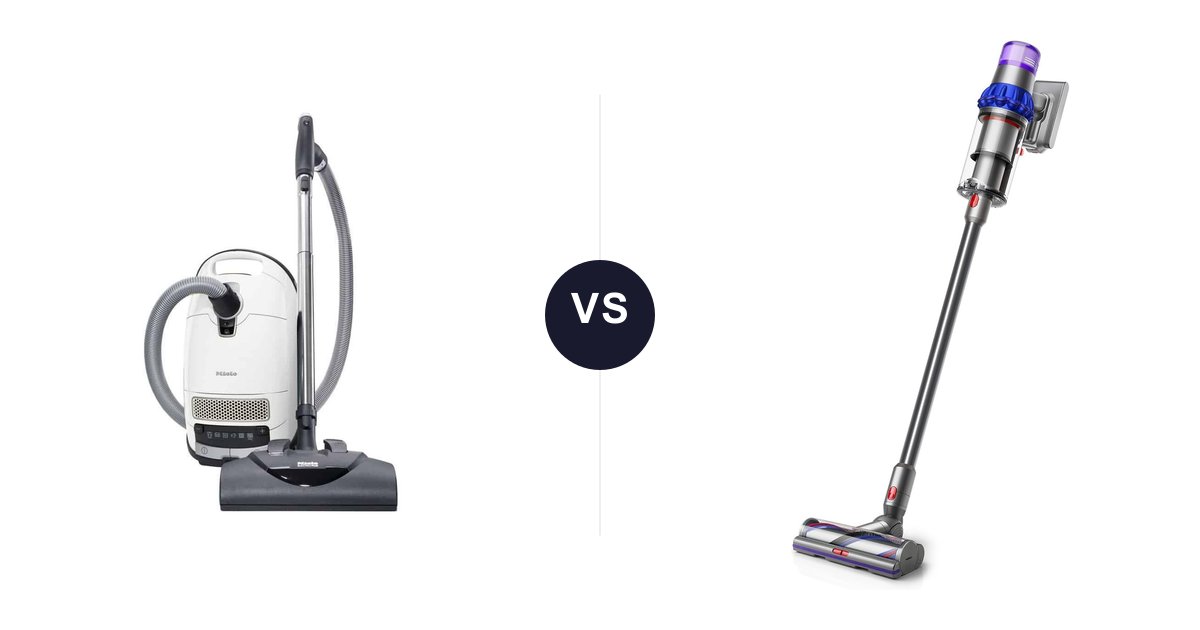
Bagged vs Bagless Vacuums: Which Type Is Actually Better?
Bagged and bagless vacuums each have distinct advantages for different households. We compare cost, filtration, allergen control, maintenance, and convenience to help you choose the right type.