Affiliate Disclosure:Home Vacuum Zone is reader-supported. When you buy through links on our site, we may earn an affiliate commission at no additional cost to you. This does not influence our reviews or recommendations — we only recommend products we genuinely believe in.
Choosing between a canister and upright vacuum is one of the most important decisions when buying a new cleaner. Each type excels in different situations, and the right choice depends on your home’s flooring, layout, and cleaning preferences.
Both canister and upright vacuums have evolved significantly in recent years. Modern canisters now offer motorized powerheads that rival upright carpet cleaning, while uprights have added versatile attachments and improved maneuverability. Understanding the fundamental differences between these designs - and how they align with your specific cleaning needs - will help you make an informed investment that serves you well for years to come.
Quick Comparison
| Feature | Canister Vacuum | Upright Vacuum |
|---|---|---|
| Best For | Hard floors, stairs, versatility | Carpet, large areas, simplicity |
| Maneuverability | Excellent | Good |
| Storage | Compact | Larger footprint |
| Noise | Quieter | Louder |
| Carpet Cleaning | Good (with powerhead) | Excellent |
| Hard Floor Cleaning | Excellent | Good |
| Stair Cleaning | Excellent | Difficult |
| Weight | Lighter (hose-based) | Heavier (push design) |
| Reach | Excellent vertical reach | Limited vertical reach |
| Dust Capacity | Smaller (typically) | Larger |
| Price Range | Budget to ultra-premium | Budget to premium |
| Learning Curve | Moderate | Minimal |
Understanding the Fundamental Design Differences
The core distinction between these vacuum types lies in their physical design and how that affects functionality.
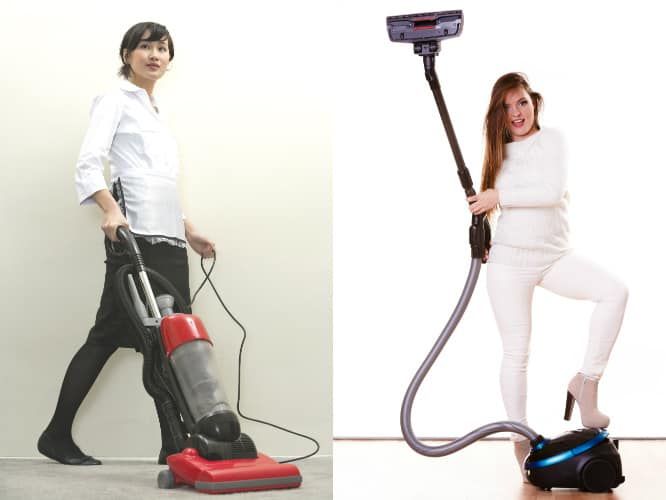
Canister Vacuums separate the motor and dust collection unit from the cleaning head. The main body sits on the floor while you maneuver a lightweight wand and cleaning head via a flexible hose. This separation creates a pulling motion as you vacuum, with the canister trailing behind you or remaining stationary while you clean elevated areas.
Upright Vacuums integrate the motor, dust bin, and cleaning head into a single vertical unit. You push this combined unit across floors in a traditional back-and-forth motion. The motor sits directly above or behind the brushroll, creating a more direct power transfer to the cleaning head.
These design philosophies create cascading differences in performance, ease of use, and ideal applications. The canister’s separation of components allows for lighter wand handling and exceptional reach, while the upright’s unified design creates a concentrated cleaning powerhouse optimized for floor surfaces.
Canister Vacuum Advantages
Superior Versatility
Canister vacuums excel at cleaning multiple surfaces and hard-to-reach areas:
Hard Floors: Suction-only cleaning without beater bars prevents debris scatter - see our best vacuums for hardwood floors roundup for top picks. The canister design allows for smooth gliding across hardwood, tile, and laminate without the jerking motion that uprights sometimes exhibit. You can switch between soft parquet brushes for delicate hardwood and firmer bristle attachments for textured tile.
Stairs: Canister stays put while hose cleans steps safely. See our guide to the best vacuums for stairs for specific model picks. Simply place the canister at the top or bottom of the staircase and carry only the lightweight wand and cleaning head. This approach is safer than trying to maneuver a heavy upright on stairs and more effective than using an upright’s hose attachment (which often has weaker suction).
Under Furniture: Low-profile heads reach under beds and sofas. Most canister floor heads measure 3-4 inches in height, allowing them to slide beneath furniture that would stop an upright vacuum. This means less furniture moving and more efficient cleaning.
Above Floor: Telescoping wands clean ceilings, fans, and shelves. With reach extending up to 10-12 feet when fully extended, canisters make ceiling cobwebs, light fixtures, and high shelves accessible without ladders or step stools.
Tight Spaces: Compact heads navigate around furniture legs. The flexible hose allows you to maneuver the cleaning head in any direction independently of the canister body, making it easy to vacuum around chair legs, table bases, and other obstacles.
Vehicle Interiors: The long hose and portable design make canisters ideal for cleaning cars, with the canister sitting outside the vehicle while you reach into every corner of the interior.
Better Attachments
Canisters typically include more specialized tools:
- Hard floor brushes: Soft natural bristles prevent scratching
- Dusting brushes: Gentle cleaning for blinds and decorative items
- Crevice tools: Narrow extensions for baseboards and tight gaps
- Upholstery tools: Fabric-friendly heads for furniture and mattresses
- Turbo brushes: Mechanically-powered brushrolls for upholstery and stairs
- Extension wands: Additional tubes for extra reach
- Combination tools: Flip-out brushes for dual functionality
Premium canisters like the Miele Complete C3 often include six or more specialized attachments, each designed for specific surfaces and situations. These tools store conveniently on the canister body or in accompanying accessory bags, keeping everything organized and accessible.
Quieter Operation
The motor is isolated in the canister, often located away from the user. This makes canisters 5-10 dB quieter than uprights during operation.
The sound dampening occurs for several reasons. First, the canister body itself acts as a sound barrier, often incorporating acoustic insulation in premium models. Second, the physical distance between the motor and your ears reduces perceived noise. Third, canister motors typically run at slightly lower RPMs than upright motors while maintaining equivalent suction through optimized airflow design.
This noise reduction matters in several practical scenarios: vacuuming while others sleep, cleaning in noise-sensitive environments like libraries or offices, reducing stress on pets sensitive to vacuum sounds, and maintaining a more pleasant cleaning experience overall.
Easier Physical Strain
While uprights often market themselves as ergonomic, canisters actually reduce physical strain in several ways:
No Pushing Weight: You only maneuver the lightweight wand and cleaning head (typically 3-5 pounds), rather than pushing a 15-20 pound upright back and forth. This reduces arm, shoulder, and back strain, especially during longer cleaning sessions.
Natural Posture: The wand’s length keeps you in a more upright posture rather than hunching over. Telescoping adjustment lets you customize the height for your body, preventing the back strain that sometimes occurs with fixed-height upright handles.
No Lifting for Stairs: Unlike carrying a heavy upright up and down stairs, you simply place the canister and carry the lightweight wand. This matters significantly in multi-story homes where stair safety is a concern.
Flexible Angles: The hose allows you to vacuum from any angle without twisting your body or straining to reach. You can stand comfortably while vacuuming under furniture rather than crouching or bending awkwardly.
Longer Lifespan
Canister vacuums often outlast uprights, particularly in the premium segment:
European Build Quality: Brands like Miele engineer canisters for 20+ year lifespans with proper maintenance, rating their motors for 1,000-1,500+ hours of use. The separation of components means less vibration stress on motor mounts and internal parts.
Simpler Mechanics: Fewer moving parts in the main body (no brushroll belt, no height adjustment mechanisms in the canister itself) means fewer points of failure. The motorized powerheads are modular and can be replaced independently if needed.
Better Filtration: Canister designs allow for larger, more sophisticated filtration systems without compromising the machine’s center of gravity or size. This often includes true HEPA filtration with multiple filtration stages.
Upright Vacuum Advantages
Superior Carpet Cleaning
Uprights are designed primarily for carpet:
Larger Brushrolls: Wider cleaning paths cover more area. Our best upright vacuum reviews compare six top models. Most uprights feature 12-15 inch cleaning paths compared to 10-12 inches on canister powerheads. This width advantage translates to faster carpet cleaning - you can clean a 200 square foot room in 30-40% fewer passes.
Aggressive Agitation: Weight helps brushroll penetrate deep into carpet. The 15-20 pound weight of an upright creates constant downward pressure, forcing the brushroll bristles deeper into carpet pile where dirt and pet hair hide. This weight advantage is difficult to replicate with canister powerheads, which rely primarily on suction.
Optimized Suction: Motor power focused on carpet cleaning. Uprights concentrate their airflow directly into the brushroll chamber, creating powerful agitation and extraction. The short distance between motor and cleaning head minimizes suction loss that can occur through long hoses.
Convenience: No pulling a canister behind you. The single-unit design means you’re not managing multiple components or worrying about the canister tipping over or bumping into furniture. This is particularly advantageous in homes with abundant carpet where you’re rarely switching between floor types. Better for High-Pile Carpet: The weight and power of uprights excel on plush, high-pile carpets where embedded dirt resists removal. Models like the Dyson Ball Animal 3 feature self-adjusting cleaning heads that maintain optimal contact with carpet surface regardless of pile height.
Simpler Operation
One-Handed Use: Push and steer with minimal effort. The familiar back-and-forth motion requires minimal learning curve. Most people can achieve effective cleaning results immediately without reading instructions or adjusting technique.
Easy Storage: Stand upright in closets. Most uprights measure 12-18 inches deep and can fit in standard closets without disassembly. The self-standing design means you don’t need hooks, shelves, or special storage solutions.
Large Capacity: Bigger dust bins require less frequent emptying. Upright dust bins typically hold 1.0-2.0 liters compared to 0.5-1.5 liters for canisters. In large homes or homes with heavy shedding pets, this can mean the difference between emptying once versus three times per cleaning session.
Intuitive: Most people are familiar with upright design. If you’ve grown up using uprights or see them regularly in commercial settings, the learning curve is essentially zero. This familiarity reduces frustration and increases cleaning efficiency from day one.
Better for Large Open Spaces: When you have expansive rooms with minimal furniture - like finished basements, large living rooms, or commercial spaces - the upright’s straightforward push operation is simply faster. You can establish a rhythm and clean efficiently without managing a trailing canister.
Effective Edge Cleaning
Modern uprights have improved edge cleaning capabilities:
Side Suction Channels: Many uprights now incorporate dedicated airflow channels on one or both sides of the cleaning head, pulling debris from edges and corners directly into the suction path.
Corner Brushes: Rotating corner brushes extend beyond the main cleaning head, sweeping edge debris into the vacuum’s path. This feature, common on models like the Shark Navigator Lift-Away, significantly improves baseboards cleaning.
Wider Cleaning Coverage: The wider cleaning path of uprights means fewer areas that require focused edge work, since the main brushroll covers more floor area per pass.
Lower Learning Curve for Attachments
While uprights offer fewer attachments than canisters, the ones they include are often simpler to deploy:
Quick-Release Hoses: Most modern uprights feature a hose that releases with a single button press, already connected to suction. No fumbling with attachment points or fitting tools onto wands.
Stored On-Board: Attachments store directly on the upright body, always accessible without searching through separate accessory bags. This convenience means you’re more likely to actually use them for spot cleaning.
Shorter Hose Length: The shorter hose (typically 6-8 feet) is easier to manage for quick jobs, though it limits vertical reach compared to canister wands.
When to Choose Each Type
Choose a Canister If:
✓ You have mostly hard floors (hardwood, tile, laminate)
✓ You have multiple levels with stairs
✓ You want versatile attachments for different tasks
✓ You prefer quieter operation
✓ You have delicate surfaces or antique rugs
✓ Storage space is limited
✓ You regularly clean above-floor areas (drapes, vents, ceiling fans)
✓ You have furniture with low clearances
✓ You value long-term durability and are willing to invest in quality
✓ You have back problems or reduced upper body strength
✓ You clean vehicles regularly
✓ You have bare floors with area rugs rather than wall-to-wall carpet
Choose an Upright If:
✓ You have mostly carpet (especially high-pile)
✓ You want simple, one-handed operation
✓ You have large, open areas to clean
✓ You prefer standing storage
✓ You want larger dust capacity
✓ You prioritize deep carpet cleaning
✓ You have a single-story home
✓ Your home has minimal stairs (fewer than 5 steps)
✓ You prefer familiar, traditional vacuum operation
✓ You need to clean quickly with minimal setup
✓ You have wall-to-wall carpeting throughout most of your home
✓ Budget is a primary concern (entry-level uprights start lower)
Gray Areas Requiring Closer Analysis
Some situations don’t have clear winners:
50/50 Hard Floor and Carpet Mix: This scenario favors either a premium canister with motorized powerhead (like the Miele Complete C3) or a lift-away hybrid. The canister excels at the hard floor portions while the powerhead handles carpets effectively. Alternatively, a lift-away upright provides good carpet cleaning with detachable canister functionality for hard floors.
Minimal Carpet (20-30%) in Bedrooms Only: A canister with a turbo brush or small motorized head can handle occasional carpet cleaning while excelling at the predominantly hard floor areas. However, if the carpet areas are large bedrooms, an upright might still be preferable with a separate hard floor tool for occasional use.
Frequent Above-Floor Cleaning Needs with Significant Carpet: Consider either a canister with a strong motorized powerhead or an upright with an extended reach hose (10+ feet). Some premium uprights now offer longer hoses with better suction retention, closing the gap with canisters for above-floor work.
Hybrid Option: Lift-Away Vacuums
Some vacuums combine both designs, offering a compelling middle ground:
Shark Navigator Lift-Away: Upright convenience with detachable canister functionality. The main body detaches with a button press, transforming into a portable canister while maintaining the powerful carpet cleaning of an upright. This design works well for homes with mixed flooring and occasional stairs. Dyson Ball Animal 3: Upright design with hose attachments. While not a true lift-away, the extended reach hose and included tools provide some canister-like versatility for above-floor cleaning and furniture, though the main unit remains an upright.
Advantages of Hybrids:
- Versatility for varied home layouts
- One machine addresses multiple cleaning scenarios
- Good value for households that would otherwise need both types
- Less storage space than owning separate vacuums
Limitations of Hybrids:
- Compromise design means not quite as effective as dedicated types
- Often heavier than traditional uprights due to added features
- More complex mechanisms may reduce long-term reliability
- Typically more expensive than basic uprights or budget canisters
- Detachment mechanism can wear over time with frequent use
Hybrids work particularly well for households transitioning from full carpet to mixed flooring, renters who may move to different home layouts, or anyone seeking maximum flexibility from a single machine.
Flooring-Specific Recommendations
Mostly Carpet (70%+)
Winner: Upright vacuum
Recommended: Dyson Ball Animal 3 or Shark Navigator
Why This Works: Carpet cleaning is where uprights truly shine. The concentrated power delivery, aggressive brushroll action, and weight-assisted agitation extract embedded dirt that canisters struggle to match. In heavily carpeted homes, you’ll spend 70% or more of your vacuuming time on carpet, making the upright’s specialized design the logical choice.
Canister Alternative: If you prefer canister design, choose a model with a motorized powerhead specifically designed for carpet (not just a turbo brush). The Miele Complete C3 Cat & Dog with electrobrush can approach upright carpet cleaning performance, though at a premium price point.
Mixed Flooring
Winner: Canister with powerhead OR Lift-Away upright
Recommended: Miele Complete C3 or Shark Navigator Lift-Away
Why This Works: Mixed flooring homes require legitimate competence on both carpet and hard floors. A canister with motorized powerhead provides exceptional hard floor cleaning while still tackling carpeted areas effectively. The lift-away upright approaches this from the opposite direction - upright carpet performance with detachable canister flexibility.
Decision Factor: If your hard floors are high-end (expensive hardwood, natural stone) or include many area rugs, favor the canister. If your carpets are high-pile or cover large contiguous areas, favor the lift-away upright.
Mostly Hard Floors (70%+)
Winner: Canister vacuum
Recommended: Miele Classic C1 Pure Suction
Why This Works: Hard floors don’t benefit from brushroll agitation - in fact, beater bars can scatter debris rather than collecting it. Canisters with suction-only operation and soft parquet brushes clean hard floors more effectively and safely. The versatility for stairs, furniture, and above-floor cleaning reinforces the canister advantage.
Upright Alternative: If you strongly prefer upright operation, choose a model with brushroll shutoff and a dedicated hard floor attachment. However, you’ll still face challenges with stairs and under-furniture cleaning.
Stairs Present
Winner: Canister vacuum
Recommended: Any Miele canister or lightweight stick vacuum
Why This Works: Stair cleaning represents one of the most dramatic performance differences between vacuum types. Canisters are purpose-built for stairs - the main unit remains stationary while you carry only the lightweight wand and tool. Uprights are awkward, heavy, and potentially dangerous on stairs.
Upright Workaround: If you choose an upright despite having stairs, budget for a supplementary lightweight stick vacuum or handheld vacuum specifically for stair cleaning. Attempting to use an upright’s hose attachment typically results in disappointing suction and awkward positioning.
Pet Owners
Winner: Depends on primary flooring
For Carpeted Homes: Uprights excel at extracting embedded pet hair from carpet fibers. Models specifically designed for pet hair feature tangle-free brushrolls, strong suction, and HEPA filtration.
For Hard Floor/Mixed Homes: Canisters with motorized pet tools prevent hair scatter on hard floors while still addressing upholstery and carpet areas. The Miele Complete C3 Cat & Dog includes specialized pet attachments for furniture, stairs, and car interiors.
Universal Consideration: Regardless of type, prioritize models with sealed HEPA filtration to trap pet dander, strong suction to handle heavy shedding, and easily-cleanable brushrolls that resist hair tangling. For dedicated pet picks, see our best vacuums for pet hair roundup.
Allergy Sufferers
Winner: Premium canister (slight edge)
Canister vacuums more frequently offer true HEPA filtration with sealed systems that prevent air leaks. The larger body accommodates multiple filtration stages without compromising suction or requiring frequent filter replacement.
However, premium uprights have largely closed this gap. Models with sealed systems and HEPA filtration perform comparably. The key is choosing either type with certified HEPA filtration (H13 or H14 rating) and a sealed system that forces all exhaust air through the filtration system.
Canisters gain a slight additional advantage through their gentler hard floor cleaning, which stirs up less dust and allergens compared to upright brushrolls.
Cost Comparison
| Price Tier | Canister Options | Upright Options |
|---|---|---|
| Budget | Eureka WhirlWind | Bissell CleanView |
| Mid-Range | Kenmore BC3005 | Shark Navigator |
| Premium | Miele Complete C3 | Dyson Ball Animal 3 |
| Ultra-Premium | Miele Complete C3 Limited Edition | Dyson Cinetic Big Ball |
Value Considerations by Price Tier
Budget Tier: Both canister and upright options at entry-level pricing make compromises. Budget uprights typically offer better carpet cleaning, while budget canisters provide better versatility. However, both sacrifice build quality and durability. Expect 2-4 year lifespans.
Mid-Range: This tier offers the best value for most households. Mid-range uprights deliver 80% of premium carpet cleaning performance at a fraction of the price. Mid-range canisters include motorized powerheads and varied attachments without the ultra-premium build quality. Expect 5-8 year lifespans with proper maintenance.
Premium: Premium pricing buys significantly better build quality, more powerful motors, superior filtration, and comprehensive warranties. Premium canisters particularly shine here, with German engineering and components rated for decades of use. Premium uprights focus on maximizing suction and convenience features.
Ultra-Premium: Reserved primarily for German-engineered canisters (Miele, SEBO) and top-tier Dyson models. At this investment level, you’re getting a 15-20+ year lifespan, exceptional engineering, and comprehensive accessory kits. This tier makes sense for large homes, severe allergies, or those who simply want the best available.
Long-Term Cost of Ownership
Consider replacement parts and consumables over a vacuum’s lifetime:
Canisters:
- Bags: low annual cost (bagged models)
- Filters: low to moderate per year
- Belts (powerhead): minimal every 1-2 years
- Replacement powerhead: significant but rarely needed with premium brands
Uprights:
- Bags: low annual cost (bagged models) or dust bin cleaning
- Filters: low to moderate per year
- Belts: minimal per year
- Replacement brushroll: moderate every 3-5 years
- Replacement hose: moderate (if damaged)
Premium canisters often have lower long-term costs due to more durable components and readily available parts. Budget uprights may cost less initially but require more frequent replacement, potentially costing more over a decade.
Performance Factors Beyond Type
Several factors impact vacuum performance regardless of whether you choose canister or upright:
Motor Power and Suction
Wattage alone doesn’t determine cleaning performance. A 1,200-watt motor with poor airflow design may underperform a 600-watt motor with optimized airflow pathways. Look for:
- Sealed suction: Measured in inches of water lift or air watts
- Airflow: Measured in CFM (cubic feet per minute)
- Efficient design: German brands like Miele often achieve superior results with lower wattage through better engineering
Filtration Quality
True HEPA filtration captures 99.97% of particles 0.3 microns or larger. However, the filter alone isn’t enough - the vacuum must have a sealed system that forces all air through the filter. Unsealed systems allow dirty air to leak around the filter, negating its benefits.
Premium Filtration Features:
- Activated charcoal filters for odor control
- Multi-stage filtration (pre-motor, post-motor, exhaust)
- Washable lifetime filters (reduces ongoing costs)
- Easily accessible filter compartments for maintenance
Build Quality and Materials
Premium vacuums use higher-grade plastics, metal components, and durable seals that resist wear:
- German-built models (Miele, SEBO) feature metal telescoping wands, reinforced hose connections, and motors rated for 1,500+ hours
- Mid-range models use quality plastics and adequate durability for 5-8 years
- Budget models sacrifice component quality for lower pricing, resulting in shorter lifespans
Brushroll Technology
Modern brushrolls feature several innovations:
- Tangle-free design: Bristle patterns that resist hair wrapping
- Adjustable height: Adaptation to different carpet pile heights
- Dual brushrolls: Some uprights feature two counter-rotating brushrolls for enhanced agitation
- Soft rollers: Specialized for hard floors, preventing debris scatter
Maneuverability Features
Both vacuum types have evolved their maneuverability:
- Swivel steering: Uprights with ball-joint or pivot steering navigate around furniture more easily
- Rubberized wheels: Prevent scratching on hard floors
- Auto-rewind cords: Convenience feature increasingly common in both types
- Lightweight construction: Modern materials reduce weight without sacrificing durability
Maintenance Requirements
Canister Maintenance

Weekly:
- Empty dust bag or bin
- Check hose for clogs
Monthly:
- Clean or replace pre-motor filter
- Inspect brushroll and remove tangled hair
- Check powerhead belt tension
Annually:
- Replace HEPA filter (or wash if washable)
- Deep clean attachments
- Check hose for cracks or damage
- Lubricate telescoping wand if needed
As Needed:
- Replace bags (bagged models)
- Replace worn powerhead brushroll
- Replace damaged hose or attachments
Upright Maintenance
Weekly:
- Empty dust cup
- Clean dust cup filters
Monthly:
- Check and clean brushroll
- Remove tangled hair and debris
- Clean or replace filters
Every 3-6 Months:
- Replace brushroll belt
- Deep clean dust cup assembly
Annually:
- Replace HEPA filter
- Check hose for cracks
- Inspect wheels and clean wheel axles
- Check all seals and gaskets
As Needed:
- Replace damaged brushroll
- Replace worn belts
- Clear clogs from hose or internal pathways
Maintenance Difficulty
Canisters typically require less frequent maintenance but more components to service. Uprights require more frequent brushroll attention due to their constant carpet contact but have fewer separate pieces to maintain.
Premium models of both types feature tool-free maintenance - accessing brushrolls, clearing clogs, and replacing belts without screwdrivers or disassembly. This convenience factor significantly impacts long-term ownership satisfaction.
Environmental and Sustainability Considerations
Longevity and Waste Reduction
Premium canisters, particularly European brands, offer the most sustainable option through exceptional longevity. A Miele canister that lasts 20+ years prevents 4-5 cheaper vacuums from entering landfills. The higher initial investment pays environmental dividends through:
- Reduced manufacturing resources over time
- Less packaging waste
- Fewer transportation emissions
- Lower overall material consumption
Repairability
European-built canisters emphasize user-serviceable components and widely available parts. You can replace virtually every component, from motors to switches, extending the vacuum’s useful life indefinitely.
Budget uprights often use proprietary components or glued assemblies that resist repair, essentially becoming disposable when any major component fails.
Energy Efficiency
Modern vacuums use significantly less energy than older models while maintaining or improving performance. European regulations have driven innovation in efficient motor design, particularly benefiting canisters. Look for:
- Energy Star certification
- High efficiency motors (lower wattage, equivalent performance)
- Automatic power adjustment based on surface type
- Standby power management
Bag vs. Bagless Impact
Bagged Models:
- Ongoing bag purchases create waste
- More hygienic emptying (no dust cloud)
- Better for allergy sufferers
- Bags decompose in landfills (paper bags)
Bagless Models:
- No ongoing bag waste
- Dust cloud during emptying exposes users to allergens
- Require regular filter washing/replacement
- Plastic components may eventually need replacement
Neither option is definitively more sustainable - the choice depends on your specific circumstances and how you value the tradeoffs.
Further Reading
- Cordless vs Corded Vacuum Cleaners: Which Is Best for You? (2026 Guide)
- Shark vs Dyson 2026: Which Vacuum Brand is Best?
Making Your Final Decision
After evaluating your home’s specific requirements, consider this decision framework:
Step 1: Assess Your Primary Flooring
Walk through your home and estimate flooring percentages:
- 70%+ carpet: Strongly favor upright
- 70%+ hard floors: Strongly favor canister
- 50/50 mix: Consider either premium canister with powerhead or lift-away hybrid
Step 2: Evaluate Your Home Layout
Count and assess:
- Number of stairs requiring regular cleaning
- Amount of under-furniture space
- Ceiling height and above-floor cleaning needs
- Room connectivity (open concept vs. many small rooms)
Multiple stairs strongly favor canisters. Open concept with minimal furniture favors uprights.
Step 3: Consider Physical Factors
Evaluate:
- Your physical strength and any mobility limitations
- Storage space availability
- Tolerance for noise during cleaning
- Frequency and duration of typical cleaning sessions
Reduced mobility favors lightweight canisters. Limited storage favors compact canisters or uprights that store upright.
Step 4: Determine Your Budget and Timeframe
Decide:
- Initial budget available
- Desired lifespan (2-5 years vs. 10-20 years)
- Willingness to invest in long-term quality
- Importance of warranty coverage
Longer timeframe thinking favors premium canisters. Immediate budget constraints may favor mid-range uprights.
Step 5: Prioritize Your Must-Have Features
Identify non-negotiables:
- HEPA filtration for allergies
- Quiet operation for noise sensitivity
- Specific attachments for unique cleaning needs
- Bagged vs. bagless preference
- Brand reputation or country of manufacture preferences
Use these priorities to narrow options within your chosen vacuum type.
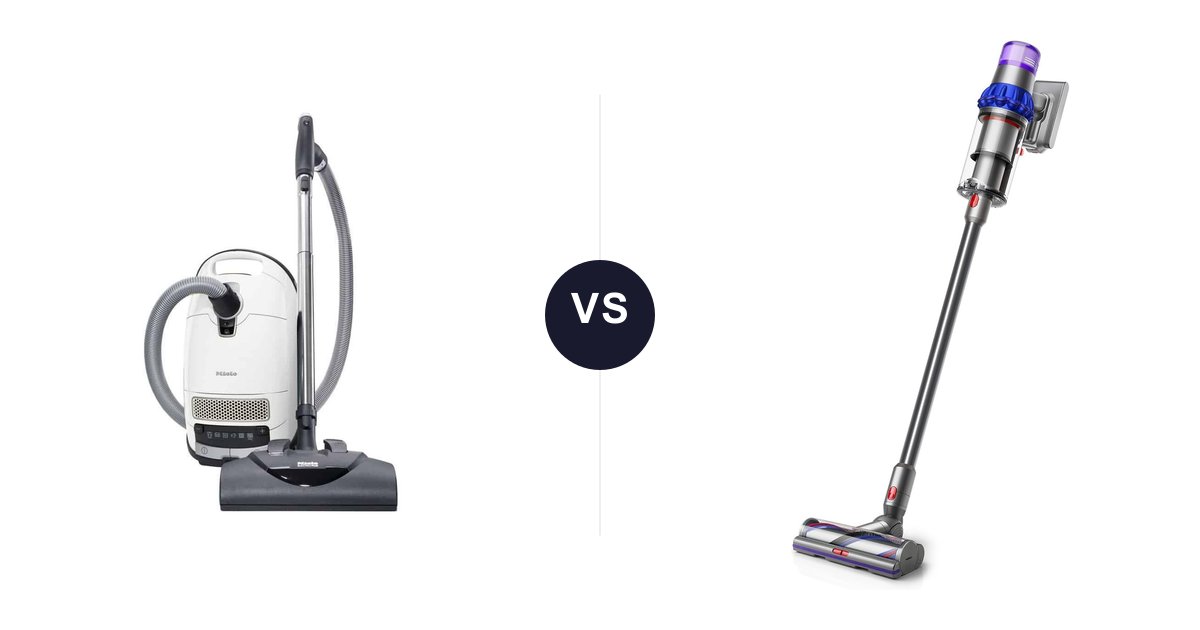
Head-to-Head Comparison
Detailed Reviews
Miele Complete C3 Calima Canister Vacuum
Best canisterBest canister vacuum with superior versatility.
What We Like
- CRI Gold certified for effective carpet cleaning
- Premium HEPA filtration captures 99.95% of particles
- Quiet operation at 64dB
- Excellent for high-pile carpet and hardwood floors
What We Don't
- Premium price point
- Requires bag replacements (ongoing cost)
- No motorized brush roll included with base model
Dyson Ball Animal 3
Best uprightBest upright vacuum for deep carpet cleaning.
What We Like
- Powerful motorized brush bar for deep carpet cleaning
- Tangle-free turbine tool prevents hair wrap
- Strong 290 AW suction power
- Whole-machine HEPA filtration captures allergens
- Ball technology for easy steering around furniture
What We Don't
- Premium price point for a corded upright
- Heavy at 17.4 lbs for prolonged use
- Small dustbin capacity requires frequent emptying
Shark Navigator Lift-Away
Best hybridBest hybrid option combining upright and canister benefits.
What We Like
- Lift-away feature for versatile cleaning of stairs and furniture
- HEPA filter with Anti-Allergen Complete Seal technology
- Swivel steering for easy maneuverability
- Durable build quality with 5-year warranty
What We Don't
- Heavier at 12.5 lbs compared to some competitors
- Corded design limits cleaning range
- No self-cleaning brushroll - requires manual hair removal
- Smaller dustbin than some competitors at 0.9 quarts
Miele Classic C1 Pure Suction
Best for hard floorsThe Miele Classic C1 Pure Suction uses a smooth floor nozzle without a rotating brush, making it ideal for hardwood, tile, and delicate rugs that powered brushes can damage. Best for homes with primarily hard flooring who want Miele build quality, 6-speed suction control, and 72 dB quiet operation.
What We Like
- Pure suction design ideal for hardwood and smooth floors
- No rotating brush to damage delicate surfaces
- Quiet operation at 72 dB
- 6-speed suction control for versatile cleaning
What We Don't
- Not suitable for deep carpet cleaning without powered brush
- Requires ongoing bag purchases
- Heavier than modern bagless alternatives
Miele Complete C3 Cat & Dog
Best canisterThe Miele Complete C3 Cat & Dog features a handheld turbo brush for furniture, charcoal odor filtration, and 66 dB quiet operation backed by a 7-year motor warranty. Best for multi-pet households that need a hygienic bagged system with specialized tools to handle long hair on upholstery and stairs.
What We Like
- Handheld turbo brush excellent for pet hair on furniture
- Bagged design hygienic for allergy sufferers
- German engineering with superior build quality
- Charcoal filter neutralizes pet odors effectively
What We Don't
- Very expensive compared to competitors
- Ongoing cost of replacement bags
- Lacks motorized powerhead in base configuration
Eureka WhirlWind Bagless Canister
Frequent light cleaning and seniorsPerfect for frequent, quick cleanups. The lightweight design reduces fatigue during daily vacuuming sessions, making it ideal for maintaining cleanliness.
What We Like
- Ultra-lightweight at 8 lbs
- Easy maneuverability
- Washable filters
- Budget-friendly
What We Don't
- Smaller capacity than premium canisters
- Less powerful than high-end models
- No powered brush head for deep carpet agitation
Bissell CleanView Swivel Pet Upright Vacuum
First-time pet owners and smaller apartmentsThe CleanView Swivel Pet combines Scatter-Free Technology with a triple-action brush roll to tackle pet hair on both carpet and hard floors without pushing debris around. Best for first-time pet owners and apartment dwellers who want an effective, budget-friendly upright with a washable filter to reduce ongoing costs.
What We Like
- Scatter-Free Technology prevents debris scatter on hard floors
- Edge-to-edge cleaning capability
- Lightweight at 15 lbs and easy to maneuver
- Washable filter reduces ongoing costs
- Includes specialized pet hair corner tool
What We Don't
- Smaller 1-liter dirt cup requires frequent emptying
- No automatic cord rewind
- Filter requires frequent cleaning when dealing with pet hair
Kenmore BC3005
Best mid-rangeThe Kenmore BC3005 delivers 2-motor canister power with HEPA filtration and a dedicated Pet PowerMate attachment at a mid-range price. Ideal for households wanting reliable pet hair pickup and allergen capture without stepping up to Miele pricing.
What We Like
- HEPA filtration captures allergens and fine particles
- Pet PowerMate attachment for effective pet hair removal
- Telescoping wand adjusts for different cleaning heights
- 2-motor system provides strong suction power
What We Don't
- Requires replacement bags for operation
- Less refined construction and features than Miele competitors
- 1-year warranty offers limited long-term coverage compared to premium canister brands
Dyson V15 Detect Absolute
Best overall cordlessBest cordless vacuum overall with unmatched technology and suction.
What We Like
- Laser Slim Fluffy cleaner head reveals microscopic dust
- Powerful 240 AW suction
- Up to 60 minutes runtime in Eco mode
- Piezo sensor counts and categorizes dust particles
What We Don't
- Premium price point — among the most expensive cordless vacuums
- No self-emptying dock available
- 60-minute runtime only achievable in Eco mode
Shark Stratos Cordless
Best stick budgetThe Shark Stratos Cordless packs DuoClean PowerFins, a self-cleaning brushroll, and built-in odor neutralizer technology into a 60-minute runtime cordless vacuum with HEPA filtration. Best for pet owners seeking Shark's latest features at a lower price than the top-tier Stratos models.
What We Like
- PowerFins brush roll effectively removes pet hair without tangling
- Up to 60 minutes of runtime on standard mode
- Built-in odor neutralizer technology reduces odors
- Good value for a premium cordless vacuum with DuoClean system
- Self-cleaning brush roll prevents hair wrap
What We Don't
- Dustbin capacity is smaller than some competitors at 0.7 quarts
- Premium price point for a cordless model
- Shorter runtime on high-power mode
Sources & Research
- Amazon Product Page
- Miele Official Product Page
- Miele Official Product Page
- Amazon Product Page
- Dyson Official Product Page
- Amazon Product Page
- Shark Official Website
- Shark Official Site
- Amazon Product Page
- Miele Official Product Page
- Miele Official Product Page
- Amazon Product Page
- Miele Official Product Page
- Miele Official Product Page
- Amazon Product Page
- Bissell Official Product Page
- Amazon Product Page
- Amazon Product Page
- Dyson Official
- Dyson Official Page
- Amazon Product Page
- Shark Official
Continue Reading
Explore more buying guides content or browse our other categories.
Frequently Asked Questions
- Which is better canister or upright vacuum?
- Neither is universally better - it depends on your home. Choose a canister vacuum if you have mostly hard floors, stairs, multiple levels, or need versatile attachments for different surfaces. Canisters excel at maneuverability and quiet operation. Choose an upright vacuum if you have mostly carpet, want simpler storage, prefer pushing rather than pulling a vacuum, and want one-handed operation. Uprights are generally better for large carpeted areas and deep cleaning. Many homes benefit from having both types or choosing a hybrid like the Shark Navigator Lift-Away that offers upright convenience with canister versatility.
- Are canister vacuums better for hardwood floors?
- Yes, canister vacuums are generally better for hardwood floors than uprights. Canisters typically offer suction-only cleaning without beater bars that can scatter debris or potentially scratch wood. They come with dedicated hard floor attachments like parquet brushes that glide smoothly across wood surfaces while maintaining strong suction. The lightweight hose and wand reach easily under furniture where dust accumulates. Uprights often have brushrolls that can't be fully disabled, making them less ideal for hardwood. If you have mostly hardwood floors, a canister vacuum (like the Miele Classic C1 Pure Suction) or a stick vacuum with soft roller head is the best choice.
- Do upright vacuums clean carpet better than canisters?
- Upright vacuums typically clean carpet better than canisters because they have larger brushrolls with more aggressive agitation and often stronger suction optimized for carpet fibers. The weight of an upright also helps the brushroll penetrate deeper into carpet pile. However, canisters with motorized powerheads (electrobrushes) can clean carpet just as effectively - models like the Miele Complete C3 with the SEB 228 powerhead rival upright performance. The key factor is the brushroll: uprights have them built-in, while canisters need a powerhead attachment. For high-pile carpet, an upright is generally more convenient. For low to medium-pile carpet, either type works well if the canister has a quality powerhead.
- Are canister vacuums easier to use on stairs?
- Yes, canister vacuums are significantly easier to use on stairs than uprights. With a canister, the main unit stays at the top or bottom of the staircase while you carry only the lightweight hose and wand to clean each step. This is much safer and less tiring than lugging a full upright up and down stairs. The wand attachment also maneuvers better on narrow stair treads. Many canisters come with specialized stair tools or turbo brushes for effective step cleaning. Some uprights (like the Shark Lift-Away series) convert to a canister-like mode for stairs, but true canisters still offer superior stair cleaning convenience and safety.
- What about stick vacuums as an alternative?
- Stick vacuums are an excellent third option worth considering, especially for smaller homes or apartments. They combine the convenience of uprights (push design) with the lightweight maneuverability of canisters. Modern cordless sticks like the Dyson V15 Detect or Shark Stratos offer strong suction, versatile attachments, and convert to handheld mode. They're ideal for quick cleanups and daily maintenance. However, sticks typically have smaller dust bins, shorter battery life (for cordless models), and less deep-cleaning power than full-size canisters or uprights. For many homes, a stick vacuum complements a primary canister or upright rather than replacing it entirely.
Written By
Home Vacuum Zone
Our team researches, tests, and reviews vacuum cleaners to help you make confident buying decisions.
Related Articles
Vacuum Noise Level Comparison: Decibel Ratings for 60+ Models (2026 Database)
Comprehensive vacuum noise level database with decibel ratings for 60+ models across every vacuum type. Find the quietest vacuums and understand what dB ratings actually mean.
Vacuum Suction Power Chart: AW, Pa & kPa Ratings Compared (2026 Database)
Comprehensive vacuum suction power database with air watts, pascals, and kPa ratings compared across every vacuum type. Find how much suction you actually need.
Bagged vs Bagless Vacuums: Which Type Is Actually Better?
Bagged and bagless vacuums each have distinct advantages for different households. We compare cost, filtration, allergen control, maintenance, and convenience to help you choose the right type.