
Affiliate Disclosure:Home Vacuum Zone is reader-supported. When you buy through links on our site, we may earn an affiliate commission at no additional cost to you. This does not influence our reviews or recommendations — we only recommend products we genuinely believe in.
Cordless or corded? It’s one of the first decisions you’ll face when buying a new vacuum. Cordless convenience has improved dramatically, but corded vacuums still offer distinct advantages. This guide helps you choose.
The vacuum market in 2026 presents an interesting dichotomy. While cordless technology has advanced substantially - with improved battery life, stronger motors, and better filtration - corded vacuums continue to dominate in specific scenarios. Understanding which type aligns with your cleaning needs, home layout, and lifestyle will save you money and frustration.
Quick Comparison
| Factor | Cordless Vacuum | Corded Vacuum |
|---|---|---|
| Convenience | Excellent | Moderate |
| Runtime | 15-60 minutes | Unlimited |
| Suction Power | Good-Excellent | Excellent |
| Weight | Lighter (5-7 lbs) | Heavier (10-15 lbs) |
| Storage | Compact | Larger |
| Initial Cost | Budget to premium | Budget to mid-range |
| Long-term Costs | Battery replacement | Minimal |
| Best For | Quick cleanups, hard floors | Deep cleaning, large homes |
Cordless Vacuum Advantages
Unmatched Convenience
No Cord Management: Grab and go without finding outlets or managing cord length
Quick Cleanups: Ideal for daily maintenance and spot cleaning
Lightweight: Easier to carry upstairs and maneuver around furniture
Compact Storage: Wall mounts or small closets keep them accessible
Versatile: Convert to handheld mode for cars, furniture, and tight spaces
The convenience factor cannot be overstated. In real-world use, cordless vacuums eliminate the friction that prevents regular cleaning. When you spot cereal under the dining table or pet hair on the stairs, you can address it immediately rather than putting it off until your next scheduled cleaning session. This psychological advantage leads to cleaner homes overall.
Cordless models excel in multi-story homes where carrying a lightweight stick vacuum upstairs is far easier than lugging a 15-pound upright. You can switch from floor to handheld mode in seconds, cleaning baseboards, furniture, and ceiling corners without swapping tools.
Modern Performance
Premium cordless vacuums now rival corded models:
| Model | Max Suction | Runtime | Price Tier |
|---|---|---|---|
| Dyson V15 Detect | 240 AW | 60 min | Premium |
| Shark Stratos | 200 AW | 50 min | Mid-range |
| Tineco Pure One S15 | 120 AW | 40 min | Mid-range |
These performance figures represent a significant leap from cordless models available just five years ago. The Dyson V15 Detect, for instance, delivers suction power that matches or exceeds many mid-range corded uprights. Its laser detection technology reveals microscopic dust on hard floors, while the intelligent sensor adjusts power automatically based on debris levels. However, these numbers require context. While peak suction approaches corded levels, cordless vacuums typically operate on medium or eco modes to extend runtime. On maximum power, most cordless models drain batteries in 10-15 minutes. This trade-off between power and runtime remains the fundamental limitation of battery technology.
2026 Battery Technology
Lithium-ion batteries now last 3-5 years with proper care
LFP (Lithium Iron Phosphate) batteries in newer models last 5-8 years
Replaceable batteries extend vacuum lifespan
Fast charging - many models reach 80% in 1 hour
Battery technology improvements have been the driving force behind cordless adoption. Lithium Iron Phosphate (LFP) batteries, which first appeared in electric vehicles, are now making their way into premium vacuum cleaners. These batteries tolerate more charge cycles, degrade slower, and operate safely across wider temperature ranges.
Battery maintenance significantly impacts longevity. Store your cordless vacuum in moderate temperatures (60-75°F), avoid depleting batteries completely before recharging, and use the manufacturer’s charger exclusively. Following these practices, lithium-ion batteries typically maintain 80% capacity after 500 charge cycles - roughly 3-4 years of regular use.
Some manufacturers now offer swappable battery systems - the LG CordZero, for example, ships with dual batteries. A second battery effectively doubles your cleaning capacity and provides insurance against sudden battery death. This option proves particularly valuable for larger homes or those with higher cleaning demands.
Filtration Improvements
Modern cordless vacuums increasingly feature sealed HEPA filtration systems that capture 99.97% of particles as small as 0.3 microns. Models like the Dyson V15 Detect employ whole-machine filtration, meaning all expelled air passes through HEPA filters rather than escaping through motor vents or seals.
This advancement matters for allergy sufferers and those concerned about indoor air quality. While corded vacuums traditionally held the filtration advantage due to more powerful motors and larger filter chambers, premium cordless models have largely closed this gap. The key difference lies in sustained filtration during extended cleaning sessions, where corded models maintain consistent airflow through filters without the power-saving modes that cordless units employ.
Corded Vacuum Advantages
Sustained Power
Consistent Suction: Full power from start to finish - no battery fade
Stronger Deep Cleaning: Better for high-pile carpet and embedded dirt
No Recharging: Clean as long as needed without interruption
Better Filtration: Larger motors accommodate superior HEPA systems
The unlimited runtime of corded vacuums eliminates cleaning anxiety. Whether you’re tackling a 4,000 square foot home, hosting guests and need to clean for an hour straight, or dealing with a significant mess that requires multiple passes, corded vacuums simply continue working. There’s no mental calculation about remaining battery life or power mode trade-offs.
Sustained power delivery proves particularly important for carpet cleaning. While cordless vacuums perform admirably on hard floors and low-pile carpet, high-pile or plush carpets benefit from the deeper brush penetration and consistent agitation that corded uprights provide. The Shark Navigator, for example, maintains 200+ air watts continuously, allowing the rotating brush to work deeper into carpet fibers without power fluctuation. Corded vacuums also excel in homes with pets. Continuous power means you can make multiple passes over areas with embedded pet hair without worrying about battery depletion. The stronger suction helps extract hair from upholstery and carpeted stairs more effectively.
Long-term Value
Lifespan: Quality corded vacuums last 10-20 years
Lower Total Cost: No battery replacements needed
Proven Durability: Simpler mechanics, fewer failure points
Warranty Coverage: Premium brands offer 5-7 year warranties
The longevity advantage of corded vacuums becomes apparent over time. Without batteries to degrade, the primary wear components are filters, belts, and brush rolls - all inexpensive and easy to replace. A well-maintained corded vacuum from brands like Miele or Shark can operate effectively for a decade or longer.
Consider the Miele Classic C1, which typically lasts 15-20 years with basic maintenance. Its mid-range price tag translates to a very low cost per year of ownership. A premium cordless vacuum with a 6-year lifespan costs significantly more per year - not including battery replacements. This math becomes even more favorable if you purchase a mid-range corded model.
The simplicity of corded vacuum design also means repairs are more straightforward and affordable. Our vacuum repair DIY guide covers the most common fixes. Many issues can be resolved with inexpensive replacement parts available online, whereas cordless vacuum electronics and battery systems often require manufacturer service.
Motor Power and Efficiency
Corded vacuum motors typically range from 8-12 amps (960-1440 watts), while cordless models run on 6-8 cell batteries delivering 150-300 watts. This power difference translates to superior performance in specific scenarios:
Carpet agitation: Corded uprights power rotating brushes more effectively, achieving 5,000-8,000 RPM compared to 3,000-4,000 RPM in cordless models. This faster rotation lifts carpet fibers more effectively and dislodges embedded debris.
Airflow volume: Corded vacuums move greater air volumes (60-100 CFM) compared to cordless models (15-40 CFM), improving debris capture and reducing the number of passes needed.
Brush pressure: With unlimited power, corded uprights maintain consistent brush pressure against flooring, whereas cordless models may reduce brush speed in power-saving modes.
Best For
✓ Large homes (2,000+ sq ft)
✓ Homes with mostly carpet
✓ Deep weekly cleaning
✓ Allergy sufferers needing sustained HEPA
✓ Pet owners with heavy shedding
✓ Families who clean less frequently but more thoroughly
✓ Multi-generational households with varying cleaning needs
Decision Framework
Choose Cordless If:
✓ Home is under 1,500 sq ft
✓ You have mostly hard floors
✓ You want quick, convenient daily cleanups
✓ You hate managing cords
✓ Storage space is limited
✓ Budget allows for a premium model
✓ You clean frequently in short sessions
✓ Stairs are a significant cleaning challenge
Choose Corded If:
✓ Home is over 2,000 sq ft
✓ You have mostly carpet
✓ You need deep cleaning power
✓ You have allergies requiring HEPA
✓ You want 10+ year lifespan
✓ You prefer lower long-term costs
✓ You clean less frequently but more thoroughly
✓ You have pets that shed heavily
Consider Both
Many homes benefit from a two-vacuum strategy:
Cordless: Daily quick cleanups, kitchen crumbs, car interior
Corded: Weekly deep cleaning, carpet restoration, thorough dusting
The two-vacuum approach has gained popularity among cleaning professionals and detail-oriented homeowners. A quality cordless vacuum handles 80-90% of cleaning tasks - the daily maintenance that prevents dirt buildup. Meanwhile, a corded vacuum provides the deep-cleaning power for weekly or bi-weekly thorough sessions.
This strategy works particularly well financially. You might invest in a premium cordless for daily use and a reliable mid-range corded upright for deep cleaning. The combined investment still costs less than replacing a single cordless vacuum every 5-6 years, while providing superior overall cleaning capability.
Floor Type Considerations
Hard Floors
Cordless vacuums dominate the hard floor category. Their lightweight design prevents the fatigue associated with pushing heavy uprights, while their maneuverability allows easy navigation around furniture legs and into corners. Modern cordless models feature soft rollers or specialized hard floor tools that capture fine dust without scattering it.
However, larger homes with extensive hard flooring may still benefit from corded models. A canister vacuum like the Miele Classic C1 with a parquet floor brush provides exceptional dust collection across large areas without runtime concerns. The trade-off is reduced convenience for the assurance of completing the entire home in one session.
Low-Pile Carpet
Both vacuum types perform well on low-pile carpet, making this a personal preference scenario. Cordless vacuums handle routine maintenance effectively, while corded models offer superior deep cleaning when carpet restoration is needed. For homes with primarily low-pile carpet, consider your cleaning frequency - daily maintenance favors cordless, weekly deep cleaning favors corded.
High-Pile and Plush Carpet
Corded uprights maintain the advantage here. High-pile carpet requires sustained brush agitation and strong suction to lift fibers and remove embedded debris. While premium cordless models can handle these carpets in short bursts on maximum power, you’ll find yourself recharging frequently or compromising on cleaning thoroughness.
The Shark Navigator demonstrates why corded uprights excel on thick carpet - its brush roll maintains 6,500 RPM continuously, powered by a 10-amp motor. This consistent performance allows the brush to penetrate deeply into carpet pile, lifting and loosening dirt that weaker cordless models might leave behind.
Mixed Flooring
Homes with mixed flooring - hardwood in living areas, carpet in bedrooms - present the most complex decision. Here, consider your cleaning style. If you prefer cleaning one floor type at a time (all hard floors, then all carpets), a cordless vacuum provides excellent flexibility. If you clean room-by-room regardless of floor type, a corded vacuum eliminates mid-clean battery anxiety.
Home Size and Layout
Small Homes and Apartments (Under 1,000 sq ft)
Cordless vacuums shine in compact spaces. You can clean the entire home on a single charge, storage space is typically limited (favoring wall-mounted cordless models), and the maneuverability advantages matter more in tighter quarters. The convenience factor justifies the higher cost per year of ownership.
Medium Homes (1,000-2,000 sq ft)
This range represents the decision point. Premium cordless models can handle these homes, but you’ll need to manage power settings strategically or invest in a second battery. Corded vacuums work efficiently but require more outlet management. Your flooring type becomes the deciding factor - mostly hard floors favor cordless, mostly carpet favors corded.
Large Homes (2,000-3,500 sq ft)
Corded vacuums prove more practical unless you opt for a premium cordless with a spare battery. Even then, battery swapping mid-clean disrupts workflow. Large homes typically require 45-75 minutes of vacuuming, exceeding the realistic runtime of most cordless models on effective power settings.
Very Large Homes (3,500+ sq ft)
Corded vacuums dominate this category. The runtime and power consistency outweigh convenience considerations. Many owners of large homes adopt the two-vacuum strategy - a cordless for daily spot cleaning and a powerful corded upright for scheduled whole-home cleaning sessions.
Multi-Story Homes
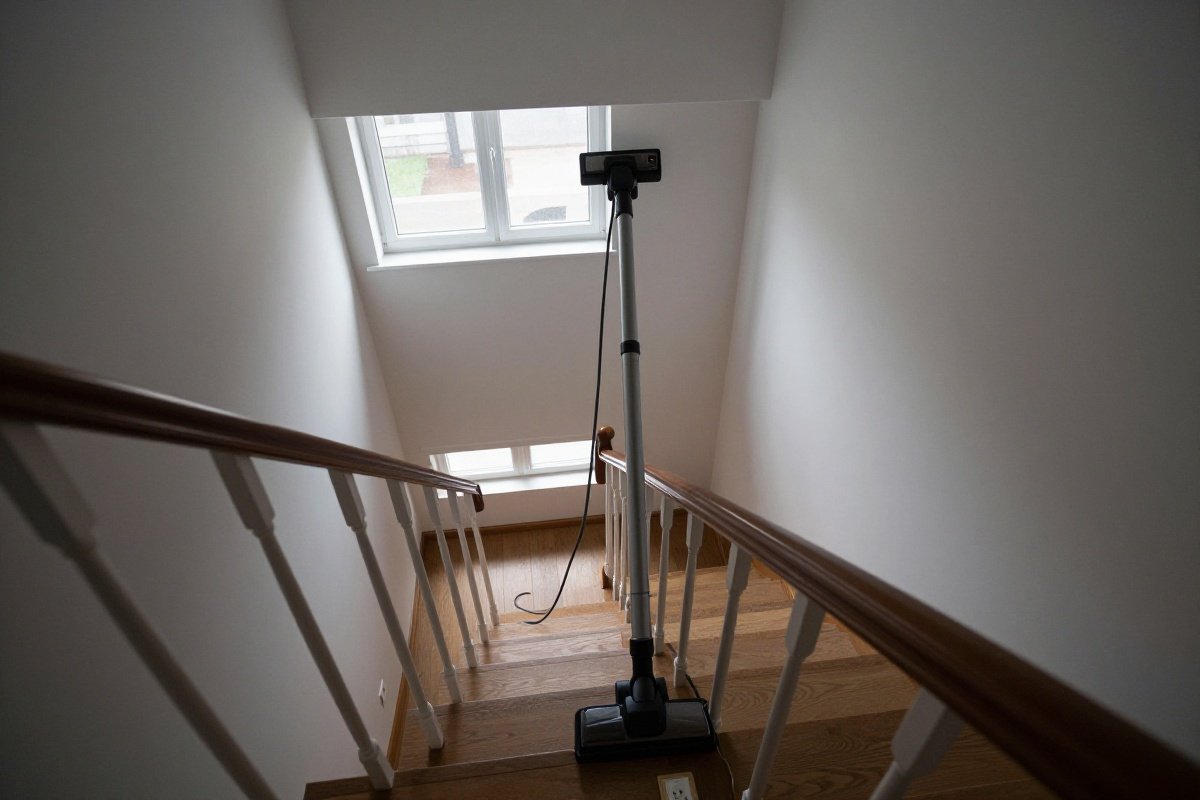
Stairs present unique challenges. Cordless vacuums with detachable handheld modes excel at stair cleaning - lightweight, maneuverable, and no cord management. However, if your multi-story home has significant square footage on each level, consider keeping a corded vacuum on each floor or using a lightweight corded model that’s easier to carry between levels.
Cost Comparison (10-Year Ownership)
| Cost Factor | Cordless (mid-range) | Corded (budget) |
|---|---|---|
| Initial Purchase | Higher | Lower |
| Battery Replacement (2x) | Significant | None |
| Filter Replacements | Moderate | Moderate |
| Replacement Vacuum | Likely needed | Unlikely needed |
| 10-Year Total | Roughly 3-4x higher | Much lower |

Corded vacuums offer significant long-term savings despite lower upfront cost.
This cost analysis assumes typical usage patterns and maintenance. The numbers shift based on your specific situation:
Heavy use (daily cleaning): Battery replacements may occur more frequently, potentially requiring three battery purchases over ten years, increasing the cordless total substantially. Conversely, corded vacuum belts and filters may need more frequent replacement, adding modestly to the total.
Light use (weekly cleaning): Batteries may last their full rated lifespan, possibly eliminating one replacement cycle and reducing the cordless total somewhat. The corded vacuum will almost certainly last the full decade without replacement.
Premium vs. budget models: A premium Dyson V15 Detect with superior build quality might last 8-10 years with three battery replacements, bringing the total well above the original purchase price. A budget corded upright might fail after 5 years, requiring replacement, yet the combined total remains far lower.
The cost equation also depends on your valuation of convenience. If cordless convenience prevents you from hiring a cleaning service even once per month, the savings from skipping professional cleaning far dwarf the ownership cost difference.
Hybrid Solutions
Shark Navigator Lift-Away: Corded upright with detachable canister
Dyson Ball Animal 3: Corded with hose versatility
These offer corded power with some cordless-like flexibility.
Hybrid designs attempt to bridge the gap between vacuum types. The Shark Navigator Lift-Away exemplifies this approach - it functions as a traditional upright for floor cleaning but detaches into a portable canister for above-floor cleaning, stairs, and furniture. You maintain unlimited corded power while gaining some of the versatility that makes cordless models appealing.
These hybrid solutions work well for specific situations:
Budget-conscious buyers who want versatility without cordless prices
Skeptics who want to try cordless-style features before committing to battery-powered cleaning
Multi-story homes where corded power is needed but stair cleaning requires portability
Pet owners who need strong suction for floors plus handheld capability for furniture
However, hybrid corded vacuums compromise in both directions. They’re heavier than true cordless models when used in handheld mode (10-12 lbs vs. 5-7 lbs), and they still require outlet access and cord management. They represent a middle ground rather than the best of both worlds.
Maintenance and Upkeep
Cordless Vacuum Maintenance
Battery care: Store at room temperature, avoid complete depletion, use manufacturer’s charger
Filter cleaning: Wash or replace monthly for optimal performance
Brush roll maintenance: Remove hair and debris weekly
Charging dock: Keep contacts clean for consistent charging
Firmware updates: Some smart models receive performance improvements via app updates
Cordless vacuums require more attentive maintenance than corded models. Battery health directly impacts performance, making proper charging habits essential. Most manufacturers recommend against leaving cordless vacuums on the charger continuously - charge after use, then disconnect once full.
Filter maintenance also proves more critical in cordless models. Clogged filters reduce airflow, causing the motor to work harder and drain batteries faster. This creates a negative feedback loop where dirty filters lead to more frequent charging, which accelerates battery degradation.
Corded Vacuum Maintenance
Belt replacement: Every 6-12 months or when brush rotation slows
Filter replacement: Every 3-6 months depending on use
Bag replacement: Monthly for bagged models
Brush roll cleaning: Monthly hair and debris removal
Hose checks: Inspect for clogs or cracks annually
Corded vacuum maintenance focuses on mechanical components rather than battery health. Belts wear over time and should be replaced when you notice reduced brush performance. Many users overlook this maintenance, leading to poor cleaning results despite adequate suction.
Bagged corded models require regular bag replacement, adding a modest annual operating cost. However, bags often provide superior filtration and reduce dust exposure during emptying - a worthwhile trade-off for allergy sufferers.
Environmental Considerations
Cordless Environmental Impact
Battery production: Mining lithium and cobalt carries environmental costs
Battery disposal: Requires proper recycling to prevent soil contamination
Shorter lifespan: More frequent replacement means more manufacturing impact
Energy efficiency: Typically use less electricity per cleaning session
The environmental footprint of cordless vacuums centers on battery production and disposal. Lithium mining involves water-intensive processes, while cobalt extraction has raised human rights concerns. Responsible manufacturers increasingly source ethically and support recycling programs.
When your cordless vacuum battery finally fails, proper disposal through manufacturer take-back programs or electronics recyclers prevents toxic materials from entering landfills. Many retailers like Best Buy offer free battery recycling.
Corded Environmental Impact
Longer lifespan: Fewer replacements mean less manufacturing impact
Simpler materials: Primarily plastics and metals without complex battery chemistry
Energy consumption: Use more electricity per session but less over product lifetime
Repairability: Easier to fix, reducing electronic waste
Corded vacuums generally present a smaller environmental footprint over their lifetime due to longevity and simpler construction. A 15-year corded vacuum represents one manufacturing cycle, while you might purchase three cordless vacuums in the same period.
However, corded models consume more electricity per use - typically 900-1200 watts compared to 150-300 watts for cordless models. Over a year, this difference amounts to 30-50 kWh additional consumption, though the electricity cost difference remains negligible.
Special Considerations for Different Users
Allergy and Asthma Sufferers
Both vacuum types now offer certified HEPA filtration, but implementation details matter. Look for:
Sealed systems: Ensuring all air passes through filters rather than escaping through seams
Whole-machine filtration: Not just vacuum output, but all expelled air is filtered
Anti-allergen seals: Preventing dust escape during bin emptying
The Miele Classic C1 features an electrostatically-charged filter that captures particles smaller than HEPA standards, making it exceptional for allergy sufferers. However, premium cordless models like the Dyson V15 Detect also meet stringent filtration requirements. The key difference lies in sustained filtration during extended cleaning. Cordless models in power-saving modes may reduce motor speed, potentially decreasing filtration efficiency. Corded models maintain consistent airflow through filters throughout the cleaning session.
Elderly or Mobility-Limited Users
Lightweight cordless vacuums offer significant advantages for users with limited strength or mobility. The reduced weight (5-7 lbs vs. 12-15 lbs) prevents fatigue and reduces fall risk. Wall mounting keeps the vacuum accessible without bending or reaching into closets.
However, battery management adds complexity that some elderly users find frustrating. Remembering to charge the vacuum and monitoring battery levels requires cognitive attention. For these users, a lightweight corded upright or canister vacuum might prove more reliable despite the cord management requirement.
Pet Owners
Heavy shedding demands powerful, consistent suction - areas where corded vacuums maintain advantages. Pet hair embeds deeply in carpet and upholstery, requiring multiple passes with strong agitation. Unlimited runtime means you can address shedding thoroughly without battery anxiety.
That said, premium cordless vacuums with motorized pet tools handle shedding effectively for homes under 1,500 sq ft. The ability to quickly spot-clean after pets enter from outdoors or vacuum furniture where pets lounge adds value that compensates for battery limitations.
2026 Market Reality
Cordless vacuums have improved dramatically and now work well for:
- Daily maintenance
- Hard floor homes
- Small to medium spaces
- Quick cleanups
However, corded vacuums remain superior for:
- Deep carpet cleaning
- Large homes
- Sustained cleaning sessions
- Long-term value
The vacuum market in 2026 reflects this reality, with manufacturers offering strong options in both categories rather than pushing exclusively toward cordless. Innovation continues in both segments - corded vacuums gaining better maneuverability and reduced weight, cordless models improving battery life and power.
Emerging technologies like solid-state batteries promise to extend cordless runtimes further, potentially shifting the balance. However, these batteries remain 2-3 years from consumer vacuum applications. For purchases in 2026, evaluate current technology rather than anticipated improvements.
Further Reading
- Dyson V11 vs V10 vs V8 comparison - compare Dyson’s most popular cordless models side by side
- Best Vacuum For Stairs - 6 Top Corded & Cordless Options
- Shark vs Dyson 2026: Which Vacuum Brand is Best?
Making Your Final Decision
After considering all factors - home size, floor types, budget, cleaning style, and personal preferences - most buyers will find their ideal choice becomes clear. To finalize your decision:
Calculate your cleaning area: Measure square footage and estimate realistic cleaning time needed
Assess your floors: Identify the percentage of hard floors vs. carpet, and carpet pile height
Consider your cleaning style: Do you prefer quick daily maintenance or weekly deep cleaning?
Evaluate storage options: Where will you keep the vacuum, and how accessible needs it to be?
Budget realistically: Include long-term costs like battery replacement or bags
Test if possible: Many retailers allow returns within 30-90 days
Remember that no single vacuum type proves objectively superior. The best choice aligns with your specific circumstances, preferences, and cleaning requirements. Many satisfied vacuum owners use different types in different life stages - a cordless during apartment years, a corded in a large family home, then back to cordless as they downsize.
Head-to-Head Comparison
Detailed Reviews
Dyson V15 Detect
Best cordlessBest premium cordless vacuum with advanced features.
What We Like
- Laser reveals microscopic dust on hard floors
- Piezo sensor counts particles and displays in real-time
- Anti-tangle Motorbar cleaner head prevents hair wrap
- Powerful 240 AW suction with auto-adjusting power
What We Don't
- 60-minute runtime only in Eco mode (8 min in Boost)
- Small 0.2-gallon dustbin requires frequent emptying
- Premium price point
- 4.5-hour charging time is lengthy
Shark Vertex DuoClean PowerFins
Best value cordlessBest value cordless vacuum with solid performance.
What We Like
- DuoClean PowerFins dual brush system deep cleans carpets and hard floors
- Self-cleaning brush roll continuously removes hair wrap during use
- Strong value for premium features compared to competitor flagship models
- LED headlights for improved visibility
- Largest dustbin capacity at 1 quart reduces emptying frequency
What We Don't
- Heavier than comparable Dyson models at 16.4 lbs
- Lacks automatic height adjustment for different floor types
- Bulky design may be challenging in tight spaces
Shark Navigator Lift-Away Belt Replacement Kit
Best corded uprightBest corded upright with consistent power.
What We Like
- Fits multiple Shark models
- Includes 2 belts
- Easy DIY installation
What We Don't
- Model-specific fit required - must verify compatibility before purchase
- Plastic tools included are basic and may break under heavy use
- Belts wear out and need replacement every 3 to 9 months depending on usage
Miele Classic C1 Cat & Dog
Best corded canisterBest corded canister for allergy sufferers.
What We Like
- Active AirClean filter with charcoal neutralizes pet odors effectively
- Turbo Comfort brush removes pet hair from all carpet types
- 6-speed motor with footswitch control for versatile cleaning
- 29.5 ft operating radius for extended reach
- 5-year warranty on parts and labor
What We Don't
- Smaller 4.76-quart bag capacity compared to C3 models
- Air-driven turbo brush less powerful than electric powerhead
- Replacement bags and filters add to operating cost
Sources & Research
Continue Reading
Explore more buying guides content or browse our other categories.
Frequently Asked Questions
- Are cordless vacuums as powerful as corded?
- Modern cordless vacuums have narrowed the power gap significantly, but corded vacuums still generally offer stronger sustained suction. Premium cordless models like the Dyson V15 Detect (up to 240 AW) and Shark Stratos approach corded upright suction levels for daily cleaning tasks. However, corded vacuums maintain consistent power regardless of battery level, while cordless suction can decrease as the battery drains. For deep carpet cleaning or large homes, corded vacuums still have an advantage. For quick cleanups, hard floors, and daily maintenance, premium cordless vacuums now provide adequate power. Budget cordless vacuums ($100-200) typically have significantly less power than corded alternatives and are best for light-duty cleaning only.
- How long do cordless vacuum batteries last?
- Cordless vacuum battery life varies by model and usage: (1) Runtime per charge - premium models offer 40-60 minutes on low power, 10-20 minutes on maximum suction; budget models typically provide 15-25 minutes total; (2) Battery lifespan - lithium-ion batteries in cordless vacuums typically last 3-5 years with proper care before significant capacity degradation occurs; newer LFP (lithium iron phosphate) batteries last longer (5-8 years) but are less common; (3) Replacement cost - replacement batteries cost $50-150 depending on the model. To maximize battery life: avoid fully draining the battery, store at partial charge (40-80%), avoid extreme temperatures, and use the appropriate power mode for the task. Some manufacturers offer replaceable batteries, allowing you to swap in a fresh battery for extended cleaning sessions.
- Should I buy a cordless or corded vacuum?
- Choose cordless if: you have a smaller home or apartment (under 1,500 sq ft), mostly hard floors, want quick convenient cleanups, hate managing cords, or have limited storage space. Choose corded if: you have a larger home (2,000+ sq ft), mostly carpet, need deep cleaning power, have allergies requiring sustained HEPA filtration, or want a vacuum that will last 10+ years without battery replacement. Many homes benefit from having both: a cordless stick for daily quick cleanups and a corded upright or canister for weekly deep cleaning. If budget allows only one vacuum and you have mixed flooring, a corded vacuum with a hose attachment or a Shark Lift-Away style convertible provides the most versatility. For pet owners with carpet, corded vacuums typically perform better at deep cleaning embedded hair.
- What are the hidden costs of cordless vacuums?
- Beyond the initial purchase price, cordless vacuums have several potential ongoing costs: (1) Battery replacement - $50-150 every 3-5 years as lithium-ion batteries degrade; (2) Filter replacements - $15-40 annually, more frequent than some corded models; (3) Shorter lifespan - cordless vacuums typically last 5-8 years versus 10-20 for quality corded vacuums, meaning more frequent full replacement; (4) Accessories - some manufacturers charge premium prices for attachments; (5) Electricity for charging - minimal cost but continuous. Corded vacuums have fewer ongoing costs: filters last longer, no batteries to replace, and longer overall lifespan. When calculating total cost of ownership over 10 years, a $200 corded vacuum may actually cost less than a $400 cordless vacuum when factoring in battery replacement and earlier replacement.
- Can a cordless vacuum clean a whole house?
- Whether a cordless vacuum can clean a whole house depends on the home size and vacuum model. For homes under 1,500 square feet, a premium cordless vacuum with 40-60 minute runtime (like Dyson V15, Shark Stratos) can typically handle the entire house on a single charge if using appropriate power modes. For larger homes (2,000+ sq ft), you'll likely need to: (1) Clean in sections, recharging between areas; (2) Purchase a second battery ($50-150) for continuous cleaning; (3) Use lower power settings to extend runtime; (4) Consider a corded vacuum for whole-house cleaning. Homes with significant carpet require more power and drain batteries faster than hard floor homes. Multi-level homes add stair cleaning time. For reliable whole-house cleaning without interruption, corded vacuums remain the better choice, though modern cordless models have made significant progress.
Written By
Home Vacuum Zone
Our team researches, tests, and reviews vacuum cleaners to help you make confident buying decisions.
Related Articles
Vacuum Noise Level Comparison: Decibel Ratings for 60+ Models (2026 Database)
Comprehensive vacuum noise level database with decibel ratings for 60+ models across every vacuum type. Find the quietest vacuums and understand what dB ratings actually mean.
Vacuum Suction Power Chart: AW, Pa & kPa Ratings Compared (2026 Database)
Comprehensive vacuum suction power database with air watts, pascals, and kPa ratings compared across every vacuum type. Find how much suction you actually need.
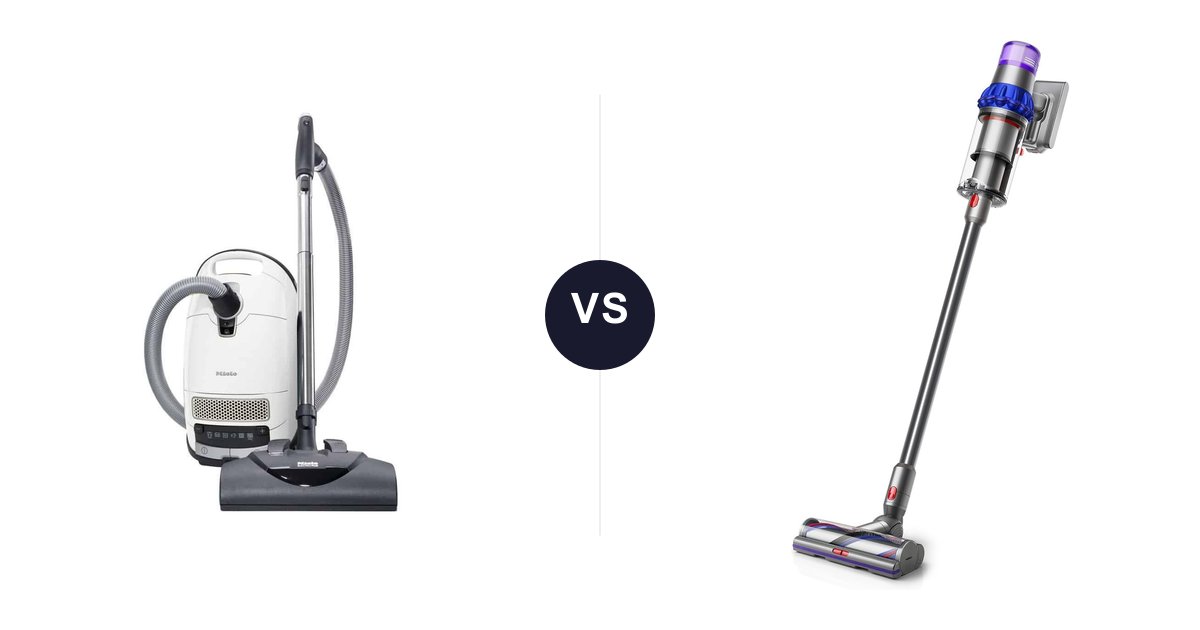
Bagged vs Bagless Vacuums: Which Type Is Actually Better?
Bagged and bagless vacuums each have distinct advantages for different households. We compare cost, filtration, allergen control, maintenance, and convenience to help you choose the right type.