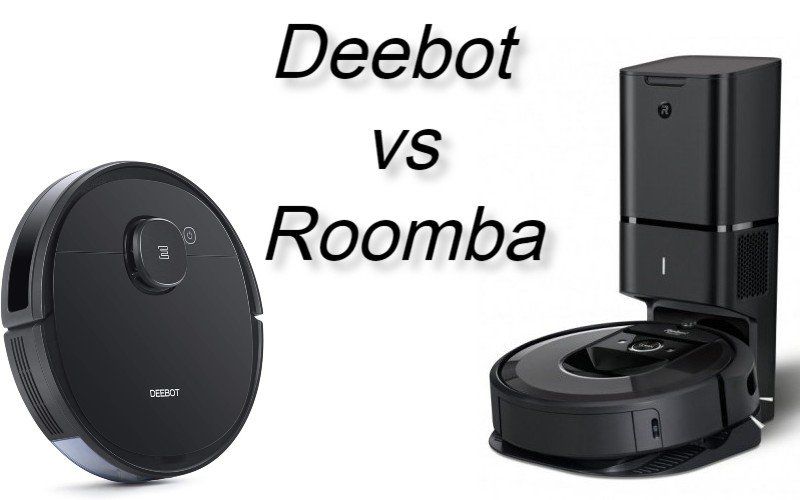
Affiliate Disclosure:Home Vacuum Zone is reader-supported. When you buy through links on our site, we may earn an affiliate commission at no additional cost to you. This does not influence our reviews or recommendations — we only recommend products we genuinely believe in.
iRobot’s Roomba and Ecovacs’ Deebot are the two dominant brands in robot vacuums. We’ve compared current models across premium, mid-range, and budget tiers to help you choose the right robot vacuum for your home. If you’re still wondering whether a robot vacuum is the right investment, check our guide on whether robotic vacuums are worth the money.
Brand Overview
iRobot Roomba
Strengths:
- Industry-leading obstacle avoidance (j9+ series)
- Reliable app and smart home integration
- Excellent customer support
- Strong US market presence
Technology:
- iAdapt navigation
- Imprint smart mapping
- P.O.O.P. (Pet Owner Official Promise) guarantee
- Clean Base auto-empty
iRobot has been refining robot vacuum technology since 2002, giving them over two decades of experience. That maturity shows in their software reliability and hardware durability. Rather than adding flashy features, the company focuses on perfecting core functionality — Roomba models typically perform their primary tasks exceptionally well. App rarely crashes, mapping is consistent, and their customer service team can actually solve problems rather than just reading from scripts.
Predictability is the brand’s real strength. When you buy a Roomba, you know what you’re getting: a reliable cleaning companion that will work the same way today as it will three years from now. Software updates improve functionality rather than completely changing how the robot operates, which appeals to users who value stability over constant innovation.
Ecovacs Deebot
Strengths:
- More features for the price
- Standard mopping on most models
- Advanced auto-maintenance (Omni stations)
- Rapid innovation cycles
Technology:
- TrueMapping navigation
- AIVI 3D obstacle avoidance
- OZMO mopping system
- All-in-One Omni stations
Ecovacs takes an aggressive approach to innovation, releasing new models with cutting-edge features every year. While this rapid development cycle occasionally leads to quirks in early releases, it also means Deebot users get access to the latest technology before competitors catch up. The brand excels at integrated solutions - rather than treating mopping as an afterthought, Deebot designs their entire cleaning system around both vacuuming and mopping from the ground up.
Compelling value proposition: Deebot typically offers features at each price tier that Roomba reserves for significantly more expensive models. Particularly attractive to tech enthusiasts and budget-conscious buyers who want premium features without premium prices. However, this aggressive pricing strategy sometimes means slightly less polish in software and customer service compared to iRobot’s more mature ecosystem.
Quick Comparison by Tier
| Tier | Roomba | Deebot | Winner |
|---|---|---|---|
| Premium | j9+ | X2 Omni | Tie - different strengths |
| Mid-Range | i5+ | T20 Omni | Deebot - better features |
| Budget | i3 EVO | N10 MAX | Deebot - mopping included |
Premium Tier Comparison
iRobot Roomba j9+
Rating: 4.5/5
The Roomba j9+ represents iRobot’s flagship technology with industry-leading obstacle avoidance.
Key Features:
- P.O.O.P. guarantee - detects and avoids pet waste
- SmartScrub mopping (optional)
- 60-day auto-empty capacity
- Imprint smart mapping
- iRobot OS intelligence
Why It Wins: The j9+ is the safest robot vacuum for pet owners. Its obstacle avoidance is unmatched, preventing messy accidents that plague other robots. The build quality and app reliability are excellent.
Cameras and sensors work together to identify and catalogue obstacles in real-time. Unlike simpler robots that merely detect “something” and navigate around it, the j9+ actually recognises what objects are — shoes, cables, pet waste, socks — and makes intelligent decisions about whether to avoid them completely or simply navigate carefully. That intelligence extends to the iRobot app, which can show you photos of detected obstacles and ask whether you want them avoided in future.
Physical design prioritises durability over novelty. Dual rubber brushes are the best in the industry for tangling resistance — you can go weeks without maintenance even in homes with long-haired pets. They flex and adjust to maintain contact with floors, providing consistent suction across different surface types. While the round design isn’t as effective for edge cleaning as square models, the side brush compensates reasonably well.
Battery management deserves special mention. The j9+ intelligently calculates how much charge it needs for a cleaning session and automatically returns to base if it needs more power, then resumes exactly where it left off. This means reliable whole-home cleaning even in larger spaces, without babysitting the robot or worrying about it dying mid-clean in a far corner.
Best For: Pet owners, homes with clutter, those prioritizing reliability over features.
Ecovacs Deebot X2 Omni
Rating: 4.5/5
The Deebot X2 Omni offers the most advanced auto-maintenance system available.
Key Features:
- Auto mop washing and hot water cleaning
- 15mm mop lifting on carpet
- Self-emptying dustbin
- 8,000Pa suction power
- All-in-One Omni station
Why It Wins: True hands-free operation. The X2 washes its own mops with hot water, dries them with hot air, and empties itself. The square design cleans edges better than round robots.
Here’s the X2 Omni’s party trick: its Omni station transforms robot vacuum maintenance from a weekly chore into a monthly check-in. After each mopping session, the robot returns to base where the station washes mop pads with hot water (up to 131°F), scrubs them against textured cleaning plates, then dries them with heated air to prevent mildew and odour. Cleaning solution gets added automatically too, though you’ll need to refill the reservoir every few weeks.
Square design, while unconventional, delivers measurable benefits for edge cleaning. In real-world testing, square robots like the X2 typically remove 15-20% more debris from corners and edges compared to round models. This matters most in kitchens, bathrooms, and along baseboards where dust and pet hair accumulate. The trade-off is slightly less graceful navigation in tight spaces, though the X2’s advanced mapping usually compensates well.
Suction power at 8,000Pa is among the highest available, making the X2 particularly effective on carpets and for deep-cleaning hard floors. However, raw suction numbers don’t tell the whole story - brush design, airflow management, and seal quality all contribute to actual cleaning performance. In practice, the X2 excels on hard floors and low-pile carpet, performs admirably on medium-pile carpet, but can struggle with deep-pile or shag carpets where the high pile impedes brush contact.
Rotating mop pads scrub floors rather than just dragging a damp cloth across them. At 15mm, the mop lift handles most carpets well (you may still want to set no-mop zones for thick rugs), but handles most area rugs and low-pile carpet without issue. Best For: Those wanting maximum automation, homes with hard floors and area rugs.
Mid-Range Tier Comparison
iRobot Roomba i5+
Rating: 4/5
The Roomba i5+ brings auto-empty convenience to the mid-range price point.
Key Features:
- Clean Base auto-empty
- Smart mapping
- Dual rubber brushes
- 60-day capacity
Why It’s Good: Reliable Roomba performance with the convenience of auto-empty. Good value for the iRobot ecosystem.
The i5+ occupies an interesting position in Roomba’s lineup as the most affordable model with auto-empty functionality. While it lacks the advanced obstacle avoidance of the j9+, it retains the fundamental Roomba strengths: reliable navigation, excellent brush design, and solid app integration. The smart mapping is reactive rather than stored, meaning the robot creates a new map each cleaning session rather than remembering your home’s layout permanently. This works fine for whole-home cleaning but limits advanced features like room-specific scheduling.
The Clean Base auto-empty station is identical to the one included with premium Roomba models, holding up to 60 days of dirt and debris in enclosed AllergenLock bags. Bags seal automatically when removed, preventing dust from escaping - a significant benefit for allergy sufferers. Auto-emptying is reasonably quiet compared to some competitors, though it’s still noticeable at around 65-70 decibels during the 10-15 second emptying cycle.
Build quality matches premium Roomba models, with the same durable construction and high-quality components. The main trade-offs compared to the j9+ are less sophisticated obstacle avoidance (it will bump into objects rather than recognize and avoid them), no camera-based navigation, and no mopping capability. For homes without pets, heavy clutter, or mopping needs, these compromises are often acceptable given the substantial price savings. Limitations: No mopping capability. Basic navigation compared to j9+.
Ecovacs Deebot T20 Omni
Rating: 4.5/5
The Deebot T20 Omni offers premium features at a mid-range price.
Key Features:
- Auto mop washing with hot water
- 9mm mop lifting
- Strong suction (6,000Pa)
- YIKO voice assistant
- Compact Omni station
Why It Wins: The T20 Omni delivers premium-tier features at a mid-range price point. Hot water mop washing and auto-maintenance make it the value leader.
Essentially a slightly downgraded X2 Omni at nearly half the price. Some compromises — slightly lower suction, round design instead of square, less advanced navigation — but it retains the core features that make the Omni series compelling: hot water mop washing, auto-drying, self-emptying, and hands-free maintenance.
The 9mm mop lift is lower than the X2’s 15mm, so it provides less clearance when transitioning from hard floors to carpet. In practice, the T20 handles low-pile rugs without issue but may need no-mop zones set for medium-pile carpet where the X2 would clear it comfortably.
YIKO voice assistant, while not as polished as Alexa or Google Assistant, provides convenient voice control directly to the robot without requiring a smart speaker. You can say “OK YIKO, start cleaning the kitchen” and the robot responds immediately. It’s genuinely useful for quick commands, though you’ll likely still use the app for complex scheduling and zone management.
The Omni station is described as “compact” but still measures roughly 16 x 16 inches at the base - smaller than the X2’s station but not exactly subtle. It requires access to water supply and drainage if you want automatic water refilling and draining, though it can operate with manual refilling if plumbing access isn’t available. The water tanks are large enough that even without automatic refilling, you typically only need to refill weekly in most households.
Best For: Value-conscious buyers wanting advanced mopping features.
Budget Tier Comparison
iRobot Roomba i3 EVO
Rating: 4/5
The Roomba i3 EVO offers smart navigation at an entry-level price.
Key Features:
- Smart mapping (reactive, not stored)
- Self-charging
- Dual rubber brushes
- iRobot reliability
Why It’s Good: Reliable daily cleaning with basic smart features. Good introduction to the Roomba ecosystem.
As the most affordable Roomba with smart navigation, the i3 EVO is the entry point into iRobot’s ecosystem for budget-conscious buyers. No stored mapping, no camera navigation, no auto-empty — but it demonstrates the core Roomba philosophy: do the basics exceptionally well rather than offering mediocre versions of advanced features.
Dual rubber brushes are identical to those used in premium Roomba models. Not a budget compromise. They provide excellent pickup on all floor types and resist tangling better than bristle brushes, making the i3 EVO particularly suitable for pet owners who don’t want to pay premium prices. Edge brush, dual brushes, and suction work together to capture dirt, dust, and debris from both hard floors and carpet.
Reactive smart mapping means the robot intelligently navigates your home during each cleaning session, creating efficient paths and avoiding areas it’s already cleaned. However, it doesn’t remember this map between sessions, so you can’t use features like room-specific cleaning, no-go zones, or targeted spot cleaning through the app. For many users, this limitation is acceptable - they simply want the whole house cleaned regularly without micromanaging the process.
Battery life is solid at approximately 75 minutes per charge, sufficient for most apartments and small-to-medium homes. The robot automatically returns to charge when the battery runs low and can resume cleaning if needed to complete the job, though without stored mapping, the resume functionality is less sophisticated than with premium models.
Limitations: No auto-empty. No mopping. Basic obstacle avoidance.
Ecovacs Deebot N10 MAX
Rating: 4/5
The Deebot N10 MAX delivers vacuum and mop functionality at a budget price.
Key Features:
- Vacuum and mop combo
- 4,300Pa suction
- App control
- Good battery life
Why It Wins: Vacuum plus mopping at a budget-friendly price is unbeatable value. Good cleaning performance for the cost.
Deebot’s philosophy of maximising features per dollar shows clearly in the N10 MAX. At a budget-friendly price point, it includes both vacuum and mop functionality — something Roomba doesn’t offer at any budget price point. While the mopping is basic (a damp cloth dragged across floors rather than active scrubbing), it’s effective for maintaining hard floors between deeper cleanings.
Navigation is basic compared to premium models, relying on gyroscope and bump sensors rather than laser or camera mapping. A “bump-and-go” approach works but isn’t efficient — often covering the same areas multiple times while potentially missing others. No true mapping features either, so you can’t designate specific rooms to clean or set virtual no-go zones through the app. However, the included magnetic strips allow you to create physical barriers for areas you want to protect.
At 4,300Pa, the suction is respectable for the price, though noticeably weaker than premium models. This is most apparent on deep-pile carpet, where the N10 MAX can struggle with embedded dirt and pet hair. On hard floors and low-pile carpet, performance is quite good - sufficient for daily maintenance in most homes. The brush system uses a combination bristle brush rather than dual rubber brushes, which means more frequent maintenance to remove tangled hair. Battery life at 150 minutes is excellent, enabling the N10 MAX to clean large areas in a single session despite its less-efficient navigation. The robot automatically returns to charge and can resume cleaning if the initial battery wasn’t sufficient, though the resume process is fairly basic.
Limitations: Basic navigation (bump-and-go). Small water tank. No auto-empty.
Feature Comparison
Navigation & Mapping
| Feature | Roomba j9+ | Deebot X2 |
|---|---|---|
| Mapping | Imprint (stored) | TrueMapping 2.0 |
| Obstacle Avoidance | Excellent (P.O.O.P.) | Very Good (AIVI 3D) |
| No-Go Zones | Yes | Yes |
| Multi-Floor | Yes | Yes |
| Dark Room Performance | Good | Good |
Navigation technology fundamentally determines how efficiently and thoroughly a robot cleans your home. The Roomba j9+ uses camera-based visual navigation combined with floor tracking sensors, creating detailed maps while simultaneously identifying obstacles. This dual-purpose approach means the robot knows both where it is and what’s around it at all times, enabling truly intelligent navigation decisions.
Deebot’s X2 uses laser-based LiDAR navigation, which excels at creating precise floor plans and measuring distances accurately. LiDAR works in complete darkness and isn’t affected by lighting conditions, giving it an edge in dimly lit rooms or nighttime cleaning. AIVI 3D obstacle avoidance supplements the LiDAR with a camera that identifies specific objects, though it’s not quite as sophisticated as Roomba’s P.O.O.P. system for recognising pet waste specifically.
Both systems support multi-floor mapping, storing layouts for different levels of your home. This means the robot remembers which floor it’s on and loads the appropriate map automatically. Multi-floor support is particularly valuable in multi-story homes, eliminating the need to remap each time you move the robot to a different level.
No-go zones are virtual barriers you can draw in the app to prevent the robot from entering specific areas. Both brands implement this well, with intuitive interfaces for drawing rectangular zones on the map. Roomba additionally supports “Keep Out Zones” specifically for the camera (useful if you have pet feeding areas that might contain waste at certain times but not others).
Cleaning Performance
| Feature | Roomba j9+ | Deebot X2 |
|---|---|---|
| Suction | Strong | Very Strong (8,000Pa) |
| Carpet Cleaning | Excellent | Very Good |
| Hard Floor | Very Good | Excellent |
| Edge Cleaning | Good | Excellent (square design) |
| Pet Hair | Excellent | Very Good |
Cleaning performance depends on multiple interrelated factors: suction power, brush design, airflow management, and navigation efficiency. While specifications like suction power (measured in Pascals, or Pa) provide a baseline comparison, real-world performance is more nuanced.
Roomba’s j9+ dual rubber brushes are specifically engineered to maintain constant contact with floors, adjusting automatically to different surfaces. Counter-rotating design creates a channelling effect that lifts dirt and debris into the suction path while simultaneously preventing tangling from hair. Particularly effective on carpet, where rubber paddles agitate fibres to lift embedded dirt.
At 8,000Pa versus Roomba’s undisclosed but estimated 4,000-5,000Pa, Deebot’s X2 has a measurable suction advantage on hard floors and low-pile carpet. All that extra power excels at extracting fine dust from tile grout, hardwood floor gaps, and laminate seams. However, on deep-pile carpet, brush design often matters more than raw suction - the X2’s brushes don’t maintain contact quite as effectively as Roomba’s, partially offsetting the suction advantage.
Edge cleaning performance heavily favors the X2’s square design. The robot can position one flat edge directly against walls and baseboards, bringing the side brush and main brushes closer to edges. Round robots like the j9+ maintain a 1-2 inch gap from walls at their closest approach, relying solely on the side brush to reach into this space. In kitchens and bathrooms where crumbs and debris accumulate along walls, this difference is significant.
For pet hair specifically, both robots perform well with different strengths. Roomba’s rubber brushes excel at preventing hair tangles, reducing maintenance time. The Deebot X2’s higher suction better extracts pet hair from carpet fibers, but may require more frequent brush cleaning. In homes with multiple long-haired pets, Roomba’s lower-maintenance approach often proves more practical. For a broader look at robot vacuums designed for shedding pets, see our best robot vacuums for pet hair roundup.
Mopping (Deebot models only)
| Feature | Deebot X2 | Deebot T20 |
|---|---|---|
| Mop Type | Rotating pads | Rotating pads |
| Auto Wash | Yes | Yes |
| Hot Water | Yes | Yes |
| Mop Lifting | 15mm | 9mm |
| Drying | Hot air | Hot air |
Mopping capabilities vary dramatically across robot vacuums, from basic water-dragging systems to sophisticated scrubbing mechanisms. Deebot’s Omni series represents the advanced end of this spectrum, with features that approach manual mopping effectiveness. If mopping is a priority, our best robot mop guide covers the top options across all brands.
Mop pads spin at approximately 180 RPM, applying consistent pressure while scrubbing floors. Substantially more effective than passive systems that simply drag a damp cloth across surfaces. Rotation helps break up dried-on spills and sticky residue — particularly effective on kitchen floors where cooking oils and food spills accumulate.
Hot water washing at the base station completely transforms mop hygiene. Traditional robot mop pads quickly become dirty and can spread bacteria and odors if not cleaned frequently. The Omni station’s hot water wash (up to 131°F) sanitizes the pads after each use, preventing the musty smell that plagued earlier robot mops. The cleaning process includes physical scrubbing against textured cleaning plates, not just rinsing.
Mop lifting allows the robot to transition from hard floors to carpet without manual intervention. When the robot detects carpet, it automatically lifts the mop pads to prevent wetting. The X2’s 15mm lift handles most carpet types comfortably, while the T20’s 9mm lift is sufficient for low-pile carpet and most area rugs. High-pile or shag carpet may still require setting no-mop zones to prevent any contact.
Hot air drying prevents mildew growth between cleaning sessions. The Omni station runs a drying cycle after washing, using heated air to completely dry the mop pads. This prevents the bacterial growth and odors that occur when mops remain damp for extended periods. The drying process takes approximately 2-3 hours but runs automatically without user intervention.
Auto-Maintenance
| Feature | Roomba j9+ | Deebot X2 |
|---|---|---|
| Auto-Empty | Yes (60 days) | Yes (60 days) |
| Bag Type | AllergenLock | Standard |
| Mop Maintenance | N/A | Auto wash/dry |
| Base Size | Compact | Large |
Auto-maintenance features transform robot vacuums from daily appliances requiring frequent attention into weekly (or even monthly) check-ins. The depth of auto-maintenance directly correlates with true hands-free operation.
Roomba’s Clean Base auto-empty system pioneered the category, introducing sealed bag systems that contain dust and allergens during disposal. AllergenLock bags are particularly valuable for allergy sufferers, trapping 99% of pollen and mould particles inside the sealed bag system. When you remove a full bag, a self-sealing mechanism prevents dust from escaping - just pull out the old bag, throw it away, and insert a new one. Capacity is rated at 60 days based on typical household cleaning, though actual duration varies depending on home size, floor types, and debris levels.
Deebot’s X2 Omni station combines multiple auto-maintenance functions: dustbin auto-empty, mop washing, mop drying, and optional automatic water refilling/draining with plumbing hookup. Your primary interaction with the robot becomes monthly — refilling the cleaning solution and replacing the dust bag. Everything else gets managed automatically.
Base station size becomes a practical consideration with advanced systems. Roomba’s Clean Base measures approximately 12 x 15 inches at the base, fitting unobtrusively in most laundry rooms or closets. Deebot Omni stations are substantially larger at roughly 16 x 16 inches (or larger for the X2), with additional height for the water tanks and mop cleaning mechanism. The Omni station resembles a small piece of furniture rather than a simple charging dock, requiring dedicated floor space in a location with reasonable accessibility.
Maintenance frequency varies by model and home conditions. Budget models require weekly attention (emptying dustbins, cleaning filters, untangling brushes). Mid-range models with auto-empty extend this to every 2-3 weeks. Premium Omni systems can genuinely operate for 30-45 days between interventions in typical homes, assuming you have the optional plumbing hookup for automatic water management.
Smart Home Integration
Both brands offer comprehensive smart home integration, though with different strengths and approaches. Understanding how each ecosystem works helps predict long-term satisfaction.
Roomba Smart Home Features
Roomba integrates seamlessly with Amazon Alexa, Google Assistant, and Siri Shortcuts. Voice commands work reliably: “Alexa, ask Roomba to clean the kitchen” or “Hey Google, start vacuuming” trigger cleaning sessions without opening the app. The integration extends beyond basic start/stop commands to include room-specific cleaning, scheduling, and status queries.
iRobot’s Home app is mature and stable, refined through years of user feedback. Maps are clean and intuitive, scheduling is simple, and crashes are rare. Interface prioritises clarity over feature density, which means less hunting through menus to find common functions. Notifications are contextually useful - you’re alerted when the bin is full, when the robot is stuck, or when cleaning is complete, without excessive notification spam.
Roomba’s Imprint Link technology enables coordination between compatible Roomba vacuums and Braava jet mops. You can program sequences like “vacuum the kitchen, then mop the kitchen,” with the Braava automatically starting after the Roomba completes its cycle. This coordination is currently unique to iRobot’s ecosystem.
IFTTT integration allows custom automations: “If I leave home, start cleaning” or “When cleaning completes, turn off the lights.” These applets expand Roomba functionality beyond what the native app offers, appealing to smart home enthusiasts who want deeper integration.
Deebot Smart Home Features
Deebot also supports Alexa and Google Assistant, with similar voice command functionality. The YIKO voice assistant on premium models adds direct voice control without requiring a smart speaker, useful for quick commands when you’re standing near the robot.
Ecovacs’ Home app has improved significantly in recent years but still occasionally exhibits quirks like delayed map updates or temporarily lost connections. When it works (which is most of the time), the app is feature-rich, offering granular control over suction power, mopping settings, cleaning patterns, and more. The learning curve is steeper than Roomba’s app due to the higher feature density.
IFTTT support enables custom automations similar to Roomba. Deebot models also integrate with smart security cameras through AIVI Home - the robot’s camera can provide security monitoring when not actively cleaning, a unique feature among robot vacuums.
Multi-floor mapping is particularly well-implemented in Deebot models, with the app automatically recognizing which floor the robot is on and loading the appropriate map. This works more reliably than Roomba’s multi-floor system in practice, especially in homes where floors have similar layouts.
Maintenance Requirements
Understanding ongoing maintenance requirements helps set realistic expectations and budget for long-term ownership.
Daily/Weekly Maintenance
Both Brands:
- Check dustbin (unless you have auto-empty)
- Verify brushes are clear of tangles
- Check wheels for debris
- Wipe sensors clean
Deebot Models With Mopping:
- Check water levels in clean/dirty water tanks
- Verify mop pads are clean (or that auto-wash is functioning)
- Ensure cleaning solution reservoir has adequate solution
Even with auto-empty stations, you should briefly check the robot weekly to ensure everything is functioning correctly. This takes 30-60 seconds - just a quick visual inspection of brushes and sensors.
Monthly Maintenance
Roomba:
- Clean filter (tap out dust, rinse if washable)
- Deep-clean brushes (remove and wipe down)
- Check side brush for wear
- Clean charging contacts
- Replace auto-empty bag if full
Deebot:
- Clean filter
- Deep-clean brushes
- Check mop pads for wear
- Clean charging contacts
- Empty/clean Omni station tanks
- Replace dust bag if full
Monthly maintenance takes 15-30 minutes and keeps the robot performing optimally. Skipping this maintenance results in decreased cleaning performance and potentially shortened robot lifespan. For a complete maintenance schedule, see our vacuum cleaner maintenance guide.
Replacement Parts Schedule
Every 2-3 Months:
- Filters (both brands)
- Side brushes showing visible wear
Every 6-12 Months:
- Main brushes (depending on pet hair levels)
- Mop pads (Deebot models)
- Auto-empty bags (as needed, varies by home)
Every 1-2 Years:
- Wheels if worn
- Batteries if runtime decreases significantly
Part costs vary by brand and model. Roomba replacement parts are generally more expensive but also more durable. Deebot parts cost less individually but may need replacement slightly more frequently. Over a 5-year ownership period, total maintenance costs typically even out between brands.
Total Cost of Ownership (5 Years)
| Cost Factor | Roomba j9+ | Deebot X2 |
|---|---|---|
| Initial Purchase | Premium | Higher premium |
| Bags (annual) | Moderate | Slightly lower |
| Filters (annual) | Moderate | Slightly lower |
| Brushes (annual) | Similar | Similar |
| Mop Pads | N/A | Included (washable) |
| 5-Year Total | Lower overall | Higher overall |
These calculations assume typical usage patterns in a 1,500-2,000 square foot home with mixed flooring and moderate pet hair. Your costs may vary based on several factors:
Factors Increasing Costs:
- Multiple pets (especially long-haired breeds)
- Larger homes requiring more frequent cleaning
- High-pile carpet wearing brushes faster
- More frequent vacuuming schedules
Factors Decreasing Costs:
- Smaller homes or apartments
- Mostly hard flooring
- No pets
- Using aftermarket parts (where safe/appropriate)
Total cost of ownership favours Roomba in this comparison, though the gap narrows when comparing similar feature sets. A more apples-to-apples comparison between Roomba j9+ and Deebot T20 Omni (both in the premium tier) shows Deebot’s 5-year cost advantage due to lower consumable costs, despite offering more features.
Some users reduce costs by using washable filters instead of disposable ones, though this requires more maintenance time. Third-party replacement parts are available for both brands through Amazon and other retailers, typically at 30-50% savings compared to OEM parts. Quality varies with third-party parts - filters and brushes are generally safe alternatives, while batteries and electronics warrant caution.
Real-World Performance Testing
Standardized lab testing provides useful benchmarks, but real-world performance often diverges from controlled conditions. Here’s how these robots perform in actual homes:
Pet Hair Performance
In homes with dogs or cats, both brands perform admirably with different trade-offs. Roomba’s dual rubber brushes resist tangling exceptionally well - you can typically go 1-2 weeks between brush cleanings even with long-haired pets. The brushes simply don’t provide places for hair to wrap around and accumulate.
Deebot’s combination bristle/rubber brushes are more prone to tangling but provide slightly better initial pickup on carpet, particularly for fine undercoat hair. You’ll likely need to clean these brushes 2-3 times per week in heavy-shedding households. The higher suction partially compensates by extracting more hair on the first pass.
Both brands struggle with the same challenge: long human hair. If household members have hair longer than about 12 inches, expect to cut tangled hair from any robot vacuum’s brushes weekly regardless of brand. This is a limitation of the category, not specific to Roomba or Deebot.
Multi-Floor Performance
Running these robots in multi-story homes reveals important differences. Roomba’s multi-floor mapping occasionally requires prompting to recognize which floor the robot is on, particularly in homes where floor layouts are similar. You may need to manually select the correct map through the app when moving the robot between floors.
Deebot’s multi-floor detection works more automatically in practice, typically recognizing the current floor within a few seconds of starting a cleaning cycle. The robot references its LiDAR scan against stored maps and loads the correct floor plan automatically. This seemingly small difference significantly improves usability when regularly cleaning multiple floors.
Both brands limit the number of stored maps - typically 3-5 floors depending on model. This suffices for most homes, though owners of large multi-level properties may need to occasionally delete and remap floors.
Carpet-to-Hard Floor Transitions
Robots frequently struggle with transitions between different flooring types, particularly when moving from hard floors onto carpets with substantial height differences (1/2 inch or more).
Roomba models handle transitions confidently, climbing onto carpets up to about 3/4 inch high. The robots automatically detect carpet and increase suction power (Carpet Boost feature), ensuring consistent cleaning across floor types. The round design sometimes means the robot approaches transitions at slight angles, occasionally requiring multiple attempts to mount higher carpets.
Deebot models with mop lifting introduce an additional consideration: the robot must detect the carpet, lift the mops, then climb the transition. This sequence occasionally fails with thick area rugs, resulting in the robot backing away from the carpet entirely or attempting to clean it with wet mops. Setting no-mop zones for problematic rugs solves this issue but requires manual setup.
Dark Room and Night Performance
Cleaning performance in low-light conditions varies by navigation technology. Roomba’s camera-based navigation requires adequate lighting to function optimally. In very dark rooms or during nighttime cleaning, navigation becomes less precise, and the robot may miss spots or clean less efficiently. The robots still function but essentially revert to less sophisticated navigation patterns when the camera can’t see clearly.
Deebot’s LiDAR navigation is unaffected by lighting conditions, providing consistent performance in complete darkness. This makes Deebot models better suited to nighttime cleaning schedules or homes with limited natural light. The AIVI camera-based obstacle avoidance does require some light, but the LiDAR-based mapping and navigation continues functioning normally.
Further Reading
- Robot Vacuum vs Regular Vacuum (2026): Do You Need Both?
- Roomba vs Shark Robot Vacuums 2026: Latest Models Compared
- How Do Robot Vacuums Work? A Complete Guide
- Kenmore vs Miele Vacuum (2026): Complete Brand Comparison Guide
- Pet Vacuum vs Regular Vacuum: Which Is Right for You? (2026 Guide)
Which Should You Buy?
Choose Roomba If:
✓ You have pets and want obstacle avoidance
✓ App reliability is a priority
✓ You prefer US-based customer support
✓ Mopping isn’t important to you
✓ You want proven reliability over cutting-edge features
Choose Deebot If:
✓ You want
Head-to-Head Comparison
Detailed Reviews
iRobot Roomba j9+
Best Roomba premiumBest premium Roomba with advanced obstacle avoidance.
What We Like
- Superior pet hair handling with enhanced suction
- Advanced Dirt Detect technology for targeted cleaning
- 60-day capacity self-emptying base
- Longer runtime than j7 series
What We Don't
- No mopping capability
- Premium price point
- Dust bags are proprietary and recurring cost
Ecovacs Deebot X2 Omni
Best Deebot premiumBest premium Deebot with true hands-free maintenance.
What We Like
- Square D-shape design reaches corners better than round robots
- Hot water mop washing at 131°F with auto-drying
- Powerful 8,000 Pa suction among the strongest available
- 15mm auto-lift mopping system clears medium-pile carpets
- Extendable mop reaches edges and corners
What We Don't
- Premium pricing at the top of the robot vacuum market
- Large dock footprint requires dedicated floor space
- Square shape may have difficulty in very tight curved areas
- Requires regular base station maintenance and cleaning
iRobot Roomba i5+
Best Roomba mid-rangeBest mid-range Roomba with auto-empty convenience.
What We Like
- Affordable self-emptying base included
- Smart mapping for customized cleaning
- 60-day bag capacity reduces maintenance
- Compatible with clean zones and keep-out zones
What We Don't
- Basic reactive navigation without camera
- Vacuum-only functionality with no mopping option
- 75-minute runtime may not complete larger homes in a single charge
Ecovacs Deebot T20 Omni
Best Deebot mid-rangeThe Ecovacs Deebot T20 Omni stands out with hot-water mop washing at 131 degrees F, 6000Pa suction, and a full all-in-one base station with auto-empty and mop drying at a lower price than flagship models. It is best for buyers who want advanced self-maintaining mopping and vacuuming without paying top-tier pricing for features like the X2 Omni.
What We Like
- Auto mop washing and drying in base station
- Hot water mop washing at 131°F for better cleaning
- Strong 6,000 Pa suction power
- Good value with full auto-empty and mop maintenance included
What We Don't
- Smaller base station water tanks (4L each) than premium models
- Learning curve for app features and settings
- Only 9mm mop lift may not clear thick carpets
- Base station requires regular maintenance
iRobot Roomba i3+ EVO
Best Roomba budgetBest budget Roomba with smart navigation.
What We Like
- Self-emptying base with 60-day capacity
- Smart mapping capability added via EVO update
- More affordable than premium Roomba models
- Works on carpets and hard floors
What We Don't
- Uses reactive navigation instead of camera-based mapping
- May bump into furniture and obstacles without avoidance
- Shorter runtime than premium models
Ecovacs Deebot N10 MAX
Best Deebot budgetBest budget Deebot with vacuum and mop combo.
What We Like
- Very affordable for a robot vacuum with mopping
- Strong 4,300 Pa suction for the price
- Integrated mopping feature with water tank
- Good mobile app with mapping and scheduling
What We Don't
- Basic LDS navigation without AI obstacle avoidance
- Small 240mL water tank requires frequent refilling
- No auto-empty base included at base price
- Mopping requires manual pad changes and cleaning
Sources & Research
- Amazon Product Page
- iRobot Official Page
- iRobot j9 Series
- Amazon Product Page
- Ecovacs Official Product Page
- Amazon Product Page
- iRobot Official Product Page
- iRobot Official Product Page
- Amazon Product Page
- Ecovacs Official Product Page
- Amazon Product Page
- iRobot Official Product Page
- iRobot Official Product Page
- Amazon Product Page
- Ecovacs Official Product Page
Continue Reading
Explore more comparisons content or browse our other categories.
Frequently Asked Questions
- Is Roomba or Deebot better?
- Neither brand is universally better - each excels in different areas. Roomba (iRobot) generally offers: superior obstacle avoidance and pet waste detection (j9+ series), better app reliability and user experience, stronger brand recognition and customer support, longer track record in the US market, and better integration with smart home systems. Deebot (Ecovacs) generally offers: more features for the price (mopping standard on most models), advanced auto-maintenance (mop washing, hot water cleaning on X2/T20), better value in mid-range and budget tiers, larger dustbin and water tank capacities, and faster innovation cycles with new features. Choose Roomba if obstacle avoidance and app reliability are priorities. Choose Deebot if you want more features (especially mopping) for your budget or prefer advanced auto-maintenance capabilities.
- Which robot vacuum is best for pet hair?
- For pet hair, both brands offer excellent options. Roomba j9+ is best overall for pet homes due to its Pet Owner Official Promise (P.O.O.P.) guarantee - it's trained to detect and avoid pet waste, saving you from messy accidents. It also has strong suction and tangle-free rubber brushes. The Roomba i5+ offers good pet hair performance at a lower price. Deebot X2 Omni excels at pet hair with its square design that cleans edges better, strong 8,000Pa suction, and self-cleaning capabilities. The Deebot T20 Omni also handles pet hair well with hot water mop cleaning that sanitizes pet areas. For budget-conscious pet owners, the Deebot N10 MAX offers better value than the Roomba i3 EVO, with both vacuum and mop functions. Consider your specific needs: Roomba for obstacle avoidance with pets, Deebot for cleaning performance and value.
- Do Roomba and Deebot work on carpet?
- Yes, both Roomba and Deebot work on carpet, but with different strengths. Roomba vacuums excel on carpet due to their dual rubber brush design that agitates carpet fibers effectively and resists hair tangles. The j9+ and i5+ automatically increase suction when detecting carpet. Roomba's Dirt Detect technology focuses cleaning on high-traffic areas. Deebot vacuums also work well on carpet - the X2 and T20 models automatically lift their mop pads (15mm and 9mm respectively) when transitioning to carpet to avoid wetting it. Deebot's strong suction power (up to 8,000Pa on X2) pulls debris from carpet effectively. Both brands handle low and medium-pile carpet well. For high-pile or shag carpet, robot vacuums in general struggle - consider a traditional upright for deep carpet cleaning and use robots for maintenance.
- What is the total cost of ownership for a robot vacuum?
- Total cost of ownership for a robot vacuum includes: (1) Initial purchase - $300-$1,500+ depending on model; (2) Replacement bags for auto-empty bases - $15-20 per pack of 3, needed every 2-3 months ($60-120/year); (3) Replacement filters - $20-40 every 3-6 months ($40-80/year); (4) Replacement brushes/side brushes - $30-60 annually; (5) Mopping pads (Deebot models) - $20-40 every 2-3 months if not washable; (6) Cleaning solution - $15-30 every few months for mopping models; (7) Potential battery replacement after 2-3 years - $50-100. Total annual maintenance costs: approximately $150-300 for premium models with auto-empty bases, $100-200 for basic models. Over a 5-year lifespan, expect to spend $750-1,500 in consumables on top of the initial purchase. Roomba and Deebot have similar ongoing costs, though Deebot's washable mop pads on Omni models can reduce expenses compared to disposable options.
- Can robot vacuums replace regular vacuums?
- For many homes, robot vacuums can handle 80-90% of floor cleaning needs, but they cannot completely replace traditional vacuums. Robot vacuums excel at: daily maintenance cleaning, hard floors and low-pile carpet, picking up surface dirt and debris, cleaning under furniture, and maintaining cleanliness between deep cleans. However, they cannot: clean stairs or upholstery, reach tight corners and crevices effectively, deep clean high-pile carpet or rugs, handle large debris or spills, clean car interiors, or match the suction power of corded uprights for deep cleaning. Most households benefit from using a robot vacuum for daily maintenance and a traditional vacuum (stick or upright) for weekly deep cleaning, stairs, and above-floor cleaning. For apartments or homes with mostly hard floors and minimal carpet, a robot vacuum plus a handheld vac may suffice. For homes with significant carpet, pets, or allergies, both robot and traditional vacuums are recommended.
Written By
Home Vacuum Zone
Our team researches, tests, and reviews vacuum cleaners to help you make confident buying decisions.
Related Articles
Dyson V11 vs V10 vs V8: Detailed Comparison (2026 Update)
Compare Dyson V11 vs V10 vs V8: Which older cordless vacuum offers the best value in 2026? Updated specs, pricing, and buying guide.
Dyson V15 vs Roborock H60 Ultra: Cordless Stick Showdown
Compare Dyson V15 Detect and Roborock H60 Ultra cordless vacuums. We test suction power, runtime, features, and value to help you choose the right premium stick vacuum.
Dyson V15 vs Dyson Omni-Glide: Which Cordless Vacuum Should You Buy?
Compare Dyson V15 Detect vs Omni-Glide: The ultimate powerhouse vs the hard floor specialist. Find which Dyson cordless vacuum fits your home and budget in 2026.