Affiliate Disclosure:Home Vacuum Zone is reader-supported. When you buy through links on our site, we may earn an affiliate commission at no additional cost to you. This does not influence our reviews or recommendations — we only recommend products we genuinely believe in.
Dyson PencilWash Cordless Wet Floor Cleaner
Best ultra-light wet floor cleanerA remarkably slim and lightweight wet floor cleaner built for quick daily maintenance on hard floors in smaller homes, but the lack of suction and self-cleaning means it complements a vacuum rather than replacing one.
What We Like
- Exceptionally light at 4.6 lbs
- Filter-free hygienic design with separate clean and dirty water tanks
- Very quiet operation with no suction motor noise
- 170-degree lay-flat angle gets under most furniture easily
- The most affordable entry point into Dyson's wet floor range
What We Don't
- No self-cleaning mode, requires manual roller washing after every use
- Struggles with stubborn dried-on stains like mud and ketchup
- Cannot clean room edges effectively due to roller design
- Does not vacuum, won't pick up dry debris like crumbs or cereal
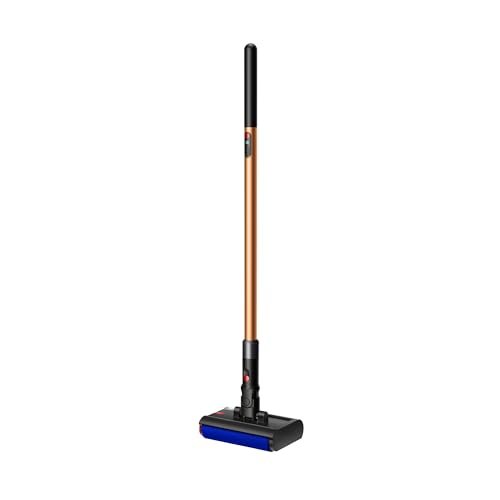
Dyson built a wet floor cleaner that weighs less than most bags of sugar. The PencilWash, launched in March 2026, tips the scales at 4.6 lbs total and puts just 0.8 lbs in your hand during use. The handle is 1.5 inches in diameter. Dyson’s pitch is cleaning with a giant pencil, which, credit where it’s due, is a refreshing bit of honesty in the product naming department.
But here’s the catch. To get the weight that low, Dyson stripped out some things you might expect from a Dyson-branded floor cleaner. There’s no suction motor. No self-cleaning cycle. And edge cleaning is genuinely poor. Whether those trade-offs make sense depends entirely on what you need from this thing.
Design
The PencilWash’s whole pitch is what it doesn’t weigh.
The 1.5-inch handle diameter is thinner than most broom handles. Dyson has gone all-in on the pencil concept, and the point of it is wrist fatigue: a wet cleaner you can hold like a broom rather than brace like a machine. Whether that trade is worth the small tanks is the question the rest of this review works through.
The clean water tank (10 fl oz) and dirty water tank (12 fl oz) are both small, well under what you’d find on a Shark HydroVac or Dyson’s own WashG1. That’s intentional. Bigger tanks would ruin the weight advantage.
The roller is dense. Dyson puts 64,000 microfibre filaments on it, though note that’s the whole roller rather than a per-square-centimetre density, which is how these numbers often get misread. An 8-point precision hydration system wets the roller evenly, with two modes for different floor sensitivity. Sealed tile gets the full treatment. Sealed hardwood gets a lighter touch.
What It Does Well
Everyday messes across smooth sealed floors are what it’s built for: fresh spills, footprints and light grime. The roller agitates, the hydration system keeps things wet enough to dissolve the mess, and the dirty water tank collects what’s left behind.
It’s quiet too. No suction motor means no turbine whine, and T3 lists “relatively quiet operation” among its reasons to buy.
Then there’s the 170-degree lay-flat capability. With just 6 inches of clearance needed, the PencilWash is built to reach under beds, sofas, and low cabinets that most floor cleaners can’t. TechRadar found it “flexible enough to reach under low furniture”, and T3 called it “brilliantly nimble in tight spots and under furniture”. For anyone who actually cleans under furniture rather than pretending it doesn’t exist, this is a big deal.
And the weight matters more the longer you clean. At 0.8 lbs in hand, arm fatigue stops being the limit on a long session.
What It Doesn’t Do
Let me be blunt. The PencilWash doesn’t vacuum.
No suction. Zero. It won’t pick up crumbs, dust bunnies, dried pasta, or anything else that’s just sitting on the floor as dry debris. You need to sweep or vacuum before you use this, or accept that your wet roller is going to push dry bits around rather than collect them.
For a machine at this price in 2026, that’s a notable omission. The Shark HydroVac Cordless Pro XL sits in the same price bracket and actually vacuums and mops simultaneously. Most competitors here do both.
Dyson’s argument is weight. Adding a suction motor adds weight, noise, and complexity. Fair enough. But it means you’re buying a single-purpose tool that handles only step two of a two-step process.
Edge cleaning is the other weak spot. TechRadar and T3 both report the roller stopping short of the skirting, leaving a gap of around half an inch unmopped along every wall, which T3 points out “is exactly where dust tends to gather”.
Stubborn stains also give it trouble. T3 found it “struggles with sticky stains, smearing rather than lifting”, and Expert Reviews needed repeat passes on mustard. Without suction pulling the loosened grime away, that’s the expected weakness.
The Self-Cleaning Gap
This is where the penny-pinching really stings.
The Dyson Clean+Wash Hygiene has a self-cleaning cycle with hot-air drying. So does the WashG1. You press a button, walk away, and the machine flushes and dries its own roller. Dead simple. Keeps everything hygienic between uses.
The PencilWash? Manual everything.
After each cleaning session, you need to remove the roller, rinse it under the tap, wring it out, and leave it to air dry. Same for the dirty water tank, which needs emptying and rinsing. Skip it, and a roller left damp overnight is exactly where odours and mildew start.
It’s a few minutes each time. That’s not terrible in isolation. But it’s every use, and the novelty of hand-washing a floor cleaner roller wears thin fast when rivals do it themselves in the dock.
Dyson probably cut self-clean to save weight and hit the price point. I get the engineering logic. But a floor cleaner at this price without self-clean in 2026 feels miserly when machines costing half as much include it.
Battery and Coverage
Thirty minutes of runtime and 1,076 square feet of coverage per tank fill. Those are Dyson’s numbers.
Higher moisture settings drain both the battery and the clean water tank faster, and the tanks are the real limiter here rather than the battery. On the wettest setting you’ll be refilling well before the charge runs out.
For context: 1,076 square feet covers a decent-sized flat or the ground floor of a typical semi-detached. If you’ve got a larger home, you’re refilling mid-clean. Not a deal-breaker.
Charging is 3.5 hours from empty. No quick-charge option. No spare battery. If the battery dies mid-session, you’re waiting.
The tanks are filter-free, which is genuinely nice. No consumable filters to replace, no clogging to diagnose. One less thing to maintain. Given that Dyson already expects you to hand-wash the roller, at least they didn’t also saddle you with filter upkeep.
Who Is This Actually For?
Not everyone. And I don’t think Dyson would argue otherwise.
The PencilWash makes sense for studio flats and small apartments where storage space is tight and floors are all sealed hard surfaces. It’s brilliant as a supplementary cleaner in bigger homes, the thing you grab for a quick kitchen wipe-down after dinner rather than dragging out the full wet-dry setup.
Older users and anyone with limited grip strength or joint issues should pay attention. The 0.8 lbs in-hand weight and thin handle make it accessible in a way that 10+ lb floor cleaners simply aren’t.
If you already own a decent vacuum or robot vac and just want something lightweight for wet maintenance between deep cleans, the PencilWash fills that gap well. Think of it as a powered mop replacement, not a floor cleaner replacement.
It’s not for families with kids who generate serious daily mess. It’s not for pet owners dealing with hair and tracked-in dirt. It’s not for anyone who wants a single machine to handle the whole job. For those situations, look at the Dyson Clean+Wash Hygiene or check our best wet-dry vacuums roundup for options that vacuum and mop together.
Verdict
The Dyson PencilWash is a fascinating exercise in subtraction. Strip away suction, self-cleaning, and large tanks, and what’s left is the lightest powered floor cleaner we cover. At 4.6 lbs and 0.8 lbs in hand, nothing else on our list comes close.
For fresh spills and daily maintenance across sealed hard floors, it’s built for the job: quiet, low enough for under furniture, and light enough not to tire your arm.
But the 3.5 out of 5 rating reflects real gaps. No suction means sweeping or vacuuming first, always. No self-clean means hand-washing the roller after every session. Edge cleaning is poor. Stubborn stains need multiple passes or manual scrubbing. For Dyson’s asking price, those compromises are hard to ignore when competitors offer more for less.
Buy the PencilWash if you value lightness above everything else, if you need a quick wet-maintenance tool for a small space, or if heavier machines cause you physical discomfort. For everyone else, the Dyson Clean+Wash Hygiene adds self-clean and is the more complete package. And if you want one pass instead of two, the Shark HydroVac Cordless Pro XL vacuums and mops together for roughly the same money.
Niche product. Done well within that niche. Just make sure you’re in it.
Still weighing the PencilWash against the rest of Dyson’s wet floor lineup? The WashG1 vs Clean+Wash Hygiene vs PencilWash comparison breaks down every pairing in detail.
Also Consider
Dyson Clean+Wash Hygiene Wet and Dry Floor Cleaner
Best Dyson with self-cleanA genuinely hygienic wet and dry floor cleaner that cleans brilliantly and fixes the WashG1's biggest flaw with its hot-air drying dock, though the small tanks and premium price tag warrant consideration against larger-capacity competitors.
What We Like
- Genuinely hygienic filter-free design where dirty water never travels through the machine body
- Excellent cleaning performance on coffee, wine, mud, and mixed wet and dry messes
- Quiet in use, with Trusted Reviews measuring 63.4 dB
- Lightweight at 8.4 lbs with 4.4-inch flat profile for under-furniture cleaning
- Hot-air drying dock eliminates manual roller drying and prevents odour buildup
What We Don't
- Small tank capacities (0.75L clean, 0.52L dirty) require frequent refills in larger homes
- Edge cleaning imperfect on one side, doesn't reach flush to walls
- Can drip waste water when moving between rooms
Shark HydroVac Cordless Pro XL AW302
Vacuums and mops in one passThe current HydroVac Cordless Pro XL, and the machine that carries the line on after the older WD and AW HydroVacs went out of stock. It does the thing this category exists for, vacuuming and mopping hard floors in one pass, and the two-tank layout plus a continuous self-cleaning cycle target the two complaints these machines usually attract. Shark does not publish runtime, weight or cleaning path, so those are left blank rather than guessed.
What We Like
- Vacuums and mops in one pass rather than asking for two trips
- Two-tank design keeps clean water away from the dirty water it picks up
- Self-cleaning cycle runs continuously, so the roller is not left wet and dirty
- Antimicrobial brush roll is aimed at the smell these machines usually develop
- LED display reports battery, surface type and tank levels
- Ships with two brush rolls, two solution concentrates, a spare filter and a dock
What We Don't
- Solution concentrates are a consumable, so there is an ongoing cost
- Wet cleaners of this type are a hard-floor and area-rug tool, not a carpet vacuum
- Runtime, weight and cleaning path width are not published by Shark
Sources & Research
Continue Reading
Explore more wet & dry vacuums content or browse our other categories.
Frequently Asked Questions
- Does the Dyson PencilWash vacuum as well as mop?
- No. The PencilWash has no suction motor. It hydrates the floor and agitates grime with a dense microfibre roller, but it won't pick up dry debris like crumbs, dust, or pet hair. You'll need to sweep or vacuum first.
- How long does the Dyson PencilWash battery last?
- Dyson rates the PencilWash at up to 30 minutes of runtime. Actual runtime depends on which hydration mode you use. Charging from empty takes about 3.5 hours.
- Can you use the PencilWash on hardwood floors?
- Yes, on sealed hardwood. The two hydration modes let you control moisture levels, and the low-moisture mode is safe for sealed wood. Don't use it on unsealed or waxed hardwood, as standing water can cause damage.
- Does the Dyson PencilWash have a self-cleaning cycle?
- No. Unlike the Dyson Clean+Wash Hygiene or WashG1, the PencilWash requires manual disassembly and hand washing of the roller and dirty water tank after each use.
- What's the difference between the PencilWash and the Dyson WashG1?
- The WashG1 is bigger, heavier, and more capable. It has larger water tanks, a self-cleaning cycle with hot air drying, and better coverage per fill. The PencilWash trades all that for extreme lightness and a lower price point as Dyson's entry-level wet floor cleaner.
Written By
Home Vacuum Zone
Our team researches vacuum cleaners against published specifications and independent lab results to help you make confident buying decisions.
Related Articles
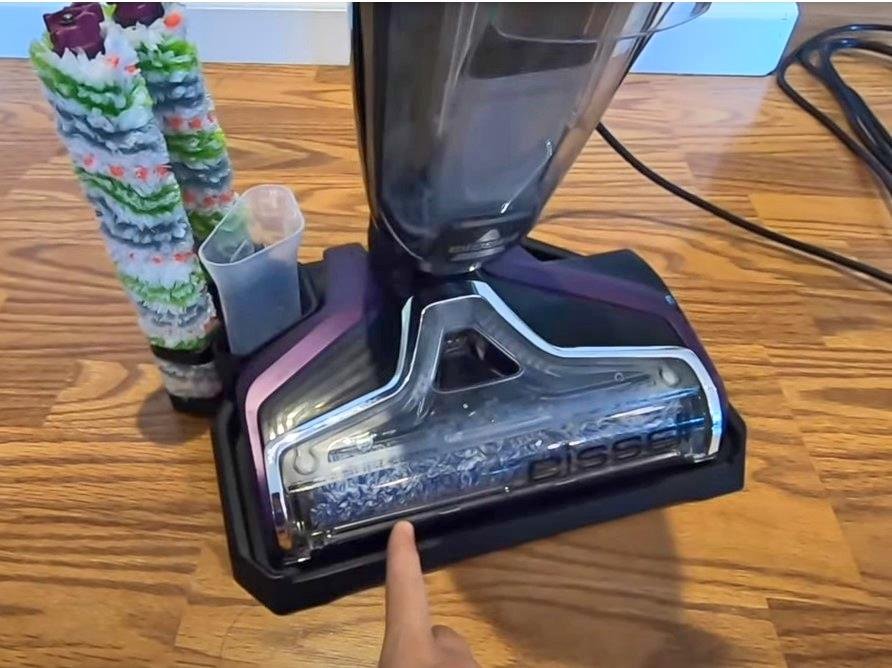
Bissell CrossWave HF3 Review: Vacuum and Mop in One
Bissell CrossWave HF3 cordless wet/dry vacuum review, built from Bissell's specs and user guide and Vacuum Wars' lab results on sealed hard floors.
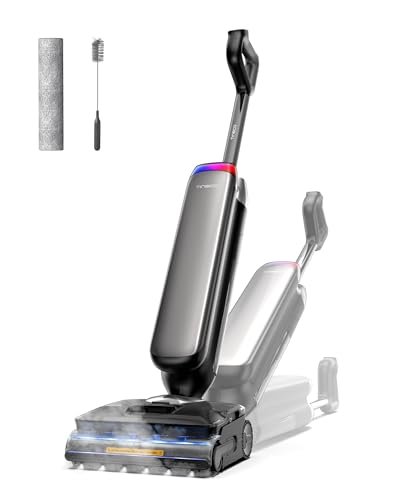
Best Wet Dry Vacuums 2026: 8 Floor Washers That Actually Work
We compared the top wet dry vacuums and wet mop vacuums for 2026. From Dyson and Tineco to budget picks from Shark, these 8 wet floor cleaners vacuum and mop in one pass.
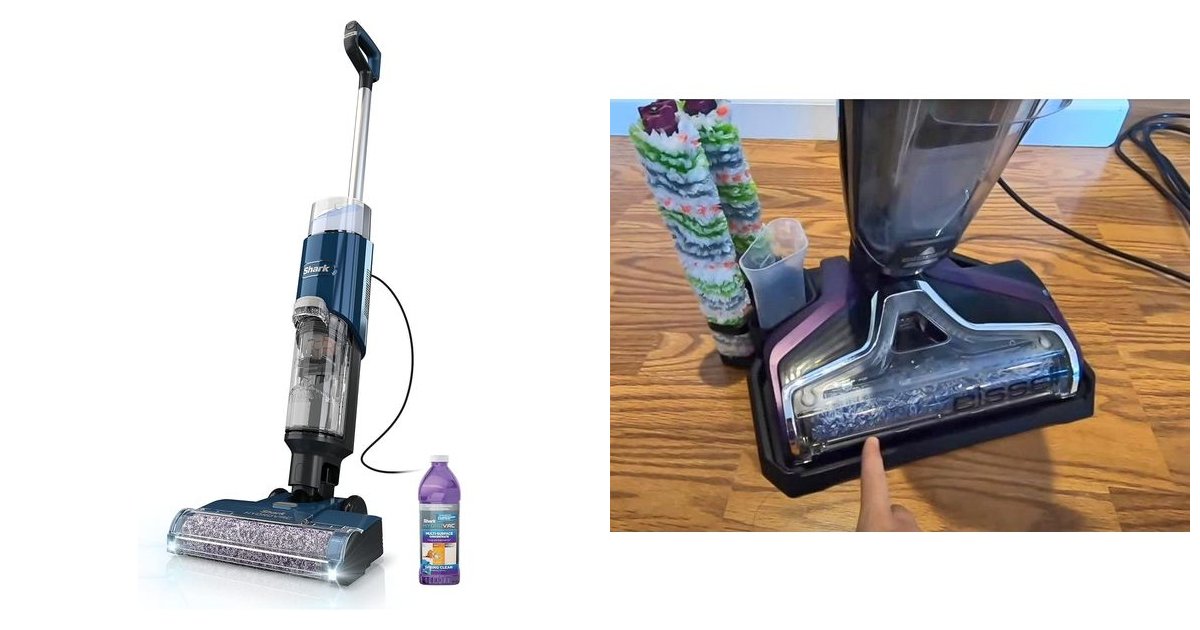
Shark HydroVac XL vs Bissell CrossWave HF3: Budget Showdown
Comparing two of the most popular budget wet mop vacuums head to head. Shark HydroVac XL brings corded power and self-cleaning, Bissell CrossWave HF3 goes cordless. We break down which is actually worth buying.