Affiliate Disclosure:Home Vacuum Zone is reader-supported. When you buy through links on our site, we may earn an affiliate commission at no additional cost to you. This does not influence our reviews or recommendations — we only recommend products we genuinely believe in.
Choosing the wrong vacuum for your carpet type is like wearing dress shoes to hike a mountain - you might get through it, but performance will suffer, and you risk damage to both the tool and the surface. Whether you have plush, shaggy high pile carpet or sleek, commercial-grade low pile, matching the right vacuum to your flooring isn’t optional; it’s essential.
This guide explains the critical differences between high pile and low pile carpet vacuums, why using the wrong type can damage your carpets or leave them dirty, and which models excel for each carpet type in 2026. For recommendations tailored to specific carpet types, see our guides to the best vacuums for high-pile carpet and best vacuums for Berber carpets.
How to Properly Adjust Vacuum Height Settings
Getting your vacuum’s height setting right is the difference between a carpet that looks refreshed and one that stays dirty or gets damaged. The goal is simple: your vacuum’s brushroll should make firm contact with carpet fibers without digging into the backing or skimming across the top.
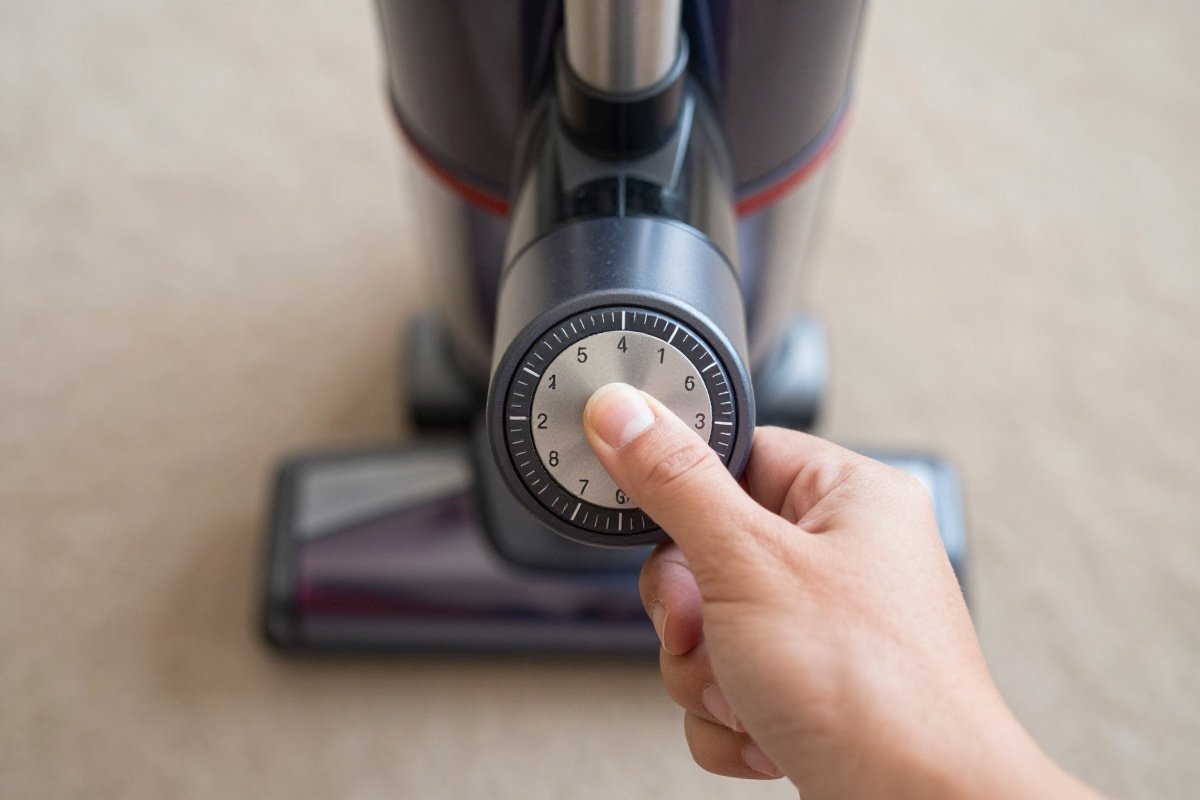
Step-by-Step Height Adjustment Process
1. Start at the highest setting. Begin with your vacuum set to its tallest height position. This prevents the brushroll from making aggressive contact before you’ve assessed the carpet.
2. Lower one setting at a time. Move the height adjustment down one level and run the vacuum over a small test area. Listen carefully to the sound of the motor and brushroll.
3. Listen for the deeper suction sound. As you lower the setting, you’ll hear the suction deepen - this indicates the brushroll is engaging with the carpet fibers. Continue lowering until you hear this change.
4. Check for smooth motion. The vacuum should glide smoothly without feeling stuck or requiring excessive pushing force. If it feels like you’re fighting the machine, the setting is too low.
5. Fine-tune for your carpet. The “just right” setting balances suction power with maneuverability. For high-pile carpets, this might be setting 3 or 4. For low-pile carpets, you may need setting 1 or 2.
Signs of Correct vs Incorrect Height
| Signs the Height is RIGHT | Signs the Height is WRONG |
|---|---|
| Steady, deep motor sound | High-pitched whining (too low) |
| Smooth gliding motion | Difficult to push (too low) |
| Visible carpet grooming | Carpet fibers flattening (too high) |
| Debris pickup in one pass | Multiple passes needed (too high) |
Testing on an Inconspicuous Area First
Before cleaning visible areas, test your height setting on a corner or under furniture. This protects against accidental fiber damage if the setting is too aggressive. Look for snagging, excessive fiber pull, or unusual marks after a few passes.
When to Adjust During Cleaning
Your height needs change throughout a cleaning session:
- Entering a room with different carpet: Adjust immediately
- Moving from carpet to hard floors: Raise height or switch modes
- Deep-cleaning high-traffic paths: Lower one setting temporarily
- Cleaning delicate area rugs: Raise height or use suction-only
Premium vacuums like the SEBO Airbelt D4 with ET-1 powerhead simplify this process with 4 levels of height adjustment and an automatic shutoff feature with an indicator light that alerts you when settings need changing. This German-engineered canister is consistently rated best for high-pile carpet because it maintains optimal brushroll contact without user guesswork.
Understanding Carpet Pile: The Foundation
What Is Carpet Pile?
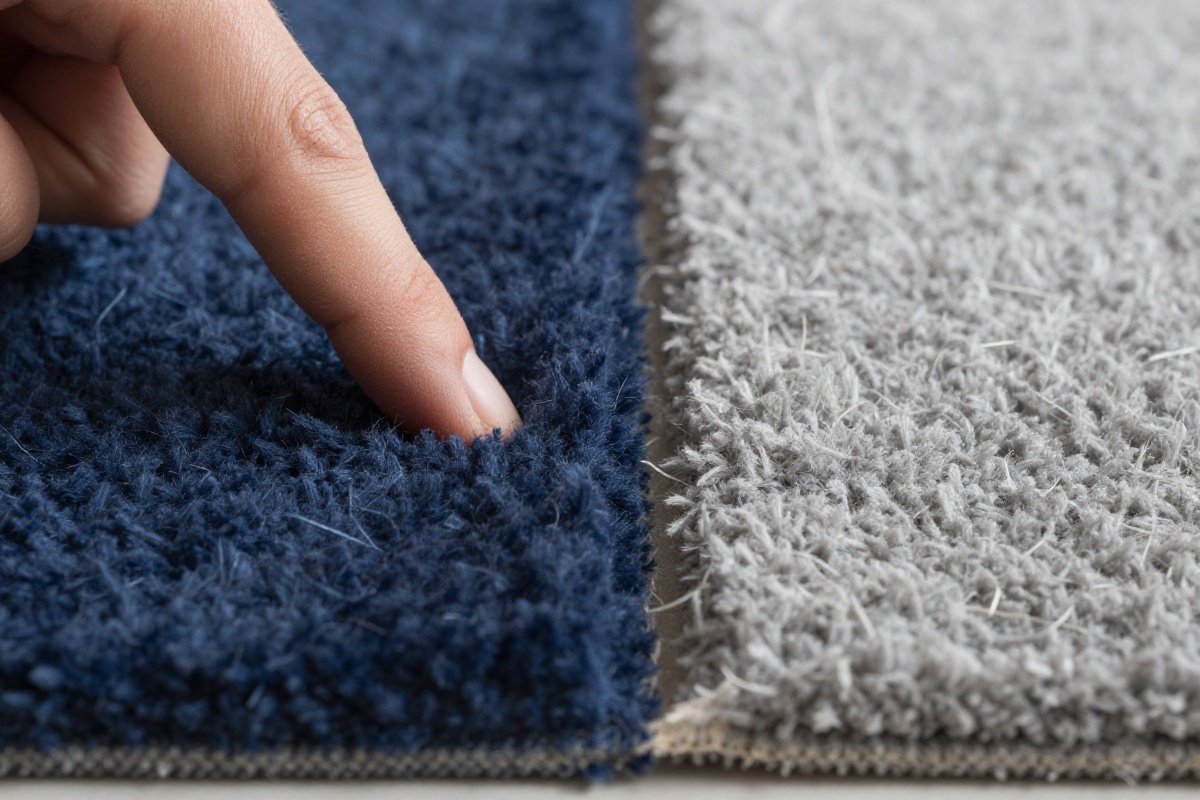
Carpet pile refers to the visible fibers that stand up from the backing. These fibers create the soft surface you walk on, and their height and density determine whether a carpet is classified as high or low pile.
| Characteristic | Low Pile Carpet | High Pile Carpet |
|---|---|---|
| Fiber height | 1/4 inch or less | 1/2 inch to 3/4 inch |
| Feel | Flat, firm | Soft, plush |
| Common types | Berber, commercial, flatweave | Shag, frieze, Saxony |
| Cleaning difficulty | Easier | More challenging |
| Debris retention | Surface level | Deep embedding |
Why Pile Height Matters for Vacuum Selection
Different pile heights present distinct cleaning challenges:
Low pile carpets allow most vacuums to make solid contact with the surface. Debris sits on top or just below the surface, making removal straightforward. However, strong suction can actually damage low pile fibers or cause the vacuum to “seal” to the floor, making it hard to push.
High pile carpets trap debris deep within fibers - sometimes an inch or more below the surface. Without sufficient suction and proper brush agitation, vacuums simply skim the surface, leaving deep-down dirt, allergens, and pet hair behind. Conversely, vacuums with overly aggressive brushes can tangle in or fray delicate high pile fibers.
Key Vacuum Features for Carpet Types
Must-Have Features for High Pile Carpets
| Feature | Why It Matters | What to Look For |
|---|---|---|
| Adjustable suction | Prevents vacuum from sticking to carpet | Manual dial or automatic sensor |
| Height adjustment | Maintains proper brush-to-carpet contact | Multiple settings (1-5+) |
| Brushroll on/off | Prevents tangling and fiber damage | Dedicated switch |
| Large wheels | Prevents sinking into plush carpet | 3+ inch diameter |
| Strong motor | Deep cleans embedded debris | 10+ amps or 150+ AW |
| Wide cleaning path | Fewer passes needed | 12+ inches |
Must-Have Features for Low Pile Carpets
| Feature | Why It Matters | What to Look For |
|---|---|---|
| Sealed suction system | Prevents dust escape | HEPA filtration |
| Gentle brushroll | Cleans without fiber damage | Soft bristles |
| Proper airflow | Maintains consistent suction | Optimized intake design |
| Edge cleaning | Reaches wall-to-wall | Side brushes or strong edge suction |
| Lightweight design | Easy to maneuver | Under 15 lbs |
High Pile Carpet Vacuums: Deep Dive
The Challenge of High Pile Cleaning
High pile carpets act like filters, trapping:
- Dirt and sand (sharp particles that cut fibers)
- Pet hair (tangles deep in fibers) - see does vacuuming remove pet dander for effectiveness details
- Allergens (dust mites, pollen, dander)
- Food particles (attracts pests and bacteria)
Without a vacuum specifically designed for high pile, you’re either:
- Under-cleaning: Surface-only removal leaving deep debris
- Over-agitating: Damaging fibers with aggressive brushes
- Struggling: Fighting a vacuum that sticks to the carpet
Best Vacuum Types for High Pile
1. Upright Vacuums with Height Adjustment
Uprights provide the weight and motor power needed for deep cleaning. The key is multiple height settings - at least 5 - to match your specific carpet thickness.
Top pick mechanism: A vacuum set too low digs into carpet, damaging fibers and making the machine hard to push. Set too high, it skims the surface. The “just right” middle setting agitates fibers without crushing them.
2. Canister Vacuums with Power Heads
Canisters offer excellent suction control and separate motor power from the cleaning head. Look for models with electric power heads featuring height adjustment and brushroll control.
Advantage: Canisters often provide better suction at the tool than uprights, and the separate wand allows easier maneuvering on thick carpet. 3. Premium Cordless (150+ AW)
Advanced cordless vacuums like the Dyson V15 (240 AW) and Shark Vertex Pro generate enough suction for high pile cleaning. The key features are automatic suction adjustment and anti-tangle brush bars.
High Pile Vacuum Recommendations by Category
| Category | Best Model | Value Tier | Why It Wins |
|---|---|---|---|
| Best Overall | Miele Complete C3 Cat & Dog | Premium | Adjustable electrobrush, unmatched suction control |
| Best Upright | Shark Vertex DuoClean | Mid-Range | Self-adjusting brushroll, powerful motor |
| Best Cordless | Dyson V15 Detect | Premium | Auto-adjusts to carpet resistance, 240 AW |
| Best Budget | Hoover WindTunnel T-Series | Budget | 5-height adjustment, reliable performance |
| Best for Pets | Bissell Pet Hair Eraser Turbo | Mid-Range | Tangle-free brushroll, specialized tools |
Low Pile Carpet Vacuums: Deep Dive
The Low Pile Advantage
Low pile carpets are more forgiving. Most quality vacuums can clean them effectively, which means you can prioritize other features:
- Maneuverability: Lighter weight for easy pushing
- Filtration: HEPA for allergen control
- Versatility: Better hard floor performance
- Noise: Quieter operation
Best Vacuum Types for Low Pile
1. Lightweight Uprights (12-15 lbs)
Low pile doesn’t require the heavy weight of high pile cleaners. A lightweight upright provides sufficient agitation without user fatigue.
2. Stick Vacuums
Modern stick vacuums like Dyson V10/V12, Shark Rocket, and Tineco models excel on low pile. Their moderate suction (115-185 AW) is perfect without being excessive. 3. Robot Vacuums
Low pile is ideal for robot vacuums. The flat surface allows consistent contact, and the lower debris embedding means robots can maintain cleanliness between deep cleans.
Low Pile Vacuum Recommendations by Category
| Category | Best Model | Value Tier | Why It Wins |
|---|---|---|---|
| Best Overall | Dyson V12 Detect Slim | Premium | Perfect suction balance, laser detection |
| Best Budget | Eureka WhirlWind Bagless | Budget | Excellent performance for price |
| Best Robot | Roomba j7+ | Mid-Range | Smart mapping, obstacle avoidance |
| Best Canister | Miele Classic C1 | Mid-Range | German engineering, adjustable suction |
| Best Stick | Shark Vertex Pro | Mid-Range | DuoClean, converts to handheld |
Comparing High and Low Carpet Vacuums
Understanding the fundamental differences between these vacuum categories helps explain why using the wrong type leads to disappointing results - or worse, damaged carpets.
Suction Requirements by Pile Type
Low-pile carpets are dense and flat, which means they need strong suction with minimal brush agitation. The lowest height setting typically works best because the fibers don’t need much lifting to release debris. Excessive suction, however, can create a “seal” effect where the vacuum sticks to the floor, making it exhausting to push and potentially stressing the motor.
High-pile carpets present the opposite challenge. The deep, plush fibers create natural air pockets that reduce suction efficiency at the carpet surface. Without adjustable suction and height control, vacuums simply can’t generate enough airflow to pull embedded dirt from the fiber depths. This is why vacuums rated for high-pile use typically feature 10+ amp motors or 150+ air watts of suction power.
Brushroll Agitation Differences
The role of motorized brush heads varies dramatically between carpet types:
For low-pile carpets: Brushrolls provide gentle agitation that lifts surface fibers for thorough cleaning. Soft bristles or rubberized fins work best - aggressive brushes can fray the tight weave of Berber or commercial-grade carpets. Many users find that suction-only cleaning works adequately for low-pile maintenance, with brushroll engagement reserved for deeper weekly cleans. Our beater bar vs no beater bar guide covers this trade-off in detail. For high-pile carpets: Motorized brush heads must dig deep into carpet fibers to agitate trapped debris loose. The brushroll needs sufficient stiffness to penetrate plush surfaces while remaining gentle enough to avoid fiber damage. Four-level height adjustment systems, like those found on the SEBO ET-1 powerhead, allow precise control over how aggressively the brush engages with carpet fibers.
HEPA Filtration Considerations
Regardless of carpet type, HEPA filtration proves essential for maintaining indoor air quality. However, high-pile carpets trap significantly more allergens - dust mites, pollen, pet dander, and microscopic debris - making quality filtration even more critical for homes with thick carpeting. Look for sealed HEPA systems that prevent particle escape during the exhaust cycle, not just HEPA-rated filters that capture intake debris.
Common Mistakes to Avoid
Using the Wrong Vacuum on High Pile
Mistake: Using a lightweight stick vacuum on thick shag carpet. Result: Surface cleaning only; deep debris remains; potential brush damage. Solution: Use vacuums with 150+ AW suction and height adjustment.
Mistake: Keeping brushroll engaged on delicate high pile. Result: Fiber tangling, matting, and premature wear. Solution: Use suction-only mode or turn off brushroll for plush carpets.
Using the Wrong Vacuum on Low Pile
Mistake: Using excessive suction on low pile commercial carpet. Result: Vacuum seals to floor; difficult to push; potential backing damage. Solution: Reduce suction setting or use a vacuum designed for hard floors/low pile.
Mistake: Using beater bar brushes on looped Berber carpet. Result: Snagging and unraveling of carpet fibers. Solution: Use suction-only mode or brushroll with very soft bristles.
Hybrid Homes: Multiple Carpet Types
Most homes have mixed flooring - low pile in some rooms, high pile in others (especially bedrooms). Here are your options:
Option 1: One Vacuum for Everything
Choose a vacuum with excellent adjustability:
- Miele Complete C3: Six suction settings, adjustable power head
- Dyson V15: Auto-adjusts to floor resistance
- Shark Vertex: Self-adjusting brushroll
Pros: One machine, consistent maintenance, cost-effective Cons: Compromises on extreme carpet types
Option 2: Specialized Vacuums
Own one vacuum optimized for each major carpet type:
- Primary: Canister or upright for main living areas
- Secondary: Stick vacuum for quick cleanups and hard floors
Pros: Optimal performance on every surface Cons: Higher cost, more storage needed
2026 Buying Recommendations by Scenario
| Your Situation | Recommended Vacuum | Value Tier | Why |
|---|---|---|---|
| Mostly high pile, some hard floors | Shark Vertex Pro | Mid-Range | Adjustable for carpet, converts for hard floors |
| Mixed pile throughout home | Dyson V15 Detect | Premium | Auto-adjusts to any surface |
| Mostly low pile, budget priority | Eureka WhirlWind | Budget | Great performance, unbeatable price |
| All high pile, luxury choice | Miele Complete C3 | Premium | Best suction control, 20-year life |
| All low pile, tech enthusiast | Dyson V12 Detect | Premium | Laser detection, lightweight |
| High pile + pets | Bissell Pet Hair Eraser | Mid-Range | Tangle-free, specialized tools |
Further Reading
- Canister vs Upright Vacuum 2026 - Which Type Is Best For You?
- Cordless vs Corded Vacuum Cleaners: Which Is Best for You? (2026 Guide)
- Shark vs Dyson 2026: Which Vacuum Brand is Best?
Maintenance Tips for Carpet Longevity
Regardless of carpet type, proper vacuum technique extends carpet life:
- High traffic areas: Daily for high pile, 2-3x weekly for low pile
- Medium traffic: 2-3x weekly for high pile, weekly for low pile
- Low traffic: Weekly for all types
Vacuum technique:
- Push slowly - one second per foot of forward motion
- Overlap passes by 1/3
- Change direction occasionally to lift fibers
- Empty bin or change bag at 2/3 full
- Check brushroll weekly for hair wrap - see our vacuum maintenance guide for a full schedule
Head-to-Head Comparison
Detailed Reviews
Dyson V15 Detect
Homes with thick, plush carpets and mixed flooringBest cordless for high pile carpets
What We Like
- Laser reveals microscopic dust on hard floors
- Piezo sensor counts particles and displays in real-time
- Anti-tangle Motorbar cleaner head prevents hair wrap
- Powerful 240 AW suction with auto-adjusting power
What We Don't
- 60-minute runtime only in Eco mode (8 min in Boost)
- Small 0.2-gallon dustbin requires frequent emptying
- Premium price point
- 4.5-hour charging time is lengthy
Shark Vertex Pro IZ462H
Budget-conscious buyers with thick carpetsThe Shark Vertex Pro IZ462H delivers DuoClean PowerFins with a self-cleaning brushroll and 60-minute runtime at a significantly lower price than premium cordless competitors like the Dyson V15. Best for budget-conscious buyers with thick carpets who want serious deep-cleaning power without the flagship price tag.
What We Like
- DuoClean PowerFins for effective cleaning on all floor types
- Self-cleaning brushroll prevents hair wrap
- Strong suction power at competitive price point
- Converts to handheld for above-floor cleaning
What We Don't
- Heavier than premium cordless models like Dyson V15
- Smaller dustbin requires frequent emptying
- Battery life may decrease over time with regular use
Dyson V10 Absolute
Homes with standard low pile carpetsPerfect for low pile and mixed surfaces
What We Like
- Larger 0.77L bin vs V8's 0.54L capacity
- Point-and-shoot hygienic bin emptying
- 60-minute max runtime in Eco mode
- Improved acoustic design reduces noise
- Whole-machine HEPA filtration
What We Don't
- Heavier than V8 at 5.9 lbs
- No automatic suction adjustment
- Motorhead variant less powerful than V11 models
- Trigger-hold operation can cause hand fatigue
Miele Complete C3 Cat & Dog
Serious carpet cleaning, allergy sufferersUltimate carpet vacuum for any pile height
What We Like
- Handheld turbo brush excellent for pet hair on furniture
- Bagged design hygienic for allergy sufferers
- German engineering with superior build quality
- Charcoal filter neutralizes pet odors effectively
What We Don't
- Very expensive compared to competitors
- Ongoing cost of replacement bags
- Lacks motorized powerhead in base configuration
Sources & Research
Continue Reading
Explore more buying guides content or browse our other categories.
Frequently Asked Questions
- Can I use a high pile carpet vacuum on low pile carpet?
- **Yes, but adjust settings.** High pile vacuums work fine on low pile when you reduce suction and raise the brushroll height. Using full high-pile power on low pile can make the vacuum difficult to push and potentially damage carpet fibers from excessive agitation.
- How do I know if my carpet is high or low pile?
- **Measure and feel.** High pile carpet fibers stand taller than 1/2 inch - your fingers sink in when you press down. Low pile is 1/4 inch or less with a flatter, firmer feel. When in doubt, check the carpet specifications or ask your installer.
- Will robot vacuums work on high pile carpet?
- **Most struggle with thick high pile.** Standard robot vacuums often sink into plush carpet or lack the suction for deep cleaning. Premium models like the Roomba s9+ and Shark AI Ultra can handle medium-high pile, but very thick shag carpets still challenge them. Use robots for maintenance, not deep cleaning, on high pile.
- Is a beater bar necessary for carpet cleaning?
- **For high pile, yes. For low pile, helpful but not essential.** The beater bar (brushroll) agitates fibers to release embedded dirt. High pile carpets need this agitation to clean deeply. Low pile cleans reasonably well with suction-only, though a brushroll improves results.
- How often should I vacuum high pile vs low pile carpet?
- **High pile needs more frequent vacuuming** because it traps more debris. Vacuum high pile carpets in high-traffic areas daily or every other day. Low pile can go 2-3 days between vacuuming in the same areas. Both types benefit from professional deep cleaning annually.
Written By
Home Vacuum Zone
Our team researches, tests, and reviews vacuum cleaners to help you make confident buying decisions.
Related Articles
Vacuum Noise Level Comparison: Decibel Ratings for 60+ Models (2026 Database)
Comprehensive vacuum noise level database with decibel ratings for 60+ models across every vacuum type. Find the quietest vacuums and understand what dB ratings actually mean.
Vacuum Suction Power Chart: AW, Pa & kPa Ratings Compared (2026 Database)
Comprehensive vacuum suction power database with air watts, pascals, and kPa ratings compared across every vacuum type. Find how much suction you actually need.
Bagged vs Bagless Vacuums: Which Type Is Actually Better?
Bagged and bagless vacuums each have distinct advantages for different households. We compare cost, filtration, allergen control, maintenance, and convenience to help you choose the right type.