Affiliate Disclosure:Home Vacuum Zone is reader-supported. When you buy through links on our site, we may earn an affiliate commission at no additional cost to you. This does not influence our reviews or recommendations — we only recommend products we genuinely believe in.
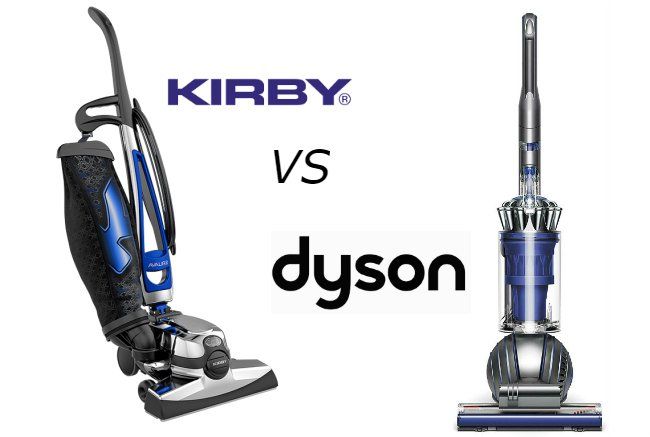
When you’re ready to invest in a premium vacuum cleaner, two names consistently emerge: Kirby and Dyson. Both command respect in the cleaning industry, but they approach the market from completely different angles.
Here’s the critical difference that shapes everything else: Kirby vacuums are priced in the ultra-premium tier while Dyson vacuums span the mid-range to premium range. That 3-5x price gap isn’t arbitrary - it reflects fundamentally different philosophies about what a vacuum should be and how it should be sold.
This comprehensive comparison breaks down everything you need to know to make the right choice for your home, budget, and cleaning needs.
At a Glance: Kirby vs Dyson
| Feature | Kirby | Dyson |
|---|---|---|
| Price Range | Ultra-premium | Mid-range to premium |
| Where Sold | In-home demos only | Retail & online |
| Weight | 23 lbs | 5.5 - 17 lbs |
| Made In | USA | Malaysia, Singapore, China |
| Warranty | 3 years (limited lifetime on motor) | 2-5 years |
| Primary Use | Deep carpet cleaning | Versatile home cleaning |
| Convertible | Yes (shampooer, buffer, blower) | No |
| Filtration | Optional HEPA upgrade | HEPA standard on most models |
Understanding the Brands
Kirby: The Heritage Heavyweight
Kirby has been manufacturing vacuums in Cleveland, Ohio since 1914. The company’s approach hasn’t changed much in a century: build incredibly durable machines using metal components, sell them through in-home demonstrations, and price them as long-term investments.
Kirby’s Core Philosophy:
- Build vacuums that last decades, not years
- Use metal where others use plastic
- One machine that transforms for multiple cleaning tasks
- Personal sales through authorized distributors
The result is a vacuum that feels like industrial equipment. At 23 pounds, the Kirby Avalir 2 (current flagship) is nearly twice as heavy as Dyson’s heaviest upright. But that weight comes from solid construction - many Kirby owners report their machines still running strong after 20+ years.
Dyson: The Innovation Leader
James Dyson founded his company in 1991 with a mission to solve problems that other manufacturers ignored. The result has been a string of innovations: bagless technology, cyclonic separation, ball steering, and most recently, laser dust detection.
Dyson’s Core Philosophy:
- Engineer solutions to specific cleaning problems
- Iterate rapidly with new technology
- Lightweight, maneuverable designs
- Available where consumers already shop
Dyson vacuums feel like precision instruments. They’re engineered for specific use cases - pet owners, allergy sufferers, hard floor homes - and excel within those niches. Where Kirby builds one machine for everything, Dyson builds specialized tools.
The Price Reality: What You’re Actually Paying For
Let’s address the elephant in the room. A Kirby vacuum costs as much as a used car. Is it justified?
Kirby’s Ultra-Premium Price Tag Explained
Construction Costs:
- All-metal body and components
- American manufacturing wages
- Cast aluminum, steel, and brass parts
- Hand-assembled in Cleveland, Ohio
Included Accessories:
- Carpet shampooing system (significant standalone value)
- Floor buffer attachment (significant standalone value)
- Blower function for garages/decks
- Multiple specialized tools
- HEPA filtration upgrade (on some packages)
Sales Model:
- Independent distributors earn commissions
- In-home demonstration time investment
- No retail markup, but sales overhead remains
When you buy a Kirby, you’re not just buying a vacuum. You’re buying a carpet deep-cleaning system, floor polisher, and portable blower in one package. Whether you need all those functions is the key question.
Dyson’s Mid-Range to Premium Price Positioning
Construction Costs:
- High-grade polymers and engineered plastics
- Asian manufacturing (Malaysia, Singapore, China)
- Automated production lines
- Economies of scale from mass retail
Technology Investment:
- Digital motors developed in-house
- R&D for features like laser detection
- Software development for smart features
- Continuous model iteration
Retail Distribution:
- Available at Amazon, Best Buy, Target
- Direct-to-consumer sales
- Competitive retail environment
Dyson’s pricing reflects modern manufacturing efficiency and retail competition. You’re paying for advanced technology and engineering, but not for a sales force doing living room demonstrations.
Performance Comparison
Carpet Cleaning: Kirby’s Home Turf
Kirby built its reputation on carpet cleaning, and this is where the Avalir 2 shines. The combination of heavy weight (providing downward pressure), powerful suction, and optional carpet shampooing makes Kirby unmatched for deep carpet restoration.
Kirby Carpet Advantages:
- Weight creates superior agitation
- Self-propelled drive system reduces user effort
- Carpet shampoo attachment removes deep stains
- Adjustable height for all carpet types
Dyson Carpet Performance:
- Self-adjusting cleaner heads maintain optimal contact
- Strong suction but lighter weight means less agitation
- Tangle-free brush bars handle hair better
- No shampooing capability
For wall-to-wall carpeting in homes with pets or heavy foot traffic, Kirby’s deep cleaning capability is superior. For maintenance cleaning on low to medium pile carpets, Dyson performs adequately at a fraction of the cost. See our best vacuums for carpet roundup for more options across all price tiers.
Hard Floor Cleaning: Dyson’s Strength
This is where the comparison shifts dramatically. Dyson’s engineering specifically addresses hard floor cleaning challenges. Dyson Hard Floor Advantages:
- Soft roller cleaner heads (Fluffy heads) capture fine dust
- Laser detection reveals invisible particles
- Lightweight design for easy maneuvering
- Swivel steering around furniture
Kirby Hard Floor Limitations:
- Heavy weight can scratch delicate floors
- Beater bar designed for carpet, not hard surfaces
- No specialized hard floor tools
- Cumbersome for quick cleanups
If your home is primarily hardwood, tile, or laminate, Dyson is the clear winner. Kirby’s design simply isn’t optimized for these surfaces.
Pet Hair: Dyson Takes the Lead
Modern Dyson models include features specifically engineered for pet owners:
Dyson Pet Features:
- Tangle-free brush bars (Animal models)
- Whole-machine HEPA filtration
- Mini motorized tools for upholstery
- High torque cleaner heads
Kirby Pet Limitations:
- Brush rolls require frequent hair cutting/removal
- No specialized pet tools included
- Optional HEPA filtration costs extra
- Heavy for daily pet hair maintenance
For households with shedding pets, Dyson’s purpose-built features justify the investment over Kirby’s general-purpose approach.
Ease of Use and Maneuverability
Weight and Handling
Kirby Avalir 2: 23 lbs
- Self-propelled drive assists movement
- Heavy to carry up stairs
- Wide cleaning path (14 inches)
- Stable but not nimble
Dyson Ball Animal 3: 17.3 lbs
- Ball technology for tight turns
- Lighter for stairs and transport
- Standard 13.4-inch cleaning path
- Highly maneuverable Dyson V15 Detect: 6.8 lbs
- Cordless, one-handed operation
- Easy overhead cleaning
- Converts to handheld
- Effortless maneuverability
Kirby’s self-propelled feature helps on carpet, but the vacuum remains cumbersome for stairs, furniture cleaning, and quick jobs. Dyson’s lighter weight - especially cordless models - makes daily cleaning less of a chore.
Storage Requirements
Kirby vacuums require significant storage space. With all attachments, the system occupies roughly the same footprint as a small chair. Dyson cordless models can hang on walls or fit in closets, while uprights have smaller footprints.
For apartments or homes with limited storage, this practical consideration often rules out Kirby regardless of cleaning performance.
Warranty and Long-Term Value
Kirby’s Warranty Reality
Kirby advertises a “lifetime” warranty, but the details matter:
What’s Covered:
- Motor and fan: Limited lifetime (original owner only)
- Other components: 3 years
- Must register within 30 days of purchase
- Requires annual service (a meaningful recurring expense)
What’s Not Covered:
- Wear items (belts, brushes, filters)
- Damage from misuse
- Transfer to new owners
- Parts if vacuum isn’t serviced annually
The warranty is good, but not as comprehensive as marketing suggests. Annual servicing is essentially mandatory to maintain coverage, adding a significant recurring expense to ownership costs.
Dyson’s Straightforward Coverage
Dyson offers simpler, more transferable warranties:
Cordless Models: 2 years parts and labor Upright Models: 5 years parts and labor
- Transferable to new owners
- No mandatory service requirements
- Easy online registration
While shorter than Kirby’s motor warranty, Dyson’s coverage is more practical. You won’t lose your warranty because you missed a service appointment.
Total Cost of Ownership
Kirby (20 years):
- Initial cost: Ultra-premium
- Annual service: Adds up substantially over two decades
- Bags/filters: Moderate ongoing expense
- Total: Several times higher than Dyson
Dyson V15 (10 years, replacing once):
- Initial cost: Premium (two purchases over 20 years)
- Replacement cost: Same as initial
- Filters: Low ongoing expense
- Total: Significantly lower than Kirby
Even accounting for Dyson’s shorter lifespan and replacement, Kirby costs significantly more over time. You’re paying for longevity, but that longevity comes at a premium.
How to Buy: The Experience Difference
Kirby’s In-Home Sales Model
You cannot buy a Kirby vacuum online or in stores. The only way to purchase is scheduling an in-home demonstration through an authorized distributor.
The Kirby Sales Process:
- Contact Kirby or respond to advertising
- Schedule in-home appointment (usually 60-90 minutes)
- Distributor demonstrates vacuum on your actual carpets
- High-pressure sales presentation
- Price negotiation (MSRP rarely final)
- Financing options presented
Pros:
- See the vacuum clean your actual home
- Demonstration proves effectiveness
- Negotiable pricing
Cons:
- High-pressure sales tactics common
- 90+ minute time commitment
- Difficult to comparison shop
- No easy return process
The Kirby sales experience is polarizing. Some appreciate the thorough demonstration. Others find the pressure uncomfortable. There’s no way to casually purchase a Kirby - you’re committing to the sales process.
Dyson’s Retail Availability
Dyson vacuums are available everywhere premium appliances are sold:
Purchase Options:
- Amazon (widest selection, best prices)
- Best Buy (see models in person)
- Target, Bed Bath & Beyond
- Direct from Dyson (newest models)
Pros:
- Buy immediately when ready
- Easy price comparison
- Return policies through retailers
- No sales pressure
Cons:
- Can’t test on your specific carpets
- Must rely on reviews and research
For most consumers, Dyson’s availability is a significant advantage. You can research at your own pace, compare prices, and purchase when ready without sitting through a sales presentation.
Environmental Impact and Sustainability
Kirby’s Longevity Approach
Kirby’s environmental story is longevity. A vacuum that lasts 20+ years means fewer vacuums in landfills over time. The all-metal construction is also more recyclable than plastic alternatives.
Kirby Eco-Factors:
- 20-25 year lifespan reduces replacement waste
- Metal components recyclable
- Rebuildable rather than disposable design
- Bags create ongoing waste (non-washable)
Dyson’s Innovation Approach
Dyson focuses on energy efficiency and improving performance per watt. The company has committed to making all products carbon neutral by 2030.
Dyson Eco-Factors:
- Bagless design eliminates bag waste
- Energy-efficient digital motors
- Recyclable plastic components
- Shorter lifespan means more frequent replacement
Neither brand is perfect from an environmental standpoint, but Kirby’s longevity gives it an edge for buyers prioritizing sustainability through durability.
Choose Kirby If…
✅ You have extensive wall-to-wall carpeting Kirby’s deep cleaning capability is unmatched for carpet restoration.
✅ You want one machine for everything The carpet shampooer, floor buffer, and blower functions eliminate need for separate equipment.
✅ You plan to keep your vacuum 15+ years The high upfront cost amortizes over decades of use.
✅ You value American manufacturing Kirby still builds in Cleveland using domestic labor and materials.
✅ You don’t mind the sales process The in-home demo lets you see results on your actual floors.
✅ You have storage space Kirby requires dedicated storage for the unit and all attachments.
Choose Dyson If…
✅ Your home has mixed flooring or mostly hard floors Dyson’s hard floor tools and maneuverability shine on non-carpet surfaces.
✅ You have pets Tangle-free brush bars and pet-specific tools make daily maintenance easier.
✅ You want cutting-edge technology Laser detection, particle counting, and smart features are genuinely useful.
✅ You prefer lightweight, cordless convenience Dyson cordless models make quick cleanups effortless.
✅ You want to buy on your terms Retail availability means no sales appointments or pressure.
✅ You upgrade appliances every 5-10 years Dyson’s shorter lifespan aligns with normal replacement cycles.
Further Reading
- Dyson V11 vs V10 vs V8 comparison - compare Dyson’s cordless lineup to find the right model for your budget
- Shark vs Dyson 2026: Which Vacuum Brand is Best?
- Shark vs Bissell Vacuums: Which Brand is Better? (2026 Comparison)
- Makita vs Dyson Stick Vacuum - Full Comparison (2026 Update)
Alternative: If Neither Fits Your Needs
Some households find both Kirby and Dyson unsuitable. Consider these alternatives:
Miele Complete C3 (Canister - see also our canister vacuum reviews)
- German engineering, 20+ year lifespan
- Better for hard floors than either Kirby or Dyson
- HEPA filtration standard
- Premium price range
SEBO Automatic X7 (Upright)
- Commercial-grade durability
- Exceptional for pet hair
- Made in Germany
- Premium price range
Shark Navigator (Budget)
- 80% of premium performance at a fraction of the price
- Good for buyers not ready for a premium investment
- Budget-friendly
Head-to-Head Comparison
Detailed Reviews
Kirby Avalir 2 Vacuum System
Best Kirby vacuumPremium all-in-one cleaning system with lifetime durability.
What We Like
- Direct air motor delivers maximum suction efficiency
- Converts to carpet shampooer, hard floor polisher, and more
- All-metal construction built to last 20+ years
- TechDrive power assist reduces pushing effort
- Lifetime rebuild program available
What We Don't
- Extremely expensive — costs more than most appliances combined
- Heavy at 23 lbs making it difficult to carry
- Typically requires in-home sales demonstration
- Bulky to store
Dyson V15 Detect
Best Dyson overallBest Dyson for tech-forward homes wanting cutting-edge features.
What We Like
- Laser reveals microscopic dust on hard floors
- Piezo sensor counts particles and displays in real-time
- Anti-tangle Motorbar cleaner head prevents hair wrap
- Powerful 240 AW suction with auto-adjusting power
What We Don't
- 60-minute runtime only in Eco mode (8 min in Boost)
- Small 0.2-gallon dustbin requires frequent emptying
- Premium price point
- 4.5-hour charging time is lengthy
Dyson Gen5detect
Best premium DysonUltimate Dyson with maximum power and runtime.
What We Like
- Latest generation Hyperdymium motor with 262 AW suction
- Advanced HEPA filtration captures 99.99% of particles
- 70-minute runtime in Eco mode
- Fluffy Optic cleaner head reveals microscopic dust
- Built-in dust particle counter and LCD screen
What We Don't
- Very expensive at premium price point
- Overkill for basic cleaning needs
- Heavy compared to competitor cordless models
Dyson Ball Animal 3
Best Dyson uprightBest Dyson upright for pet owners and deep carpet cleaning.
What We Like
- Powerful motorized brush bar for deep carpet cleaning
- Tangle-free turbine tool prevents hair wrap
- Strong 290 AW suction power
- Whole-machine HEPA filtration captures allergens
- Ball technology for easy steering around furniture
What We Don't
- Premium price point for a corded upright
- Heavy at 17.4 lbs for prolonged use
- Small dustbin capacity requires frequent emptying
Dyson V12 Detect Slim
Best lightweight DysonBest lightweight Dyson with flagship features.
What We Like
- Ultra-lightweight at 5.2 lbs - lightest Dyson with laser detection
- Same laser dust detection technology as the V15
- Whole-machine HEPA filtration captures 99.99% of particles
- LCD screen with real-time particle count and runtime display
- 60-minute runtime in Eco mode
What We Don't
- Less suction than V15 (150 AW vs 230 AW)
- Smaller 0.35L dustbin fills quickly with pet hair
- Premium price at $649 for a lightweight model
- Narrower 9.8-inch cleaning path than V15
Sources & Research
Continue Reading
Explore more buying guides content or browse our other categories.
Frequently Asked Questions
- Why does a Kirby vacuum cost so much more than a Dyson?
- Kirby vacuums cost $2,000-$3,000 primarily due to their all-metal construction, American manufacturing, convertible design (vacuum + carpet shampooer + floor buffer), and direct sales model. Dysons ($400-$950) use more plastic components, Asian manufacturing, and retail distribution, resulting in lower prices. Whether the price difference is justified depends on your cleaning needs and how long you plan to keep the vacuum.
- Is Kirby's lifetime warranty really for life?
- Kirby's "lifetime" warranty applies to specific components (usually the motor and fan) but not the entire vacuum. Most parts carry 1-3 year warranties. Additionally, the warranty is only valid for the original purchaser and requires registering the product within 30 days. Dyson offers 2-5 year warranties (2 years for cordless, 5 years for uprights) with fewer restrictions on transferability.
- Which vacuum is better for pet hair, Kirby or Dyson?
- For pet hair, Dyson generally performs better due to specialized tangle-free brush bars and strong suction optimized for hair pickup. Kirby vacuums handle pet hair adequately but their brush rolls require more frequent hair removal. Dyson also offers HEPA filtration on all models, while Kirby charges extra for their HEPA upgrade. Choose Dyson if pet hair is your primary concern.
- Can I buy a Kirby vacuum online or in stores?
- No, Kirby vacuums are only sold through authorized independent distributors who conduct in-home demonstrations. This direct sales model is why most people haven't seen Kirby in retail stores. Dyson vacuums are widely available at Amazon, Best Buy, Target, and direct from Dyson. This difference in availability is a major consideration - Kirby requires scheduling a demo, while Dyson can be purchased immediately online.
- Which vacuum lasts longer, Kirby or Dyson?
- With proper maintenance, Kirby vacuums typically last 15-25 years due to their metal construction and rebuildable design (see our guide on [how long vacuums last](/how-long-do-vacuums-last/) for more brands). Dyson vacuums last 7-10 years on average, with batteries in cordless models degrading after 3-5 years. However, Dyson's replaceable battery design extends cordless lifespan. The Kirby's longevity justifies its price if you keep it 20+ years, but Dyson offers better value if you upgrade every 5-10 years for newer technology.
Written By
Home Vacuum Zone
Our team researches, tests, and reviews vacuum cleaners to help you make confident buying decisions.
Related Articles
Vacuum Noise Level Comparison: Decibel Ratings for 60+ Models (2026 Database)
Comprehensive vacuum noise level database with decibel ratings for 60+ models across every vacuum type. Find the quietest vacuums and understand what dB ratings actually mean.
Vacuum Suction Power Chart: AW, Pa & kPa Ratings Compared (2026 Database)
Comprehensive vacuum suction power database with air watts, pascals, and kPa ratings compared across every vacuum type. Find how much suction you actually need.
Bagged vs Bagless Vacuums: Which Type Is Actually Better?
Bagged and bagless vacuums each have distinct advantages for different households. We compare cost, filtration, allergen control, maintenance, and convenience to help you choose the right type.