Affiliate Disclosure:Home Vacuum Zone is reader-supported. When you buy through links on our site, we may earn an affiliate commission at no additional cost to you. This does not influence our reviews or recommendations — we only recommend products we genuinely believe in.
Roborock Dyad Pro Combo 5-in-1 Wet Dry Vacuum
Best versatilityA highly capable 5-in-1 wet dry vacuum that excels at tackling sticky floor messes and offers genuine versatility through handheld conversion, but the thick cleaning head and shorter real-world battery life are notable compromises.
What We Like
- Excellent wet and dry cleaning handles sticky messes, cereal, and sauces with ease
- True 5-in-1 versatility with handheld vacuum conversion and multiple attachments
- Self-cleaning with hot-air drying at 122°F prevents odour buildup
- Auto-dispensing detergent in Auto mode adjusts to mess severity
- Triple-roller system with DirTect smart sensor for thorough cleaning
What We Don't
- Thick 3-inch cleaning head cannot fit under low furniture
- Notch between front rollers traps dirt and requires manual cleaning
- Real-world mopping runtime closer to 30 minutes in Max mode despite 60-minute claim
- Heavy at 14.1 lbs with some attachment connection points feeling fragile
Five devices in one machine. That’s Roborock’s pitch for the Dyad Pro Combo, and I’ll be honest, my first reaction was scepticism. “Five-in-one” usually means “mediocre at all five things.” Combo devices in any category tend to compromise everywhere so they can print a bigger number on the box.
But Roborock has a track record. Their robot vacuums are genuinely excellent. The original Dyad Pro was a solid wet-dry vac that got overlooked because Tineco and Dreame had flashier marketing. So I gave the Combo a fair run: two weeks of daily floor cleaning, a weekend of handheld detail work, and one deeply regrettable incident involving my toddler, a full cup of blackcurrant squash, and cream-coloured laminate.
The short version: it’s better than I expected and more frustrating than it should be.
The Five Modes, Explained
Let’s catalogue what’s actually in the box, because “5-in-1” needs unpacking.
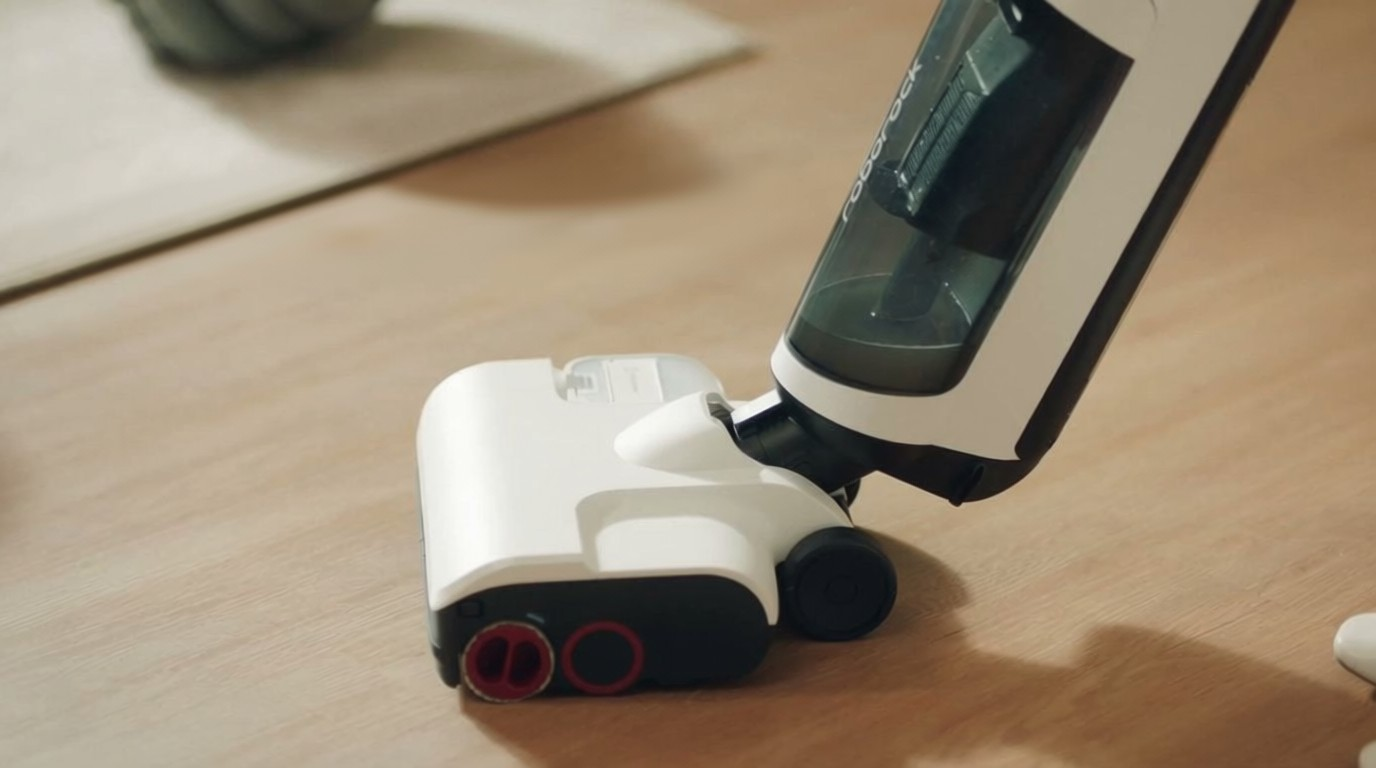
Mode 1: Wet+dry floor cleaning. The main event. Triple-roller system vacuums and mops simultaneously on hard floors. This is what you’ll use 80% of the time.
Mode 2: Handheld vacuum. Detach the main body from the floor head and you’ve got a cordless handheld. Not tiny, but portable enough for car interiors and furniture.
Mode 3: Motorised brush. Snap on the powered brush attachment for the handheld. Pet hair on sofas, dust on shelves, crumbs in sofa cushion crevices.
Mode 4: Crevice tool. Long narrow nozzle for tight gaps. Between car seats, behind radiators, the gap where the countertop meets the wall.
Mode 5: Dust brush. Soft bristle attachment for delicate surfaces. Lampshades, keyboards, that sort of thing.
Modes 2 through 5 are all variations of “handheld with different attachments.” Fair enough. But they work, and having them built into the same device you’re already storing is genuinely convenient versus buying a separate handheld vacuum.
Floor Cleaning: The Triple-Roller System
Two front rollers and one rear roller. The front pair handles initial scrubbing and debris pickup, spinning in opposite directions to pull mess inward. The rear roller does a final polish pass. Clean water feeds from the 0.95-litre tank, dirty water collects in the 0.77-litre tank, and the DirTect sensor adjusts everything in real time.
On my kitchen tile, it’s impressive. Genuinely impressive. A spilled bowl of cereal with milk got vacuumed and mopped in a single pass. Coffee drops, cooking oil spatters, the general film of grime that builds up between proper cleans. All handled efficiently.
The blackcurrant incident. My toddler upended a full cup on the laminate hallway. Purple liquid pooling across about six square feet of floor, soaking into every crack between boards. I grabbed the Dyad Pro Combo within 30 seconds, ran it over the spill in Max mode, and it picked up everything visible. Two more passes over the area and even the colour in the laminate joins had faded to almost nothing. I was impressed. I was also stressed, which isn’t the ideal testing condition, but it’s realistic.
Dried messes are tougher. Overnight dried porridge on tile needed three passes. The Tineco S9 with steam handles that in one. But the S9 costs roughly double (MSRP), so context matters.
Here’s where the triple-roller design shows its weakness: the notch between rollers. There’s a narrow gap where the front rollers meet that doesn’t get direct brush contact. On most messes, suction handles debris in that gap. But I noticed a line of dried flour sitting right in the notch after a baking session. Had to go over it at a different angle to catch it. Minor issue. Annoying when you spot it.
Edge cleaning reaches about 0.4 inches from the wall, which is respectable. Not as good as the Tineco S9’s triple-sided approach, but better than the Dreame H14 Pro or any Dyson.
Handheld Mode: Surprisingly Competent
I wasn’t expecting much from the handheld mode. Bolt-on features rarely impress.
Wrong.
Detaching the body from the floor head takes about two seconds. The handle, motor, battery, and dustbin come away as a single unit weighing maybe 4-5 pounds. Clip on the motorised brush and you’ve got a handheld that handles pet hair on our sofa better than the cheap dedicated handheld I’ve been using for two years.
I did the car interior one Saturday afternoon. Crevice tool between the seats picked up months of accumulated crumbs, coins, and hair ties. Motorised brush on the fabric seats pulled up dog hair that my previous handheld just pushed around. Not as powerful as a proper corded vacuum doing a car detail, but for a 15-minute maintenance clean, absolutely adequate.
The dust brush is the weakest link. Fine for lampshades, sure, but I can’t imagine a scenario where I’d choose it over a damp cloth. It exists so Roborock can put “5” on the box. Four-in-one would be more honest, but four isn’t as punchy in marketing copy.
Self-Cleaning Station
Dock the machine, press self-clean. The station flushes the rollers with water, spins them at high speed to wring out debris, then runs 122F hot-air drying for about 30 minutes.
Works well. After two weeks, no smell from the machine, rollers are slightly discoloured but clean, and the drying dock interior doesn’t have the pink mould situation I’ve seen with other brands’ docks. The 122F air temperature is lower than the Tineco S9’s 185F FlashDry and lower than Dyson’s hot-air dock, but it seems sufficient. No odour is no odour, regardless of the temperature that achieved it.
Auto-detergent dispensing is included and works exactly like you’d hope. Fill the reservoir, forget about it. The machine mixes solution at the right concentration automatically. Same concept as the Dreame H14 Pro, and equally appreciated.
The dirty water tank empties easily. Pop it off, pour it out, rinse, reattach. No fiddly mechanisms or hard-to-reach seals. Ten-second job. This matters because you’re doing it after every cleaning session, and bad tank designs turn a quick task into a daily annoyance.
The Weight and Height Problem
Let’s talk about what’s wrong.
14.1 pounds. That makes the Dyad Pro Combo the heaviest wet-dry vacuum in this generation of machines. Heavier than the 13.5-pound Tineco S9. Considerably heavier than the 12.6-pound Dreame H14 Pro. And unlike the Tineco, there’s no self-propulsion to mask the weight. You’re pushing and pulling 14.1 pounds of machine across your floor.
After 30 minutes, my wrist and forearm were tired. Not painful, just fatigued. My wife tried it for one session and declared she’d rather go back to a traditional mop. She’s not weak, she’s just honest about ergonomics, and 14.1 pounds with no motor assistance is too heavy for comfortable extended use.
Then there’s the cleaning head height. Three inches. That means the Dyad Pro Combo can’t fit under any furniture with less than 3 inches of clearance. My sofa? Nope. Bed frame? Nope. Both are accessible to the Dreame H14 Pro’s lie-flat 3.86-inch profile. The Roborock doesn’t lie flat at all, so you’re limited to its upright head height.
For a machine built around versatility, not being able to clean under furniture feels like a significant gap. The floor under my sofa remains the domain of the robot vacuum.
Runtime Reality Check
Roborock claims 60 minutes in vacuum-only mode and 43 minutes in wet+dry. Max mode: about 30 minutes.
In practice, the DirTect sensor frequently boosts to Max on dirty patches, so a mixed-use session doesn’t sustain 43 minutes. I consistently got 35-40 minutes in wet+dry with typical kitchen and hallway messes. The sensor does its job well, which means it uses more power than the baseline claim assumes.
Thirty minutes in Max mode is what you’ll get if you’re tackling a heavily soiled floor or a specific mess cleanup. That’s tight. Paired with the 4.5-hour charge time, running out mid-session means you’re done for the evening.
Coverage claim of 3,230 square feet per charge is plausible in standard mode on lightly soiled floors. In real homes with real messes, halve it.
Noise Levels
At 73 dB in standard mode, the Dyad Pro Combo is noticeably louder than the Dyson Clean+Wash Hygiene at 63 dB. Not unpleasant, but you’ll turn the TV up. Max mode pushes louder still. Morning cleaning while a partner sleeps isn’t going to work.
For context, 73 dB is about the volume of a running shower or a busy restaurant. Manageable. Not quiet.
The HEPA Filter Advantage
One feature worth highlighting: the Dyad Pro Combo includes a HEPA filter. Most wet-dry vacuums don’t. If anyone in your household has allergies or asthma, captured particles stay captured rather than being recirculated into the room. Not a headline feature, but meaningful for the people who need it.
The filter needs replacing every few months depending on usage. Roborock sells replacements at a reasonable price and the swap takes about 15 seconds.
Who Should Buy the Roborock Dyad Pro Combo
You want this machine if you genuinely need handheld vacuum capability alongside your wet-dry floor cleaner. If you’re currently using two separate devices for floors and furniture/car cleaning, the Combo consolidates them into one. The handheld mode is good enough to replace a mid-range cordless handheld. Not a premium Dyson replacement, but competent.
You also want it if edge cleaning matters and you don’t want to pay Tineco S9 money. The 0.4-inch wall distance is better than most alternatives at this price.
At street prices well below the $660 MSRP (it’s widely discounted to roughly $250-350), it’s remarkable value. A wet-dry vacuum and a decent handheld at that kind of discount is hard to argue against.
You don’t want it if weight matters to you. 14.1 pounds with no self-propulsion is a lot. If you’re cleaning more than 30 minutes at a stretch, you’ll feel it. You also don’t want it if under-furniture cleaning is a priority. The 3-inch head height locks you out of low furniture that the Dreame H14 Pro reaches easily.
And if 73 dB bothers you, or you need to clean while someone’s sleeping nearby, look at the quieter Dyson instead.
Verdict
The Roborock Dyad Pro Combo tries to do more than any other wet-dry vacuum, and it mostly succeeds. Floor cleaning is excellent. Handheld mode is genuinely useful rather than a marketing gimmick. Self-cleaning works. Build quality feels solid. At typical street prices well below MSRP, it’s strong value.
But the weight is a problem Roborock hasn’t solved. Fourteen pounds without motor assistance is too much for many users, and the inability to clean under low furniture puts it behind the Dreame in a key capability. Runtime claims don’t survive contact with real-world messes and the DirTect sensor’s tendency to boost power.
If versatility is your top priority and you can live with the weight, the Dyad Pro Combo delivers more functionality per pound spent than anything else in this category. If comfort and under-furniture access matter more, the Dreame H14 Pro at a similar street price is the better pick.
See our best wet-dry vacuums 2026 roundup for the full picture, or check out our Shark HydroVac XL vs Bissell CrossWave comparison if you’re considering the budget end of this category.
Also Consider
Dreame H14 Pro Wet Dry Vacuum
Best valueA strong all-rounder that punches above its price point with excellent dirt pickup, a genuinely useful 180-degree lie-flat design, and smart hot-water self-cleaning, but it leaves floors wetter than ideal.
What We Like
- Excellent cleaning performance rated 5/5 by Homes and Gardens
- True 180-degree lie-flat design cleans under furniture as low as 3.86 inches
- Hot water self-cleaning at 140°F prevents odours and mildew buildup
- Smart auto-dispensing solution tank adjusts detergent based on dirt level
- Lighter than competitors at 12.6 lbs with GlideWheel motorised drive assist
What We Don't
- Floors left noticeably wet and slippery after cleaning
- Roller brush stains and discolours after relatively little use
- No steam cleaning capability, limited to 140°F hot water
- Shorter 40-minute runtime compared to 75 minutes on the Tineco S9
Shark HydroVac XL 3-in-1 Vacuum Mop
Budget alternativeA budget-friendly corded wet dry vacuum that delivers solid mop-and-vac convenience for hard floors, but the small tank, lack of a dry-vacuum-only mode, and mediocre edge cleaning limit its appeal for larger homes.
What We Like
- Genuine 3-in-1 convenience vacuums and mops hard floors in a single pass
- Effective self-cleaning cycle cleans roller and internal hoses
- Antimicrobial brushroll prevents odour and bacterial growth between uses
- Lightweight at approximately 10 lbs for a corded wet dry vacuum
- Corded design means consistent power with no battery degradation concerns
What We Don't
- No vacuum-only mode on hard floors, always dispenses cleaning solution
- Small 16.9 oz clean water tank requires frequent refills on larger areas
- Weak edge cleaning struggles in tight corners compared to competitors
- Suction noticeably weaker than dedicated stick vacuums
Sources & Research
Continue Reading
Explore more wet & dry vacuums content or browse our other categories.
Frequently Asked Questions
- Can the Roborock Dyad Pro Combo clean carpet?
- It handles low-pile area rugs in wet+dry mode, though results are better on hard floors. The handheld vacuum with motorised brush attachment works on upholstery and car interiors. Don't use the wet floor cleaning mode on thick carpet.
- How loud is the Roborock Dyad Pro Combo?
- About 73 dB in standard mode, which is louder than conversational volume but not as aggressive as a traditional upright vacuum. Max mode is noticeably louder. You wouldn't want to run it during a phone call in the same room.
- Does it auto-dispense cleaning solution?
- Yes. The Dyad Pro Combo has an automatic detergent dispensing system that mixes cleaning solution at the correct ratio. You fill the reservoir and the machine handles the rest.
- What's the actual runtime in wet+dry mode?
- Roborock claims 43 minutes in standard wet+dry and up to 60 minutes in vacuum-only mode. In Max mode for heavy messes, expect roughly 30 minutes. Real-world usage with the DirTect sensor boosting power on dirty patches lands around 35-40 minutes in mixed use.
- Is the handheld mode actually useful?
- It's genuinely useful for car interiors, stairs, and upholstery. The motorised brush attachment handles pet hair on furniture well. It's not as powerful as a dedicated handheld vacuum, but it's competent and saves you buying a separate device.
Written By
Home Vacuum Zone
Our team researches, tests, and reviews vacuum cleaners to help you make confident buying decisions.
Related Articles
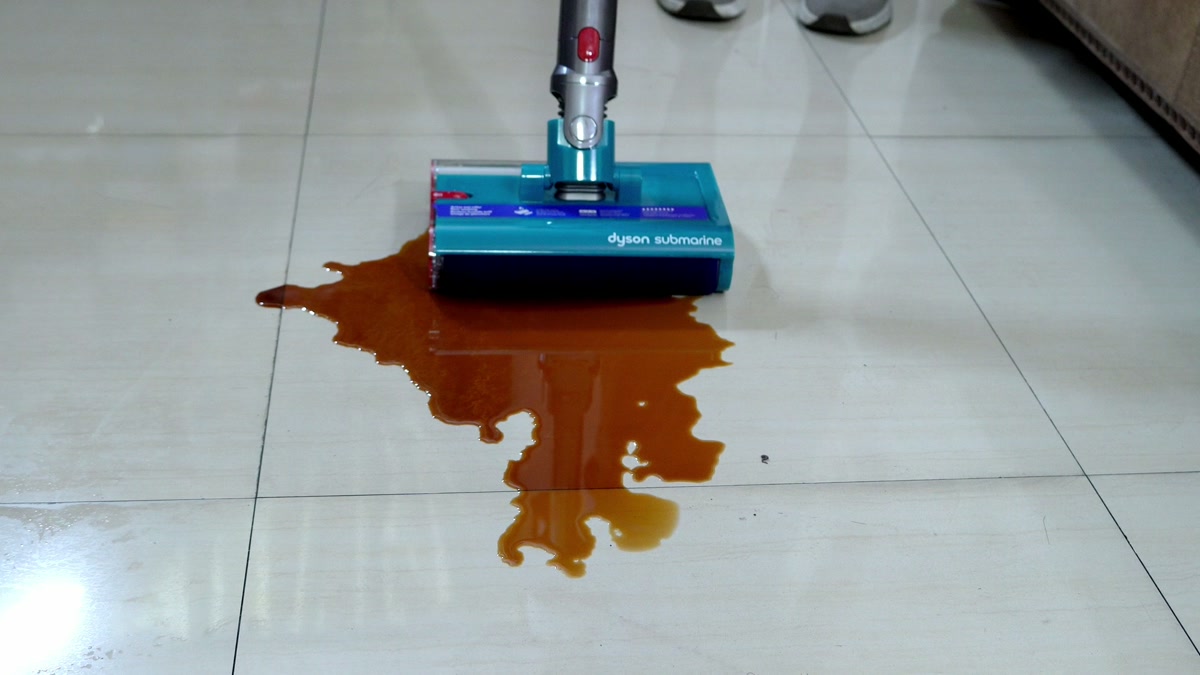
Dyson V15s Detect Submarine Review: The Vacuum That Also Mops
Hands-on review of the Dyson V15s Detect Submarine. We test the 240 AW suction, Submarine wet mopping head, green laser particle detection, and whether this 2-in-1 actually works.
Best Wet Dry Vacuums 2026: 8 Floor Washers That Actually Work
We tested the top wet dry vacuums and wet mop vacuums for 2026. From Dyson and Tineco to budget picks from Shark, these 8 wet floor cleaners vacuum and mop in one pass.
Do You Need a Wet Dry Vacuum? Honest Answer Inside
Not everyone needs a wet dry vacuum. Here's who benefits most, who can skip it, and what to look for if you decide to buy one.