Affiliate Disclosure:Home Vacuum Zone is reader-supported. When you buy through links on our site, we may earn an affiliate commission at no additional cost to you. This does not influence our reviews or recommendations — we only recommend products we genuinely believe in.
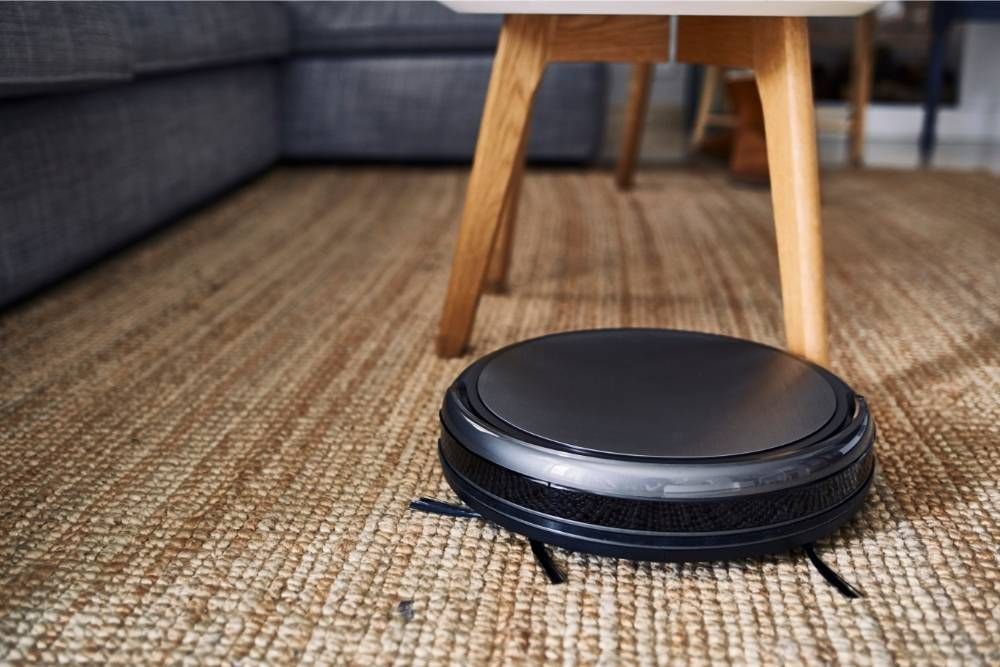
The robot vacuum revolution promised to eliminate the chore of vacuuming forever. Years into this technological transformation, the reality is more nuanced: robot vacuums have become incredibly capable maintenance cleaners, but they haven’t replaced traditional vacuums entirely. This comprehensive comparison examines what each type does best, their limitations, and whether your home needs one, the other, or both. For a primer on the technology inside robot models, see our guide on how robot vacuums work.
Understanding the Fundamental Difference
Robot Vacuums: Maintenance Cleaners
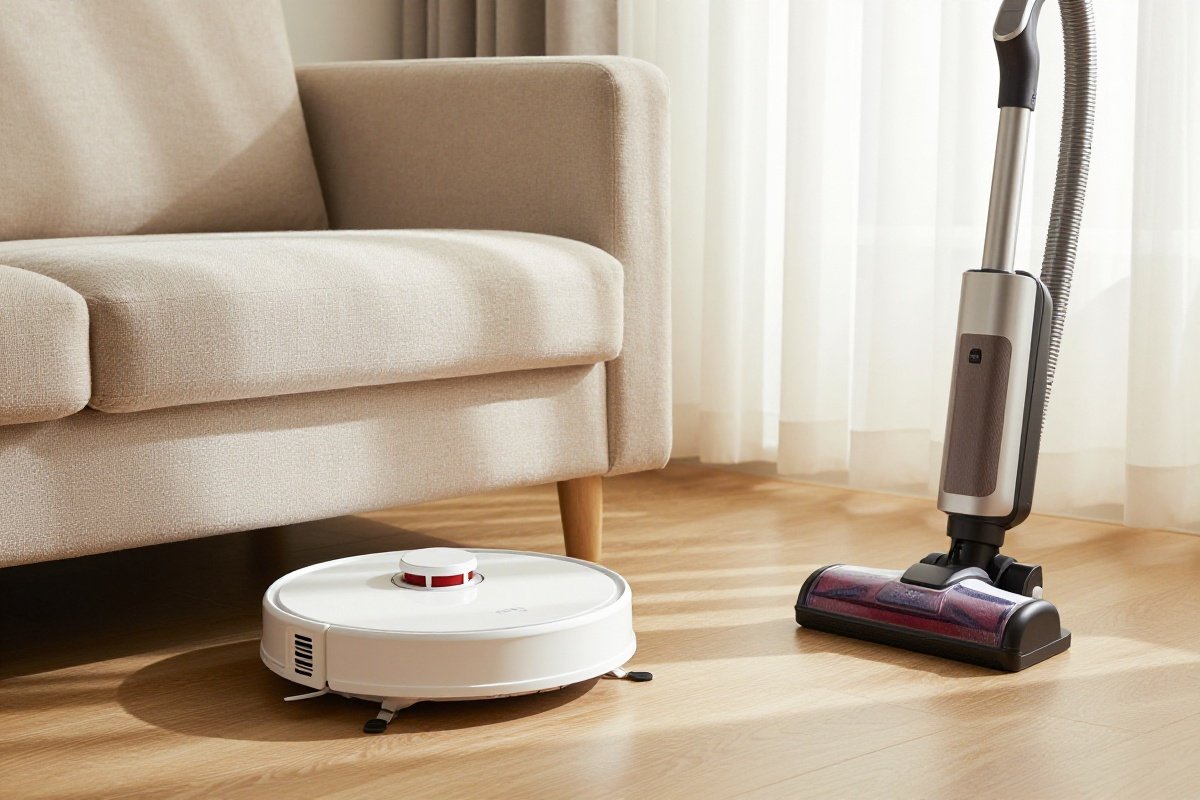
Robot vacuums are designed for:
- Frequency: Daily or scheduled cleaning
- Maintenance: Surface-level debris pickup
- Convenience: Fully automated, hands-off operation
- Coverage: Regular routes, consistent patterns
They excel at keeping floors consistently clean but have inherent limitations in power and capability.
The maintenance cleaning philosophy centers on preventing dirt accumulation rather than removing deeply embedded debris. This proactive approach means floors never reach the “dirty” stage but may not meet the standards of a thorough deep clean. Think of robot vacuums as the daily dish rinse rather than the weekly deep scrub - they maintain cleanliness between more intensive sessions.
Regular Vacuums: Deep Cleaners
Traditional vacuums are designed for:
- Thoroughness: Deep cleaning and extraction
- Power: Maximum suction and agitation
- Versatility: Multiple surfaces and attachments
- Control: User-directed precision cleaning
They provide the deep cleaning that robots can’t achieve but require human effort.
Traditional vacuums use mechanical agitation combined with powerful suction to pull debris from deep within carpet fibers and upholstery. This combination of beating action and airflow dislodges particles that have settled into materials, extracting allergens, dust mites, and embedded dirt that surface cleaning can’t reach.
Head-to-Head Comparison
Cleaning Performance
| Task | Robot Vacuum | Regular Vacuum |
|---|---|---|
| Surface dust/debris | Excellent | Excellent |
| Fine dust pickup | Good | Excellent |
| Deep carpet cleaning | Poor | Excellent |
| Edge cleaning | Fair | Good |
| Under furniture | Excellent | Poor-Fair |
| Stairs | N/A | Excellent |
| Upholstery | N/A | Excellent |
| Large debris | Poor | Excellent |
| Pet hair (surface) | Good | Excellent |
| Pet hair (embedded) | Poor | Good-Excellent |
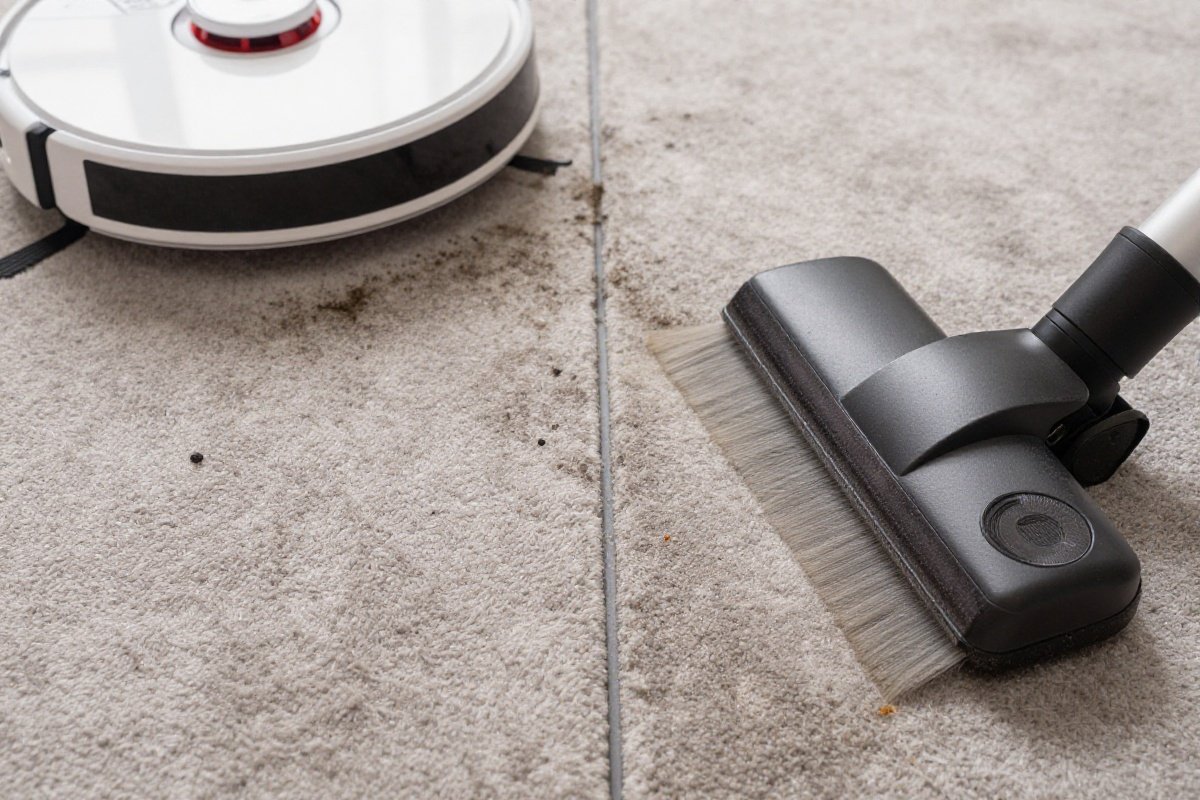
The performance differences become more pronounced with specific cleaning challenges. Robot vacuums handle daily pet hair shedding well on hard floors but struggle with longer hair or fur worked into carpet pile. If pet hair is your primary concern, our best robot vacuums for pet hair roundup highlights models built for that job. Traditional vacuums can tackle everything from small dust particles to larger debris like cereal or dirt tracked in from outside.
Suction Power Comparison
Robot Vacuums:
- Entry-level: 1,000-1,500 Pa
- Mid-range: 2,000-3,000 Pa
- Premium: 4,000-6,000 Pa
- Equivalent to: 20-40 AW
Regular Vacuums:
- Cordless stick: 100-240 AW
- Upright: 180-300 AW
- Canister: 140-280 AW
Regular vacuums offer 5-10x the suction power, which matters for deep cleaning.
This suction gap explains why robot vacuums can’t replace traditional cleaning entirely. While robot vacuum manufacturers continue improving suction, battery and size constraints prevent them from matching the raw power of plug-in or larger battery-powered traditional models. The physics of fitting cleaning capability into a compact, floor-level unit creates fundamental limitations.
Convenience Factor
| Aspect | Robot Vacuum | Regular Vacuum |
|---|---|---|
| Time required | Minimal setup | Active cleaning time |
| Physical effort | None | Moderate to high |
| Scheduling | Automated | Manual |
| Supervision | Minimal | Required |
| Frequency | Daily easily | Weekly realistically |
| Accessibility | Good | Depends on user mobility |
Robot Vacuum Strengths
Consistent Maintenance
The primary advantage of robot vacuums is consistency:
Daily Cleaning Benefits:
- Prevents dust accumulation
- Reduces allergen buildup
- Maintains appearance between deep cleans
- Less overwhelming when deep cleaning time comes
Consistency matters more than most people realize. A floor cleaned daily at 70% effectiveness stays cleaner than one cleaned weekly at 100% effectiveness because dirt never has time to accumulate and work its way into surfaces. This daily maintenance reduces the overall cleaning burden on your home.
Hard-to-Reach Areas
Robots excel where humans struggle:
Under Furniture:
- Beds
- Couches
- Cabinets
- Entertainment centers
These areas often go uncleaned with traditional vacuums due to access difficulty.
Most people move furniture to vacuum underneath maybe once or twice annually, if at all. Robot vacuums access these spaces daily, preventing the dust bunnies and allergen accumulation that typically builds up in forgotten zones. This consistent cleaning of typically neglected areas represents one of the most valuable benefits of robotic cleaning.
Automated Scheduling
Modern robots offer sophisticated scheduling:
Scheduling Options:
- Daily routines
- Room-specific cleaning
- Zone cleaning
- Do-not-disturb hours
- Integration with smart home systems
Advanced scheduling means your robot can clean the kitchen and dining area after breakfast, the living room in the afternoon, and bedrooms in the evening - all without your intervention. Some models integrate with voice assistants, allowing you to trigger cleaning sessions verbally or adjust schedules on the fly through smartphone apps.
Time Savings
Annual Time Investment:
- Robot vacuum: 10 hours (setup, maintenance)
- Traditional vacuuming: 50-100 hours (active cleaning)
For busy households, this time savings is significant.
Consider that 90 hours annually equals more than two full work weeks. For working parents, professionals with long commutes, or anyone juggling multiple responsibilities, this reclaimed time has genuine value. The passive nature of robot cleaning means you can be doing literally anything else - working, cooking, exercising, or relaxing - while floors are being cleaned.
Robot Vacuum Limitations
Power Constraints
What Robots Can’t Do:
- Deep carpet cleaning
- Extract embedded dirt
- Handle large debris effectively
- Clean high-traffic areas thoroughly
- Maintain plush carpets
Most carpet manufacturers recommend traditional vacuuming at least weekly even with daily robot use.
Battery and motor size limitations mean robots simply can’t generate the airflow and mechanical agitation needed for deep extraction. Think of it like comparing a countertop appliance to a full-size kitchen appliance - both may perform similar functions, but one operates at a fundamentally different scale and power level.
Physical Limitations
Navigation Challenges:
- Cords and cables (unless avoided)
- Thresholds over 0.75 inches
- Dark flooring (sensor confusion)
- Cluttered spaces
- Some furniture configurations
Robot vacuums require a relatively organized environment to function optimally. Homes with abundant floor clutter, numerous cables, or complex furniture arrangements may find robot effectiveness limited. The preparation required - picking up items, organizing cords, ensuring clear paths - can diminish some of the convenience benefits these devices promise.
Maintenance Requirements
Robots aren’t maintenance-free:
Weekly Maintenance:
- Empty dustbin
- Clean brushes and rollers
- Check wheels for debris
- Wipe sensors
Monthly Maintenance:
- Deep clean brushes
- Replace filters
- Check for software updates
Annual Costs:
- Replacement parts: Moderate
- Filters: Low to moderate
- Brushes: Moderate
These maintenance requirements surprise many first-time robot vacuum owners who expect a truly hands-off experience. Hair wraps around brush rollers, dustbins fill quickly in pet-owning households, and filters clog with fine dust. While maintenance takes less time than active vacuuming, it’s an ongoing commitment that can’t be ignored without degrading performance.
Regular Vacuum Strengths
Deep Cleaning Power
Traditional vacuums provide what robots cannot:
Deep Cleaning Capabilities:
- Carpet fiber agitation
- Deep dirt extraction
- Large debris pickup
- Edge and corner cleaning
- Upholstery cleaning
- Stair cleaning
The beater bar or rotating brush on traditional vacuums physically lifts carpet pile and dislodges particles that have settled below the surface. Combined with powerful suction, this mechanical action extracts not just visible debris but allergens, dust mites, and microscopic particles that impact indoor air quality. This deep cleaning maintains carpet appearance and longevity while improving the home environment.
Versatility
Regular vacuums handle diverse tasks:
Multiple Surfaces:
- Deep carpet
- Area rugs
- Hard floors
- Stairs
- Furniture
- Drapes and blinds
- Car interiors
The attachment tools that come with traditional vacuums extend their functionality far beyond floor cleaning. Crevice tools reach tight spaces between cushions and appliances, upholstery brushes tackle furniture and mattresses, and extension wands make cleaning ceiling corners and light fixtures possible. This versatility means one device handles numerous household cleaning tasks.
Immediate Results
When you need cleaning now:
Instant Gratification:
- Spills and messes
- Pre-guest cleaning
- Post-project cleanup
- Seasonal deep cleaning
Robot vacuums run on schedules or take 30-90 minutes to complete cleaning cycles. Traditional vacuums provide immediate response to messes - the moment your child spills cereal or your pet tracks in mud, you can address it within minutes. This responsive cleaning capability remains essential for real-life household situations where timing matters.
Do You Need Both?
The Case for Robot Only
You Might Get By with Just a Robot If:
- You have hard floors only
- Your home is relatively clean
- You don’t have pets
- You’re not particular about deep cleaning
- You supplement with occasional manual cleaning
Limitations:
- Carpets won’t be thoroughly cleaned
- Stairs, furniture, and upholstery won’t be cleaned
- Large messes require intervention
- Seasonal deep cleaning still needed
Single-level apartments or condos with predominantly hard floors represent the ideal scenario for robot-only cleaning. If you’re comfortable spot-cleaning occasional messes and don’t expect showroom-level cleanliness, a good robot vacuum can handle maintenance needs adequately. However, recognize that you’ll still need to address stairs, upholstery, and any carpeted areas through other means - perhaps a lightweight handheld vacuum or occasional professional cleaning.
The Case for Regular Only
You Might Get By with Just a Regular Vacuum If:
- You don’t mind vacuuming weekly
- You prefer control over automation
- Your home layout isn’t robot-friendly
- You want maximum cleaning power
- Budget is limited
Limitations:
- Under-furniture areas may be neglected
- More time investment required
- Less frequent cleaning likely
Some people genuinely enjoy vacuuming or find it meditative - there’s satisfaction in immediately visible results and complete control over the cleaning process. If you fall into this category, or if your home has too many obstacles for effective robot navigation, sticking with traditional vacuuming makes sense. Just acknowledge that frequency will likely decrease compared to automated daily cleaning, and hard-to-reach areas will require extra effort or go uncleaned.
The Case for Both (Recommended)
Why Most Homes Benefit from Both:
Robot for:
- Daily maintenance cleaning
- Under furniture
- Consistent schedule
- Time savings
Regular for:
- Weekly deep cleaning
- Carpets and rugs
- Stairs and upholstery
- Large messes
- Detailed cleaning
The Synergy: Robot vacuums handle 80% of the work (surface maintenance), while traditional vacuums handle the critical 20% (deep cleaning). Together, they provide cleaner floors than either could achieve alone.
The two-device approach represents the optimal solution for most modern households. The robot maintains baseline cleanliness daily, preventing accumulation and reducing the intensity needed for deep cleaning sessions. When you do pull out the traditional vacuum weekly or bi-weekly, the job is faster and easier because you’re maintaining already-clean floors rather than tackling significant buildup. This complementary approach also extends the lifespan of both devices. The robot handles easier daily work without being pushed to its limits, while the traditional vacuum isn’t subjected to daily wear and tear. Many households find that a mid-range robot paired with a mid-range traditional vacuum costs less and performs better than a single premium device of either type.
Cost Comparison
Initial Investment
Robot Vacuums:
- Budget: Affordable entry-level options
- Mid-range: Best value for most homes
- Premium: Top-tier features and performance
Regular Vacuums:
- Budget: Affordable basic models
- Mid-range: Solid performance and features
- Premium: Professional-grade quality
5-Year Cost of Ownership
Robot Only (Mid-range):
- Initial cost plus ongoing maintenance adds up over five years
Regular Only (Mid-range):
- Lower initial cost and lower maintenance makes this the most affordable option
Both (Mid-range each):
- Combined cost is roughly double the robot-only option
While owning both costs more, the combined cleaning effectiveness typically justifies the investment for most households.
When evaluating cost, consider the value of time saved. Our are robot vacuums worth the money guide walks through the full ROI calculation. If owning both devices saves you 40+ hours annually compared to traditional vacuuming alone, the recovered time value is significant. Over five years, the time savings alone can justify the additional investment, making the combined approach financially rational beyond just cleaning performance.
Top Recommendations (2026)
Best Robot Vacuums
iRobot Roomba j7+
- Pet waste detection (avoids accidents)
- Self-emptying base
- Smart mapping
- Excellent navigation
Shark IQ Robot XL
- Self-emptying base
- Row-by-row cleaning
- Good pet hair pickup
- Lower price point
Roborock S7 MaxV Ultra
- Mopping and vacuuming
- Advanced obstacle avoidance
- Auto-empty and wash
- Exceptional suction for robot
Best Regular Vacuums
Dyson V15 Detect
- 240AW suction
- Laser dust detection
- Whole-machine HEPA
- 60-minute runtime
Miele Complete C3 Marin
- 66 dB operation
- 280AW suction
- Exceptional filtration
- 20-year lifespan
Shark Vertex
- DuoClean PowerFins
- Self-cleaning brush roll
- Lift-away canister
- Good value
Making Your Decision
Choose Robot Only If:
- You have primarily hard floors
- You don’t have high cleaning standards
- You’re away from home frequently
- Physical limitations make traditional vacuuming difficult
- Budget allows only one device
Choose Regular Only If:
- You enjoy or don’t mind vacuuming
- You have mostly carpet
- You want maximum cleaning power
- Your home isn’t robot-friendly
- You prefer simplicity over automation
Choose Both If:
- You want the cleanest possible home
- You value both convenience and thoroughness
- You have mixed flooring and multiple levels
- You have pets or allergies
- Budget allows for both
Further Reading
- Eufy vs Roomba: Best Robot Vacuum Brand Comparison (2026)
- Dyson V15 vs Dyson Omni-Glide: Which Cordless Vacuum Should You Buy?
- Kenmore vs Miele Vacuum (2026): Complete Brand Comparison Guide
Setup Tips for Robot + Traditional
Optimal Workflow
Daily:
- Let robot handle surface cleaning
- Pick up cords and obstacles
- Empty robot dustbin
Weekly:
- Use traditional vacuum for deep clean
- Focus on carpets, stairs, furniture
- Clean robot brushes and sensors
Monthly:
- Deep clean both vacuums
- Replace filters as needed
- Check for software updates (robot)
Establishing this rhythm creates a sustainable cleaning routine that doesn’t feel overwhelming. The daily robot maintenance takes just 2-3 minutes, while weekly traditional vacuuming becomes faster because floors are already maintained. Monthly deep maintenance for both devices can be scheduled together, creating a predictable routine that prevents neglect. For more on keeping both machines running smoothly, check our vacuum cleaner maintenance guide. And if you’re ready to shop, see our best robot vacuum and best upright vacuum roundups.
Head-to-Head Comparison
Detailed Reviews
iRobot Roomba j7+ Self-Emptying Robot Vacuum
Best Robot Vacuum OverallThe iRobot Roomba j7+ combines PrecisionVision camera-based obstacle avoidance with a 60-day self-emptying Clean Base and the P.O.O.P. guarantee for pet waste detection, setting it apart from older Roomba models. It is best for pet owners who want the confidence that their robot will navigate around cords, shoes, and pet accidents without getting stuck.
What We Like
- PrecisionVision AI obstacle avoidance (avoids pet waste)
- 60-day capacity self-emptying Clean Base
- Smart mapping with room-specific cleaning schedules
- Pet Owner Official Promise (P.O.O.P.)
What We Don't
- Premium price point
- No mopping capability
- Camera-based navigation requires adequate lighting
Roborock S8 MaxV Ultra
Best Robot Vacuum & Mop ComboThe Roborock S8 MaxV Ultra delivers 10000Pa HyperForce suction with ReactiveAI 2.0 camera-based obstacle avoidance and a self-washing hot water mop system. Best for tech-forward households who want the most autonomous cleaning experience available and are willing to invest in a premium dock setup.
What We Like
- Advanced ReactiveAI 2.0 obstacle avoidance with voice control
- Self-washing and drying mop with hot water
- 10000Pa HyperForce suction (not 6000Pa)
- VibraRise 3.0 sonic mopping system
What We Don't
- Very expensive premium pricing
- Large dock requires significant floor space
- 4-hour charging time means extended downtime between cleaning sessions in large homes
Dyson V15 Detect
Best Regular Cordless VacuumThe most technologically advanced cordless vacuum available, with genuine innovations in dust detection and suction optimization. Best for tech-forward buyers with mostly hard floors.
What We Like
- Laser reveals microscopic dust on hard floors
- Piezo sensor counts particles and displays in real-time
- Anti-tangle Motorbar cleaner head prevents hair wrap
- Powerful 240 AW suction with auto-adjusting power
What We Don't
- 60-minute runtime only in Eco mode (8 min in Boost)
- Small 0.2-gallon dustbin requires frequent emptying
- Premium price point
- 4.5-hour charging time is lengthy
Miele Complete C3 Marin Canister Vacuum
Best Canister VacuumThe Miele Complete C3 Marin is a top-tier canister vacuum with outstanding suction, whisper-quiet operation, and hospital-grade HEPA filtration. Ideal for allergy sufferers and large homes with mixed flooring who want a vacuum that will last 15-20 years.
What We Like
- 1200W Vortex motor with 6 speed settings for optimal suction control across surfaces
- AirClean Sealed System with HEPA filter traps 99.95% of particles down to 0.1 microns
- Exceptionally quiet operation at 64 dB - among the quietest canister vacuums available
- 36-foot operating radius covers large rooms without unplugging
What We Don't
- Requires bags which add ongoing maintenance cost (~$5 per bag)
- Premium pricing at top of market segment
- No motorized brush roll included - must purchase SEB 228 or SEB 236 separately
Shark IQ Robot Vacuum AV2501AE
Budget buyers, simple floor plans, first-time robot ownersThe Shark IQ AV2501AE pairs a self-emptying base with 45 days of capacity and methodical row-by-row IQ Navigation at a price well below most self-emptying competitors. Best for first-time robot vacuum buyers with simple, open floor plans who want hands-off maintenance without a flagship price tag.
What We Like
- Self-emptying base holds up to 45 days of dirt and debris
- Methodical row-by-row cleaning pattern ensures complete coverage
- App and voice control via Alexa and Google Assistant
- Excellent value compared to competitors with similar features
What We Don't
- Lacks advanced AI obstacle avoidance technology
- May have difficulty navigating on dark carpets and certain floor transitions
- 1000Pa suction is weak compared to modern robots offering 5000Pa+
Shark Vertex AZ2002
Best modern alternativeThe Shark Vertex AZ2002 is Shark's most powerful upright, combining PowerFins brushroll technology with DuoClean and Powered Lift-Away for exceptional whole-home cleaning. Worth the upgrade from the APEX if you want Shark's latest deep-cleaning innovations.
What We Like
- PowerFins brushroll digs deep into carpet fibers and engages directly with floors
- DuoClean PowerFins dual-brushroll system handles carpets and hard floors seamlessly
- Self-cleaning brushroll actively removes hair wrap during use
- HyperVelocity suction delivers strong, consistent airflow across all surfaces
- Powered Lift-Away mode detaches the pod for portable above-floor cleaning
What We Don't
- Heavy at 14.5 lbs - noticeable during extended stair and furniture cleaning
- Premium price at $430 puts it above many full-size uprights
- Larger footprint makes storage challenging in tight closets
- Can be loud at full power, especially on hard floors
Sources & Research
- Amazon Product Page
- iRobot Official Page
- iRobot j7 Series
- Amazon Product Page
- Roborock Official
- Dyson official product page
- RTINGS lab test results
- Amazon Product Page
- Amazon Product Page
- Miele Official Product Page
- Miele Official Product Page
- Amazon Product Page
- Shark Robot Vacuums
- Shark Official Product Page
Continue Reading
Explore more comparisons content or browse our other categories.
Frequently Asked Questions
- Can a robot vacuum replace my regular vacuum completely?
- For most households, no. Robot vacuums excel at daily surface maintenance but lack the suction power and versatility for deep cleaning carpets, stairs, upholstery, and furniture. They're best viewed as complementary devices - robots handle daily maintenance while traditional vacuums provide weekly deep cleaning. Homes with only hard floors and minimal cleaning needs might get by with just a robot.
- Do robot vacuums actually save time or create more work?
- Robot vacuums save significant active cleaning time (50+ hours annually) but require setup, maintenance, and troubleshooting. For most users, the time savings outweigh the maintenance requirements. However, if you enjoy vacuuming or have a small, simple home, a robot may add complexity rather than convenience.
- Are expensive robot vacuums worth the price over budget models?
- Premium robot vacuums ($600+) offer significantly better navigation, mapping, suction, and features than budget models ($150-300). The jump from budget to mid-range is substantial; mid-range to premium offers diminishing returns. For most households, mid-range ($300-600) offers the best value, while premium models benefit tech enthusiasts and complex homes.
- How often should I still vacuum if I have a robot vacuum?
- Even with daily robot cleaning, most homes benefit from traditional vacuuming weekly for carpets and high-traffic areas. The robot handles surface maintenance, but deep extraction of embedded dirt requires a traditional vacuum's superior suction and agitation. Some households may extend to bi-weekly deep cleaning with effective daily robot use.
- Will a robot vacuum work on dark carpet or rugs?
- Many robot vacuums struggle with very dark flooring (black, dark brown) because cliff sensors may interpret dark colors as drop-offs. Some premium models (iRobot j7+, Roborock S7 MaxV) have improved sensors that handle dark floors better. If you have extensive dark carpeting, research specific models' capabilities or consider traditional vacuuming for those areas.
Written By
Home Vacuum Zone
Our team researches, tests, and reviews vacuum cleaners to help you make confident buying decisions.
Related Articles
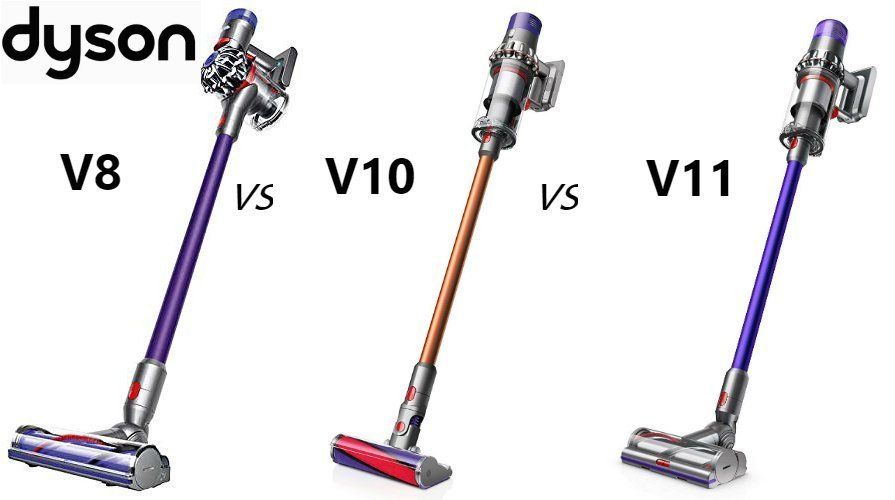
Dyson V11 vs V10 vs V8: Detailed Comparison (2026 Update)
Compare Dyson V11 vs V10 vs V8: Which older cordless vacuum offers the best value in 2026? Updated specs, pricing, and buying guide.
Dyson V15 vs Roborock H60 Ultra: Cordless Stick Showdown
Compare Dyson V15 Detect and Roborock H60 Ultra cordless vacuums. We test suction power, runtime, features, and value to help you choose the right premium stick vacuum.
Roomba vs Deebot: Which Robot Vacuum is Better? (2026 Comparison)
Roomba vs Deebot robot vacuum comparison for 2026. Compare iRobot and Ecovacs models across premium, mid-range, and budget tiers with features, pricing, and recommendations.