Affiliate Disclosure:Home Vacuum Zone is reader-supported. When you buy through links on our site, we may earn an affiliate commission at no additional cost to you. This does not influence our reviews or recommendations — we only recommend products we genuinely believe in.
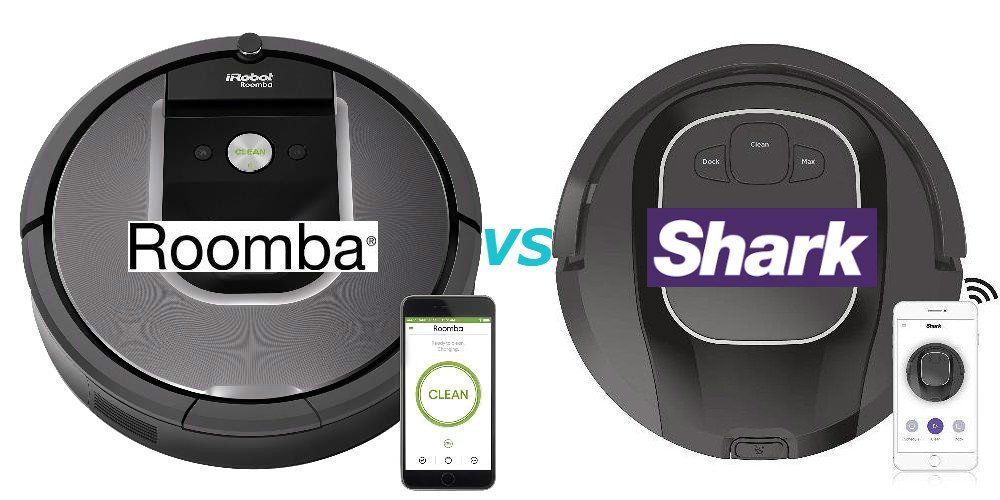
Robot vacuums have evolved from novelty gadgets to essential home appliances. Two brands dominate the conversation: iRobot’s Roomba, the category pioneer, and Shark, the value innovator challenging with competitive features at lower prices. If you’re wondering whether the investment pays off, our guide explores whether robotic vacuums are worth the money.
This comparison examines where each brand excels, their latest 2026 models, and which robot vacuum deserves your money. For a broader brand overview, see our Eufy vs Roomba comparison.
Quick Comparison: Roomba vs Shark
| Feature | Roomba | Shark |
|---|---|---|
| Navigation | Camera vSLAM + AI | LiDAR (laser) |
| Obstacle Avoidance | Advanced AI (j-series) | Basic (bumper-based) |
| Price Range | Mid-range to premium | Budget to mid-range |
| Self-Emptying | 30-60 days | 30-60 days |
| Mopping | Premium models only | Many 2-in-1 options |
| App Quality | Excellent | Good |
| Best For | Premium features, AI avoidance | Value, LiDAR navigation |
Brand Philosophy Comparison
Roomba (iRobot): The Innovation Leader
Founded: 1990 by MIT researchers Market Position: Premium, technology-focused Price Range: Mid-range to premium
Roomba created the robot vacuum category and continues pushing boundaries. Their focus is software intelligence - AI obstacle avoidance, smart mapping, and app ecosystem integration.
Key Strengths:
- Industry-leading obstacle avoidance (j-series)
- Most mature app and smart home integration
- Strong brand recognition and support
- Pet waste detection (j-series)
- Retractable mops (Combo models)
Key Weaknesses:
- Premium pricing
- Camera navigation struggles in low light
- Basic models lack advanced features
Shark: The Value Innovator
Founded: Shark brand 2007 (robot vacuums 2016) Market Position: Mid-range, value-focused Price Range: Budget to mid-range
Shark entered robot vacuums later but quickly gained market share by offering premium hardware features at competitive prices. Their focus is navigation precision and cleaning performance.
Key Strengths:
- LiDAR navigation (works in darkness)
- Excellent value for features
- Self-emptying at lower prices
- Sonic mopping (select models)
- Strong suction power
Key Weaknesses:
- No advanced AI obstacle avoidance
- Less mature app ecosystem
- Shorter warranty (1 year vs 1-2 years)
Latest Model Releases
The robot vacuum landscape shifted significantly in recent releases, with both brands introducing compelling new models.
Roomba 205 DustCompactor
Released in late 2025, the Roomba 205 marks a major departure - incorporating LiDAR navigation, previously a Shark exclusive. The internal DustCompactor compresses debris inside the robot, providing 60 days of capacity without an external base station. This bagless, self-contained design saves floor space and ongoing costs. When discounted, the 205 directly challenges Shark’s value dominance.
Roomba Combo j5+
The Combo j5+ bridges the gap between basic and premium models as a mid-range option. The swap-and-mop system converts from vacuum-only to vacuum-and-mop with a simple bin change. While lacking AI obstacle avoidance, it retains smart mapping, room-specific cleaning, and 60-day self-emptying.
Shark PowerDetect NeverTouch Pro
Shark’s 2025 premium flagship is their most ambitious yet. The NeverTouch Pro base doesn’t just empty debris - it washes, dries, and refills the mopping system automatically. Five PowerDetect technologies adapt cleaning in real-time: DirtDetect boosts suction on concentrated messes, EdgeDetect uses air blasts for edge cleaning, and 3D sensors combined with 360° LiDAR enable obstacle recognition rivaling Roomba’s AI. The system provides 60 days of debris capacity and 30 days of water refills.
Model-by-Model Comparison
Premium Showdown: Roomba Combo j9+ vs Shark AI Ultra 2-in-1
| Feature | Roomba Combo j9+ | Shark AI Ultra 2-in-1 |
|---|---|---|
| Value Tier | Premium | Mid-Range |
| Navigation | Camera + AI | LiDAR |
| Self-Emptying | 60 days | 60 days |
| Mopping | Auto-fill, retractable | Sonic mopping |
| Obstacle Avoidance | Advanced AI | Basic |
| Runtime | 120 min | 120 min |
Roomba Combo j9+
As Roomba’s current flagship, the j9+ offers revolutionary mopping capabilities. An auto-fill system refills the mop tank from a reservoir in the base station, enabling weeks of autonomous mopping. Its retractable mop lifts when carpet is detected - no manual intervention needed.
AI obstacle avoidance identifies and avoids cords, socks, shoes, and pet waste. It even recognises and creates “keep-out zones” around obstacles automatically.
Shark AI Ultra 2-in-1
At less than half the price, the AI Ultra offers remarkably comparable features. The LiDAR navigation creates precise room maps and works in total darkness. The sonic mopping vibrates at high frequency for effective hard floor cleaning.
The self-emptying base holds 60 days of debris. While it lacks AI obstacle detection, the LiDAR precision means it rarely gets stuck in predictable layouts.
Verdict: The Roomba j9+ is superior in intelligence and autonomy, but the Shark AI Ultra delivers 80% of the functionality at 43% of the price. For most buyers, Shark wins on value.
Mid-Range Comparison: Roomba j7+ vs Shark Matrix Plus
| Feature | Roomba j7+ | Shark Matrix Plus |
|---|---|---|
| Value Tier | Mid-Range | Mid-Range |
| Navigation | Camera + AI | LiDAR |
| Self-Emptying | 60 days | 60 days |
| Mopping | No (vacuum only) | Sonic mopping |
| Special Feature | AI obstacle avoidance | Matrix Clean grid |
| Runtime | 90 min | 110 min |
Roomba j7+
The j7+ made history as the first robot vacuum with AI obstacle avoidance specifically trained to recognise and avoid pet waste. Its front-facing camera identifies objects in real-time and navigates around them.
Without mopping, this is a vacuum-only device - but the obstacle avoidance is unmatched by any competitor.
Shark Matrix Plus
At a moderately higher price, the Matrix Plus includes sonic mopping. Its “Matrix Clean” technology vacuums in a precision grid pattern, overlapping passes for deep cleaning that rivals traditional vacuums.
Verdict: Choose the Roomba j7+ if you have pets and obstacle avoidance is critical. Choose the Shark Matrix Plus if deep cleaning performance and mopping matter more.
Budget Options: Roomba i5+ vs Shark ION
| Feature | Roomba i5+ | Shark ION AV751 |
|---|---|---|
| Tier | Mid-range | Budget |
| Navigation | Smart mapping | Random bounce |
| Self-Emptying | 60 days | No |
| Mopping | No | No |
| Runtime | 90 min | 90 min |
| Best For | Basic smart features | Entry-level introduction |
Roomba i5+
iRobot’s i5+ brings self-emptying and smart mapping to a more accessible price point. It lacks obstacle avoidance (will bump into things) but can map your home and clean specific rooms on schedule.
Shark ION AV751
Shark’s entry point - basic random navigation without mapping or advanced features. But at its budget-friendly price, it’s an affordable introduction to robot vacuums.
Verdict: The Roomba i5+ is the better robot vacuum with meaningful smart features. The Shark ION is the cheapest entry point for the curious.
Latest Value Disruptor: Roomba 205 vs Shark PowerDetect
The 2025 releases create fascinating new comparison points. The Roomba 205 offers LiDAR navigation and 60-day capacity without a base station at a mid-range price - features previously unavailable from Roomba at this tier. The Shark PowerDetect NeverTouch Pro at a premium price point brings automatic mop maintenance and 3D obstacle detection rivaling Roomba’s AI systems. For buyers prioritizing compact simplicity, the 205 excels; for true hands-off maintenance, the PowerDetect Pro delivers.
Navigation Technology Deep Dive
Roomba’s Camera + AI Approach
How It Works: Roomba uses a forward-facing camera combined with vSLAM (visual Simultaneous Localization and Mapping) to navigate. For a deeper dive into navigation technology, see our guide on how robot vacuums work. The camera identifies features in your home and tracks movement relative to them.
Advantages:
- AI can identify specific objects (cords, shoes, pet waste)
- Lower power consumption than LiDAR
- Can recognize rooms by visual features
Disadvantages:
- Requires adequate lighting (struggles in darkness)
- Can get confused by repetitive patterns
- Camera lenses need periodic cleaning
Latest Update: The Roomba 205 marks Roomba’s first LiDAR-equipped model, bridging the navigation gap while maintaining smart features.
Shark’s LiDAR Approach
How It Works: LiDAR (Light Detection and Ranging) uses laser pulses to map the environment with millimeter precision. The vacuum spins a laser sensor to create a 360-degree map.
Advantages:
- Works in complete darkness
- More precise mapping than camera
- Faster room recognition
- Not affected by visual clutter
Disadvantages:
- Cannot identify specific objects (just obstacles)
- Slightly higher power consumption
- Laser sensor can be damaged if mishandled
Latest Advancement: Shark’s PowerDetect adds 3D structured light sensors to LiDAR, enabling object recognition capabilities approximating Roomba’s AI avoidance.
Cleaning Performance Comparison
Carpet Deep Cleaning
When it comes to extracting embedded dirt from carpets, brushroll design matters as much as raw suction. Roomba Combo j9+ and j7+ use dual rubber brushrolls that grip carpet fibers and agitate debris loose without tangling hair around the brush. This rubber-on-rubber design is particularly effective for pet owners - hair slides off rather than wrapping tight.
Shark AI Ultra and Matrix models take a different approach with a bristle-and-rubber combo brushroll paired with a self-cleaning feature that actively removes hair wraps during operation. For deep carpet cleaning specifically, the Shark Matrix Plus stands out with its precision grid cleaning pattern. Rather than following random or zigzag paths, the Matrix Plus vacuums in overlapping parallel lines, ensuring no strip of carpet gets missed. This systematic approach provides the most thorough single-pass cleaning of any model in either lineup.
Both brands handle pet hair effectively, but the maintenance experience differs. Roomba’s all-rubber brushrolls rarely need manual cleaning - most pet hair falls into the bin naturally. Shark’s self-cleaning brushroll automates maintenance during cleaning cycles, but occasional manual removal of tightly wound hair may still be necessary.
Hard Floor and Mopping
Shark offers mopping capability at more price points than Roomba, making it the more accessible option for homes with significant hard flooring. Shark’s sonic mopping technology vibrates the mopping pad at high frequency, providing active scrubbing rather than passive dragging. This makes a noticeable difference on dried spills and sticky residue.
The Roomba Combo j9+ counters with two premium features: an auto-fill system that refills the mop tank from a reservoir in the base station (enabling weeks of autonomous mopping), and a retractable mop pad that physically lifts when carpet is detected. This retraction is critical for mixed-surface homes - it prevents the wet mop pad from dampening carpets as the robot transitions between rooms.
For primarily hard floor homes, Shark offers better mopping value with sonic vibration available at mid-range pricing. For mixed carpet and hard floor homes, Roomba’s retractable mop prevents the most common complaint with robot mops: wet carpet edges.
Noise Levels
Robot vacuums typically operate between 55-70 dB, making them significantly quieter than upright vacuums which commonly reach 70-85 dB. Roomba models tend to run 60-65 dB on standard cleaning mode, while Shark models operate in a similar 58-65 dB range.
The difference between brands is minimal on standard settings. Where it matters more is in quiet or eco modes - both brands offer reduced-power modes that drop noise to around 55 dB, roughly equivalent to a normal conversation. For noise-sensitive households, apartments with thin walls, or homes where you want to run the vacuum during nap time, either brand works well in quiet mode. If noise is a primary concern, check out our quiet vacuum reviews for models specifically optimized for low-noise operation.
Best Robot Vacuum for Your Situation
For Pet Owners
Roomba j7+ wins if pet waste avoidance is critical. Its AI obstacle detection was specifically trained to recognize and avoid pet accidents on the floor - a feature no Shark model currently matches. If your dog or cat has occasional indoor accidents, the j7+ prevents the nightmare scenario of a robot vacuum spreading waste across your entire home.
Shark AI Ultra wins on value with strong suction, a self-cleaning brushroll that handles pet hair without tangling, and a self-emptying base holding 60 days of debris - all at a lower price point than comparable Roombas. For homes where shedding is the main concern (rather than accident avoidance), Shark delivers excellent pet hair pickup without the premium. See our dedicated best robot vacuum for pet hair roundup for more options.
For Apartments and Small Spaces
The Roomba 205 DustCompactor is purpose-built for smaller living spaces. Its internal dust compression system eliminates the need for an external base station entirely - the robot itself holds 60 days of debris. In a studio or one-bedroom apartment where floor space is at a premium, not needing a bulky self-emptying dock is a significant advantage.
The Shark ION AV751 serves as the budget entry point for apartment dwellers who want to test whether a robot vacuum fits their lifestyle. Its compact footprint and basic navigation handle open floor plans adequately, though it uses random-bounce navigation rather than systematic mapping.
For apartments with complex layouts - lots of furniture legs, tight hallways, and small rooms - LiDAR-equipped Shark models handle tight navigation with more precision than camera-based systems, mapping the space accurately even in dimly lit rooms.
For Large Homes (2,000+ sq ft)
Both brands support multi-floor mapping, allowing you to save separate maps for each level of your home. The Roomba Combo j9+ and Shark PowerDetect NeverTouch Pro both handle large homes effectively with 120+ minute runtimes and automatic recharge-and-resume when battery runs low mid-clean.
Self-emptying bases become essential at this scale. A large home generates more debris per cleaning cycle, and manually emptying the dustbin after every run defeats the purpose of automation. Both brands offer 60-day self-emptying capacity.
Consider total cost of ownership when choosing between brands for a large home. Roomba self-emptying bases use disposable bags that need periodic replacement. Shark’s bagless designs avoid this recurring cost but require more frequent filter cleaning. Over two to three years of ownership, the bag cost difference adds up - factor this into your budget alongside the purchase price.
For Smart Home Integration
Roomba has the more mature smart home ecosystem. Beyond basic Alexa and Google Home voice commands (which both brands support), Roomba offers IFTTT trigger support, detailed room-specific scheduling, and granular zone controls within the iRobot app. You can set different cleaning frequencies for the kitchen versus bedrooms, create invisible barriers, and receive notifications when specific rooms are cleaned.
Shark supports Alexa and Google Home for voice-activated cleaning and scheduling, but the SharkClean app offers fewer granular controls than iRobot’s. Room-specific scheduling is available on LiDAR models, but advanced automations like IFTTT triggers and conditional cleaning routines are not.
For smart home enthusiasts who want their robot vacuum deeply integrated into home automation workflows, Roomba’s app and ecosystem provide the deeper, more customizable experience. For users who simply want to say “clean the kitchen” to their smart speaker, both brands deliver equally well.
Further Reading
- Roomba i7 vs S9: 2026 Buyer”s Guide to Older Models
- Best Robot Vacuum Brands 2026: Top 7 Compared
- Robot Vacuum vs Regular Vacuum: Do You Need Both?
- Shark vs Dyson: Which Brand is Better?
- Deebot vs Roomba: Which Robot Vacuum Wins?
- Shark ION 750 vs Roomba 675: Budget Showdown
Which Brand Should You Choose?
Choose Roomba If:
- You have pets and need obstacle avoidance
- You want the most mature app ecosystem
- Premium features justify premium pricing
- Smart home integration is important
- You want the “best” regardless of cost
- You have complex layouts requiring AI navigation
Choose Shark If:
- Value is important (20-40% savings)
- You want LiDAR navigation precision
- You need mopping capabilities
- You prefer hardware features over AI
- Your home has predictable layouts
- You want self-emptying without premium pricing
Specific Recommendations:
Best Overall Value: Shark AI Ultra 2-in-1 - LiDAR, self-emptying, mopping (mid-range)
Best for Pet Owners: Roomba j7+ - AI obstacle avoidance, pet waste detection (see our full robot vacuums for pet hair roundup) (mid-range)
Best Premium Experience: Roomba Combo j9+ - Auto-fill mopping, retractable mop, AI (premium)
Best Budget Option: Roomba i5+ - Self-emptying with smart mapping (affordable)
Best for Deep Cleaning: Shark Matrix Plus - Precision grid cleaning, sonic mopping (mid-range)
Best Entry-Level: Shark ION AV751 - Affordable introduction (budget)
Best Recent Innovation (Value): Roomba 205 DustCompactor - LiDAR without base station (mid-range)
Best Recent Innovation (Premium): Shark PowerDetect NeverTouch Pro - Automatic mop maintenance (premium)
Head-to-Head Comparison
Detailed Reviews
iRobot Roomba Combo j9+ Self-Emptying
Best Roomba overallThe iRobot Roomba Combo j9+ is the most autonomous Roomba available, featuring SmartScrub back-and-forth mopping, an auto-fill water system, and AI-powered obstacle recognition that avoids pet waste. It is best for large multi-surface homes where owners want truly hands-off cleaning with minimal maintenance for up to 60 days at a time.
What We Like
- Advanced AI obstacle avoidance and recognition
- SmartScrub back-and-forth mopping for better cleaning
- Retractable mop pad lifts completely over carpets
- 60-day self-emptying with auto-fill water system
What We Don't
- Very expensive at premium price tier
- Large base station footprint requires significant space
- Auto-fill water reservoir needs plumbing-adjacent placement or manual refills
Shark AI Ultra 2-in-1 Robot Vacuum & Mop
Best Shark overallThe Shark AI Ultra 2-in-1 pairs 360-degree LiDAR navigation with sonic mopping at 100 scrubs per minute and a 60-day self-emptying base, delivering thorough vacuuming and mopping in a single pass. Best for households wanting Shark's most capable robot without paying the premium of competing brands like Roborock or Ecovacs.
What We Like
- 360° LiDAR navigation for precise room mapping
- 60-day bagless self-emptying base
- Sonic mopping with scrubbing motion
- Good value for 2-in-1 functionality
What We Don't
- Basic obstacle avoidance without camera-based AI
- Limited to single-floor mapping
- 6-hour charging time is significantly longer than competitors
- Sonic mopping lacks the water pressure of dedicated robot mops
iRobot Roomba j7+ Self-Emptying Robot Vacuum
Best for pet ownersBest Roomba for pet owners with AI obstacle avoidance.
What We Like
- PrecisionVision AI obstacle avoidance (avoids pet waste)
- 60-day capacity self-emptying Clean Base
- Smart mapping with room-specific cleaning schedules
- Pet Owner Official Promise (P.O.O.P.)
What We Don't
- Premium price point
- No mopping capability
- Camera-based navigation requires adequate lighting
iRobot Roomba i5+ Self-Emptying
Best budget RoombaThe iRobot Roomba i5+ Self-Emptying provides Imprint Smart Mapping and a 60-day capacity base at an accessible price, eliminating the need to touch the dustbin for weeks at a time. It is best for busy households that want the core self-emptying Roomba experience with room-level customization without stepping up to the j-series premium.
What We Like
- Self-emptying base included
- Smart mapping for room-specific cleaning
- Affordable price for a self-emptying Roomba
- iRobot Home app with scheduling and customization
What We Don't
- No camera-based obstacle avoidance
- Uses reactive navigation which may result in collisions
- 75-minute runtime may require recharge-and-resume cycles in larger homes
Shark ION Robot Vacuum AV751
Best budget SharkThe Shark ION AV751 delivers WiFi connectivity, voice control, and a self-cleaning brushroll at the lowest price point in Shark's robot lineup, making it a genuine entry-level smart vacuum. Best for first-time robot vacuum buyers in small apartments who want app and voice control without a large investment.
What We Like
- Very affordable entry-level robot vacuum
- Tri-brush system provides good coverage
- WiFi connected with app control
- Voice control compatible with Alexa and Google Assistant
- Self-cleaning brushroll reduces maintenance
What We Don't
- No self-emptying base requires manual dustbin emptying
- Random navigation less efficient than smart mapping
- Basic features compared to premium models
- Shorter battery life than newer models
Sources & Research
- Amazon Product Page
- iRobot Official Product Page
- iRobot Official Product Page
- Amazon Product Page
- Manufacturer Page
- Amazon Product Page
- iRobot Official Page
- iRobot j7 Series
- Amazon Product Page
- iRobot Official Product Page
- iRobot Official Product Page
- Amazon Product Page
- Shark Official Product Page
- Shark Official Website
Continue Reading
Explore more robot vacuums content or browse our other categories.
Frequently Asked Questions
- Is Shark or Roomba robot vacuum better?
- Roomba offers superior AI obstacle avoidance and mature app ecosystem, while Shark provides better value with LiDAR navigation at lower prices. Choose Roomba for premium features like pet waste detection and advanced object recognition. Choose Shark for strong navigation, good cleaning performance, and budget-friendly pricing. Roomba excels in software intelligence; Shark wins on hardware value. For most buyers, Shark AI Ultra 2-in-1 at $599 offers 80% of Roomba j7+ features at the same price with mopping included.
- What are the main differences between Roomba and Shark robot vacuums?
- The main differences: (1) Navigation: Shark uses LiDAR (laser) for precise mapping; Roomba uses camera-based vSLAM with AI recognition. (2) Obstacle Avoidance: Roomba j-series has AI that identifies cords, socks, pet waste; Shark lacks advanced obstacle detection. (3) Price: Shark models typically cost 20-40% less than comparable Roombas. (4) App: Roomba's app is more mature with better scheduling and zone control. (5) Mopping: Shark's 2-in-1 models offer sonic mopping; Roomba Combo models have auto-fill and retractable mops at higher prices. (6) Self-emptying: Both offer 30-60 day bases, but Roomba's are quieter and more refined.
- Do Shark robot vacuums have mapping?
- Yes, Shark robot vacuums have advanced mapping capabilities. Shark AI Ultra and Matrix models use LiDAR (Light Detection and Ranging) navigation to create detailed home maps. These maps enable: room-specific cleaning, no-go zones, scheduled cleaning by room, and efficient path planning. Shark's LiDAR works in darkness unlike camera-based systems. Entry-level Shark ION models use random bounce navigation without mapping. For mapping capabilities, choose Shark AI Ultra, Matrix, or PowerDetect models - not the base ION series.
- Which robot vacuum is best for pet hair Roomba or Shark?
- For pet hair, the choice depends on your specific needs. Roomba j7+ is best for avoiding pet accidents and toys with AI obstacle detection - critical if your pets have indoor accidents. The rubber brushes resist hair tangles. Shark AI Ultra 2-in-1 offers strong suction and self-cleaning brushroll at lower price. Shark Matrix Plus has superior deep cleaning with precision grid patterns. For homes with pets that shed heavily but don't have accident issues, Shark offers better value. For homes where pet waste avoidance is critical, Roomba j7+ is worth the premium.
- Are Shark robot vacuums worth the money?
- Shark robot vacuums are excellent value, offering features comparable to premium brands at 20-40% lower prices. The Shark AI Ultra 2-in-1 at $599 includes LiDAR navigation, self-emptying, and sonic mopping - features that cost $800+ from competitors. Shark's build quality is solid, navigation is precise, and cleaning performance is strong. The main trade-offs are less advanced obstacle avoidance (compared to Roomba j-series) and a less mature app ecosystem. For most buyers, Shark robot vacuums deliver 90% of premium performance at significantly lower cost, making them a smart value choice.
Written By
Home Vacuum Zone
Our team researches, tests, and reviews vacuum cleaners to help you make confident buying decisions.
Related Articles
Dreame vs Roborock: Which Robot Vacuum Brand Is Better in 2026?
Dreame and Roborock are two of the fastest-growing robot vacuum brands. We compare their flagship models across navigation, suction, mopping, self-emptying stations, and value to help you pick the right one.
What Happened to Neato? Best Robot Vacuum Alternatives in 2026
Neato Robotics shut down in 2023 after Vorwerk discontinued the brand. Learn what happened, why Neato failed, and which robot vacuums are the best replacements for former Neato owners in 2026.
Best Robot Vacuums of 2026: Top Picks Reviewed & Compared
We compared dozens of robot vacuums to find the 6 best for every budget and floor type in 2026. Compare top models from iRobot, Roborock, and Shark with expert reviews.