Affiliate Disclosure:Home Vacuum Zone is reader-supported. When you buy through links on our site, we may earn an affiliate commission at no additional cost to you. This does not influence our reviews or recommendations — we only recommend products we genuinely believe in.
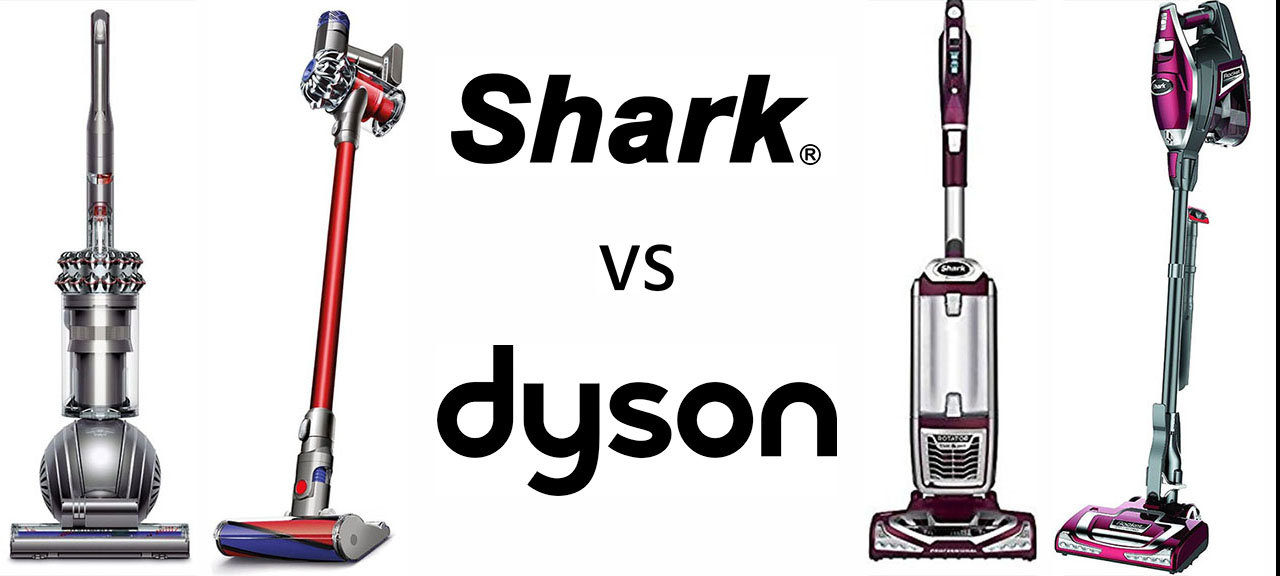
Shark and Dyson represent opposite ends of the vacuum market philosophy. Dyson relentlessly pursues innovation, introducing features years before competitors and charging premium prices for the privilege. Shark focuses on value engineering, delivering features that matter at prices that don’t break the bank.
This comprehensive comparison examines where each brand excels, where they fall short, and which deserves your money in 2026. If you need help narrowing down what type of vacuum to buy first, start with our vacuum buying guide.
Executive Summary: Winner by Category
| Category | Winner | Why |
|---|---|---|
| Suction Power | Dyson | 230-290 AW vs Shark’s 150-200 AW |
| Innovation | Dyson | Laser detection, particle counting, latest motor tech |
| Value | Shark | 50-60% less cost for comparable performance |
| Features | Tie | Each has exclusive innovations |
| Cordless Runtime | Dyson | 60-70 min vs Shark’s 40-60 min |
| Warranty | Shark | 5-7 years vs Dyson’s 2-5 years |
| Weight | Dyson | Lighter designs, especially cordless |
| Filtration | Dyson | Superior HEPA systems on most models |
Brand Philosophy Comparison
Dyson: The Innovation Leader
Founded: 1991 by James Dyson (UK) Headquarters: Singapore (manufacturing in Malaysia/Singapore) Annual R&D Investment: Over $300 million Price Positioning: Premium
Core Philosophy: Dyson operates like a technology company that happens to make vacuums. They invest heavily in R&D, patent aggressively, and introduce features 2-3 years before competitors can copy them. The result is cutting-edge technology at luxury prices.
Key Innovations:
- Cyclone technology (no loss of suction)
- Digital motors (high power, compact size)
- Ball steering (maneuverability)
- Laser dust detection (V15 series)
- Piezo particle counting (V15/Gen5)
- Cordless category leadership (both brands also compete in robot vacuums - see our Roomba vs Shark robot vacuum comparison)
Shark: The Value Innovator
Founded: 1990s, Shark brand launched 2007 (USA) Headquarters: Needham, Massachusetts Parent Company: SharkNinja (Euro-Pro) Price Positioning: Mid-range
Core Philosophy: Shark positions as offering “Dyson features at Dyson-half prices.” They watch what Dyson innovates, then engineer similar functionality at accessible prices. The focus is practical innovation that solves real cleaning problems.
Key Innovations:
- Lift-Away canister conversion
- DuoClean dual brush system
- Self-cleaning brush rolls
- Flexology wand (under furniture reach)
- Odor neutralizer technology
- Extended warranties (5-7 years)
Cordless Stick Vacuum Comparison
Dyson V15 Detect vs Shark Stratos
| Feature | Dyson V15 Detect | Shark Stratos |
|---|---|---|
| Value Tier | Premium | Mid-Range |
| Suction | 240 AW | ~180 AW |
| Runtime | 60 min | 60 min |
| Weight | 6.8 lbs | 8.8 lbs |
| Dustbin | 0.2 gal | 0.2 gal |
| Filtration | 5-stage HEPA | HEPA |
| Special Features | Laser dust detection, particle counting | Self-cleaning brush, odor neutralizer |
| Warranty | 2 years | 5 years |
Dyson V15 Detect
The V15 showcases Dyson’s innovation advantage. The laser dust detection illuminates microscopic dust invisible to the naked eye, showing exactly where to clean. The piezo sensor counts and displays particle sizes removed, providing tangible proof of cleaning effectiveness.
At 240 AW suction, the V15 outperforms most corded uprights. Read our full Dyson V15 Detect review for detailed test results. The digital motor V15 spins at 125,000 RPM, generating suction that pulls embedded dirt from deep within carpet fibers.
The hair screw tool uses an augmented cone brush that spirals hair off and into the bin - no tangles, no wrapping. It’s genuinely effective for long hair and pet fur.
Shark Stratos
The Stratos counters with practical innovations at a significantly lower price. The self-cleaning brush roll uses combs that actively remove hair during operation - Dyson’s approach requires specialized attachments; Shark’s is built into the main cleaner head.
The Clean Sense IQ automatically adjusts suction based on debris detected. While not as flashy as Dyson’s particle counting, it extends runtime by reducing power when less is needed.
The odor neutralizer technology actually works - a cartridge in the cleaner head releases particles that reduce pet smells in exhaust air. For pet owners, this is genuinely useful.
Verdict: Dyson wins on suction power and technology wow-factor. Shark wins on practical features and value. If you want the absolute best cordless performance and latest tech, choose Dyson. If you want excellent cleaning with self-maintenance features at lower cost, choose Shark.
Upright Vacuum Comparison
Dyson Ball Animal 3 vs Shark Vertex Pro
| Feature | Dyson Ball Animal 3 | Shark Vertex Pro |
|---|---|---|
| Value Tier | Premium | Mid-Range |
| Suction | 290 AW | ~200 AW |
| Weight | 17.4 lbs | 17.2 lbs |
| Dustbin | 0.3 gal | 0.3 gal |
| Cord Length | 35 ft | 30 ft |
| Special Features | Self-adjusting head, ball steering | Lift-Away, DuoClean |
| Warranty | 5 years | 5 years |
Dyson Ball Animal 3
The Ball Animal 3 features Dyson’s self-adjusting cleaner head that automatically adapts to different floor heights. Move from carpet to hard floor without changing settings - the vacuum senses and adjusts.
The ball steering, while polarizing (some love it, some hate it), does provide exceptional maneuverability around furniture. You pivot the vacuum rather than turning the entire unit.
At 290 AW, suction is exceptional - even Dyson’s cordless models don’t match this power. For deep carpet cleaning, the Animal 3 is unmatched in Dyson’s lineup.
Shark Vertex Pro
The Vertex Pro’s DuoClean PowerFins use two brush rolls - a soft front roller for hard floors and a PowerFin roller for carpets. This eliminates the need to switch modes when moving between surfaces.
The Powered Lift-Away feature is Shark’s signature innovation - detach the canister and the brush roll remains powered via the wand. Clean stairs, under furniture, and upholstery with full brush roll power.
At a lower price than the Dyson, the Vertex Pro offers comparable cleaning performance with greater versatility.
Verdict: Dyson wins on raw suction and automatic adjustment. Shark wins on versatility and value. For homes with varied floor types and above-floor cleaning needs, Shark’s Lift-Away is genuinely useful. For carpet-heavy homes wanting maximum suction, Dyson delivers.
Technology Deep Dive
Suction Power Comparison
Independent testing shows significant suction differences:
| Model | Air Watts (AW) | Tested Suction (kPa) |
|---|---|---|
| Dyson Gen5detect | 280 | 28.5 |
| Dyson V15 Detect | 230 | 25.0 |
| Dyson Ball Animal 3 | 290 | 30.0 |
| Shark Stratos | ~180 | 19.0 |
| Shark Vertex Pro | ~200 | 21.0 |
| Shark Navigator | ~150 | 16.0 |
What This Means: Dyson vacuums generate 30-50% more suction than comparable Sharks. This translates to:
- Better deep carpet cleaning
- More effective pet hair removal
- Faster cleaning (fewer passes needed)
However, Shark’s suction is sufficient for most cleaning tasks. The difference is most noticeable on thick carpet and heavy pet hair.
Filtration Comparison
Both brands offer HEPA filtration, but implementation differs:
Dyson:
- Multi-stage cyclone filtration
- Whole-machine HEPA (sealed system on most models)
- 99.99% particle capture to 0.3 microns
- Washable lifetime filters (most models)
Shark:
- Anti-Allergen Complete Seal (select models)
- HEPA filters standard on mid-range+
- 99.9% particle capture
- Replaceable filters (lower long-term cost)
Verdict: Dyson offers slightly better filtration on premium models. Shark provides good filtration at all price points.
Price-to-Performance Analysis
Budget Tier
Winner: Shark
Shark dominates this segment with models like:
- Navigator Lift-Away
- Rotator Professional
- Vertex DuoClean
Dyson has minimal presence at budget-friendly price points - only older refurbished models.
Mid-Range Tier
Winner: Shark (value), Dyson (performance)
This is the battleground. Shark offers feature-rich models in this range, while Dyson’s entry-level options (V8, refurbished V10) overlap here. For a detailed breakdown of Dyson’s cordless tiers, see our Dyson V11 vs V10 vs V8 comparison.
For pure value, Shark wins. For cutting-edge cordless technology, Dyson’s V12 Detect is compelling.
Premium Tier
Winner: Dyson
At premium price points, Dyson owns the category. The V15 Detect and Gen5detect offer technology unavailable elsewhere. Shark has limited offerings in this tier.
Long-Term Value Comparison
Durability and Lifespan
Dyson (for more detail, see how long vacuums last):
- Typical lifespan: 5-7 years
- Premium models may last 8-10 years
- Digital motors have excellent reliability
- Shorter warranty (2-5 years)
Shark:
- Typical lifespan: 5-7 years
- Consistent across price points
- Longer warranty (5-7 years) provides peace of mind
- Plastic construction durable but not premium
Maintenance Costs
Dyson:
- Filters: Washable lifetime on most models (free)
- Brush rolls: Moderate replacement cost every 3-5 years
- Batteries (cordless): Replacement needed after 2-4 years
Shark:
- Filters: Affordable annual replacement
- Brush rolls: Low-cost replacement every 3-4 years
- Belts: Low-cost annual replacement
5-Year Total Cost of Ownership:
- Dyson V15: Premium purchase price plus battery replacement - higher total cost
- Shark Stratos: More affordable purchase price plus filters and belts - significantly lower total cost
Further Reading
- Shark vs Bissell Vacuums: Which Brand is Better? (2026 Comparison)
- Makita vs Dyson Stick Vacuum - Full Comparison (2026 Update)
- SEBO vs Miele: Which German Vacuum Brand Is Better? (2026 Comparison)
Which Brand Should You Choose?
Choose Dyson If:
- You want cutting-edge technology and innovation
- Suction power is your top priority
- You have thick carpet or heavy pet hair
- Budget allows for premium pricing
- You value lightweight cordless designs
- Filtration for allergies is critical
- You want the “best” regardless of cost
Choose Shark If:
- Value is important (significantly less than Dyson)
- You want practical features (Lift-Away, self-cleaning)
- You prefer longer warranty coverage
- You need versatile above-floor cleaning
- You want good performance without premium pricing
- You prefer bagless convenience without complexity
Specific Recommendations:
Best Overall Cordless:
- Premium: Dyson Gen5detect
- Value: Shark Stratos
Best for Pet Hair (see our best upright vacuums for pet hair for more picks):
- Dyson Ball Animal 3
- Shark Vertex Pro with self-cleaning
Best for Allergies:
- Dyson V15 Detect
- Shark Navigator with HEPA
Best Budget Option:
- Shark Navigator Lift-Away
- Dyson V8 (refurbished)
Head-to-Head Comparison
Detailed Reviews
Dyson V15 Detect Absolute
Best Dyson cordlessBest Dyson for tech enthusiasts wanting cutting-edge features.
What We Like
- Laser Slim Fluffy cleaner head reveals microscopic dust
- Powerful 240 AW suction
- Up to 60 minutes runtime in Eco mode
- Piezo sensor counts and categorizes dust particles
What We Don't
- Premium price point — among the most expensive cordless vacuums
- No self-emptying dock available
- 60-minute runtime only achievable in Eco mode
Shark Stratos Cordless with Clean Sense IQ
Best Shark cordlessBest Shark cordless with innovative features at lower price.
What We Like
- Self-cleaning brush roll prevents hair wrap
- Odor neutralizer cartridge keeps vacuum fresh
- Up to 60-minute runtime in standard mode
- Clean Sense IQ auto-adjusts suction power based on dirt detection
- Removable battery for extended cleaning sessions
What We Don't
- Heavier at 8.8 lbs than some cordless competitors
- Premium price point
- Odor neutralizer cartridges need periodic replacement
- Runtime decreases significantly in boost mode
Dyson Ball Animal 3 Extra
Best Dyson uprightBest Dyson upright with automatic adjustment for all floor types.
What We Like
- Whole-machine HEPA filtration traps 99.97% of particles
- Tangle-free turbine tool prevents hair wrap
- 290 AW suction power for deep cleaning
- Sealed system prevents allergen leakage
- Self-adjusting cleaner head for all floor types
What We Don't
- Premium pricing for a corded upright
- Small 0.45 gallon dustbin needs frequent emptying
- Heavy at 17.3 lbs for extended use
Dyson Gen5detect
Best Dyson overallThe Gen5detect represents Dyson's most advanced cordless vacuum with 262 AW suction, a piezo sensor that counts particles in real time, and a Fluffy Optic laser head that reveals microscopic dust. Best for cleaning enthusiasts and allergy sufferers who want the absolute best suction, filtration, and runtime in a cordless format.
What We Like
- Latest generation Hyperdymium motor with 262 AW suction
- Advanced HEPA filtration captures 99.99% of particles
- 70-minute runtime in Eco mode
- Fluffy Optic cleaner head reveals microscopic dust
- Built-in dust particle counter and LCD screen
What We Don't
- Very expensive at premium price point
- Overkill for basic cleaning needs
- Heavy compared to competitor cordless models
Shark Vertex DuoClean PowerFins
Best Shark multi-surfaceThe Shark Vertex DuoClean PowerFins pairs a dual brush system with a self-cleaning brushroll, powered lift-away mode, and the largest dustbin in its class at 1 quart. Best for multi-surface homes with both carpet and hard floors that want Shark's deepest-cleaning corded upright without stepping up to a Dyson price.
What We Like
- DuoClean PowerFins dual brush system deep cleans carpets and hard floors
- Self-cleaning brush roll continuously removes hair wrap during use
- Strong value for premium features compared to competitor flagship models
- LED headlights for improved visibility
- Largest dustbin capacity at 1 quart reduces emptying frequency
What We Don't
- Heavier than comparable Dyson models at 16.4 lbs
- Lacks automatic height adjustment for different floor types
- Bulky design may be challenging in tight spaces
Sources & Research
Continue Reading
Explore more buying guides content or browse our other categories.
Frequently Asked Questions
- Is Shark or Dyson better?
- Dyson offers superior suction power, innovative technology, and premium build quality but at significantly higher prices. Shark provides excellent value with innovative features like self-cleaning brush rolls and Lift-Away canisters at mid-range prices. Choose Dyson if you want cutting-edge technology and maximum performance regardless of cost. Choose Shark if you want comparable performance at a much lower price. Both brands are excellent - Dyson wins on performance and features, Shark wins on value.
- Why is Dyson so expensive?
- Dyson vacuums command premium prices due to proprietary technology investments (over $3 billion in R&D), premium materials, and innovative features not found on competitors. Key differentiators include: cyclone technology for sustained suction, digital motors with high power-to-weight ratios, laser dust detection, piezo particle counting, and advanced HEPA filtration. Dyson also manufactures in Malaysia and Singapore rather than China, with higher labor and quality control costs. You're paying for cutting-edge innovation, brand prestige, and research-leading features. Whether the premium is worth it depends on your budget and how much you value having the latest technology.
- Do Shark vacuums last as long as Dyson?
- Both Shark and Dyson vacuums typically last 5-7 years with proper maintenance. Dyson's premium models may outlast Sharks due to better build materials and motor design, but the difference is marginal (perhaps 1-2 years). Dyson offers 2-5 year warranties depending on model, while Shark offers 5-7 year warranties on most models. The longer warranty from Shark reflects their confidence in durability. Key maintenance for both: empty dustbin after each use, clean filters monthly, remove hair from brush rolls weekly, and replace filters annually. With proper care, both brands provide years of reliable service.
- Which is better for pet hair Shark or Dyson?
- Both brands excel at pet hair removal but with different approaches. Dyson offers superior suction power (up to 230-290 AW) that pulls embedded pet hair from deep in carpet fibers. The Animal models include tangle-free turbine tools and specialized attachments. Shark counters with self-cleaning brush roll technology that actively removes hair during operation, preventing the tangles that plague most vacuums. Shark also offers lower prices for comparable pet-specific features. For heavy shedding pets, Dyson's suction advantage may be worth the premium. For maintenance cleaning and everyday pet hair, Shark's self-cleaning feature and better value make it the smarter choice.
- Can I use Shark attachments on Dyson or vice versa?
- No, Shark and Dyson use proprietary attachment systems that are not cross-compatible. Dyson uses quick-release mechanisms with specific fitting diameters. Shark uses various attachment systems depending on model (some click-lock, some friction-fit). Even within brands, attachments aren't always universal between models. When buying a vacuum, ensure it includes the attachments you need rather than planning to purchase separately. Both brands offer a wide range of specialized tools for pet hair, crevices, upholstery, and dusting. If you have specific attachment needs, verify availability for your chosen model before purchasing.
Written By
Home Vacuum Zone
Our team researches, tests, and reviews vacuum cleaners to help you make confident buying decisions.
Related Articles
Vacuum Noise Level Comparison: Decibel Ratings for 60+ Models (2026 Database)
Comprehensive vacuum noise level database with decibel ratings for 60+ models across every vacuum type. Find the quietest vacuums and understand what dB ratings actually mean.
Vacuum Suction Power Chart: AW, Pa & kPa Ratings Compared (2026 Database)
Comprehensive vacuum suction power database with air watts, pascals, and kPa ratings compared across every vacuum type. Find how much suction you actually need.
Bagged vs Bagless Vacuums: Which Type Is Actually Better?
Bagged and bagless vacuums each have distinct advantages for different households. We compare cost, filtration, allergen control, maintenance, and convenience to help you choose the right type.