Affiliate Disclosure:Home Vacuum Zone is reader-supported. When you buy through links on our site, we may earn an affiliate commission at no additional cost to you. This does not influence our reviews or recommendations — we only recommend products we genuinely believe in.
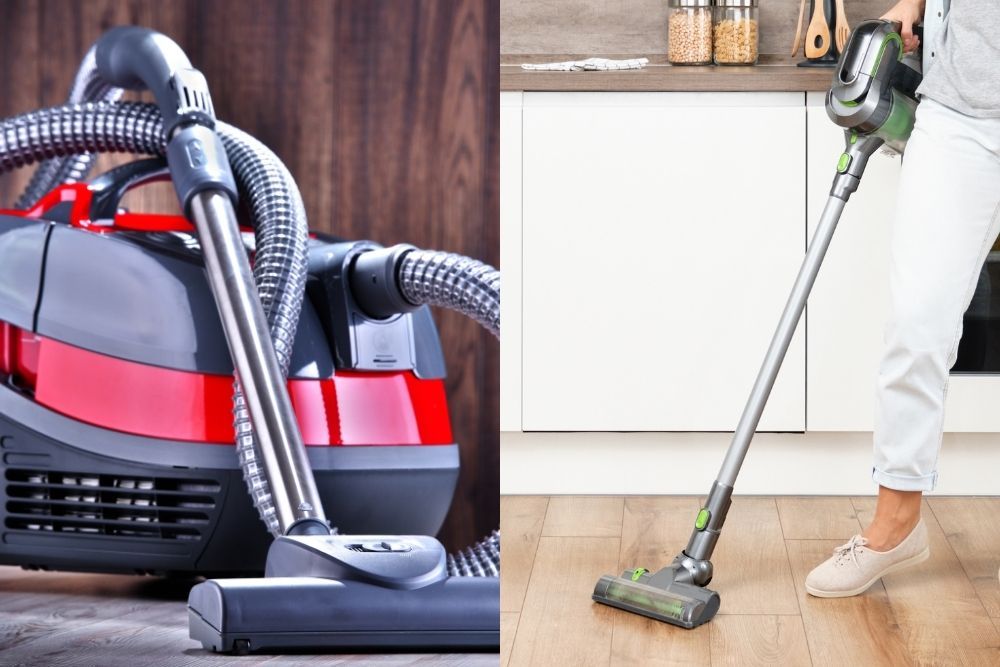
Choosing between a stick vacuum and a canister vacuum is one of the most important decisions when buying a new cleaner. The right choice depends on your home size, flooring types, storage space, and cleaning habits.
This guide breaks down the differences to help you decide - and recommends specific models for each category.
Quick Comparison
| Factor | Stick Vacuum | Canister Vacuum |
|---|---|---|
| Best For | Quick cleanups, small homes | Deep cleaning, large homes |
| Weight | 5-7 lbs (lightweight) | 10-20 lbs (plus wand) |
| Runtime | 30-60 minutes (battery) | Unlimited (corded) |
| Suction | Good to excellent | Excellent |
| Capacity | 0.3-0.6 liters | 3-6 liters |
| Storage | Minimal space needed | Requires closet space |
| Noise | Moderate to loud | Quiet to moderate |
| Lifespan | 3-7 years | 10-20 years |
| Price Range | Budget to premium | Mid-range to premium |
Understanding Stick Vacuums
What Is a Stick Vacuum?
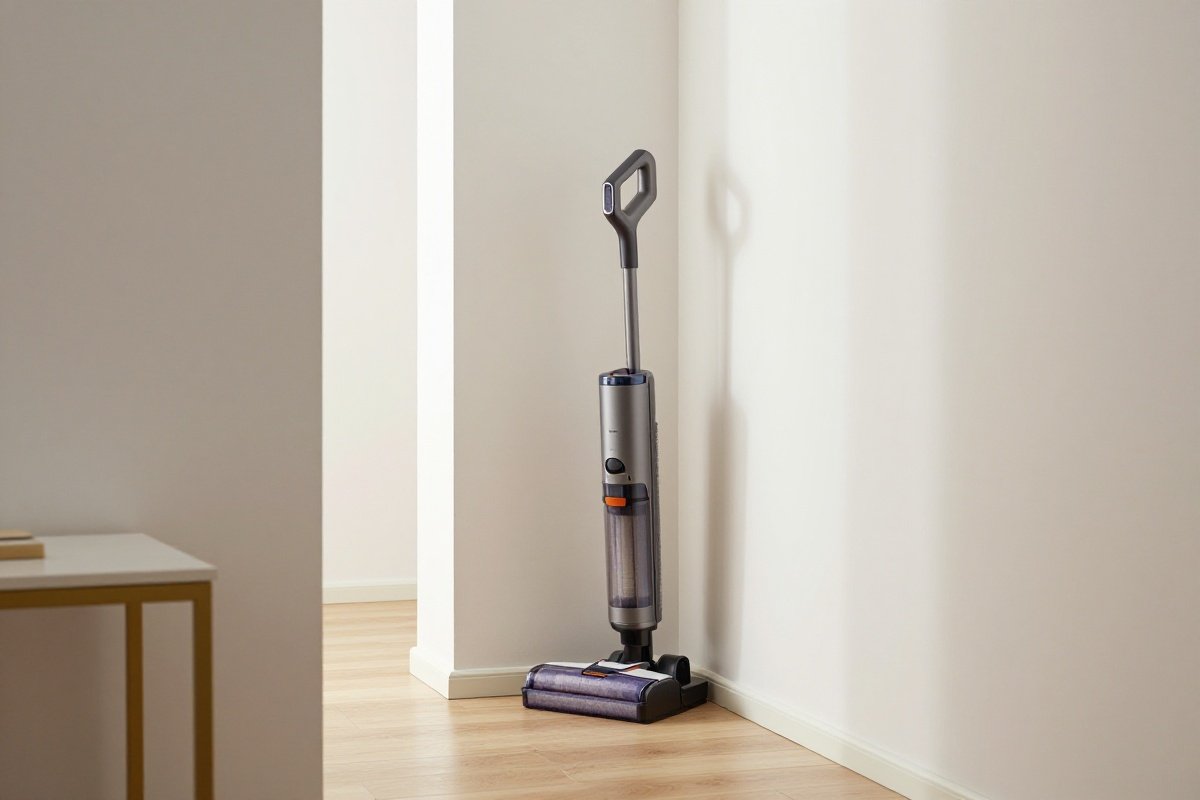
Stick vacuums are lightweight, cordless (typically) cleaning tools designed for quick, convenient cleaning. They feature:
- Slim, upright design
- Battery-powered operation
- Minimal weight (5-7 lbs)
- Convertible to handheld
- Wall-mount storage
Modern stick vacuums have evolved significantly from their early iterations. Today’s premium models incorporate advanced cyclonic technology, powerful digital motors, and intelligent sensors that rival traditional vacuum performance. The typical stick vacuum consists of a motor unit positioned in the handle, a rechargeable lithium-ion battery pack, a transparent dustbin, and a motorized floor head with brush roll.
Going cordless fundamentally changes how you approach cleaning. Rather than planning dedicated vacuuming sessions, many users adopt a “clean as you go” mentality - quickly addressing spills, crumbs, or tracked-in dirt the moment they appear. This shift in cleaning behaviour often results in homes that stay cleaner overall, even if individual sessions are shorter.
Stick Vacuum Pros
1. Ultimate Convenience
- Grab-and-go cleaning
- No cord to manage
- Store anywhere (even mount on wall)
- Quick setup and put-away
Honestly, the convenience factor can’t be overstated. Traditional vacuums require you to retrieve the unit from storage, find an outlet, unwind the cord, plug in, clean, unplug, wrap the cord, and return everything to storage. That 5-10 minute overhead discourages quick cleanups. With a stick vacuum mounted on your wall, you can clean up a spill in under 60 seconds total - including grabbing and returning the vacuum.
2. Lightweight
- Easy to carry up stairs
- No fatigue during extended use
- Accessible for elderly or those with mobility issues
Being lightweight isn’t just about the number on the scale. Because you’re only manoeuvring a single piece (versus managing a canister, hose, and wand), the perceived effort is significantly lower. Stick vacuums are particularly valuable for people with arthritis, back problems, or reduced strength. Many elderly users who struggled with traditional vacuums find stick vacuums let them maintain independence in home cleaning.
3. Versatile
- Converts to handheld for cars, upholstery, stairs
- Clean high and low with minimal effort
- Perfect for quick spills
One device handles multiple cleaning tasks thanks to the convertible design. Remove the wand and you have a powerful handheld for cleaning car interiors, upholstered furniture, mattresses, or tight spaces. Extension wands let you reach ceiling corners for cobwebs or under furniture without bending. This multi-purpose functionality eliminates the need for separate handheld vacuums or dusting tools.
4. Compact Storage
- Fits in closets, corners, or mounted on walls
- Ideal for apartments and small homes
- No bulky canister to store
Wall-mounting also serves as a charging station, keeping your vacuum ready to use. Some models include tool storage on the dock, keeping all accessories organized in one spot. This integrated storage solution is particularly valuable in urban apartments where every square foot counts.
Stick Vacuum Cons
1. Limited Runtime
- 30-60 minutes per charge
- May not complete large homes
- Battery degradation over 2-3 years
- Replacement batteries are a significant expense
Runtime varies significantly by power mode. Most stick vacuums offer multiple power settings - eco mode might provide 60+ minutes of runtime on hard floors, while max power mode depletes the battery in 10-15 minutes. This means you need to plan your cleaning strategy, saving high power for carpets and using eco mode for hard floors to maximize coverage.
Battery degradation is inevitable with lithium-ion technology. After 300-500 charge cycles (typically 2-3 years of regular use), you’ll notice reduced runtime. Some manufacturers offer replaceable battery packs, but they’re expensive. This planned obsolescence is perhaps the most significant drawback of cordless stick vacuums - the battery effectively determines the vacuum’s lifespan. For a detailed breakdown of power source tradeoffs, see our cordless vs corded vacuum comparison.
2. Smaller Capacity
- Dustbins require frequent emptying
- Not ideal for heavy-duty cleaning
- Can get messy with lots of debris
A typical stick vacuum dustbin holds 0.3-0.6 liters compared to 3-6 liters in canisters. In practical terms, you might empty a stick vacuum 3-5 times when cleaning a 2,000 sq ft home, versus once with a canister. For homes with pets that shed heavily, you may need to empty the bin multiple times per room. The emptying process, while designed to be easy, can create dust clouds if you’re not careful.
3. Less Powerful (Generally)
- Cordless models max around 240 AW
- May struggle with thick carpet
- Not designed for deep cleaning
While premium stick vacuums approach canister-level suction in terms of air watts, they still struggle with certain tasks. Deep-pile carpet cleaning, particularly extracting embedded dirt and pet hair from carpet padding, requires sustained powerful suction that drains batteries quickly. Stick vacuums excel at surface-level cleaning but aren’t designed for the deep cleaning that canisters provide.
4. Shorter Lifespan
- Average 3-7 years
- Battery-dependent
- Less repairable than canisters
Beyond batteries, stick vacuums use plastic components that wear faster than the metal and high-grade materials in premium canisters. Motors are sealed units that can’t be serviced. When a stick vacuum breaks, it’s often more economical to replace it entirely rather than repair it. This disposability conflicts with sustainability values and increases long-term costs.
Best Stick Vacuum Use Cases
- Apartments and small homes (under 1,500 sq ft)
- Homes with mostly hard floors
- Daily maintenance cleaning
- Quick cleanups between deep cleans
- People with limited storage
- Those wanting lightweight convenience
Stick vacuums also excel in specific lifestyle situations: homes with young children where spills happen frequently, minimalist living spaces where visible appliances are undesirable, and second homes or vacation properties where you want simple, effective cleaning without hauling equipment. They’re also ideal for people with mobility challenges who find traditional vacuums too cumbersome but still want to maintain independence.
Understanding Canister Vacuums
What Is a Canister Vacuum?
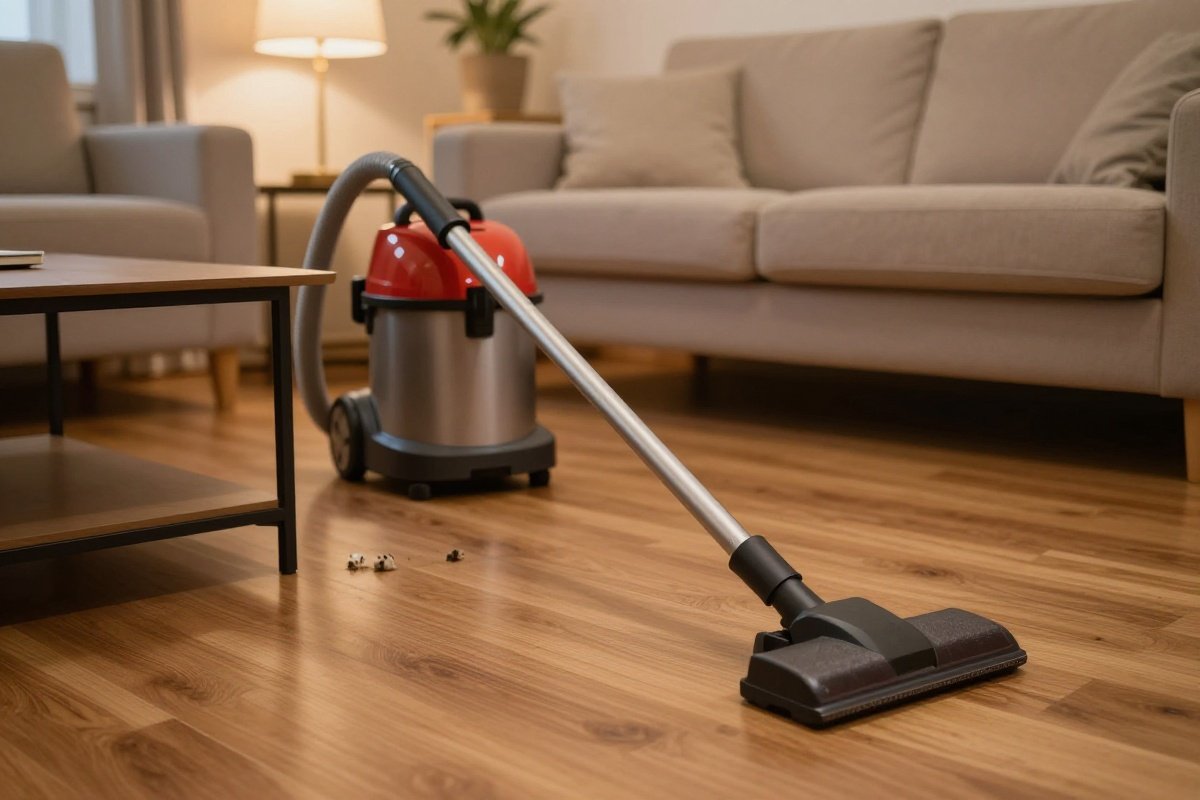
Canister vacuums feature a separate wheeled unit (the canister) containing the motor, dustbin/bag, and filters, connected to a lightweight cleaning wand by a hose.
The canister design separates the weight and motor from the cleaning tool, resulting in a lightweight wand that’s easy to maneuver while the canister follows behind on smooth-rolling wheels. This design has dominated European markets for decades and remains the preferred choice in homes where deep cleaning and versatility are priorities.
Premium canister vacuums incorporate sophisticated engineering - sealed systems with multiple filtration stages, variable power controls, and specialized tools for every surface. The wheeled canister design distributes weight efficiently, and quality models feature large, rubber-coated wheels that glide smoothly across floors without marring surfaces.
Canister Vacuum Pros
1. Superior Suction
- Larger motors (1,000-2,000+ watts)
- Consistent power (corded)
- Excellent for deep cleaning
- Handles all floor types well
Corded operation means canisters maintain peak performance throughout your entire cleaning session - no gradual power fade as batteries deplete. That consistent power enables deep cleaning that actually extracts embedded dirt from carpet padding rather than just surface debris. Larger motor housings also allow for better heat dissipation, preventing thermal throttling that can affect stick vacuum performance.
2. Large Capacity
- 3-6 liter dustbins or bags
- Clean entire home without emptying
- Better for heavy debris
Large capacity transforms cleaning from an interrupted task into one continuous session. You can vacuum your entire home, including basement and garage, without stopping to empty. This is particularly valuable during seasonal cleaning, when moving furniture exposes months of accumulated dust and debris. Bagged models offer the additional advantage of sealed disposal - simply remove the full bag and discard it without exposure to dust.
3. Versatile Attachments
- Multiple tools for different surfaces
- Better edge cleaning
- Superior upholstery tools
- Dedicated hard floor brushes
Premium canisters often include 6-10 specialized tools: parquet brushes for hard floors, turbo brushes for upholstery, crevice tools in multiple sizes, dusting brushes with soft bristles, and dedicated tools for radiators, keyboards, or delicate surfaces. This tool variety means you can optimize cleaning for every surface rather than compromising with a one-size-fits-all approach. The powered turbo tools provide motorized agitation for upholstery and stairs, achieving results impossible with stick vacuum attachments.
4. Quiet Operation
- Motor isolated in canister
- Sound dampening
- Less household disruption
Because the motor sits in the canister rather than at the cleaning head, perceived noise drops significantly. While the canister itself might generate 70 dB, you experience the quieter sound of airflow through the wand - typically 60-65 dB. Canister vacuums work much better in households where others might be sleeping, working from home, or sensitive to noise. Some premium models incorporate additional sound insulation, achieving remarkably quiet operation that allows conversation during cleaning.
5. Longevity
- Built to last 10-20 years
- Replaceable parts
- Premium models (Miele, SEBO) last decades
- Better long-term value
Canister vacuums are genuinely repairable, which means they can last decades with proper maintenance. Motors can be serviced, hoses replaced, and wheels renewed. Premium manufacturers maintain parts inventory for discontinued models, so you can still repair a 15-year-old vacuum. This longevity makes canisters more sustainable and economical over time. A premium canister that lasts 20 years costs far less per year than a mid-range stick vacuum that needs replacing every 5 years.
6. Superior Filtration
- Larger filter capacity
- Better sealed systems
- True HEPA options
- Ideal for allergy sufferers
The larger housing allows for multi-stage filtration with substantial filter media surface area. Premium canisters incorporate pre-motor filters, motor protection filters, and sealed HEPA exhaust filters that capture 99.97% of particles down to 0.3 microns. The sealed system design means all air entering the vacuum passes through filtration before exhaust - critical for allergy sufferers. Some medical-grade models achieve HEPA 13 or even ULPA filtration standards, removing allergens, mold spores, and bacteria from your home environment.
Canister Vacuum Cons
1. Less Convenient
- Must drag canister behind you
- Manage hose and cord
- Longer setup and storage time
- Not grab-and-go
The setup routine for canister vacuums involves more steps: retrieve from storage, unwind hose, select appropriate tool, plug into outlet, adjust power setting, then begin cleaning. After cleaning, you reverse these steps. This overhead means canister vacuums are less suitable for 30-second spot cleaning. You need to commit to a proper cleaning session to justify the setup time. Some users also find managing both the cord and hose awkward, particularly when vacuuming around furniture.
2. Requires More Storage
- Needs closet or storage space
- Hose and wand take room
- Multiple attachments to store
A complete canister vacuum system might require 3-4 cubic feet of storage space when you account for the main unit, hose, wands, and tool collection. Some homes lack convenient storage near main living areas, meaning you must retrieve the vacuum from a basement or garage before cleaning. The tools also need organization - loose in a closet, they become tangled and inconvenient. Premium models often include onboard tool storage, but this increases the canister footprint.
3. Heavier (Overall)
- Canister unit is 10-20 lbs
- Must lift for stairs
- Less portable than sticks
While the wand remains lightweight in hand, moving the canister between floors requires lifting 15-20 pounds up and down stairs. For multi-story homes, this becomes a significant consideration. Some users solve this by storing a vacuum on each floor, but this doubles your investment. The wheeled design works beautifully on single floors but becomes a liability in multi-story homes.
4. Learning Curve
- Managing hose takes practice
- Switching attachments
- Different technique than uprights
New users often struggle initially with hose management - it can catch on furniture legs or corners. You develop technique over time: keeping the canister positioned centrally, using your other hand to guide the hose, and learning the vacuum’s turning radius. Switching attachments mid-cleaning also interrupts workflow until you learn to plan your cleaning path by surface type, minimizing tool changes.
Best Canister Vacuum Use Cases
- Large homes (2,000+ sq ft)
- Homes with mostly carpet
- Allergy or asthma sufferers
- Those wanting deep cleaning
- Multi-level homes with stairs
- People prioritizing longevity
Canister vacuums also excel in homes with extensive hard flooring - the dedicated hard floor tools provide superior cleaning without the scratching risk of beater brushes. They’re ideal for collectors who need gentle cleaning for delicate items, pet owners dealing with heavy shedding, and anyone who values buy-it-for-life quality over disposable convenience. Professional cleaners and housekeepers overwhelmingly prefer canisters for their reliability and performance.
Detailed Comparison by Category
Cleaning Performance
Winner: Canister Vacuums
Canister vacuums consistently outperform stick vacuums in deep cleaning tests:
- Carpet: Canisters extract more embedded dirt
- Hard Floors: Better tools and suction
- Edges: Superior edge-cleaning attachments
- Upholstery: Better tools and suction
However, premium stick vacuums (Dyson V15, Shark Stratos) perform adequately for maintenance cleaning on most surfaces.
Independent testing reveals significant performance gaps in specific scenarios. For carpet deep cleaning, quality canisters remove 15-30% more embedded dirt than premium stick vacuums. This difference becomes noticeable over time - carpets cleaned exclusively with stick vacuums develop a “traffic pattern” discoloration faster than those deep-cleaned regularly with canisters.
On hard floors, the gap narrows considerably. Premium stick vacuums with soft roller heads match or exceed canister performance on hardwood and tile for surface debris. However, canisters maintain an advantage in edge cleaning - their specialized tools can get closer to baseboards and into corners.
The upholstery cleaning advantage for canisters is substantial. Powered upholstery tools with motorized brush rolls extract pet hair and embedded dirt that stick vacuum attachments simply cannot match. If you have fabric furniture or clean car interiors regularly, this difference is noticeable and significant.
Convenience
Winner: Stick Vacuums
Nothing beats the grab-and-go convenience of a stick vacuum:
- No cord to plug in
- Lightweight and maneuverable
- Instant storage
- Quick cleanups in seconds
Canisters require more setup: unwinding hose, plugging in, selecting attachments.
The convenience advantage extends beyond just quick cleanups. Stick vacuums encourage more frequent cleaning - users report vacuuming 3-4 times weekly versus once weekly with traditional vacuums. This frequent light cleaning often results in homes that are actually cleaner overall, even though individual sessions are less thorough.
The cordless operation eliminates the frustration of unplugging and moving to new outlets, which can add 5-10 minutes to a whole-house cleaning session. For homes with limited outlets or unusual layouts, this represents significant time savings.
Versatility
Winner: Canister Vacuums
Canisters offer more tools and better performance across all surfaces:
- Multiple specialized attachments
- Better above-floor cleaning
- Superior hard floor performance
- Better for drapes and delicate items
Sticks convert to handheld but have limited tool options.
The versatility gap is most apparent when cleaning beyond floors. Canister vacuums excel at whole-house cleaning - drapes, blinds, ceiling fans, radiators, baseboards, door frames, and air vents. The variety of tools means you can use the optimal attachment for each task rather than forcing a floor tool to work in inappropriate applications.
Premium canisters also adjust suction levels, allowing gentle cleaning of delicate surfaces or maximum power for deep carpet cleaning. Most stick vacuums offer only 2-3 power modes with less granular control.
Runtime
Winner: Canister Vacuums
Corded canisters offer unlimited runtime. Stick vacuums provide:
- Budget models: 20-30 minutes
- Mid-range: 40-50 minutes
- Premium: 60-80 minutes
For large homes, stick vacuums may not complete cleaning on one charge.
Runtime limitations force you to strategize cleaning sessions with stick vacuums. In a 2,500 sq ft home, you might need to clean high-traffic areas one day, bedrooms the next, allowing the battery to recharge between sessions. Some premium models offer swappable batteries (sold separately), effectively solving the runtime issue but adding significant cost.
For professional cleaners or anyone managing multiple properties, the unlimited runtime of canisters is essential. There’s no planning cleaning schedules around battery charging or keeping multiple battery packs charged and ready.
Noise Level
Winner: Canister Vacuums
Canisters are generally quieter:
- Motor isolated in canister
- Sound dampening
- 60-70 dB average
Sticks are louder (65-75 dB) with motor in the handle near your ear.
The noise difference matters particularly in households with young children who nap, work-from-home professionals on video calls, or noise-sensitive pets. Canister vacuums allow you to clean without dramatically disrupting household activities. The quieter operation also reduces hearing fatigue during extended cleaning sessions.
Some premium canisters incorporate noise insulation that reduces operation to conversational levels - you can vacuum while others watch television in the same room without significantly raising the volume.
Storage
Winner: Stick Vacuums
Sticks require minimal space:
- Wall-mount options
- Slim profile
- Fits anywhere
Canisters need closet space for unit, hose, and attachments.
The storage advantage becomes critical in space-constrained environments. A wall-mounted stick vacuum occupies less than one square foot of wall space and protrudes just 8-10 inches from the wall. This allows placement in unused vertical space - inside closets, in mudrooms, or even in wide hallways.
Canister storage often requires dedicating a closet shelf or floor space, which might displace other items. The awkward shape of the hose and wand also makes efficient storage challenging without proper organization.
Cost of Ownership
5-Year Cost Comparison:
Premium Stick (Dyson V15):
- Purchase: Premium price
- Battery replacement: Moderate
- Filters: Moderate
- Total: Significant 5-year investment
Premium Canister (Miele C3):
- Purchase: Higher premium price
- Bags (5 years): Moderate
- Filters: Low
- Total: Higher upfront but better long-term value
The canister costs more upfront but lasts 15-20 years vs the stick’s 5-7 years, making canisters cheaper long-term.
Extending this to a 15-year comparison reveals the true value difference. The stick vacuum would require 2-3 complete replacements plus batteries and filters, significantly increasing total cost. The canister’s one-time purchase plus modest consumable costs makes it substantially cheaper over the long run while providing superior performance.
Budget models show even more dramatic differences. A budget stick vacuum lasting 3-4 years requires 4-5 replacements over 15 years, with minimal resale value. A budget canister lasting 10-15 years costs far less total including consumables - a major savings over the stick vacuum lifecycle.
Maintenance Requirements
Stick vacuums require relatively simple maintenance: emptying the dustbin after each use, rinsing washable filters monthly, and clearing brush roll tangles weekly in homes with long hair. Battery care involves avoiding complete discharge and storage in temperature-controlled environments to maximize lifespan.
Canister vacuums need more attention but remain straightforward: replacing bags when full (or emptying bagless models), replacing or cleaning filters every 3-6 months, checking hoses for blockages, and lubricating wheels annually. The comprehensive maintenance keeps the vacuum performing optimally for decades.
Premium canisters often include maintenance indicators that alert you when filters need attention or bags are full. These reminders prevent performance degradation from neglected maintenance.
Top Recommendations by Type
Best Stick Vacuum: Dyson V15 Detect
Why It Wins: The V15 Detect offers suction (240 AW) approaching canister levels, with innovative features like laser dust detection and whole-machine HEPA filtration. The 60-84 minute runtime covers most homes, and the convertible design provides versatility.
The V15’s laser technology reveals microscopic dust on hard floors that you’d otherwise miss, changing how thoroughly you clean. The LCD screen displays particle counts in real-time, providing satisfaction that you’ve actually cleaned thoroughly rather than just pushed dirt around. The anti-tangle hair screw tool makes this an excellent choice for pet owners or anyone with long hair.
Tier: Premium
Best Value Stick: Shark Vertex Pro
Why It Wins: The Vertex Pro delivers 80% of Dyson’s performance at half the price. DuoClean technology handles all floors, 60-minute runtime is competitive, and the 5-year warranty provides peace of mind.
Shark’s DuoClean system uses both a bristle brush and soft roller simultaneously, achieving better debris pickup than single-roller designs. The self-cleaning brush roll minimizes hair tangles, reducing maintenance. While it lacks Dyson’s innovative features, the Vertex Pro delivers reliable performance that satisfies most users at a price point that won’t strain budgets. For more options in this range, see our best corded stick vacuums roundup.
Tier: Mid-range
Best Canister Vacuum: Miele Complete C3 Marin
Why It Wins: German engineering with a 1200W motor, sealed HEPA filtration, and 7-year motor warranty. Built for 20 years of service with replaceable parts. Superior performance on all floor types.
The C3 Marin includes Miele’s electrobrush (SEB 236) for exceptional carpet cleaning, a parquet twister for hard floors, and multiple attachments for every surface. The sealed system with HEPA AirClean filter makes this ideal for allergy sufferers. While expensive, the cost-per-year over its expected 20-year lifespan makes it economical. The build quality is immediately apparent - this vacuum feels like a precision instrument rather than a disposable appliance.
Tier: Premium
Best Value Canister: Kenmore Elite 21814
Why It Wins: Strong suction, HEPA filtration, and hard floor tool at an affordable price. While not as refined as Miele, it delivers solid canister performance for budget-conscious buyers.
The Kenmore Elite provides the canister advantages - unlimited runtime, large capacity, multiple tools - without premium pricing. It’s built to last 10-12 years with reasonable care, offering longevity that budget stick vacuums cannot match. The HEPA filtration and bagged design make it allergy-friendly, and the 2-motor system (one for suction, one for the power head) delivers cleaning performance that exceeds its price point.
Tier: Budget-friendly
Decision Guide: Which Should You Buy?
Buy a Stick Vacuum If:
✓ You live in an apartment or small home (under 1,500 sq ft) ✓ You have mostly hard floors ✓ You want quick daily cleanups ✓ You have limited storage space ✓ You prioritize convenience over deep cleaning ✓ You don’t mind replacing it in 5-7 years ✓ You want something lightweight
Buy a Canister Vacuum If:
✓ You have a large home (2,000+ sq ft) ✓ You have mostly carpet or mixed flooring ✓ You or family members have allergies ✓ You want maximum versatility ✓ You prioritize longevity (10-20 years) ✓ You want the best filtration ✓ You don’t mind the learning curve
Consider Both If:
Many households benefit from owning both types:
- Stick: Daily quick cleanups, kitchen spills, car interiors
- Canister: Weekly deep cleaning, carpet shampooing prep, thorough dusting
This combination provides convenience for daily use and power for periodic deep cleaning.
The dual-vacuum approach has gained popularity as stick vacuum prices have decreased. Many families find that a premium canister paired with a mid-range stick vacuum provides optimal cleaning capability across all scenarios. The stick handles 80% of cleaning tasks with maximum convenience, while the canister delivers deep cleaning performance when needed.
This strategy also extends vacuum lifespan - the canister gets used less frequently, lasting 20+ years, while the stick handles daily wear. When the stick eventually needs replacement after 5-7 years, you still have your reliable canister for deep cleaning.
Special Considerations by Home Type
Small Apartments (Under 800 sq ft)
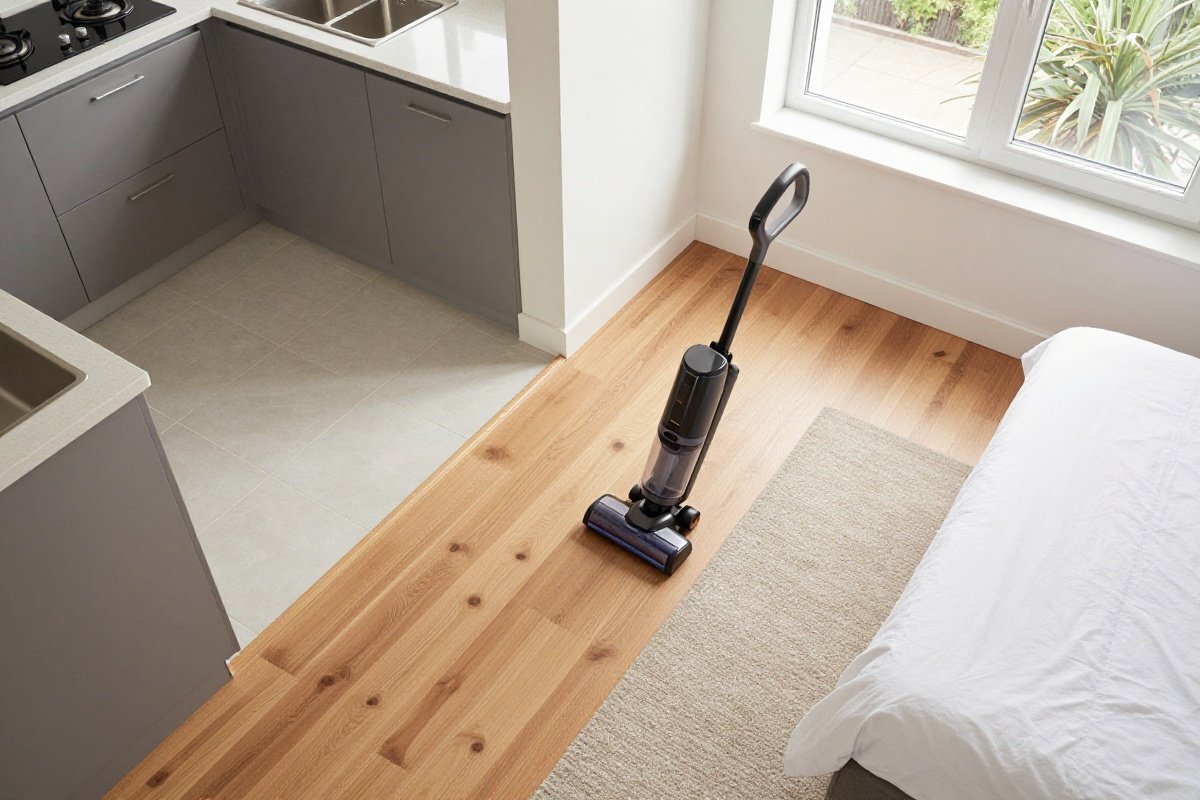
Stick vacuums make the most sense for small apartments. The limited square footage means runtime isn’t a constraint, and storage space is typically at a premium. The ability to quickly clean up after cooking or track-ins makes stick vacuums ideal for small-space living. A single mid-range stick vacuum can handle all cleaning needs efficiently.
Medium Homes (1,200-2,000 sq ft)
This size range represents the crossover point where either type can work depending on your priorities. Homes with mostly hard floors favor stick vacuums, while homes with significant carpeting benefit from canisters. Many owners in this category successfully use premium stick vacuums as their sole cleaning tool, though they may need to clean in two sessions for whole-house coverage.
Large Homes (2,500+ sq ft)
Large homes almost always benefit from canister vacuums. The runtime limitations of stick vacuums become impractical when you need to clean 3,000+ square feet. The larger dust capacity also matters - you don’t want to empty dustbins 6-8 times during a whole-house cleaning. However, adding a budget stick vacuum for quick cleanups between deep cleaning sessions provides valuable convenience.
Multi-Story Homes
Multi-story homes present unique challenges. Carrying a canister up and down stairs becomes tiresome, favoring stick vacuums for convenience. See our guide to the best vacuums for stairs for staircase-specific picks. However, some homeowners solve this by keeping a vacuum on each floor - perhaps a canister for the main floor where you do most deep cleaning, and a stick vacuum for upstairs bedrooms. This eliminates stair-carrying while providing appropriate tools for each floor’s cleaning needs.
Further Reading
- Canister vs Upright Vacuum 2026 - Which Type Is Best For You?
- Should You Buy a Refurbished Vacuum? [2026 Buyer’s Guide]
- Best Vacuum for Long Hair - 6 Anti-Tangle Models for 2026
Environmental and Sustainability Considerations
The sustainability question increasingly influences vacuum buying decisions. Stick vacuums, with their 3-7 year lifespans and non-replaceable batteries, create more electronic waste. The batteries themselves contain materials that require proper recycling but often end up in landfills. Manufacturing new stick vacuums every few years also has environmental costs.
Canister vacuums, particularly premium models designed for 20-year lifespans, align better with sustainability values. Their repairability means broken components can be replaced rather than discarding the entire unit. Bagged canisters also capture dust more hygienically than bagless designs, potentially reducing microplastic release into homes.
However, stick vacuums’ convenience encourages more frequent cleaning, which some argue improves indoor air quality and reduces dust accumulation. The trade-off between disposability and encouraging good cleaning habits presents a complex environmental calculation.
For environmentally conscious buyers, the most sustainable choice is likely a repairable premium canister, used until it truly cannot be repaired, followed by proper recycling of components. If choosing a stick vacuum, select models with replaceable batteries and commit to replacing batteries rather than the entire unit.
Recommended Products
Dyson V15 Detect
Best stickBest stick vacuum with unmatched performance and features.
What We Like
- Laser reveals microscopic dust on hard floors
- Piezo sensor counts particles and displays in real-time
- Anti-tangle Motorbar cleaner head prevents hair wrap
- Powerful 240 AW suction with auto-adjusting power
What We Don't
- 60-minute runtime only in Eco mode (8 min in Boost)
- Small 0.2-gallon dustbin requires frequent emptying
- Premium price point
- 4.5-hour charging time is lengthy
Miele Complete C3 Marin Canister Vacuum
Best canisterBest canister with German engineering and longevity.
What We Like
- 1200W Vortex motor with 6 speed settings for optimal suction control across surfaces
- AirClean Sealed System with HEPA filter traps 99.95% of particles down to 0.1 microns
- Exceptionally quiet operation at 64 dB - among the quietest canister vacuums available
- 36-foot operating radius covers large rooms without unplugging
What We Don't
- Requires bags which add ongoing maintenance cost (~$5 per bag)
- Premium pricing at top of market segment
- No motorized brush roll included - must purchase SEB 228 or SEB 236 separately
Shark Vertex Pro Cordless Upright Vacuum
Best value stickBest value stick with solid performance.
What We Like
- Cordless convenience with 60-minute runtime
- DuoClean PowerFins technology for deep cleaning on carpets and hard floors
- Converts to handheld for versatile cleaning
- Self-cleaning brushroll removes hair wrap automatically
What We Don't
- Battery requires eventual replacement
- Smaller 0.4-quart dustbin capacity requires frequent emptying
- Heavier than some cordless competitors at 8.8 lbs
Kenmore Elite 21814
Best budget canisterThe Kenmore Elite 21814 pairs HEPA filtration with a 2-motor system and 28-foot cord reach at a price point well below European canister brands. Best for homeowners who want sealed HEPA canister performance without the premium investment that Miele or Sebo require.
What We Like
- HEPA filtration for allergen capture
- Dedicated hard floor tool for bare surfaces
- Affordable price point for canister vacuum
- Powerful suction for thorough cleaning
What We Don't
- Heavy at 23 lbs compared to competitors
- Basic feature set without advanced controls
- 1-year warranty is significantly shorter than Miele's 7-year motor coverage
Sources & Research
Continue Reading
Explore more buying guides content or browse our other categories.
Frequently Asked Questions
- Which is better stick or canister vacuum?
- Neither is universally better - it depends on your needs. Stick vacuums are better for: quick cleanups, smaller homes, people with limited storage, and those wanting lightweight convenience. Canister vacuums are better for: large homes, homes with mostly carpet, allergy sufferers (superior filtration), and those wanting maximum versatility with attachments. For most homes with mixed flooring and average square footage (1,500-2,500 sq ft), canister vacuums provide better overall cleaning performance and longevity. For apartments or quick maintenance between deep cleans, stick vacuums offer unbeatable convenience.
- Are canister vacuums better than upright?
- Canister vacuums are generally better than uprights for hard floors and homes with lots of stairs, while uprights excel at carpet cleaning. Canisters offer: lighter weight in hand (only the wand), better maneuverability, superior hard floor tools, and easier storage. Uprights offer: larger capacity, often stronger carpet agitation, and all-in-one design. For homes with mostly carpet, uprights may clean better. For mixed flooring or hard floors, canisters typically perform better. Canisters also tend to be quieter and offer better filtration options. The 'better' choice depends on your flooring mix, home layout, and personal preference for design.
- How long do stick vacuums last compared to canister vacuums?
- Canister vacuums typically last 10-20 years with proper maintenance, while stick vacuums average 3-7 years. The difference is primarily battery technology - stick vacuums rely on lithium-ion batteries that degrade in 2-3 years and cost $80-200 to replace. Canister vacuums use corded power with no battery limitations. Premium canisters (Miele, SEBO) are built for 20-year lifespans with replaceable parts. Stick vacuums from Dyson, Shark, and Tineco typically last 4-7 years before battery replacement or motor issues. For long-term value, canisters offer significantly better longevity. However, stick vacuums provide 5-7 years of convenient cordless cleaning that many users find worth the shorter lifespan.
- Do stick vacuums work on carpet?
- Yes, modern stick vacuums work well on low to medium-pile carpet, but with limitations. Premium stick vacuums (Dyson V15, Shark Stratos) effectively clean carpet with motorized brush heads and strong suction (150-240 AW). However, stick vacuums struggle with: thick/high-pile carpet, deeply embedded dirt, and large debris. They also have smaller dustbins requiring frequent emptying and shorter runtime (30-60 minutes). For homes with mostly carpet, a canister or upright vacuum typically performs better. For homes with mixed flooring or area rugs, stick vacuums handle carpet adequately for maintenance cleaning. If you have wall-to-wall thick carpet, consider a canister or upright as your primary vacuum.
- Should I buy a stick or canister vacuum in 2026?
- Buy a stick vacuum if you: have a small home or apartment (under 1,500 sq ft), have mostly hard floors with minimal carpet, want quick daily cleanups, have limited storage space, or prefer lightweight convenience. Buy a canister vacuum if you: have a larger home (2,000+ sq ft), have mostly carpet or mixed flooring, suffer from allergies (better filtration), want maximum versatility with attachments, or prioritize longevity and value. Many households benefit from owning both - a stick for quick daily touch-ups and a canister for weekly deep cleaning. If buying only one vacuum for a mixed-flooring home, a quality canister typically provides better overall performance and longevity.
Written By
Home Vacuum Zone
Our team researches, tests, and reviews vacuum cleaners to help you make confident buying decisions.
Related Articles
Vacuum Noise Level Comparison: Decibel Ratings for 60+ Models (2026 Database)
Comprehensive vacuum noise level database with decibel ratings for 60+ models across every vacuum type. Find the quietest vacuums and understand what dB ratings actually mean.
Vacuum Suction Power Chart: AW, Pa & kPa Ratings Compared (2026 Database)
Comprehensive vacuum suction power database with air watts, pascals, and kPa ratings compared across every vacuum type. Find how much suction you actually need.
Bagged vs Bagless Vacuums: Which Type Is Actually Better?
Bagged and bagless vacuums each have distinct advantages for different households. We compare cost, filtration, allergen control, maintenance, and convenience to help you choose the right type.