Affiliate Disclosure:Home Vacuum Zone is reader-supported. When you buy through links on our site, we may earn an affiliate commission at no additional cost to you. This does not influence our reviews or recommendations — we only recommend products we genuinely believe in.
Vacuum noise is the number one usability complaint among homeowners, and the gap between the quietest and loudest models is enormous. A 53 dB robot vacuum is barely noticeable in the next room. An 87 dB upright makes phone conversations impossible. Yet most shoppers don’t have a practical reference for what these numbers actually mean.
This database catalogues real decibel ratings from over 60 vacuum models in our product library, organised by type and ranked from quietest to loudest. Use it to find vacuums that fit your noise tolerance, whether you work from home, have sleeping babies, or simply hate how loud your current machine is.
For detailed reviews of specific quiet models, see our quiet vacuum cleaner reviews.
The Decibel Scale: A Practical Reference
The decibel (dB) scale is logarithmic, not linear. That means the difference between 60 dB and 70 dB isn’t “a little louder” - it’s roughly twice as loud to the human ear. Understanding this relationship matters for making informed comparisons.
Everyday Sound Reference Chart
| Decibel Level | Everyday Sound | How It Feels |
|---|---|---|
| 30 dB | Whisper, quiet library | Barely audible |
| 40 dB | Quiet residential area | Very quiet |
| 50 dB | Moderate rainfall | Comfortable background |
| 53 dB | Narwal Freo X Ultra | Noticeable but unobtrusive |
| 55 dB | Eufy RoboVac 11S Max | Quiet conversation possible |
| 60 dB | Normal conversation | Standard indoor level |
| 63 dB | SEBO Airbelt D4 canister | Talk normally while vacuuming |
| 64 dB | Miele C3 Calima | Talk normally while vacuuming |
| 65 dB | Busy restaurant | Slightly raised voice needed |
| 68 dB | SEBO Felix 2 upright | Raised voice needed |
| 70 dB | Shower running | Clearly loud |
| 75 dB | Busy traffic, dishwasher | Uncomfortable for some |
| 78 dB | Shark Navigator upright | Must shout to be heard |
| 80 dB | Alarm clock, blender | Unpleasant for extended use |
| 85 dB | Hearing damage threshold | NIOSH 8-hour exposure limit |
| 87 dB | Dyson V10 Animal (max) | Hearing protection recommended |
| 90 dB | Lawn mower, food processor | Painful for some |
The 10 dB Rule
Every 10 dB increase doubles perceived loudness. This means:
- A vacuum at 75 dB sounds twice as loud as one at 65 dB
- A vacuum at 85 dB sounds four times as loud as one at 65 dB
- A vacuum at 65 dB sounds half as loud as one at 75 dB
This is why the gap between a 64 dB Miele canister and an 82 dB Dyson V15 on max power is so dramatic. The Dyson sounds roughly 3.5 times louder despite being an excellent vacuum.
Robot Vacuum Noise Database
Robot vacuums are the quietest category overall, making them ideal for homes where noise is a primary concern. Their smaller motors don’t produce as much raw suction, but they compensate with daily automated cleaning.
| Model | Noise Level | Suction | Navigation | Rank |
|---|---|---|---|---|
| Narwal Freo X Ultra | 53 dB | 8,200 Pa | LiDAR | Quietest |
| Eufy RoboVac 11S Max | 55 dB | 2,000 Pa | BoostIQ | |
| Eufy RoboVac G30 Edge | 55 dB | 2,000 Pa | Smart Dynamic | |
| Eufy RoboVac X8 Hybrid | 56 dB | 2x 2,000 Pa | iPath | |
| Eufy RoboVac X8 Pro | 56 dB | 2x 4,000 Pa | iPath | |
| Dreame L20 Ultra | 63 dB | 7,000 Pa | LiDAR | |
| iRobot Roomba 694 | 65 dB | Standard | iAdapt | |
| iLife V9e | 65 dB | 3,000 Pa | Gyroscope | |
| Shark IQ Robot AV2501AE | 65 dB | 1,000 Pa | IQ Nav | |
| Shark Matrix Robot | 65 dB | Enhanced | 360 LiDAR | |
| Shark Matrix Plus 2-in-1 | 65 dB | Enhanced | 360 LiDAR | |
| Shark AI Ultra Robot | 65 dB | Not specified | AI Laser | |
| Shark AI Ultra 2-in-1 | 65 dB | Not specified | AI Laser | |
| Ecovacs Deebot X2 Omni | 67 dB | 8,000 Pa | LiDAR + Camera | |
| Ecovacs Deebot T20 Omni | 67 dB | 6,000 Pa | TrueDetect 3D | |
| Ecovacs Deebot N10 Max | 67 dB | 4,300 Pa | TrueMapping | |
| Roborock S8 MaxV Ultra | 67 dB | 10,000 Pa | LiDAR + Camera | |
| Roborock S8 Pro Ultra | 67 dB | 6,000 Pa | LiDAR + Camera | |
| Roborock Q-Revo | 67 dB | 5,500 Pa | LiDAR | |
| Roborock Q7 Max | 67 dB | 4,200 Pa | LiDAR | |
| Roborock Q5 | 67 dB | 2,700 Pa | LiDAR | |
| iRobot Roomba J7 | 68 dB | Standard | PrecisionVision | |
| iRobot Roomba J9+ | 68 dB | Enhanced | PrecisionVision | |
| iRobot Roomba i7 | 68 dB | 10x Standard | vSLAM | |
| iRobot Roomba S9 | 70 dB | 40x Standard | vSLAM | |
| Eufy X8 Pro | ~70 dB | 2x 4,000 Pa | iPath | |
| Miele Scout RX3 | 72 dB | 30 W | Smart Nav | Loudest robot |
Key takeaway: The Narwal Freo X Ultra at 53 dB is so quiet you may forget it is running. Eufy’s lineup consistently delivers the best noise-to-value ratio for budget shoppers. Roborock and Ecovacs cluster around 67 dB, still quiet enough for daytime use without disturbance.
For a complete robot vacuum buying guide, see our best robot vacuum roundup or check whether a robot vacuum is worth it for your situation.
Canister Vacuum Noise Database
Canister vacuums generally run quieter than uprights because the motor housing is separated from the cleaning head, and premium brands like Miele and SEBO invest heavily in acoustic insulation.
| Model | Noise Level | Suction | Filtration | Rank |
|---|---|---|---|---|
| SEBO Airbelt D4 Premium | 63 dB | Not specified | S-class | Quietest canister |
| Miele Complete C3 Calima | 64 dB | 150 AW | HEPA AirClean | |
| Miele Complete C3 Soft Carpet | ~69 dB | Not specified | HEPA AirClean | |
| Eureka Mighty Mite 3670G | ~70 dB | Not specified | Standard | Budget option |
| Miele Compact C1 Turbo Team | 71 dB | Not specified | AirClean | |
| Miele Classic C1 Pure Suction | 72 dB | Not specified | AirClean | |
| Miele Compact C1 Pure Suction | 72 dB | Not specified | AirClean | |
| Miele Classic C1 Cat & Dog | 72 dB | Not specified | AirClean |
Key takeaway: Miele and SEBO dominate the quiet canister segment. The SEBO Airbelt D4 at 63 dB is remarkable: quieter than a normal conversation. Even Miele’s “loudest” canisters at 72 dB are quieter than most uprights on their lowest settings.
For a comparison of canister versus upright noise and performance trade-offs, see our canister vs upright vacuum guide.
Cordless Stick Vacuum Noise Database
Cordless vacuums have a wide noise range. On low power, many are acceptably quiet. On boost mode, models like the Dyson V10 Animal reach levels that warrant hearing protection.
| Model | Noise Level | Suction | Notes | Rank |
|---|---|---|---|---|
| Makita XLC07 (low mode) | 70 dB | Not specified | Low mode only | Quietest on low |
| Dyson V15 Detect | 73 dB | 240 AW | Eco mode | Eco mode quiet |
| MOOSOO K17 | 75 dB | 17,000 Pa | Single speed | |
| Shark WandVac WV201 | ~75 dB | Tapered nozzle | Handheld hybrid | |
| Roborock H60 Ultra | 75 dB(A) | 210 AW | A-weighted | |
| Milwaukee M18 Fuel | 75 dB | 20 CFM | Tool-only | |
| Miele Triflex HX1 Cat & Dog | 77 dB | 140 AW | 3-in-1 design | |
| Miele Triflex HX2 Pro | 77 dB | 150 AW | PowerUnit on top | |
| Dyson V15 Detect (boost) | 82 dB | 240 AW | Max power mode | |
| Makita XLC07 (high mode) | 82 dB | Not specified | High mode | |
| Samsung Bespoke Jet | ~84 dB | 210 AW | Max power | |
| LG CordZero A9 Ultimate | 84 dB | 265 AW | Max power | |
| Dyson V10 Animal | 87 dB | 150 AW | Loudest cordless | Loudest |
Key takeaway: Most cordless vacuums are marketed with maximum suction figures but rated for noise at maximum power. In everyday use on lower settings, models like the Dyson V15 are far quieter than the spec sheet suggests. The Miele Triflex lineup offers the best balance of quiet operation and strong suction among cordless vacuums.
For more on the cordless vs corded debate, including noise considerations, see our cordless vs corded vacuum comparison.
Upright Vacuum Noise Database
Uprights are generally the loudest portable vacuum category due to their powerful motors and direct-drive brush systems.
| Model | Noise Level | Type | Notes | Rank |
|---|---|---|---|---|
| SEBO Felix 2 Premium | 68 dB | Residential | Quietest upright | Quietest |
| SEBO Felix 4 Premium | 68 dB | Residential | Updated model | |
| SEBO Felix Premium | 68 dB | Residential | Original model | |
| Hoover HushTone | 69 dB | Commercial | Designed for offices | |
| SEBO Automatic X5 | 69 dB | Residential | Auto height adjust | |
| SEBO Automatic X5 Premium | ~72 dB | Residential | Premium features | |
| Shark Vertex DuoClean | ~74 dB | Residential | PowerFins | |
| Shark Apex DuoClean AZ1002 | ~75 dB | Residential | Lift-Away | |
| Shark Stratos Upright | ~75 dB | Residential | CleanSense IQ | |
| Miele Dynamic U1 Cat & Dog | ~78 dB | Residential | Sealed system | |
| Miele Dynamic U1 Upright | ~78 dB | Residential | Sealed system | |
| Shark Navigator Lift-Away | 78-82 dB | Residential | Multiple models | |
| Shark Navigator Pro NV356E | 78-82 dB | Residential | Wide range | |
| Milwaukee M18 Compact | 78 dB | Tool/Commercial | Battery-powered | |
| Sanitaire SC679J | 78 dB | Commercial | Heavy-duty | |
| Oreck Commercial XL2100RHS | ~80 dB | Commercial | Lightweight design | Loudest |
Key takeaway: SEBO uprights are the clear noise winners at 68-69 dB, a full 10+ dB quieter than most Shark Navigators (which means they sound roughly half as loud). The Hoover HushTone was specifically engineered for noise-sensitive commercial environments and lives up to its name.
Specialty Vacuum Noise Reference
| Model | Noise Level | Type | Notes |
|---|---|---|---|
| NuTone PurePower PP500 | 62 dB | Central vacuum | Motor in utility room |
| CanAvac LS-590 | 65 dB | Central vacuum | Motor in utility room |
| ProTeam Super CoachVac | 63 dBA | Backpack | A-weighted rating |
| Shark UltraCyclone Pet Pro | ~78 dB | Handheld | Corded handheld |
| Shop-Vac 5989300 5-Gallon | 78-80 dB | Wet/dry | Standard shop vac |
| VacMaster Beast VFB511B | 78 dB | Wet/dry | Compact shop vac |
| DeWalt DXV10P 10-Gallon | 78-80 dB | Wet/dry | Heavy-duty |
| Rainbow SRX | 70-75 dB | Water filtration | Unique technology |
Central vacuum systems deserve a special mention. The 62-65 dB rating is measured at the motor unit, typically installed in a garage or basement. At the cleaning head (where you actually stand), you only hear airflow through the hose, which is significantly quieter. This makes central vacuums the best option for noise-sensitive households with the budget for installation.
What Makes Some Vacuums Quieter Than Others?
Noise is an engineering problem with known solutions. The quietest vacuums invest in all of these areas:
Motor Technology
Brushless digital motors are inherently quieter than brush motors because they eliminate the physical contact between brushes and commutator that generates friction noise. Dyson’s Hyperdymium motor, Miele’s Vortex motor, and Roborock’s brushless motors all fall in this category.
Motor speed matters too. Lower RPM motors running at higher torque produce less noise than high RPM ones. Some vacuums use intelligent speed control (like Dyson’s Auto mode and Shark’s CleanSense IQ) that runs the motor only as fast as the current floor type demands.
Sound Insulation
Premium vacuums use multi-layer insulation around the motor housing. Miele typically uses three layers: a foam inner layer, a rigid plastic shell, and an outer rubberized coating. Budget vacuums may use a single thin plastic housing with no dedicated insulation.
Bagged vs bagless: The vacuum bag itself acts as sound insulation, which is one reason bagged Miele canisters are consistently quieter than bagless designs of comparable power. See our bagged vs bagless comparison for the full trade-off analysis.
Airflow Path Design
Turbulent airflow generates noise. Well-designed vacuums use smooth, gradually expanding airflow channels that minimise turbulence. Poorly designed ones have sharp bends, sudden diameter changes, and rough interior surfaces that create whistling and roaring sounds.
Vibration Dampening
Motor vibration transmits through the vacuum body and amplifies noise. Premium models mount motors on rubber isolators and use precision-balanced rotating components to minimize vibration at the source.
Noise Reduction Tips for Your Current Vacuum
If buying a new vacuum isn’t in the budget, these steps can reduce noise from your existing machine by 3-8 dB:
Maintenance-Based Noise Reduction
- Replace or wash filters. Clogged filters force the motor to work harder, increasing both RPM and noise
- Clear brush roll of hair wraps. Tangled hair creates vibration and grinding sounds
- Check for loose connections. Rattling hoses, loose latches, and worn gaskets amplify noise
- Empty the bag/bin at half capacity. Overfull containers restrict airflow, forcing the motor to compensate with more RPM
- Use lower power settings. Most cleaning tasks don’t require maximum suction; dropping one power level typically reduces noise by 5-8 dB
For comprehensive vacuum care instructions, see our vacuum maintenance guide.
Environment-Based Noise Reduction
- Close doors between rooms. A wall and closed door reduces perceived noise by 25-35 dB for people in other rooms
- Vacuum on carpet before hard floors. Carpet absorbs 3-5 dB of sound vs hard surfaces that reflect it
- Use robot vacuums for daily maintenance. Schedule them during work or school hours, then deep clean with a traditional vacuum weekly
- Add rubber pads to the vacuum’s base if it vibrates on hard floors
EU Noise Regulations and Energy Labels
Since 2017, the European Union has required vacuum cleaners to display noise ratings on energy labels, alongside efficiency ratings. The EU mandates:
- Maximum noise level of 80 dB for new vacuums sold in the EU
- Standardized testing methodology for noise measurement
- Clear labeling so consumers can compare noise levels across brands
This regulation has pushed manufacturers (especially European brands like Miele, SEBO, and Bosch) to prioritise noise reduction in their engineering. Models sold globally often benefit from these EU-driven improvements, even if noise labelling isn’t required in the US market.
The US has no equivalent federal noise regulation for household vacuums, which is why some models sold in America exceed 85 dB on max settings.
Best Vacuums by Noise Category
Ultra-Quiet (Under 60 dB)
Perfect for apartments, work-from-home setups, sleeping babies, and noise-sensitive pets. At this level, you can hold a phone conversation while vacuuming.
- Narwal Freo X Ultra (53 dB) - robot with 8,200 Pa suction
- Eufy RoboVac 11S Max (55 dB) - best budget quiet option
- Eufy RoboVac G30 Edge (55 dB) - smart navigation
- Eufy RoboVac X8 Hybrid/Pro (56 dB) - twin-turbine suction
Quiet (60-70 dB)
Comfortable for daytime use in occupied homes. You may need to raise your voice slightly.
- NuTone PurePower PP500 (62 dB) - central vacuum
- SEBO Airbelt D4 Premium (63 dB) - canister
- ProTeam Super CoachVac (63 dBA) - backpack
- Miele Complete C3 Calima (64 dB) - canister with 150 AW
- SEBO Felix 2 Premium (68 dB) - upright
- Hoover HushTone (69 dB) - commercial upright
- SEBO Automatic X5 (69 dB) - upright
Moderate (70-78 dB)
Standard for most vacuums. Normal conversation requires shouting.
- Miele Compact C1 / Classic C1 models (71-72 dB) - canisters
- Dyson V15 Detect (73 dB) - eco mode
- Shark Apex DuoClean (~75 dB) - upright
- Miele Triflex HX1/HX2 (77 dB) - cordless
- Shark Navigator models (78-82 dB) - uprights
- Miele Dynamic U1 (~78 dB) - upright
Loud (Above 78 dB)
Hearing protection recommended for extended sessions above 85 dB.
- Dyson V15 Detect (boost) (82 dB) - cordless
- Dyson V11 Torque Drive (82 dB) - cordless
- Samsung Bespoke Jet (~84 dB) - cordless
- LG CordZero A9 Ultimate (84 dB) - cordless
- Dyson V10 Animal (87 dB) - cordless, loudest in database
Methodology
All noise levels in this database are sourced from manufacturer specifications measured per IEC 60704-2-1 standards where available. Noise is typically measured at the operator’s ear position at maximum suction setting unless otherwise noted. Some manufacturers report A-weighted measurements (dBA), which slightly discount low-frequency rumble. Where the weighting is known, we have noted it.
Actual noise levels in your home may vary based on floor type (hard floors reflect sound, carpet absorbs it), room size, ceiling height, and the specific attachments used. Turbo brush attachments are typically 3-5 dB louder than standard floor tools.
We update this database regularly as new products are added to our review library. For suction power data to pair with these noise figures, see our vacuum suction power chart.
Recommended Products
Narwal Freo X Ultra
Quietest robot vacuumThe Narwal Freo X Ultra excels in intelligent operation with its DirtSense technology and whisper-quiet cleaning. Perfect for homes where noise is a concern.
What We Like
- DirtSense technology detects dirty mop pads and rewashes automatically
- Zero-tangle brush design effectively handles pet hair
- Quiet operation at just 53dB
- Elegant compact base design saves space
- Auto-drying mop pads prevent odor
- Strong 8200 Pa suction power
What We Don't
- Smaller 0.35L dustbin requires more frequent emptying than competitors
- Mopping pressure (6N) less than Roborock S8 Pro Ultra (10N)
- Premium price point
Miele Complete C3 Calima Canister Vacuum
Quietest canister vacuumThe gold standard for carpet cleaning with industry-leading filtration and CRI certification. Perfect for allergy sufferers and luxury carpet owners.
What We Like
- CRI Gold certified for effective carpet cleaning
- Premium HEPA filtration captures 99.95% of particles
- Quiet operation at 64dB
- Excellent for high-pile carpet and hardwood floors
What We Don't
- Premium price point
- Requires bag replacements (ongoing cost)
- No motorized brush roll included with base model
SEBO Airbelt D4 Premium Canister
Quietest premium canisterBest SEBO canister with quiet operation and large capacity.
What We Like
- Ultra-quiet operation at 63 dB
- 40-foot power cord for extensive reach
- S-class hospital-grade HEPA filtration
- Variable electronic suction control for different surfaces
- Airbelt bumper system protects furniture and walls
What We Don't
- Premium pricing at the top of the canister vacuum market
- Large footprint requires storage space
- Heavier than compact canister models at 20.5 lbs
Hoover Commercial HushTone Upright Vacuum Cleaner
Quietest upright vacuumThe best overall commercial vacuum for restaurants needing quiet operation during business hours without sacrificing cleaning power.
What We Like
- Ultra-quiet 69 dB operation ideal for noise-sensitive environments
- Two-speed motor adjusts for different floor surfaces
- HEPA filtration captures 99.97% of particles
- 5-year commercial warranty for durability
- Long 50-foot cord reduces outlet changes
What We Don't
- Higher price point than residential models
- Heavier than some competitors at 15.5 lbs
- Uses disposable bags adding ongoing replacement costs
Sebo Felix 2 Premium
Quietest upright (residential)Best premium vacuum with instant wand for hair removal.
What We Like
- Instant-use wand for versatile cleaning
- S-class hospital-grade filtration
- Integrated handheld turbo brush
- German-engineered durable construction
What We Don't
- Premium pricing for an upright vacuum
- Heavier than standard upright vacuums at 15.8 lbs
Eufy RoboVac G30 Edge
Quietest budget robotThe Eufy RoboVac G30 Edge offers organized row-by-row cleaning via Smart Dynamic Navigation and includes boundary strips for no-go zones, rare features at this price point. It is ideal for first-time robot vacuum buyers in small apartments who want reliable daily maintenance without a steep learning curve.
What We Like
- Very affordable price point
- Smart Dynamic Navigation cleans in organized rows
- 2000Pa suction power handles most debris
- Thin 2.85-inch profile fits under furniture
- Boundary strips included for no-go zones
What We Don't
- No room mapping or memory
- Small 0.6L dustbin capacity
- No mopping function
- No app control - remote only
Miele Triflex HX1 Cat & Dog
Quiet cordless with HEPAThe Miele Triflex HX1 Cat & Dog is a premium cordless stick vacuum with German engineering, outstanding filtration, and a versatile 3-in-1 design. While pricey, its build quality and HEPA AirClean filter justify the investment for allergy sufferers and pet owners.
What We Like
- German engineering with HEPA AirClean filter for superior filtration
- 3-in-1 design converts between stick, handheld, and compact modes
- Electrobrush with automatic floor detection
- Up to 60-minute runtime with removable battery
What We Don't
- Premium price point significantly higher than competitors
- Replacement parts and accessories are expensive
- Heavier than many cordless competitors at 3 kg
- 4-hour charge time is longer than most cordless rivals
Dyson V15 Detect
Best overall cordlessThe most technologically advanced cordless vacuum available, with genuine innovations in dust detection and suction optimization. Best for tech-forward buyers with mostly hard floors.
What We Like
- Laser reveals microscopic dust on hard floors
- Piezo sensor counts particles and displays in real-time
- Anti-tangle Motorbar cleaner head prevents hair wrap
- Powerful 240 AW suction with auto-adjusting power
What We Don't
- 60-minute runtime only in Eco mode (8 min in Boost)
- Small 0.2-gallon dustbin requires frequent emptying
- Premium price point
- 4.5-hour charging time is lengthy
Sources & Research
- Amazon Product Page
- Narwal Official Page
- Manufacturer Product Page
- Amazon Product Page
- Miele Official Product Page
- Miele Official Product Page
- Amazon Product Page
- SEBO Official Product Page
- Amazon Product Page
- Hoover Commercial Site
- Hoover Commercial Products
- Amazon Product Page
- Manufacturer Page
- Amazon Product Page
- Eufy Official Page
- Amazon Product Page
- Miele Triflex Series
- Miele Cordless Vacuums
- Dyson official product page
- RTINGS lab test results
- Amazon Product Page
Continue Reading
Explore more buying guides content or browse our other categories.
Frequently Asked Questions
- What is a good decibel level for a vacuum cleaner?
- Below 70 dB is considered quiet for a vacuum cleaner — you can hold a conversation while vacuuming. Between 70-78 dB is average and comfortable for most people. Above 80 dB is loud and may require hearing protection during extended use. The quietest full-size vacuums operate at 63-66 dB, while ultra-quiet robot vacuums can run at 53-55 dB.
- How loud is 70 dB compared to normal conversation?
- Normal conversation is about 60 dB, so 70 dB is noticeably louder but not dramatically so. You would need to raise your voice slightly to be heard over a 70 dB vacuum. At 80 dB, you would need to shout. The key is that every 10 dB increase sounds roughly twice as loud to the human ear, so a 70 dB vacuum sounds about twice as loud as a 60 dB conversation, and an 80 dB vacuum sounds four times as loud.
- Are robot vacuums quieter than regular vacuums?
- Yes, significantly. Most robot vacuums operate between 53-70 dB, while upright vacuums typically run at 75-87 dB. The trade-off is cleaning power — robot vacuums achieve their quiet operation partly because they have smaller, less powerful motors. However, robot vacuums compensate by making multiple passes and running daily. For a complete analysis, see our robot vacuum vs regular vacuum comparison.
- Can vacuum noise cause hearing damage?
- Prolonged exposure to sounds above 85 dB can cause gradual hearing damage. Some vacuums, particularly older uprights and the Dyson V10 Animal at 87 dB, operate in this range. While typical vacuuming sessions of 15-30 minutes are unlikely to cause permanent damage, professionals who vacuum for hours daily should wear hearing protection with any vacuum above 80 dB. The National Institute for Occupational Safety and Health (NIOSH) recommends limiting 85 dB exposure to 8 hours per day.
- Do quieter vacuums have less suction?
- Not necessarily. Noise reduction comes from better engineering, not reduced power. The Miele Complete C3 Calima produces 150 air watts at just 64 dB, while some budget uprights produce similar suction at 80+ dB. Premium brands achieve quietness through brushless motors, multi-layer insulation, optimized airflow paths, and precision-balanced components. However, within a single product line, higher power settings are always louder than lower settings.
- Why are Miele vacuums so much quieter than other brands?
- Miele invests heavily in acoustic engineering, including multi-layer sound insulation around the motor housing, precision-balanced Vortex motors that minimize vibration, rubber gaskets and seals at every connection point, and optimized airflow paths that reduce turbulence. Their sealed bag system also adds a layer of sound dampening that bagless designs lack. Miele has consistently produced the quietest vacuums across multiple categories for over a decade.
Written By
Home Vacuum Zone
Our team researches, tests, and reviews vacuum cleaners to help you make confident buying decisions.
Related Articles
Vacuum Suction Power Chart: AW, Pa & kPa Ratings Compared (2026 Database)
Comprehensive vacuum suction power database with air watts, pascals, and kPa ratings compared across every vacuum type. Find how much suction you actually need.
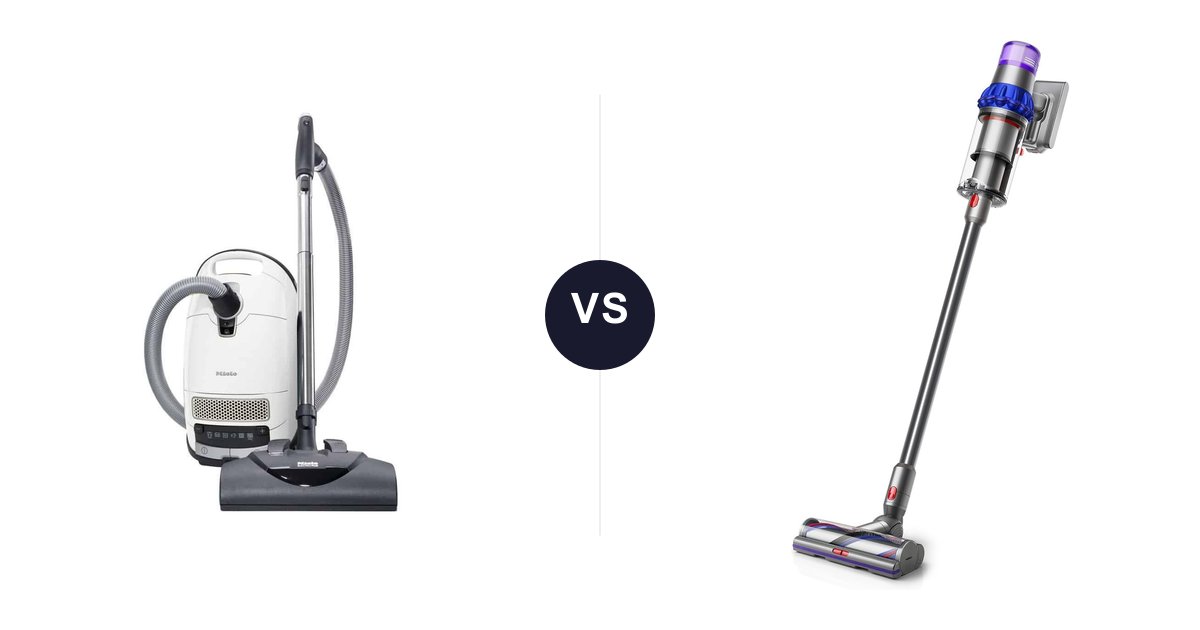
Bagged vs Bagless Vacuums: Which Type Is Actually Better?
Bagged and bagless vacuums each have distinct advantages for different households. We compare cost, filtration, allergen control, maintenance, and convenience to help you choose the right type.
Beater Bar vs No Beater Bar: Does Your Vacuum Need One? (2026 Guide)
Learn what a beater bar is, when you need one, and the best vacuums with and without beater bars. Complete guide for carpet, hardwood, and pet hair cleaning.