Affiliate Disclosure:Home Vacuum Zone is reader-supported. When you buy through links on our site, we may earn an affiliate commission at no additional cost to you. This does not influence our reviews or recommendations — we only recommend products we genuinely believe in.
When you invest in a premium vacuum cleaner, you want to know exactly what you’re getting. Manufacturing location matters - not just for quality control, but for understanding the supply chain, environmental impact, and even warranty support. For another perspective on manufacturing origins, see our companion guide to where Miele vacuums are made.
This comprehensive guide traces where Dyson and Shark vacuums are manufactured in 2026, revealing how two of the biggest names in home cleaning produce their machines, and whether origin truly affects performance.
Where Are Dyson Vacuums Made?
Despite being a British company founded by James Dyson in 1991, Dyson vacuums are manufactured across multiple Asian facilities. The company hasn’t produced vacuums in the UK since 2002, though it maintains significant operations there for engineering and research.
Malaysia: Primary Manufacturing Hub
Location: Johor Bahru and Senai, Malaysia
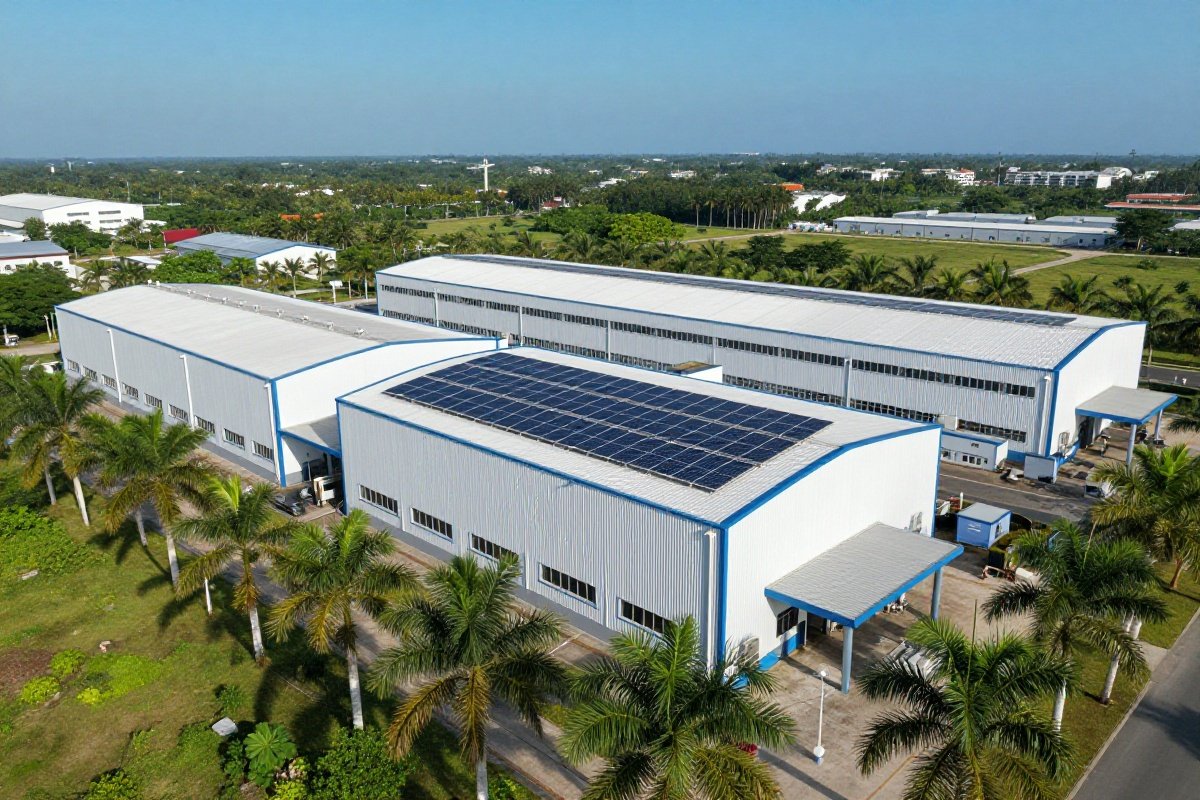
Dyson’s largest manufacturing facility is located in southern Malaysia, just across the strait from Singapore. This facility handles:
- Assembly of cordless stick vacuums (V series, including V15 and Gen5detect)
- Production of canister and upright models for Asian markets
- Final quality testing and packaging
- Distribution hub for Asia-Pacific region
The Malaysia facility opened in the early 2000s and represents Dyson’s response to rising UK manufacturing costs. The company employs over 4,000 people at this location, making it one of the largest employers in the region.
Why Malaysia?
- Strategic location near Singapore’s R&D facilities
- Skilled workforce with electronics manufacturing expertise
- Proximity to component suppliers
- Competitive operating costs
The Malaysian facilities benefit from the country’s well-developed electronics manufacturing infrastructure. Malaysia has become a regional hub for high-tech manufacturing, with companies like Intel, AMD, and Western Digital maintaining significant operations there. This ecosystem provides Dyson with access to suppliers, logistics partners, and a trained workforce familiar with precision assembly.
The Senai facility specifically handles the most complex vacuum assemblies, including models with advanced sensor systems and laser detection technology. The clean-room environments required for assembling sensitive electronics components make this location ideal for Dyson’s premium product lines.
Singapore: Motor Manufacturing Center
Location: Tuas, Singapore
Dyson invested $400 million in its Singapore facility, which focuses exclusively on the company’s proprietary digital motors:
- Production of V9, V10, V11, and Hyperdymium motors
- Precision engineering requiring clean-room conditions
- Advanced robotics for motor assembly
- Research into next-generation motor technology
The Singapore facility represents Dyson’s most advanced manufacturing operation. The digital motors produced here spin at up to 125,000 RPM - five times faster than a Formula 1 race car engine. This precision manufacturing requires Singapore’s advanced infrastructure and skilled technical workforce.
Singapore was chosen for motor production because of its exceptional infrastructure, stable business environment, and concentration of engineering talent. The facility operates under ISO Class 6 clean-room standards (fewer than 35,200 particles of 0.5 microns per cubic meter of air), similar to pharmaceutical manufacturing environments.
The motor production process involves over 50 precision steps, from winding copper wire around magnetic poles to balancing the rotor assemblies. Each motor undergoes acoustic testing, vibration analysis, and endurance testing before being certified for assembly into vacuums. This attention to detail is why Dyson motors consistently achieve higher power-to-weight ratios than competitors.
Philippines: Hyperdymium Motor Production
Location: Calamba and Alabang, Philippines
In 2016, Dyson expanded motor production to the Philippines with two facilities:
- Calamba: Primary motor winding and assembly
- Alabang: Secondary production and component fabrication
The Philippines facilities specifically manufacture the Hyperdymium motors found in the newest Dyson cordless vacuums. This expansion reduced pressure on Singapore’s capacity while maintaining quality standards.
Philippines Manufacturing Advantages:
- English-speaking workforce facilitates training
- Established electronics manufacturing ecosystem
- Government incentives for high-tech manufacturing
- Growing pool of engineering talent
The Calamba facility employs approximately 2,500 workers and produces over 5 million motors annually. The facility uses automated guided vehicles (AGVs) to move components between production stages, reducing handling damage and improving efficiency. Quality control technicians stationed throughout the production line perform random sampling every 30 minutes to ensure consistency.
Dyson chose the Philippines partly because of its Board of Investments incentive programs, which offer tax holidays for high-value manufacturing. The company has invested over $150 million in Philippine facilities since 2016, making it one of the largest foreign manufacturers in the region.
China: V12 Detect Slim Production
Location: Zhuhai, Guangdong Province, China
Dyson’s newest manufacturing facility opened in Zhuhai in 2020 specifically for the V12 Detect Slim:
- Dedicated production line for the lightweight V12 series
- Integration of laser detection technology assembly
- Component sourcing from nearby Shenzhen suppliers
- Quality testing with Dyson-standard protocols
This facility allows Dyson to produce the V12 at scale while keeping prices competitive. The proximity to Shenzhen - China’s tech capital - provides access to cutting-edge sensor and laser component suppliers.
The Zhuhai facility represents a strategic move by Dyson to manufacture closer to the Chinese consumer market, which has become the company’s fastest-growing region. By localizing production, Dyson reduces shipping costs, import duties, and lead times for the Chinese market while maintaining the flexibility to export to other regions.
The facility features advanced automation, with collaborative robots (cobots) working alongside human assemblers. These cobots handle repetitive tasks like screw fastening and cable routing, while skilled workers focus on final assembly, quality inspection, and testing. This hybrid approach balances efficiency with quality control.
United Kingdom: R&D and Engineering
While Dyson no longer manufactures vacuums in the UK, the country remains central to the company’s operations:
- Malmesbury, Wiltshire: Global headquarters and primary R&D facility
- Bristol Robotics Lab: Autonomous vacuum development
- Hullavington Airfield: Testing facility for robotics and AI
Over 4,000 engineers work at Dyson’s UK facilities, designing the next generation of cleaning technology. The company has pledged to invest $3.3 billion in UK research over the next decade.
The Malmesbury campus includes prototype workshops where engineers can quickly iterate on designs. This rapid prototyping capability is crucial for Dyson’s innovation pace - the company typically tests hundreds of prototype variations before finalizing a design for production. The campus also houses acoustic testing chambers, where engineers optimize motor noise profiles, and dust laboratories that recreate various types of household debris.
Hullavington, a former RAF airfield purchased by Dyson in 2016, serves as a testing ground for autonomous vacuum technologies. The 750-acre site includes mock home environments where robot vacuums navigate furniture configurations, lighting conditions, and floor transitions. This facility helps Dyson develop navigation algorithms before manufacturing integration.
Where Are Shark Vacuums Made?
Unlike Dyson’s vertically integrated approach, Shark (officially SharkNinja, owned by JS Global) uses a contract manufacturing model. The company designs vacuums in the USA but outsources all production to third-party manufacturers in China.
China: Primary Manufacturing Location
Primary Regions: Guangdong, Zhejiang, and Jiangsu Provinces
Shark vacuums are manufactured by multiple Chinese contract manufacturers, primarily:
- Guangdong Province: Cordless stick vacuums and robot models
- Zhejiang Province: Upright vacuums and carpet cleaners
- Jiangsu Province: Specialized components and accessories
This distributed approach allows Shark to optimize costs and production capacity, though it means less direct control over manufacturing compared to Dyson’s owned facilities.
Guangdong Province, particularly the Pearl River Delta region, has become the world’s largest electronics manufacturing hub. The concentration of suppliers, component manufacturers, and assembly facilities creates efficiency through proximity. Shark leverages this ecosystem by working with Original Design Manufacturers (ODMs) that specialize in vacuum production.
These ODMs often manufacture vacuums for multiple brands simultaneously, using shared production lines that can be reconfigured for different models. This approach allows Shark to scale production up or down based on seasonal demand without maintaining excess capacity. During peak shopping seasons (Black Friday, holiday sales), Shark can request increased production allocation from its manufacturing partners.
The JS Global Acquisition (2017)
In 2017, SharkNinja was acquired by JS Global Lifestyle Company, a Hong Kong-based conglomerate. This acquisition:
- Provided access to established Chinese manufacturing relationships
- Enabled faster scaling of production
- Created cost synergies across the supply chain
- Maintained the Needham, Massachusetts design headquarters
JS Global Manufacturing Strategy:
- In-house design and engineering in USA
- Contract manufacturing through vetted Chinese partners
- Quality control through third-party inspectors
- Distribution through regional warehouses
JS Global’s established relationships with Chinese manufacturers gave Shark immediate access to production capacity that would have taken years to develop independently. The parent company operates multiple consumer product brands across Asia, creating purchasing power that benefits all brands in the portfolio through bulk component sourcing.
This acquisition also enabled Shark to introduce new products faster. The time from concept to retail shelf has decreased from 18-24 months to 12-15 months, largely because JS Global’s manufacturing network can quickly produce prototype runs and make tooling adjustments based on testing feedback.
Shark’s Quality Control Process
Despite outsourcing manufacturing, Shark maintains quality through:
Design Phase Controls:
- Rigorous supplier qualification processes
- Component approval workflows
- Prototype testing at Needham headquarters
Production Controls:
- Third-party factory audits
- Incoming component inspection
- In-line quality checks during assembly
- Finished product testing before shipment
This approach has proven effective - Shark consistently ranks highly in JD Power satisfaction surveys, sometimes outperforming Dyson in reliability metrics despite the lower price point. Our Shark versus Dyson comparison examines how these differences translate to real-world cleaning performance.
Shark employs resident quality engineers at major manufacturing partners who work on-site to monitor production. These engineers report directly to Shark headquarters, maintaining independence from the contract manufacturer. They conduct daily line audits, review defect rates, and have authority to halt production if quality standards aren’t met.
Additionally, Shark uses statistical process control (SPC) to monitor manufacturing consistency. Key measurements - motor power draw, suction pressure, filtration efficiency - are tracked for every production batch. When measurements drift outside acceptable ranges, engineers investigate and implement corrective actions before problems affect large quantities.
Dyson vs Shark: Manufacturing Philosophy Comparison
| Aspect | Dyson | Shark |
|---|---|---|
| Manufacturing Model | Vertically integrated, owned facilities | Contract manufacturing, third-party |
| Primary Locations | Malaysia, Singapore, Philippines, China | China (multiple contract manufacturers) |
| R&D Location | UK (Malmesbury) + Singapore | USA (Needham, Massachusetts) |
| Quality Control | Direct oversight at all facilities | Third-party audits + incoming inspection |
| Price Positioning | Premium | Mid-range |
| Manufacturing Investment | $1+ billion in owned facilities | Minimal capital investment (outsourced) |
Which Approach Is Better?
Neither model is inherently superior - they serve different strategies:
Dyson’s Vertical Integration:
- Complete control over production
- Faster innovation implementation
- Higher costs passed to consumers
- Direct responsibility for working conditions
Shark’s Contract Manufacturing:
- Lower production costs
- Flexibility to scale up/down quickly
- Less control over day-to-day operations
- Enables competitive pricing
The vertical integration model gives Dyson the ability to implement proprietary manufacturing techniques that competitors can’t easily replicate. When Dyson engineers develop a new motor design, they can modify production equipment and train workers without negotiating with external partners. This control accelerates innovation cycles.
However, this approach requires substantial capital investment. Dyson must maintain facility capacity even during slow periods and absorb fixed costs regardless of production volume. During the 2020 pandemic slowdown, Dyson kept facilities operational despite reduced demand, which impacted profitability.
Shark’s contract model provides financial flexibility. The company pays only for units produced, shifting inventory risk to manufacturing partners. This variable cost structure allows Shark to maintain profitability across market cycles. When demand surges, Shark can allocate additional production capacity without building new facilities.
The trade-off is less control over proprietary technology. Shark must share detailed specifications with contract manufacturers, increasing the risk of intellectual property exposure. Additionally, contract manufacturers may prioritize higher-margin customers during capacity constraints.
Does Manufacturing Location Affect Quality?
The evidence suggests that for both brands, manufacturing location doesn’t significantly impact product quality:
Dyson Quality Consistency
Dyson vacuums manufactured in Malaysia, Singapore, Philippines, and China undergo identical quality testing protocols:
- Motor Testing: Every digital motor runs for 1,000+ hours before approval
- Drop Testing: Vacuums dropped 5,000+ times from various heights
- Environmental Testing: Operation in extreme temperatures and humidity
- Lifecycle Testing: Buttons pressed 100,000+ times
These standards apply regardless of facility location. In fact, Dyson’s Asian facilities often achieve higher efficiency and lower defect rates than the original UK factory did.
Dyson publishes internal quality metrics showing remarkably consistent defect rates across manufacturing locations. The Malaysia facility typically reports 0.8% defect rates, Singapore motor production runs at 0.3%, and the Philippines facilities average 0.9%. These figures are comparable to best-in-class manufacturing across any industry.
The consistency results from Dyson’s standardized training programs. New facility workers undergo 4-6 weeks of training, regardless of location, using identical curricula developed at Malmesbury. Senior engineers rotate between facilities to ensure best practices transfer globally. This knowledge-sharing approach maintains quality standards even as production scales.
Shark Quality Consistency
Shark’s contract manufacturing model requires suppliers to meet strict specifications:
- Component Standards: All parts must meet Shark’s engineering requirements
- Assembly Protocols: Detailed work instructions for each model
- Testing Requirements: 100% functional testing before shipment
- Defect Tracking: Continuous monitoring and corrective action
Shark vacuums consistently score well in reliability surveys, suggesting the contract manufacturing model works when properly managed.
Shark’s quality depends heavily on effective supplier management. The company grades manufacturing partners quarterly based on defect rates, on-time delivery, and responsiveness to quality issues. Partners that consistently score below standards risk losing contracts to competitors, creating strong incentives for quality maintenance.
Before launching new models, Shark conducts extensive pre-production runs at manufacturing facilities. Engineers identify potential assembly issues, refine work instructions, and verify that production equipment produces consistent results. Only after multiple successful trial runs does Shark approve full-scale production.
The Real Quality Factors
What actually affects vacuum quality:
- Design and engineering (location matters less than expertise)
- Component quality (both brands use high-grade materials)
- Quality control processes (both have rigorous testing)
- Design for manufacturing (easier assembly = fewer defects)
Component sourcing plays an underappreciated role in quality. Both Dyson and Shark source motors, batteries, and electronic components from reputable suppliers who meet strict specifications. The battery cells in a Dyson V15 likely come from the same suppliers (Samsung SDI, LG Chem) that provide batteries to premium electronics manufacturers.
Similarly, the HEPA filters used in both brands come from specialized filter manufacturers with decades of experience. These suppliers maintain their own quality standards, conducting micron-level testing to verify filtration efficiency. When properly specified, contract-manufactured filters perform identically to in-house produced versions.
Design for manufacturing (DFM) significantly impacts quality outcomes. Engineers who design components with manufacturing constraints in mind create products that are easier to assemble consistently. Dyson’s snap-fit plastic components, for example, provide tactile and audible feedback when properly seated, reducing assembly errors. Shark’s color-coded wiring harnesses similarly prevent incorrect connections.
Supply Chain and Sustainability Considerations
Dyson’s Environmental Initiatives
Dyson committed to achieving carbon neutrality across its operations, with a target originally set for 2025. This sustainability push affects manufacturing:
- Renewable Energy: Malaysia and Singapore facilities increasingly powered by solar
- Sustainable Materials: Increased use of recycled plastics in housing components
- Packaging Reduction: Minimized packaging materials and eliminated plastic wrap
- Product Longevity: Design for 10+ year lifespan reduces replacement frequency
The Malaysia facility installed a 2-megawatt solar array in 2023, generating approximately 30% of the facility’s power requirements. Dyson plans to expand renewable energy generation to 50% by 2026 through additional solar installations and potentially wind power contracts.
Dyson has also implemented closed-loop recycling for manufacturing scrap. Plastic components that fail quality inspection are ground down and reused rather than discarded. This reduces virgin plastic consumption by approximately 8% annually while maintaining material properties through controlled reprocessing.
Shark’s Supply Chain Approach
Shark’s contract manufacturing model presents different sustainability challenges:
- Limited Direct Control: Relies on manufacturing partners to implement sustainability
- Supplier Requirements: JS Global requires environmental compliance from partners
- Transportation Impact: Longer supply chains from China to global markets
- Packaging Standards: Shark has reduced packaging materials by 25% since 2020
JS Global has implemented supplier environmental scorecards that factor into contract renewals. Manufacturing partners must demonstrate progress on energy efficiency, waste reduction, and water conservation to maintain preferred supplier status. However, verification depends on third-party audits rather than direct operational control.
The geographic concentration of Shark’s manufacturing in China creates transportation efficiency. Components travel shorter distances between suppliers and assembly facilities compared to Dyson’s multi-country production network. However, finished products must travel farther to reach North American and European consumers, increasing shipping-related emissions.
Warranty and Customer Service Implications
How Manufacturing Location Affects Support
Manufacturing location indirectly impacts customer service through parts availability and repair infrastructure:
Dyson Service Structure:
- Global parts distribution network with regional warehouses
- Authorized service centers in 80+ countries
- Direct-to-consumer repair service in major markets
- Extended warranty options available at purchase
Dyson maintains centralized inventory of common replacement parts (filters, batteries, brush bars) in regional distribution centers. This enables 2-3 day parts delivery for most repairs. However, specialized components sometimes require shipping from manufacturing facilities, extending repair times to 2-3 weeks for complex issues.
Shark Service Structure:
- Centralized parts distribution from US warehouses
- Limited authorized service centers (primarily US and UK)
- Emphasis on replacement over repair
- 5-year warranty covers manufacturing defects
Shark’s business model favors replacement over repair for older models. When a vacuum fails after 2-3 years, Shark frequently offers replacement units at discounted prices rather than coordinating repairs. This approach reduces service complexity but generates more electronic waste.
Regional Warranty Differences
Both brands offer consistent warranty terms globally, but enforcement varies:
- North America: Strongest warranty enforcement, easiest returns
- Europe: Strong consumer protection laws favor buyers
- Asia: Warranty terms identical but fewer service centers
- Latin America/Africa: Limited official presence, warranty claims more difficult
Consumers in regions with limited manufacturer presence often rely on third-party repair shops. These shops may use non-original parts or employ technicians without manufacturer training, potentially affecting repair quality. This represents a hidden cost of purchasing premium vacuums in underserved markets.
Best Dyson Vacuums to Buy in 2026
Dyson V15 Detect - Best Overall
The V15 Detect represents Dyson’s current technology pinnacle. The laser dust detection reveals particles invisible to the naked eye, while the piezo sensor counts and sizes debris in real-time.
For homes with mixed flooring, pets, or allergy concerns, this is the gold standard. The 60-minute runtime covers most homes, and the HEPA filtration captures 99.99% of particles down to 0.3 microns.
The acoustic piezo sensor provides scientific validation of cleaning effectiveness - you can literally watch the particle count displayed on the LCD screen as you vacuum. This feature transforms cleaning from guesswork into measurable results, particularly valuable for allergy sufferers who need confidence that allergens are actually being removed.
Dyson Ball Animal 3 - Best for Pet Owners
The Ball Animal 3 upright features Dyson’s most powerful suction in a traditional form factor. The self-adjusting cleaner head maintains optimal contact across carpet and hard floors, while the tangle-free brush bar handles pet hair without wrapping.
If you prefer upright vacuums and have pets, this is the Dyson to choose.
The whole-machine filtration traps pet dander and allergens that smaller vacuums might exhaust back into the room. The large-capacity bin reduces emptying frequency, particularly helpful during heavy shedding seasons when you might otherwise empty several times per room.
Dyson Gen5detect - Best Premium Option
With 70 minutes of runtime and the most powerful suction Dyson has ever produced, the Gen5detect is for those who want the absolute best. The HEPA filtration system is sealed to H13 standard, making it ideal for severe allergy sufferers.
The Gen5detect introduces the Fluffy Optic cleaner head with laser illumination across the full width of the head (not just a single beam like the V15). This comprehensive illumination reveals debris more effectively across the entire cleaning path. For households that demand the highest cleaning standards, the incremental improvements justify the premium price.
Further Reading
- Dyson V11 vs V10 vs V8 comparison - see how manufacturing improvements translate across Dyson’s cordless generations
- How to Use a Hoover Carpet Cleaner: Complete Step-by-Step Guide
- Beater Bar vs No Beater Bar: Does Your Vacuum Need One? (2026 Guide)
- Best Vacuum for Long Hair - 6 Anti-Tangle Models for 2026
Best Shark Vacuums to Buy in 2026
Shark Stratos Cordless - Best Shark Cordless
The Stratos delivers Dyson-adjacent performance at a significantly lower price. Clean Sense IQ automatically adjusts suction based on debris detected, while DuoClean PowerFins maintain continuous contact with floors.
At roughly half the price of a comparable Dyson, the Stratos is the smart choice for budget-conscious buyers who still want premium features. Use our vacuum buying guide to decide which price tier suits your needs.
The Stratos uses an odor-neutralizing cartridge in the dust bin that releases pleasant scent while vacuuming, addressing one of the common complaints about bagless vacuums. This practical feature enhances the cleaning experience, particularly in homes with pets where dust bin odors can be unpleasant.
Shark Navigator Lift-Away Professional - Best Value
This classic upright remains Shark’s bestseller for good reason. The Lift-Away feature transforms it from upright to canister for stairs and furniture, while the sealed HEPA system traps allergens.
At this affordable price point, you’d be hard-pressed to find better cleaning performance.
The Navigator’s longevity deserves mention - many owners report 5-7 years of reliable service with minimal maintenance. The brush roll can be removed for cleaning without tools, preventing the performance degradation common in vacuums where hair wraps around inaccessible components.
Shark AI Ultra Robot - Best Shark Robot
The AI Ultra offers features typically found in ultra-premium robots (self-emptying, matrix cleaning, sonic mopping) at a mid-range price. While navigation isn’t quite as polished as Roomba, the value proposition is compelling.
The 60-day capacity self-empty base significantly reduces maintenance frequency compared to traditional robot vacuums. The Matrix Clean navigation pattern makes multiple passes over areas in a grid formation, compensating for less sophisticated dirt detection with more thorough coverage patterns.
Recommended Products
Dyson V15 Detect
Best Dyson overallThe most advanced Dyson with real-time particle detection and powerful suction.
What We Like
- Laser reveals microscopic dust on hard floors
- Piezo sensor counts particles and displays in real-time
- Anti-tangle Motorbar cleaner head prevents hair wrap
- Powerful 240 AW suction with auto-adjusting power
What We Don't
- 60-minute runtime only in Eco mode (8 min in Boost)
- Small 0.2-gallon dustbin requires frequent emptying
- Premium price point
- 4.5-hour charging time is lengthy
Dyson Ball Animal 3
Best Dyson for pet hairBest upright Dyson for pet owners with powerful suction and tangle-free brush bar.
What We Like
- Powerful motorized brush bar for deep carpet cleaning
- Tangle-free turbine tool prevents hair wrap
- Strong 290 AW suction power
- Whole-machine HEPA filtration captures allergens
- Ball technology for easy steering around furniture
What We Don't
- Premium price point for a corded upright
- Heavy at 17.4 lbs for prolonged use
- Small dustbin capacity requires frequent emptying
Dyson Gen5detect
Best premium DysonThe ultimate Dyson with the longest runtime and most powerful suction.
What We Like
- Latest generation Hyperdymium motor with 262 AW suction
- Advanced HEPA filtration captures 99.99% of particles
- 70-minute runtime in Eco mode
- Fluffy Optic cleaner head reveals microscopic dust
- Built-in dust particle counter and LCD screen
What We Don't
- Very expensive at premium price point
- Overkill for basic cleaning needs
- Heavy compared to competitor cordless models
Shark Stratos Cordless
Best Shark cordlessBest value cordless with features matching Dyson at half the price.
What We Like
- PowerFins brush roll effectively removes pet hair without tangling
- Up to 60 minutes of runtime on standard mode
- Built-in odor neutralizer technology reduces odors
- Good value for a premium cordless vacuum with DuoClean system
- Self-cleaning brush roll prevents hair wrap
What We Don't
- Dustbin capacity is smaller than some competitors at 0.7 quarts
- Premium price point for a cordless model
- Shorter runtime on high-power mode
Shark Navigator Lift-Away Pro
Best value SharkBest budget upright with professional-grade cleaning performance.
What We Like
- Lift-away feature for cleaning stairs and above-floor areas
- Lighter weight at 14 lbs compared to other Navigator models
- Effective for pet hair removal
- HEPA filtration with Anti-Allergen Complete Seal
What We Don't
- Basic accessory kit compared to premium models
- Corded design limits reach
- No self-propulsion feature
Sources & Research
Continue Reading
Explore more buying guides content or browse our other categories.
Frequently Asked Questions
- Does where a Dyson vacuum is made affect its quality?
- No. Dyson maintains identical quality standards across all manufacturing facilities. Every Dyson vacuum undergoes the same rigorous testing regardless of whether it was assembled in Malaysia, Singapore, or China. The company controls design and engineering in-house while maintaining strict oversight of all manufacturing partners.
- Are Shark vacuums made in the USA?
- No, Shark vacuums are not made in the USA. They are manufactured in China by third-party manufacturers contracted by SharkNinja (parent company JS Global). While Shark designs its vacuums in the USA (Needham, Massachusetts), all manufacturing occurs in Chinese facilities to maintain competitive pricing.
- Why did Dyson move manufacturing from the UK to Malaysia?
- Dyson moved primary manufacturing to Malaysia in 2002 primarily for cost efficiency and proximity to Asian supply chains. The company still maintains significant UK operations including engineering, research and development, and a new robotics facility. Founder James Dyson has stated this allows the company to remain competitive while investing more in R&D.
- Is it worth paying more for a Dyson over a Shark?
- It depends on your priorities. Dyson offers more innovative technology (laser detection, particle counting, superior filtration) and typically longer lifespans (7-10 years vs 5-7 for Shark). However, Shark delivers 80% of Dyson's performance at 40-50% of the price. Choose Dyson if you want the best technology and longevity; choose Shark if you want solid performance on a budget.
- Do Dyson and Shark offer the same warranty regardless of manufacturing location?
- Yes, both brands offer consistent warranty terms globally. Dyson provides a 2-year warranty on all cordless vacuums and 5 years on uprights, regardless of manufacturing location. Shark offers a 5-year warranty on most vacuums. Warranty service is handled regionally, so support availability depends on your location rather than where the vacuum was made.
Written By
Home Vacuum Zone
Our team researches, tests, and reviews vacuum cleaners to help you make confident buying decisions.
Related Articles
Vacuum Noise Level Comparison: Decibel Ratings for 60+ Models (2026 Database)
Comprehensive vacuum noise level database with decibel ratings for 60+ models across every vacuum type. Find the quietest vacuums and understand what dB ratings actually mean.
Vacuum Suction Power Chart: AW, Pa & kPa Ratings Compared (2026 Database)
Comprehensive vacuum suction power database with air watts, pascals, and kPa ratings compared across every vacuum type. Find how much suction you actually need.
Bagged vs Bagless Vacuums: Which Type Is Actually Better?
Bagged and bagless vacuums each have distinct advantages for different households. We compare cost, filtration, allergen control, maintenance, and convenience to help you choose the right type.