Affiliate Disclosure:Home Vacuum Zone is reader-supported. When you buy through links on our site, we may earn an affiliate commission at no additional cost to you. This does not influence our reviews or recommendations — we only recommend products we genuinely believe in.
The bagged vs bagless debate is one of the most common questions shoppers face when buying a vacuum cleaner. Marketing claims on both sides can make it hard to separate real differences from hype. This guide cuts through the noise to explain how each system works, the trade-offs in filtration, cost, performance, and convenience, and which type matches your specific situation.
If you are just starting your research, our vacuum buying guide covers the broader landscape of vacuum types and features.
The Core Difference
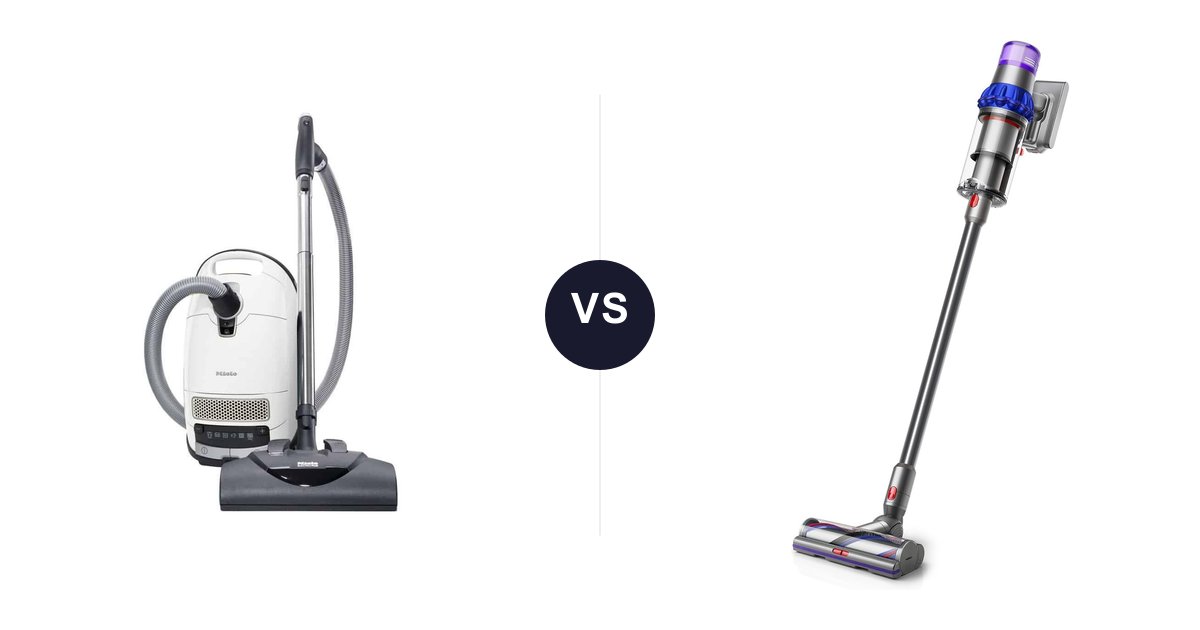
A bagged vacuum uses a disposable filter bag inside a sealed chamber. The vacuum pulls air through the bag, trapping dust, debris, and allergens in the bag’s layers. When the bag fills up, you remove it, seal it, and toss it in the trash. The entire process keeps your hands clean and dust contained.
A bagless vacuum uses cyclonic separation to spin air at high speed. Centrifugal force flings particles into a dustbin while air passes through washable filters. You empty the bin directly into the trash and rinse the filters periodically. No ongoing bag purchases required.
Bagless technology was popularized by Dyson in the 1990s with cyclonic separation that promised constant suction. Bagged vacuums have been the standard since the 1920s, evolving with better filtration and sealed systems. Neither system is inherently better. Each has real trade-offs that matter differently depending on your home, health, and preferences.
Filtration and Allergen Control
For allergy sufferers and households with pets, filtration is often the deciding factor. The type of filtration matters more than whether the vacuum uses bags or not, but each system handles allergen containment differently.
Bagged vacuums contain dust and allergens inside the sealed bag during disposal. You remove the bag, seal it, and throw it away without a dust cloud. This makes them inherently better for people with severe allergies or asthma. The Miele Complete C3 Cat & Dog exemplifies this approach with its sealed AirClean system that combines a sealed bag, sealed body, and HEPA filter for virtually zero emissions.
Bagless vacuums require you to empty the dustbin directly into the trash. Even with point-and-shoot bin designs like the Dyson V15 Detect, some dust escapes into the air during emptying. You are exposed to the dust plume every time you clean out the bin. For mild sensitivities, this is manageable. For severe allergies, it is a genuine drawback.
HEPA filtration is available in both types. A true HEPA filter captures 99.97% of particles 0.3 microns and larger. The Shark Navigator Lift-Away proves that bagless vacuums can achieve strong allergen control with its Anti-Allergen Complete Seal combined with HEPA filtration. For more on choosing a vacuum for allergies, see our guide to the best vacuums for allergy sufferers.
Bottom line: For severe allergies or asthma, a bagged vacuum with a sealed system is the safer choice. For mild sensitivities, either type with HEPA filtration will work well.
Ongoing Cost
Bagless vacuums are often marketed as saving money on bags. The actual savings are smaller than many buyers expect.
Bagged vacuum costs: Replacement bags typically cost $2-5 each and last 1-2 months depending on home size, occupants, and pets. A typical household spends roughly $15-40 per year on bags. Premium bagged models like the Miele Complete C3 use multi-layer bags that cost $4-6 each but last longer and filter better than cheaper single-layer bags.
Bagless vacuum costs: Washable filters are “free” to rinse, but they degrade over time and need replacement. Expect to spend $10-30 per year on replacement filters, depending on the model and how often you wash them.
Total cost of ownership: Bagless saves roughly $10-20 per year on consumables. That is not enough to be a deciding factor for most buyers. The Bissell Zing Bagged Canister 2154A and Bissell Zing Bagless Canister 2156A are priced nearly identically, proving that bagged technology does not require a premium.
Bottom line: Cost savings are real but minimal. Focus on filtration, convenience, and performance instead.
Suction and Performance
A common marketing claim suggests that bagged vacuums lose suction as the bag fills. This is partially true but overstated.
Modern multi-layer bags like Miele’s AirClean bags maintain airflow better than older single-layer designs. By the time a bag is half full, airflow restriction is noticeable but not catastrophic. Most users simply change the bag when performance declines.
Cyclonic bagless vacuums from brands like Dyson and Shark are engineered to maintain consistent suction as the dustbin fills. The high-speed air separation keeps debris from clogging the intake. The Dyson V15 Detect demonstrates this with its laser particle detection that shows real-time cleaning performance regardless of bin level.
In real-world use, the suction difference between a half-full bag and a half-full dustbin is marginal. What matters more for cleaning performance is motor power, brush roll design, and floor head engineering. Both bagged and bagless vacuums clean effectively when properly maintained.
Bottom line: Do not choose based on suction marketing claims. Both types deliver strong cleaning performance.
Convenience and Maintenance
Daily convenience differs significantly between the two types.
Emptying a dustbin (bagless): You see exactly how full the bin is through the clear container. Emptying involves releasing a latch and dumping debris into the trash. The downside is a dust plume on emptying, especially with fine dust or pet hair. You often need to tap or shake the bin to get everything out, and your hands may get dirty.
Swapping a bag (bagged): Quick and clean. You remove the old bag, seal it, and drop in a new one. No dust exposure, no dirty hands. The trade-off is that you need to keep replacement bags stocked. Running out means you cannot vacuum until you buy more.
Visibility: Bagless wins on seeing exactly how full the container is. Bagged vacuums often have a “bag full” indicator light, but it is less precise than a clear bin.
Filter maintenance: Bagless requires periodic filter rinsing every 1-3 months. Filters need 24 hours to dry completely before reinstallation. Bagged vacuums have longer filter life because the bag captures most debris before it reaches the filter. For more details on filter care, see our vacuum maintenance guide.
Odor control: Pet owners often prefer bagged vacuums because sealed bags contain odors better. Bagless bins can develop smells if not cleaned regularly, especially in homes with pets.
Which Type Is Right for You?
The right choice depends on your priorities, home environment, and health needs. Use this decision matrix to match your situation:
| Factor | Bagged | Bagless |
|---|---|---|
| Filtration | Excellent (sealed bag + HEPA) | Good (cyclonic + HEPA) |
| Allergen Control | Superior (sealed disposal) | Good (dust exposure on emptying) |
| Ongoing Cost | $15-40/year (bags) | $10-30/year (filters) |
| Suction Consistency | Declines as bag fills | Maintained by cyclonic design |
| Convenience | Clean disposal, need bag stock | No bags needed, messier emptying |
| Maintenance | Low (swap bag, occasional filter) | Moderate (empty bin, rinse filters) |
| Odor Control | Better (sealed bags) | Requires regular bin cleaning |
| Environmental | More landfill waste | Less waste (reusable bin) |
Severe allergies or asthma: Choose a bagged vacuum with a sealed system. The Miele Complete C3 Cat & Dog is designed specifically for this use case with HEPA filtration and a completely sealed air path.
Budget-conscious: Look at total cost of ownership, not just bag cost. The Bissell Zing Bagged 2154A and Bissell Zing Bagless 2156A are similarly priced and both offer solid value. Either type works.
Pet owners: HEPA filtration matters more than bag type, but bagged vacuums contain odors better. See our guide to bagged vacuums for pet hair for specific recommendations.
Apartment or small space: Bagless offers simplicity without bag storage. The Eureka WhirlWind Bagless Canister weighs just 8 lbs and is easy to store in tight spaces.
Hate maintenance: Bagged is lower effort. Swap the bag and go. No filter rinsing, no drying time.
Eco-conscious: Bagless reduces disposable waste. Reusable bins avoid sending bags to landfills.
Want to see the dirt: Bagless lets you see exactly what the vacuum picked up through the clear bin. Some users find this satisfying.
Best Bagged Vacuums
If you have decided that bagged is right for your home, here are top options at different price points.
Miele Complete C3 Cat & Dog
The Miele Complete C3 Cat & Dog is the premium pick for bagged vacuum cleaners. Its sealed AirClean system combines a multi-layer dust bag with HEPA filtration and a sealed body for virtually zero emissions. The 6 power settings let you adjust suction for different surfaces from delicate curtains to thick carpets. For a broader look at Miele’s lineup, see our Miele C1 vs C2 vs C3 comparison.
Best for: Allergy sufferers, pet owners, and anyone who wants the quietest, most thorough clean available.
Bissell Zing Bagged Canister 2154A
The Bissell Zing Bagged Canister 2154A proves that bagged vacuums do not have to be expensive. This lightweight canister is simple, effective, and affordable. It delivers the allergen containment benefits of bagged filtration at a budget price point. For more canister options, see our canister vacuum reviews.
Best for: Budget shoppers who want the allergen benefits of bagged filtration without the premium price.
Best Bagless Vacuums
Bagless vacuums dominate the market for good reason. These models stand out at every tier.
Dyson V15 Detect
The Dyson V15 Detect is the premium pick for bagless technology. It features whole-machine HEPA filtration and a point-and-shoot bin emptying mechanism that minimizes dust exposure. The laser particle detection on the cleaner head shows you exactly what you are picking up in real time. Dyson’s cyclonic separation maintains suction throughout the cleaning session.
Best for: Tech-forward users who want the most advanced bagless experience with genuine HEPA filtration.
Shark Navigator Lift-Away
The Shark Navigator Lift-Away is the mid-range pick that proves bagless can match bagged on allergen control. The Anti-Allergen Complete Seal combined with HEPA filtration captures 99.9% of dust and allergens inside the vacuum. The lift-away pod detaches for portable cleaning on stairs and furniture.
Best for: Families who want strong allergen control without the premium price of a Dyson or Miele.
Bissell Zing Bagless Canister 2156A
The Bissell Zing Bagless Canister 2156A is the budget pick. It uses cyclonic filtration to maintain suction and weighs just 8 pounds for easy maneuverability. This is the direct bagless counterpart to the Bissell Zing Bagged 2154A, making it a useful point of comparison between the two types.
Best for: Budget shoppers who prefer the convenience of no replacement bags.
Eureka WhirlWind Bagless Canister
The Eureka WhirlWind Bagless Canister weighs just 8 lbs, making it one of the lightest full-size options available. It is ideal for apartments, condos, and anyone who needs to carry a vacuum between floors. The cyclonic filtration maintains suction and the integrated crevice tool stores on board.
Best for: Apartments, condos, and anyone who values portability above all.
Recommended Products
Miele Complete C3 Cat & Dog
Best bagged vacuum (premium)The Miele Complete C3 Cat & Dog features a handheld turbo brush for furniture, charcoal odor filtration, and 66 dB quiet operation backed by a 7-year motor warranty. Best for multi-pet households that need a hygienic bagged system with specialized tools to handle long hair on upholstery and stairs.
What We Like
- Handheld turbo brush excellent for pet hair on furniture
- Bagged design hygienic for allergy sufferers
- German engineering with superior build quality
- Charcoal filter neutralizes pet odors effectively
What We Don't
- Very expensive compared to competitors
- Ongoing cost of replacement bags
- Lacks motorized powerhead in base configuration
Bissell Zing Bagged Canister 2154A
Best bagged vacuum (budget)Best entry-level canister. Surprising performance at a budget-friendly price, perfect for light pet hair duty or small apartments.
What We Like
- Extremely affordable price point for bagged canister
- Lightweight at 7.5 lbs for easy portability
- Multi-surface cleaning with variable suction control
- Telescoping wand extends reach for high areas
- Easy bag change system for mess-free disposal
What We Don't
- Less suction power than premium canister models
- Basic multi-level filtration - not true HEPA
- 15-foot cord limits cleaning range without outlet changes
Dyson V15 Detect
Best bagless vacuum (premium cordless)The most technologically advanced cordless vacuum available, with genuine innovations in dust detection and suction optimization. Best for tech-forward buyers with mostly hard floors.
What We Like
- Laser reveals microscopic dust on hard floors
- Piezo sensor counts particles and displays in real-time
- Anti-tangle Motorbar cleaner head prevents hair wrap
- Powerful 240 AW suction with auto-adjusting power
What We Don't
- 60-minute runtime only in Eco mode (8 min in Boost)
- Small 0.2-gallon dustbin requires frequent emptying
- Premium price point
- 4.5-hour charging time is lengthy
Shark Navigator Lift-Away
Best bagless vacuum (mid-range upright)The Shark Navigator Lift-Away is a proven mid-range upright with HEPA filtration and detachable-pod versatility. Its Lift-Away feature makes it genuinely useful for stairs and furniture, and the 5-year warranty adds long-term peace of mind.
What We Like
- Lift-away feature for versatile cleaning of stairs and furniture
- HEPA filter with Anti-Allergen Complete Seal technology
- Swivel steering for easy maneuverability
- Durable build quality with 5-year warranty
What We Don't
- Heavier at 12.5 lbs compared to some competitors
- Corded design limits cleaning range
- No self-cleaning brushroll - requires manual hair removal
- Smaller dustbin than some competitors at 0.9 quarts
Bissell Zing Bagless Canister 2156A
Best bagless vacuum (budget)The Zing Bagless offers 9-amp cyclonic suction in a compact 7.3 lb canister with a bottom-release dirt cup that eliminates ongoing bag costs. Best for budget-conscious buyers who need a lightweight canister for basic maintenance on low-pile carpet and hard floors in small apartments.
What We Like
- Very affordable entry-level canister vacuum
- Bagless design eliminates ongoing bag costs
- Compact storage with retractable cord
- Easy-empty dirt cup with bottom release
What We Don't
- No HEPA filtration for allergen control
- Short hose limits reach without moving unit
- Cyclonic filtration requires regular filter cleaning
Eureka WhirlWind Bagless Canister
Best lightweight bagless optionPerfect for frequent, quick cleanups. The lightweight design reduces fatigue during daily vacuuming sessions, making it ideal for maintaining cleanliness.
What We Like
- Ultra-lightweight at 8 lbs
- Easy maneuverability
- Washable filters
- Budget-friendly
What We Don't
- Smaller capacity than premium canisters
- Less powerful than high-end models
- No powered brush head for deep carpet agitation
Sources & Research
- Amazon Product Page
- Miele Official Product Page
- Miele Official Product Page
- Amazon Product Page
- Bissell Official Product Page
- Dyson official product page
- RTINGS lab test results
- Amazon Product Page
- Amazon Product Page
- Shark Official Website
- Shark Official Site
- Amazon Product Page
- Bissell Official Product Page
Continue Reading
Explore more buying guides content or browse our other categories.
Frequently Asked Questions
- Are bagged vacuums better for allergies?
- Generally yes. Bagged vacuums seal dust and allergens inside the bag, so you have minimal exposure when disposing. Models like the Miele C3 with their sealed filtration system are particularly effective. Bagless vacuums release some dust when emptying the bin, though HEPA-filtered bagless models like the Dyson V15 still filter exhaust air effectively.
- Do bagged vacuums lose suction as the bag fills?
- Traditional bagged vacuums do lose some suction as the bag fills and airflow decreases. However, premium models like Miele use multi-layer bags with large surface area that maintain suction longer. Bagless cyclonic vacuums maintain more consistent suction since they separate dirt without restricting airflow through a bag.
- Which is cheaper to maintain - bagged or bagless?
- Bagless vacuums have lower recurring costs since you do not buy replacement bags. However, bagged vacuum bags typically cost between two and five dollars each and last one to two months. Some bagless models require periodic filter replacements that can cost as much as a year of bags. Over a vacuum's lifetime, the cost difference is usually modest.
- Can I switch from bagged to bagless or vice versa?
- No. Vacuums are designed for one system or the other. If you want to switch, you need to buy a new vacuum. Consider what matters most to your household - allergen control and hands-off disposal favor bagged, while no-cost emptying and visible dirt collection favor bagless.
Written By
Home Vacuum Zone
Our team researches, tests, and reviews vacuum cleaners to help you make confident buying decisions.
Related Articles
Vacuum Noise Level Comparison: Decibel Ratings for 60+ Models (2026 Database)
Comprehensive vacuum noise level database with decibel ratings for 60+ models across every vacuum type. Find the quietest vacuums and understand what dB ratings actually mean.
Vacuum Suction Power Chart: AW, Pa & kPa Ratings Compared (2026 Database)
Comprehensive vacuum suction power database with air watts, pascals, and kPa ratings compared across every vacuum type. Find how much suction you actually need.
Beater Bar vs No Beater Bar: Does Your Vacuum Need One? (2026 Guide)
Learn what a beater bar is, when you need one, and the best vacuums with and without beater bars. Complete guide for carpet, hardwood, and pet hair cleaning.