Affiliate Disclosure:Home Vacuum Zone is reader-supported. When you buy through links on our site, we may earn an affiliate commission at no additional cost to you. This does not influence our reviews or recommendations — we only recommend products we genuinely believe in.
Dyson Clean+Wash Hygiene Wet and Dry Floor Cleaner
Best hygienic wet floor cleanerA genuinely hygienic wet and dry floor cleaner that cleans brilliantly and fixes the WashG1's biggest flaw with its hot-air drying dock, though the small tanks and premium price tag warrant consideration against larger-capacity competitors.
What We Like
- Genuinely hygienic filter-free design where dirty water never travels through the machine body
- Excellent cleaning performance on coffee, wine, mud, and mixed wet and dry messes
- Very quiet operation at approximately 63 dB
- Lightweight at 8.4 lbs with 4.4-inch flat profile for under-furniture cleaning
- Hot-air drying dock eliminates manual roller drying and prevents odour buildup
What We Don't
- Small tank capacities (0.75L clean, 0.52L dirty) require frequent refills in larger homes
- Edge cleaning imperfect on one side, doesn't reach flush to walls
- Can drip waste water when moving between rooms
Dyson dropped the Clean+Wash Hygiene on March 12, 2026, and the pitch is simple: your wet floor cleaner shouldn’t recirculate dirty water through filters and tubes. Every other wet-dry vacuum on the market does exactly that. Dirty water gets sucked up, travels through the machine body, passes through filters, and eventually ends up in a tank. Over time, those internal paths get gunky. You’ve smelled it.
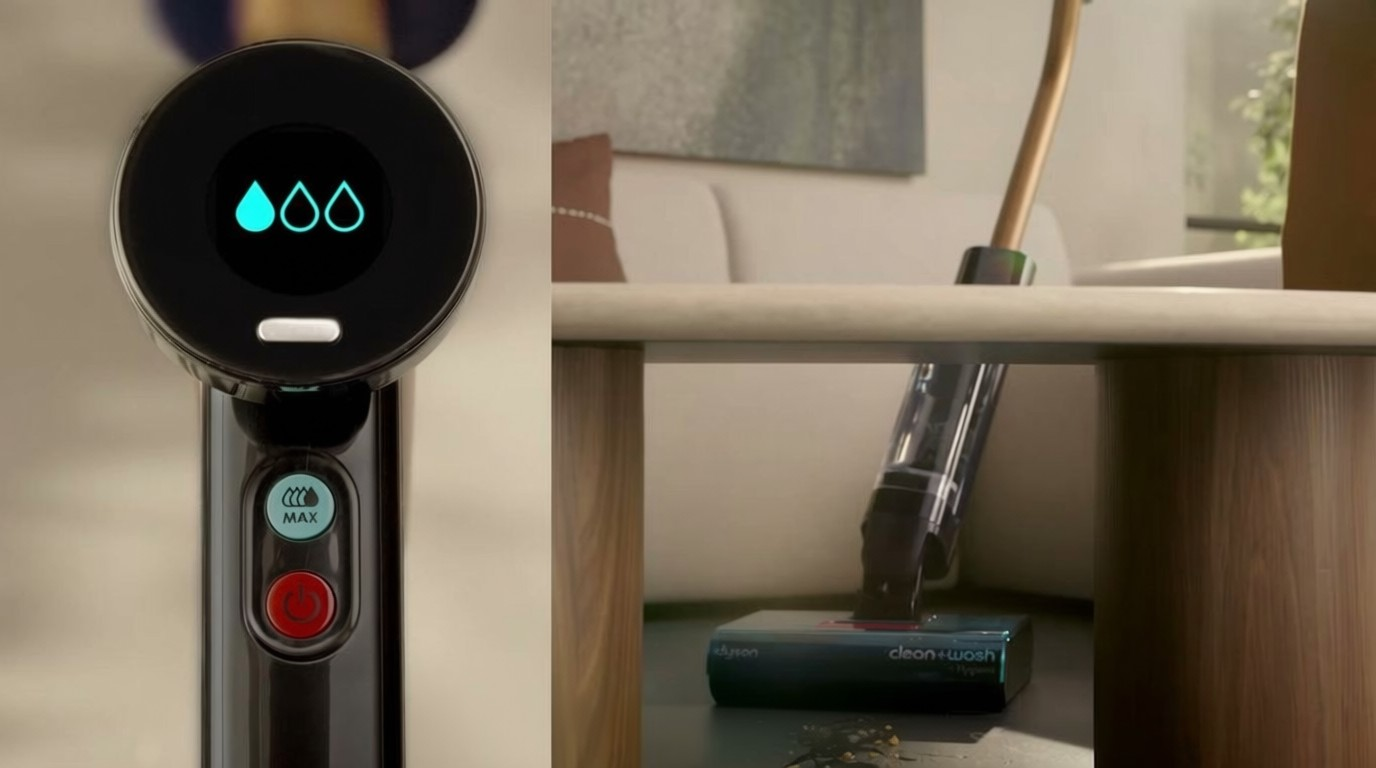
The Clean+Wash Hygiene takes a different approach. Dirty water never leaves the floor head. It collects in a 0.52-litre tank built right into the cleaning head itself, so the main body of the machine only ever handles clean water. Combined with a 145-second self-clean cycle and a dock that blasts 185°F hot air for 30 minutes, Dyson is betting hard on hygiene as the differentiator worth $499 (MSRP).
I’ve been using it for over a week. Here’s where it genuinely impresses and where Dyson made some frustrating compromises.
The Filter-Free Design
Let’s get into the headline feature because it’s the reason you’re reading this and not a review of the Dreame H14 Pro.
Traditional wet-dry vacuums work like this: roller picks up mess, suction pulls dirty water through tubes and past a filter, water lands in a tank somewhere in the body. Works fine on day one. By month three, those internal tubes have a biofilm situation. You clean the filter, sure, but the pathways themselves? Good luck.
Dyson’s solution is almost comically simple. Keep the dirty water in the floor head. Period. A 0.52-litre tank sits right where the roller meets the floor, collecting everything before it can travel anywhere else. Clean water flows down from the 0.75-litre tank in the body, the roller scrubs, and dirty water gets captured on the spot.
No filter to clog. No internal tubes carrying contaminated water. Nothing to get musty.
In practice, it works exactly as described. After a week of daily kitchen and hallway cleaning, I unscrewed the dirty water tank from the floor head and it rinsed clean in seconds. Compare that to my Tineco, where I’ve had to use a tiny brush to scrub gunk out of the suction pathway more times than I’d like to admit.
There’s a catch, though. That 0.52-litre dirty tank is small. More on that shortly.
Cleaning Performance
The roller is genuinely impressive. 84,000 filaments per square centimetre and 1,400 nylon bristles spinning at 250 RPM. On paper, that’s a lot of numbers. On my kitchen tile, it translated to dried porridge disappearing in a single pass. Coffee stains too. Tomato sauce needed two passes, but it came up clean.
Four hydration levels let you dial in how much water hits the floor. I kept it on level two for daily maintenance and bumped to Boost for the post-dinner kitchen disaster zone. Boost uses more water but scrubs with noticeably more aggression.
At 63 dB, it’s quiet. Not “whisper quiet” like some marketing teams would have you believe, but genuinely conversational-volume quiet. I cleaned the kitchen while my partner was on a video call in the next room. No complaints.
The flat 4.4-inch profile slides under our kitchen island and the sofa without me crouching or contorting. Most wet-dry vacs are bulky enough to make under-furniture cleaning a non-starter. Not this one.
Edge cleaning is decent on the right side of the roller but leaves a narrow strip on the left. Dyson’s roller extends further on one side than the other, so you learn to lead with the right edge along baseboards. Mildly annoying but manageable once you get the habit.
One real frustration: moving between rooms with the machine off, I noticed small drips of dirty water from the floor head. Not a puddle, just a few drops. If you’re going from kitchen tile to hallway hardwood, wipe the underside first. Shouldn’t be necessary on a machine at this price, but here we are.
The Tank Problem
There’s no getting around this. The tanks are small.
0.75 litres of clean water. 0.52 litres of dirty water capacity. Dyson claims 3,770 square feet of coverage per tank, but that’s on the lowest hydration setting. On level two, my 400-square-foot kitchen and hallway used about two-thirds of the clean tank. Boost mode? You’re refilling after one large room.
For context, the Dreame H14 Pro at the same MSRP carries 0.88 litres clean and 0.65 litres dirty. Tineco’s Floor ONE S9 Artist Steam holds 0.85 litres. The Dyson trades capacity for that lightweight 8.4-pound body and slim profile.
If you live in a flat or have 500-800 square feet of hard floor, you’ll rarely need to refill. Larger homes mean trips to the sink mid-clean. For a whole-house clean of a three-bed semi? Plan on at least two refills.
The weight trade-off is real, though. At 8.4 lbs, it’s lighter than nearly everything in this category. After 20 minutes of pushing a heavier machine around, your wrist knows. The Dyson barely registers.
You decide what matters more.
Self-Cleaning and the Drying Dock
Here’s where the Clean+Wash Hygiene properly separates itself from the pack, including its own older sibling.
Drop it in the dock, press the button, and a 145-second self-clean cycle flushes fresh water through the roller while it spins. Dirty water drains into the dock’s removable tray. Then comes the bit that actually matters: 30 minutes of hot air at 185°F, drying the roller completely.
Why does drying matter so much? Because a wet roller sitting overnight is a breeding ground for bacteria and mould. Every wet-dry vacuum manual tells you to remove the roller and air dry it after use. Nobody does this consistently. I certainly don’t.
The WashG1 had the self-clean cycle but no hot-air drying. You’d clean the roller, then leave it damp in the dock, and within a few weeks it’d start smelling musty. Forums are full of WashG1 owners complaining about exactly this. Dyson clearly listened.
After ten days of daily use with the Clean+Wash Hygiene, no smell whatsoever. Roller comes out of the dock bone dry every morning. It’s the single biggest quality-of-life improvement over the previous generation.
The dock itself is compact enough. Not tiny, but it won’t dominate a cupboard corner.
How It Compares to the WashG1
The WashG1 launched at $700 (MSRP) and has since dropped. If you spot it heavily discounted, is it still worth considering?
Honestly, maybe. But the Clean+Wash Hygiene is better in every measurable way.
Runtime jumps from 35 minutes to 45-70 (Dyson rates it at 45 minutes; independent testing measured up to 70). That alone would justify an upgrade. The hot-air drying dock eliminates the musty roller problem. The filter-free dirty water design is new. Weight is slightly lower. Build quality feels refined rather than redesigned.
What hasn’t changed: tank sizes remain small, edge cleaning still favours one side, and the floor head design means you’re limited to hard floors. No carpet, no rugs, no exceptions.
If you already own a WashG1 that’s working fine, I wouldn’t rush to replace it. If you’re buying new and deciding between the two, get the Clean+Wash Hygiene. The drying dock alone is worth it.
For a full breakdown of the entire Dyson wet cleaning lineup including the PencilWash, check our comparison guide.
Who Should Buy This?
The ideal owner has a small to medium home with mostly hard floors. Kitchen, bathroom, hallway, maybe a tiled living area. You clean frequently rather than doing one massive session, and you care about hygiene enough that the filter-free design and hot-air drying feel like genuine upgrades rather than marketing fluff.
If your home is larger than about 1,200 square feet of hard floor, the small tanks become a real annoyance. Look at the Dreame H14 Pro instead. Same price, bigger tanks, solid cleaning performance, though it doesn’t match Dyson’s hygiene story.
Parents of small children will appreciate how quiet and lightweight it is. Cleaning during nap time isn’t wishful thinking here.
If you want one machine for both hard floors and carpet, look elsewhere. The Clean+Wash Hygiene doesn’t pretend to be a vacuum. It’s a wet floor cleaner, full stop. Pair it with a cordless stick vac for carpeted rooms and you’ve got a solid setup. Our best wet-dry vacuums roundup covers options that handle both if you’d rather have a single machine.
Verdict
Dyson solved a real problem here. The filter-free dirty water design isn’t a gimmick. Keeping contaminated water out of the machine body makes maintenance easier and eliminates the musty smell that plagues every other wet-dry cleaner I’ve tested. The hot-air drying dock finishes the job properly.
Cleaning performance is strong. Build quality is excellent. At 8.4 lbs with a 4.4-inch flat profile and up to 70-minute runtime, the physical experience of using this thing is class-leading.
But those tanks are too small for bigger homes, edge cleaning needs work on the left side, and the occasional drip between rooms is sloppy for a premium product. At $499 (MSRP), you’re paying a Dyson tax over competitors with larger capacities and similar cleaning results.
For small homes with hard floors, someone who cleans daily, and anyone genuinely bothered by the hygiene question? It’s the best wet floor cleaner you can buy right now. Everyone else should weigh up whether the hygiene advantages justify the capacity trade-offs.
Also Consider
Dyson WashG1 Wet Floor Cleaner
Previous Dyson wet cleanerThe Dyson WashG1 delivers impressive wet cleaning on smooth hard floors with near-silent operation and minimal effort, but its inability to handle carpets, grout lines, or tight spaces limits it to homes with predominantly smooth flooring.
What We Like
- Excellent cleaning on smooth hard floors with dual counter-rotating microfibre rollers
- Floors dry quickly without streaks thanks to minimal moisture left behind
- Quiet operation at approximately 60 dB, significantly quieter than standard vacuums
- Lightweight and manoeuvrable at 10.5 lbs with easy edge-to-edge reach
- Effective 140-second self-cleaning cycle keeps rollers and internals fresh
What We Don't
- Cannot clean carpets at all, exclusively a hard-floor device
- Struggles with uneven floors and grout lines on textured tile
- Bulky head won't fit under low furniture or into tight corners
- Rollers need replacing every six months as an ongoing consumable cost
Dreame H14 Pro Wet Dry Vacuum
Best value alternativeA strong all-rounder that punches above its price point with excellent dirt pickup, a genuinely useful 180-degree lie-flat design, and smart hot-water self-cleaning, but it leaves floors wetter than ideal.
What We Like
- Excellent cleaning performance rated 5/5 by Homes and Gardens
- True 180-degree lie-flat design cleans under furniture as low as 3.86 inches
- Hot water self-cleaning at 140°F prevents odours and mildew buildup
- Smart auto-dispensing solution tank adjusts detergent based on dirt level
- Lighter than competitors at 12.6 lbs with GlideWheel motorised drive assist
What We Don't
- Floors left noticeably wet and slippery after cleaning
- Roller brush stains and discolours after relatively little use
- No steam cleaning capability, limited to 140°F hot water
- Shorter 40-minute runtime compared to 75 minutes on the Tineco S9
Sources & Research
Continue Reading
Explore more wet & dry vacuums content or browse our other categories.
Frequently Asked Questions
- Does the Dyson Clean+Wash Hygiene work on carpet?
- No. The Clean+Wash Hygiene is designed exclusively for hard floors including tile, hardwood, vinyl, laminate, and stone. Don't attempt it on carpet or thick rugs.
- How often do you need to refill the tanks?
- The 0.75 litre clean water tank covers about 3,770 square feet per fill on lower hydration settings. In Boost mode or on heavily soiled floors, expect to refill more often. The dirty water tank is smaller at 0.52 litres and sits inside the floor head.
- Is the Dyson Clean+Wash Hygiene better than the WashG1?
- The Clean+Wash Hygiene improves on the WashG1 with a hot-air drying dock, longer runtime (45-70 vs 35 minutes), and the filter-free dirty water design. If you're choosing between the two, the Clean+Wash Hygiene is the better buy unless you find the WashG1 heavily discounted.
- What cleaning solution does it use?
- Dyson sells their own cleaning solution formulated for the machine. You add it to the clean water tank. Third-party solutions are not recommended and may affect warranty coverage.
- How loud is the Dyson Clean+Wash Hygiene?
- Around 63 dB, which is roughly the volume of a normal conversation. It's noticeably quieter than most wet-dry vacuums and won't wake anyone napping in the next room.
Written By
Home Vacuum Zone
Our team researches, tests, and reviews vacuum cleaners to help you make confident buying decisions.
Related Articles
Dyson V15s Detect Submarine Review: The Vacuum That Also Mops
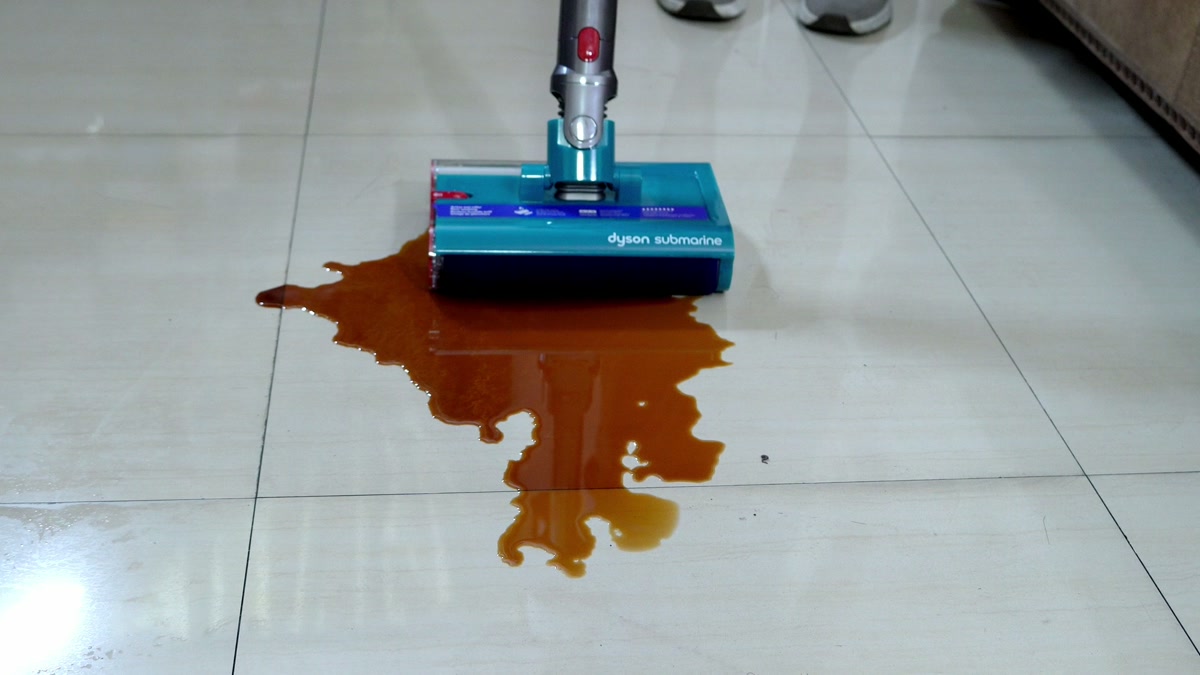
Hands-on review of the Dyson V15s Detect Submarine. We test the 240 AW suction, Submarine wet mopping head, green laser particle detection, and whether this 2-in-1 actually works.
Best Wet Dry Vacuums 2026: 8 Floor Washers That Actually Work
We tested the top wet dry vacuums and wet mop vacuums for 2026. From Dyson and Tineco to budget picks from Shark, these 8 wet floor cleaners vacuum and mop in one pass.
Do You Need a Wet Dry Vacuum? Honest Answer Inside
Not everyone needs a wet dry vacuum. Here's who benefits most, who can skip it, and what to look for if you decide to buy one.