Affiliate Disclosure:Home Vacuum Zone is reader-supported. When you buy through links on our site, we may earn an affiliate commission at no additional cost to you. This does not influence our reviews or recommendations — we only recommend products we genuinely believe in.
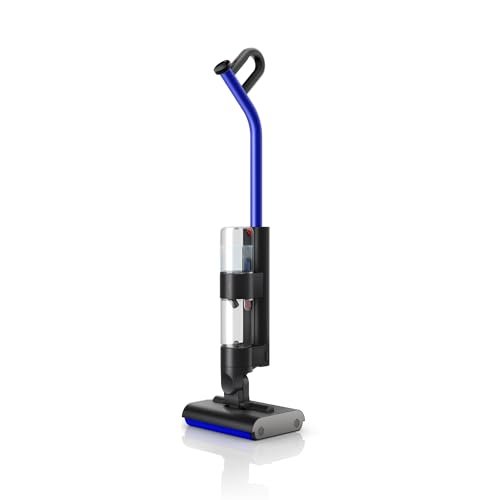
Dyson WashG1 Wet Floor Cleaner
Best dedicated wet floor cleanerThe Dyson WashG1 delivers impressive wet cleaning on smooth hard floors with near-silent operation and minimal effort, but its inability to handle carpets, grout lines, or tight spaces limits it to homes with predominantly smooth flooring.
What We Like
- Excellent cleaning on smooth hard floors with dual counter-rotating microfibre rollers
- Floors dry quickly without streaks thanks to minimal moisture left behind
- Quiet operation at approximately 60 dB, significantly quieter than standard vacuums
- Lightweight and manoeuvrable at 10.5 lbs with easy edge-to-edge reach
- Effective 140-second self-cleaning cycle keeps rollers and internals fresh
What We Don't
- Cannot clean carpets at all, exclusively a hard-floor device
- Struggles with uneven floors and grout lines on textured tile
- Bulky head won't fit under low furniture or into tight corners
- Rollers need replacing every six months as an ongoing consumable cost
The title isn’t a typo. The Dyson WashG1 doesn’t vacuum. No suction motor, no dustbin, no HEPA filter. It’s a dedicated wet floor cleaner, and Dyson wants you to pay a premium for a machine that does less than most of its competitors.
Sounds mad, right? But read the independent reviews on tile, sealed hardwood, and laminate and it starts to make sense. There’s a genuine argument for stripping suction out entirely. Whether that argument is worth the money depends on how you clean your floors and what annoys you about the machines you’ve already tried.
Design and Build
Dyson’s industrial design team clearly had fun here. The WashG1 looks nothing like a traditional mop or a wet-dry vacuum. It’s got that Dyson sci-fi aesthetic, all curves and exposed mechanical bits, but it’s also surprisingly compact for what it does.
At 10.5 lbs it sits in the middle of the wet-dry pack: lighter than the Tineco S9 Artist Steam, heavier than the Bissell CrossWave HF3 at 8.8 lbs. Wrist fatigue is the usual failure point in this category, so the difference tells over a whole floor.
The 12-inch cleaning path is generous. Two tanks sit in the body: 1.0 litre for clean water, 0.8 litres for dirty. Those tanks are smaller than competitors, but the WashG1 squeezes more coverage from less water. Dyson claims 3,100 sq ft per fill, on the lowest setting.
One complaint. The head is bulky. Tom’s Guide lists “bulky head doesn’t clean corners or fit under low furniture” among its cons, so tight corners between the toilet and wall mean reaching for a cloth. Competitors like the Dreame H14 Pro solve this with a 180-degree lie-flat design. Dyson didn’t bother.
Cleaning Performance
Here’s where things get interesting.
The WashG1 uses dual counter-rotating microfibre rollers carrying 64,800 filaments between them. One roller spins forward, the other backward. Dirty water and debris get trapped between them and squeezed into the dirty water tank. No suction involved at all.
On smooth floors, reviewers rate it highly. Tom’s Guide found it removed surface dirt and sticky stains on kitchen tile in two sweeps, and listed “floors are quick to dry without streaks” among its pros. TechRadar called it “fantastic at cleaning perfectly flat floors”.
Four cleaning modes let you dial in the water flow: Low for light dust, Max for sticky messes. Medium covers most jobs.
But there is a catch, and it shows up the moment your floors aren’t perfectly smooth. TechRadar found it “won’t dig into the grouting spaces between tiles” and “can’t really cope with uneven flooring”. Tom’s Guide didn’t hit the grout problem on its matte marble, so flush grout may be fine, but deep grout channels in a bathroom are a risk.
Uneven floors are a problem too, on TechRadar’s account, which matters at transition strips between tile and hardwood.
The No-Suction Question
Let’s address this directly because it’s the thing everyone asks about.
No suction means the WashG1 can’t pick up crumbs, hair clumps, or dried debris the way a wet-dry vacuum can. You need to vacuum or sweep first. Every time. If you skip that step and run the WashG1 over a floor covered in toast crumbs and dog hair, you’ll just push wet debris around.
So why would anyone want this?
Two reasons. First, no suction motor means one fewer noise source, though don’t read that as silent: the Amazon listing rates it at 78 dB, and Dyson doesn’t publish a figure of its own. What you lose is the specific whine of a wet-vac motor, not the volume.
Second, suction-based wet cleaners tend to leave floors wetter. They’re pulling liquid up, but also laying it down, and the recovery isn’t always complete. The WashG1’s roller system wrings dirty water out mechanically, and Tom’s Guide found floors quick to dry. On sealed hardwood, that matters. Standing water is the enemy of wood floors, and the WashG1 leaves barely any.
Is the trade-off worth it? Depends entirely on your cleaning routine. If you already run a robot vacuum daily, the WashG1 slots in perfectly as a follow-up. Vacuum handles the dry debris, WashG1 handles the wet scrubbing. Two specialised tools, each doing their job well.
If you want one machine that does everything in a single pass, the WashG1 isn’t it. Look at the Dreame H14 Pro with its 18,000 Pa suction, or check our Dyson PencilWash vs WashG1 vs Clean+Wash Hygiene comparison for a breakdown of Dyson’s own lineup.
Self-Cleaning and Maintenance
The automated self-cleaning cycle takes 140 seconds. Place the WashG1 on its dock, press the button, and the rollers flush with clean water while spinning. Dirty water drains into a tray you empty afterwards.
It’s a flush, not a dry, so the rollers stay wet afterwards. Pulling them out for a manual rinse and air-dry now and then is sensible if you’re cleaning up after messy cooking or muddy boots.
Roller replacement is the ongoing cost. Dyson says every six months, and replacement rollers aren’t cheap.
The dock doesn’t need a water connection, which is nice.
Battery and Runtime
Dyson rates the WashG1 at 35 minutes in standard mode. Max mode cuts that substantially.
Charging takes 4 hours. There’s no quick-charge option and the battery isn’t removable, so if it dies mid-clean, you’re done for the afternoon. For most flats and average-sized homes, 35 minutes is plenty. Larger houses might find it tight, especially if you’re doing a thorough room-by-room clean.
The four modes give you some control over runtime versus cleaning power.
Who Should Buy the WashG1?
The ideal WashG1 owner already has a vacuum they like. Maybe a Dyson cordless, maybe a robot. They want a dedicated wet floor cleaner that leaves floors dry, and doesn’t try to be everything at once.
If your home is mostly smooth hard floors, tile, laminate, vinyl, sealed hardwood, the WashG1 is brilliant. Tom’s Guide and TechRadar both rate its cleaning on smooth surfaces highly, and it’s easy to maintain.
If you want the newer Dyson with hot-air drying, the Clean+Wash Hygiene is lighter at 8.4 lbs, runs up to 70 minutes per charge, and dries its roller automatically between uses. It’s still wet-only, no carpet and no real suction, but it solves the WashG1’s biggest weakness (the damp roller smell). The head-to-head comparison walks through every difference if you’re choosing between these two specifically.
For people who want actual suction alongside wet cleaning (so you don’t need to sweep first), the Dreame H14 Pro offers 18,000 Pa suction with a 180-degree lie-flat design for getting under furniture. At a similar price point, it’s the more versatile machine, though floors won’t dry as quickly.
And if budget and weight matter most, Dyson’s PencilWash at 4.6 lbs is the lightest option in the range, though it lacks self-cleaning.
Verdict
The Dyson WashG1 is a strange product to recommend because it does less than its competition on paper. No suction. No carpet cleaning. Smaller tanks. But on the specific job it’s designed for, wet cleaning smooth hard floors, it’s excellent.
Floors dry quickly and without streaks on Tom’s Guide’s account. The self-cleaning dock flushes the rollers, though it doesn’t dry them.
It gets 4 out of 5 from us. It loses a point for the bulky head that can’t reach tight spaces, the struggle with grout lines, and the fact that you need a separate vacuum. Those are real limitations, not nitpicks.
If you’re already vacuuming regularly and want genuinely clean hard floors without the dampness of a wet-dry vacuum, the WashG1 is the best tool for that specific job. Just go in knowing exactly what it is, and more importantly, what it isn’t.
Also Consider
Dyson Clean+Wash Hygiene Wet and Dry Floor Cleaner
Best Dyson all-in-oneA genuinely hygienic wet and dry floor cleaner that cleans brilliantly and fixes the WashG1's biggest flaw with its hot-air drying dock, though the small tanks and premium price tag warrant consideration against larger-capacity competitors.
What We Like
- Genuinely hygienic filter-free design where dirty water never travels through the machine body
- Excellent cleaning performance on coffee, wine, mud, and mixed wet and dry messes
- Quiet in use, with Trusted Reviews measuring 63.4 dB
- Lightweight at 8.4 lbs with 4.4-inch flat profile for under-furniture cleaning
- Hot-air drying dock eliminates manual roller drying and prevents odour buildup
What We Don't
- Small tank capacities (0.75L clean, 0.52L dirty) require frequent refills in larger homes
- Edge cleaning imperfect on one side, doesn't reach flush to walls
- Can drip waste water when moving between rooms
Dreame H14 Pro Wet Dry Vacuum
Best vacuum-mop comboA strong all-rounder that punches above its price point with excellent dirt pickup, a genuinely useful 180-degree lie-flat design, and smart hot-water self-cleaning, but it leaves floors wetter than ideal.
What We Like
- Excellent cleaning performance rated 5/5 by Homes and Gardens
- True 180-degree lie-flat design cleans under furniture as low as 3.86 inches
- Hot water self-cleaning at 140°F prevents odours and mildew buildup
- Smart auto-dispensing solution tank adjusts detergent based on dirt level
- Lighter than competitors at 12.6 lbs with GlideWheel motorised drive assist
What We Don't
- Floors left noticeably wet and slippery after cleaning
- Roller brush stains and discolours after relatively little use
- No steam cleaning capability, limited to 140°F hot water
- Shorter 40-minute runtime compared to 75 minutes on the Tineco S9
Sources & Research
Continue Reading
Explore more wet & dry vacuums content or browse our other categories.
Frequently Asked Questions
- Does the Dyson WashG1 vacuum as well as mop?
- No. The WashG1 has no suction motor and cannot vacuum. It is strictly a wet floor cleaner that uses dual counter-rotating microfibre rollers to scrub and absorb dirt from hard floors. You need to vacuum or sweep first, then use the WashG1 for wet cleaning.
- What floors can the Dyson WashG1 clean?
- The WashG1 is designed for sealed hard floors including tile, vinyl, laminate, and sealed hardwood. It should not be used on unsealed wood, carpet, or heavily textured stone floors. It also struggles with deep grout lines and uneven surfaces.
- How often do the WashG1 rollers need replacing?
- Dyson recommends replacing the microfibre rollers approximately every six months with regular use. Replacement rollers are available directly from Dyson. Between replacements, the automated self-cleaning cycle helps keep them fresh.
- How long does the Dyson WashG1 battery last?
- The WashG1 provides up to 35 minutes of runtime in standard mode. Max mode cuts that substantially. A full recharge takes approximately 4 hours. The 1-litre clean water tank covers up to 3,100 square feet per fill.
- Is the Dyson WashG1 worth it if I already have a wet-dry vacuum?
- If you already own a wet-dry vacuum like a Tineco or Bissell CrossWave, the WashG1 probably doesn't justify its price as a replacement. It's best suited for people who want dedicated wet cleaning without suction, or who find traditional wet-dry vacuums leave floors too wet. Tom's Guide found it left floors quick to dry and streak-free.
Written By
Home Vacuum Zone
Our team researches vacuum cleaners against published specifications and independent lab results to help you make confident buying decisions.
Related Articles
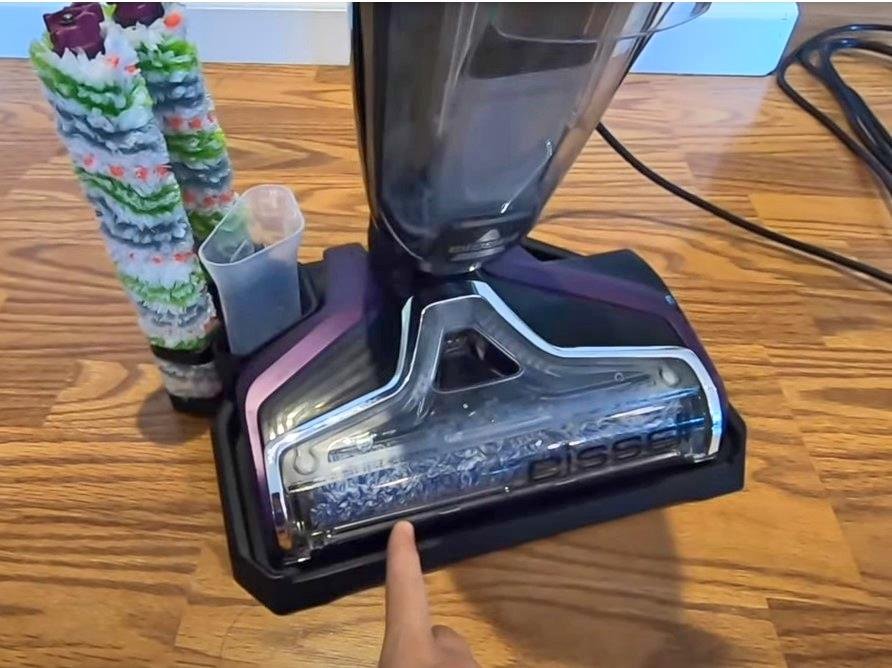
Bissell CrossWave HF3 Review: Vacuum and Mop in One
Bissell CrossWave HF3 cordless wet/dry vacuum review, built from Bissell's specs and user guide and Vacuum Wars' lab results on sealed hard floors.
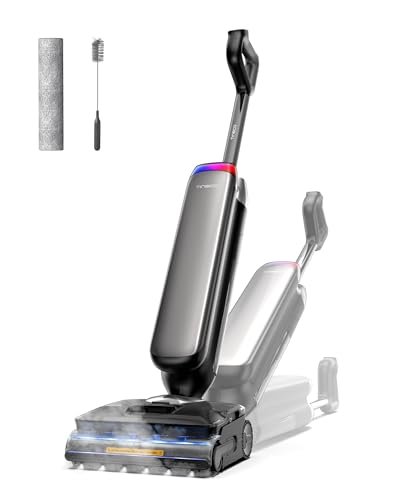
Best Wet Dry Vacuums 2026: 8 Floor Washers That Actually Work
We compared the top wet dry vacuums and wet mop vacuums for 2026. From Dyson and Tineco to budget picks from Shark, these 8 wet floor cleaners vacuum and mop in one pass.
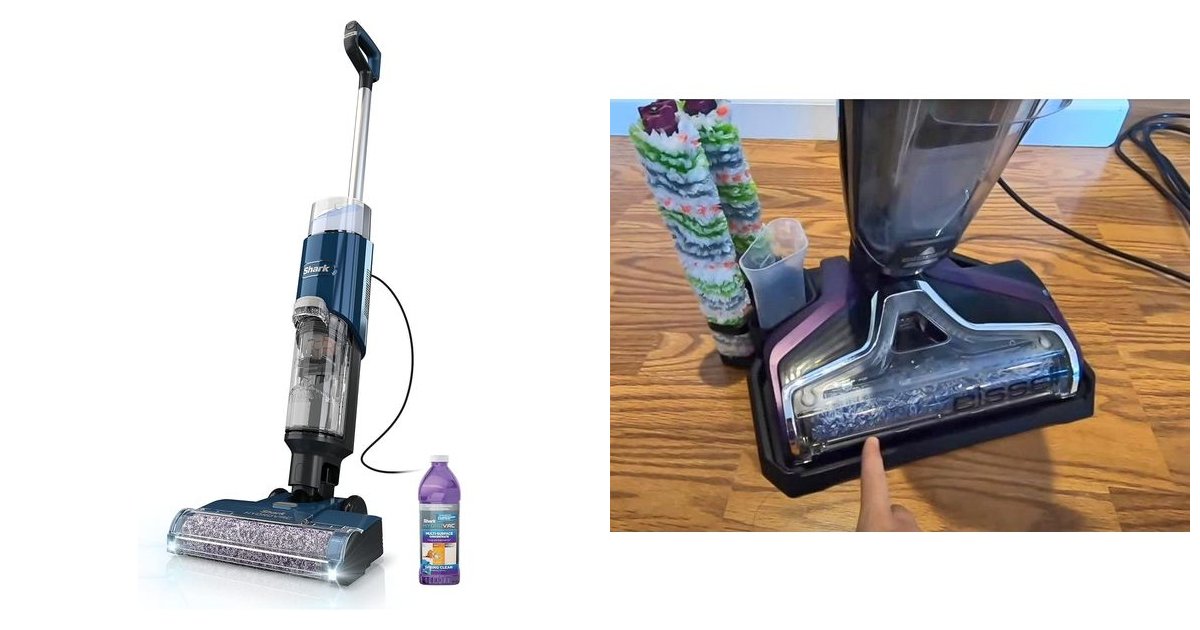
Shark HydroVac XL vs Bissell CrossWave HF3: Budget Showdown
Comparing two of the most popular budget wet mop vacuums head to head. Shark HydroVac XL brings corded power and self-cleaning, Bissell CrossWave HF3 goes cordless. We break down which is actually worth buying.