Affiliate Disclosure:Home Vacuum Zone is reader-supported. When you buy through links on our site, we may earn an affiliate commission at no additional cost to you. This does not influence our reviews or recommendations — we only recommend products we genuinely believe in.
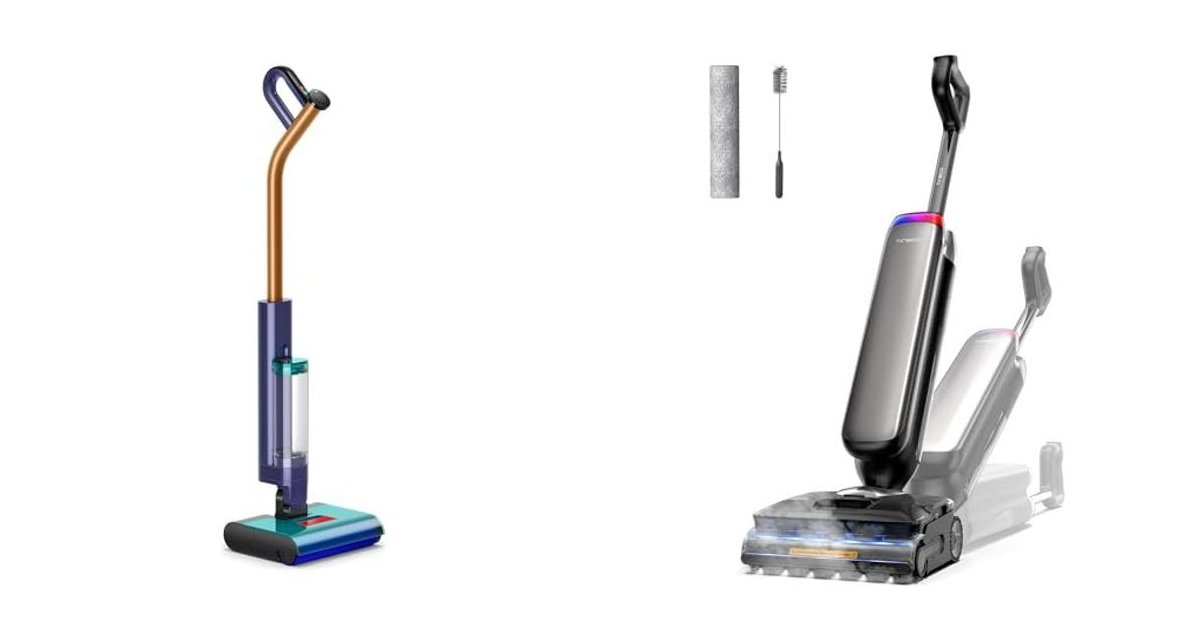
Two brands dominate the wet mop vacuum conversation right now, and they couldn’t be more different in how they approach the problem. Dyson thinks suction is unnecessary for hard floors. Tineco thinks you should have suction, steam, and a smartphone app telling you how dirty your floor is.
Who’s right? Probably neither, entirely. But after spending serious time with machines from both lineups, I’ve got strong opinions on where each brand excels and where they’re quietly hoping you don’t notice the gaps.
If you’re shopping for a wet dry vacuum in 2026, these are the two names you’ll keep running into. Let’s sort out which one actually deserves your money.
Brand Philosophies: Two Very Different Bets
Dyson entered the wet floor cleaning market with a borderline contrarian take: suction doesn’t matter on hard floors. Their argument? Traditional vacuums push dirty water around and clog filters. Better to use ultra-dense microfibre rollers that absorb liquid and trap debris mechanically. No filters to replace. No suction motor to burn out.
It’s a bold position, and I’ll admit it sounded like marketing nonsense until I actually used one.
Tineco went the opposite direction. Their machines are proper wet dry cleaners that vacuum and mop simultaneously, with suction pulling dirty water into a separate tank while fresh solution goes down. The flagship S9 Artist Steam throws 320°F steam into the mix for sanitisation. Add iLoop smart sensors, app connectivity, and self-propelled drive, and you’ve got a machine that’s trying to do everything.
Neither approach is wrong. But they attract different buyers. Dyson appeals to people who want simplicity and hygiene without fuss. Tineco appeals to people who want a single machine that replaces their vacuum, mop, and steam cleaner.
Flagship vs Flagship: Clean+Wash Hygiene vs S9 Artist Steam
Here’s where it gets interesting, because the price gap is enormous.
The Dyson Clean+Wash Hygiene comes in at $499 (MSRP). The Tineco Floor ONE S9 Artist Steam costs $999 (MSRP). That’s not a small difference. So what does double the money actually buy you?
Suction. The Dyson has none. Zero. The S9 Artist Steam pulls 22 kPa, which is enough to grab cereal crumbs, dried pasta bits, and the kind of gritty tracked-in dirt that a roller alone might smear around.
Steam. The S9 heats water to 320°F internally (about 210°F at the roller contact point), which kills bacteria and cuts through kitchen grease without chemical cleaners. Dyson’s answer to hygiene is 185°F hot-air drying during the self-clean cycle. That’s after-the-fact sanitisation of the machine itself, not the floor.
Smart features. Tineco’s iLoop sensor adjusts suction and water flow based on how dirty the floor is. There’s an app showing real-time dirt levels, cleaning reports, maintenance reminders. The Dyson has… three cleaning modes. You pick one. That’s it.
But the Dyson isn’t just cheaper for the sake of being cheaper. At 8.4 lbs versus roughly 13.5 lbs for the S9, it’s dramatically lighter. The 70-minute runtime crushes the S9’s 30-minute steam mode. And that 84,000 filaments per square centimetre roller is genuinely impressive tech. I’ve watched it pull coffee stains off tile that I expected would need scrubbing.
Cleaning Performance Compared
Right, the bit that actually matters.
On daily maintenance - light dust, footprints, kitchen splashes - both brands do a solid job. The Dyson’s roller approach works surprisingly well for routine cleaning. You don’t miss the suction when the mess is just liquid and fine dust.
Where things diverge is tougher messes. Dried oatmeal on the kitchen floor. Muddy boot prints. Sticky juice spills that have been sitting for a few hours. The S9’s suction genuinely helps here. It pulls debris into the dirty tank rather than relying on the roller to trap everything, and the steam loosens stuck-on grime that a wet roller alone would struggle with.
Edge cleaning is another gap. The S9 Artist Steam has triple-sided edge cleaning that gets close to baseboards. Not perfect, but noticeably better than the Dyson, which leaves a visible strip along walls. This bothered me more than I expected it to.
Steam sanitisation is the S9’s party trick. If you’ve got young kids crawling on the kitchen floor, or you’re particular about bacteria, 210°F steam at the contact point is genuinely useful. It’s not a gimmick. My kitchen floor felt different after a steam pass, tangibly cleaner in a way that plain water mopping doesn’t achieve.
That said, I want to be honest: for 80% of daily cleaning, the Dyson handles it fine. The extra capability of the S9 matters most to people who cook a lot, have pets, or want to skip cleaning chemicals entirely.
Weight, Runtime, and Tanks
Numbers tell part of the story. Here’s how the four main contenders stack up:
| Spec | Dyson Clean+Wash Hygiene | Dyson WashG1 | Tineco S9 Artist Steam | Tineco S7 Steam |
|---|---|---|---|---|
| Weight | 8.4 lbs | 10.5 lbs | ~13.5 lbs | 13.5 lbs |
| Runtime | 70 min | 35 min | 75 min (Auto) / 30 min (Steam) | 40 min |
| Clean tank | 0.75L | 1.0L | 0.88L | - |
| Dirty tank | 0.52L | 0.8L | 0.75L | - |
| Suction | None | None | 22 kPa | Yes |
| Steam | No | No | 320°F internal | 266°F |
| Self-clean drying | 185°F hot air | 140s flush (no heat) | 185°F hot air | Hot air |
| Lie-flat | Yes (4.4” clearance) | No | No | Yes (5.06”, 180°) |
| Self-propulsion | No | No | 360° SmoothDrive | Bi-directional SmoothPower |
| Noise | ~63 dB | ~60 dB | - | - |
| Price (MSRP) | $499 | $700 | $999 | $650 |
The Dyson Clean+Wash Hygiene’s combination of light weight and long runtime is hard to argue with. You can clean a large house without recharging. The S9’s 75-minute Auto mode is competitive, but drop into Steam mode and you’re down to 30 minutes. For a big open-plan ground floor, that’s tight.
The WashG1 is the odd one out here. At $700 (MSRP) it sits between the two brands’ flagships, but with only 35 minutes of runtime and no heated drying, it feels like the older sibling that got overshadowed. Dyson clearly learned from it when designing the Clean+Wash Hygiene.
Tank sizes are all in the same ballpark. Nobody has a huge advantage, though the WashG1’s larger 1.0L clean tank means fewer refills if you’re doing a marathon session.
Smart Features and App Ecosystem
Tineco wins this category outright. It’s not close.
The iLoop sensor on both the S9 and S7 Steam actively monitors floor dirt levels and adjusts cleaning intensity. Walk across a sticky patch and the machine ramps up automatically. Move to a cleaner area and it backs off, saving battery and water. There’s a colour-coded ring on the display that shifts from red to blue as the floor gets cleaner.
Is it necessary? No. Is it satisfying? Absolutely. There’s something weirdly compelling about watching the ring turn blue and knowing you’ve actually cleaned the floor properly rather than just pushing water around.
The Tineco app tracks cleaning sessions, reminds you about maintenance, and shows usage stats. I’ll be blunt: I checked the app twice in the first week and then forgot about it. The on-device display does everything you actually need. But if you’re the kind of person who likes data, it’s there.
Dyson’s approach is refreshingly minimal. Three modes on the Clean+Wash Hygiene. Pick one. Go clean. No app, no WiFi, no firmware updates. Some people will find this frustrating. I found it kind of relaxing after years of smart appliances demanding attention.
Value for Money
This is where the conversation gets real.
Dyson’s wet floor range spans roughly $349 to $700 (MSRP). The Clean+Wash Hygiene at $499 (MSRP) is the sweet spot, offering their best cleaning tech with genuinely useful self-cleaning and hot-air drying. The WashG1 at $700 (MSRP) is overpriced for what it delivers now that the cheaper model exists.
Tineco’s range runs from the S7 Steam at $650 (MSRP) to the S9 Artist Steam at $999 (MSRP). The S7 is actually a strong pick if you want suction plus steam without spending four figures. You lose the triple-sided edge cleaning and the 360° SmoothDrive self-propelled system, but the core cleaning is still excellent. Worth noting: the S7 does have bi-directional self-propulsion (Tineco calls it SmoothPower), so it’s not like you’re muscling it around manually. It’s just a simpler system than the S9’s 360-degree SmoothDrive.
Here’s my honest take on value:
Best bang for buck overall: Dyson Clean+Wash Hygiene at $499 (MSRP). It’s lighter, runs longer, and cleans daily messes brilliantly. The lack of suction is a real limitation, but for most hard floor homes it won’t matter as much as you’d think.
Best bang for buck with suction + steam: Tineco S7 Steam at $650 (MSRP). About $150 more than the Dyson, but adds proper vacuuming capability and steam. Heavier and shorter runtime, but more versatile for the extra outlay.
Worth it if you want the best: Tineco S9 Artist Steam at $999 (MSRP). Genuinely the most capable wet dry cleaner I’ve used. But “best” and “best value” aren’t the same thing, and you’re paying a premium for incremental improvements over the S7.
Skip it: Dyson WashG1 at $700 (MSRP). Caught in an awkward middle ground. Less capable than the cheaper Clean+Wash Hygiene in several ways. Hard to recommend unless you find a steep discount.
Which Brand Should You Choose?
Choose Dyson if:
- You mostly need daily hard floor maintenance (dust, spills, footprints)
- Weight matters to you (bad back, multi-storey home, storing on a hook)
- You want long runtime without worrying about battery management
- You prefer simple machines that just work, no apps required
- You’d rather not spend close to four figures on a floor cleaner
Choose Tineco if:
- You deal with tougher messes regularly (cooking splatters, pet accidents, tracked-in mud)
- Steam sanitisation matters to you (young kids, immunocompromised household member, or just particular about germs)
- You want one machine that genuinely vacuums and mops (not just mops)
- Edge cleaning performance is important
- You enjoy smart features and don’t mind a heavier machine
One thing I want to flag: if you already own a good stick vacuum for dry cleaning, the Dyson’s lack of suction matters less. Use your Dyson V15 or whatever for crumbs and dust, then follow up with the Clean+Wash Hygiene for the wet pass. Two machines, but each doing what it’s best at. Not everyone wants that workflow though, and I get it.
Final Verdict
Neither brand is definitively “better.” That’s a cop-out answer, I know, but it’s genuinely true here because they’re solving different problems.
Dyson made a lighter, simpler, cheaper machine that does one thing well: wet floor maintenance with obsessive hygiene standards. Tineco built a heavier, smarter, pricier machine that tries to replace multiple cleaning tools.
Gun to my head? For most people reading this, I’d point toward the Dyson Clean+Wash Hygiene as the starting recommendation. It’s $499 (MSRP), weighs nothing, runs forever, and the self-cleaning is brilliant. The roller tech genuinely works.
But if you told me you have a big kitchen, a dog, and you’re tired of mopping on your hands and knees with a steam cleaner after vacuuming, I’d say save up for the Tineco S9 Artist Steam and buy one machine that does everything. You’ll feel the price on day one and forget about it by week two.
The S7 Steam is the sleeper pick. At $650 (MSRP) it’s $150 more than the Dyson, but you’re getting suction and steam without the sticker shock of the S9. Not as polished, but it covers the same fundamentals. Worth a serious look if you don’t want to choose between brands’ philosophies but also don’t want to spend a grand.
Whatever you pick, these machines have made traditional mop-and-bucket cleaning feel absurdly outdated. That much, both brands agree on.
Head-to-Head Comparison
Detailed Reviews
Dyson Clean+Wash Hygiene Wet and Dry Floor Cleaner
Best for hygieneA genuinely hygienic wet and dry floor cleaner that cleans brilliantly and fixes the WashG1's biggest flaw with its hot-air drying dock, though the small tanks and premium price tag warrant consideration against larger-capacity competitors.
What We Like
- Genuinely hygienic filter-free design where dirty water never travels through the machine body
- Excellent cleaning performance on coffee, wine, mud, and mixed wet and dry messes
- Very quiet operation at approximately 63 dB
- Lightweight at 8.4 lbs with 4.4-inch flat profile for under-furniture cleaning
- Hot-air drying dock eliminates manual roller drying and prevents odour buildup
What We Don't
- Small tank capacities (0.75L clean, 0.52L dirty) require frequent refills in larger homes
- Edge cleaning imperfect on one side, doesn't reach flush to walls
- Can drip waste water when moving between rooms
Tineco Floor ONE S9 Artist Steam
Best overall wet dry vacuumThe best all-in-one hard floor cleaner available right now, combining vacuuming, mopping, and genuine steam cleaning in a single pass, but the $999 price tag only makes sense if you'll actually use the steam function regularly.
What We Like
- Best-in-class cleaning performance with 320°F steam that removes dried and stuck-on stains
- DualBlock anti-tangle system continuously removes hair from roller during operation
- Triple-sided edge cleaning reaches walls and corners from front and both sides
- Up to 75 minutes runtime in Eco mode covers large homes on a single charge
- 360-degree SmoothDrive self-propulsion makes the 13.5 lb weight manageable
What We Don't
- Premium pricing at $999 MSRP is hard to justify without regular steam use
- Heavy at approximately 13.5 lbs even with self-propulsion assistance
- Self-drying must be manually initiated rather than starting automatically when docked
- Steam mode cuts battery life to approximately 30 minutes
Dyson WashG1 Wet Floor Cleaner
Best for smooth hard floorsThe Dyson WashG1 delivers impressive wet cleaning on smooth hard floors with near-silent operation and minimal effort, but its inability to handle carpets, grout lines, or tight spaces limits it to homes with predominantly smooth flooring.
What We Like
- Excellent cleaning on smooth hard floors with dual counter-rotating microfibre rollers
- Floors dry quickly without streaks thanks to minimal moisture left behind
- Quiet operation at approximately 60 dB, significantly quieter than standard vacuums
- Lightweight and manoeuvrable at 10.5 lbs with easy edge-to-edge reach
- Effective 140-second self-cleaning cycle keeps rollers and internals fresh
What We Don't
- Cannot clean carpets at all, exclusively a hard-floor device
- Struggles with uneven floors and grout lines on textured tile
- Bulky head won't fit under low furniture or into tight corners
- Rollers need replacing every six months as an ongoing consumable cost
Tineco Floor One S7 Steam
Best Premium OptionThe Tineco S7 Steam represents the pinnacle of hard floor cleaning technology. Its continuous fresh water system ensures you're always cleaning with clean steam and water.
What We Like
- Continuous fresh water delivery and steam sanitization system
- Self-propelled design makes maneuvering effortless
- iLoop smart sensor automatically adjusts suction and water flow
- Self-cleaning function with hot air drying prevents odors
- High-temperature steam sanitizes floors without chemicals
What We Don't
- Most expensive option in the steam cleaner category
- Requires regular maintenance of filters and brushes
- Heavy at 13.5 lbs even with self-propulsion
Sources & Research
Continue Reading
Explore more wet & dry vacuums content or browse our other categories.
Frequently Asked Questions
- Do Dyson wet dry vacuums have suction?
- No. Neither the Dyson WashG1 nor the Clean+Wash Hygiene uses traditional suction. They rely entirely on high-density microfibre rollers spinning at speed to pick up debris and moisture. If you want suction and mopping in one pass, you'll need to look at Tineco or another brand.
- Is the Tineco S9 Artist Steam worth double the price of the Dyson Clean+Wash Hygiene?
- It depends on your priorities. The S9 Artist Steam offers true suction, 320°F steam sanitisation, and smart app features that the Dyson simply doesn't have. But if your main concern is daily hard floor maintenance and hygiene, the Dyson does that job brilliantly at half the cost.
- Can Tineco wet dry vacuums clean edges effectively?
- The S9 Artist Steam introduced triple-sided edge cleaning, which gets noticeably closer to baseboards and corners than previous Tineco models. Earlier models like the S7 Steam still leave a small gap at edges, similar to most wet dry cleaners on the market.
- Which brand has better self-cleaning?
- Both brands now offer hot-air drying cycles after self-cleaning, which prevents mould and odour buildup. Dyson's Clean+Wash Hygiene uses 185°F drying, and Tineco's S9 Artist Steam matches that with its FlashDry system. The WashG1's older 140-second flush cycle works but lacks the heated drying.
- Do I need steam in a wet dry vacuum?
- Not necessarily. Steam is great for sanitising and cutting through greasy kitchen messes without chemicals. But plenty of people get along fine without it. If you mostly clean spills, pet messes, and general grime, a non-steam wet mop vacuum like the Dyson Clean+Wash Hygiene will handle it.
Written By
Home Vacuum Zone
Our team researches, tests, and reviews vacuum cleaners to help you make confident buying decisions.
Related Articles
Dyson V15s Detect Submarine Review: The Vacuum That Also Mops
Hands-on review of the Dyson V15s Detect Submarine. We test the 240 AW suction, Submarine wet mopping head, green laser particle detection, and whether this 2-in-1 actually works.
Best Wet Dry Vacuums 2026: 8 Floor Washers That Actually Work
We tested the top wet dry vacuums and wet mop vacuums for 2026. From Dyson and Tineco to budget picks from Shark, these 8 wet floor cleaners vacuum and mop in one pass.
Do You Need a Wet Dry Vacuum? Honest Answer Inside
Not everyone needs a wet dry vacuum. Here's who benefits most, who can skip it, and what to look for if you decide to buy one.