Affiliate Disclosure:Home Vacuum Zone is reader-supported. When you buy through links on our site, we may earn an affiliate commission at no additional cost to you. This does not influence our reviews or recommendations — we only recommend products we genuinely believe in.
Baking soda is a proven, natural carpet deodorizer that neutralizes odors without harsh chemicals. For a broader look at DIY deep cleaning methods including vinegar and steam, see our companion guide. This comprehensive guide covers exactly how to use baking soda to freshen carpets, from light refreshes to deep odor elimination treatments.
Quick Answer: Sprinkle baking soda evenly across carpet, let sit 15 minutes to overnight depending on odor severity, then vacuum thoroughly with multiple passes. For best results, work baking soda into fibers with a brush and use a vacuum with strong suction and HEPA filtration.
How Baking Soda Deodorizes Carpet
Baking soda (sodium bicarbonate) is a natural alkaline compound that works through two mechanisms:
Odor Neutralization: Baking soda’s pH of 8.3 neutralizes acidic odor molecules (like pet urine, sweat, and food smells) through chemical reaction, rather than simply masking them with fragrance.
Moisture Absorption: Baking soda absorbs excess moisture from carpet fibers. Since moisture traps odor-causing bacteria, removing it eliminates the source of smells.
Scientific studies confirm baking soda’s effectiveness - research published in the Journal of Applied Sciences demonstrated sodium bicarbonate significantly reduces volatile organic compounds responsible for household odors.
Understanding the Chemical Process
Deodorising happens at the molecular level. When baking soda encounters acidic odour compounds, it creates a neutralisation reaction producing neutral salts and carbon dioxide. Rather than temporarily masking smells with fragrance, this chemical transformation permanently alters the odour molecules.
Baking soda’s porous crystal structure matters too. Each grain contains microscopic cavities that trap odour molecules through a process called adsorption (different from absorption). Tiny pockets physically capture smell particles, preventing them from becoming airborne and reaching your nose.
Temperature considerations: Baking soda works more effectively at room temperature (68-72°F). In extremely cold conditions, the chemical reaction slows down. In hot, humid environments, baking soda may clump before completing the deodorizing process. Maintain moderate room temperature for optimal results.
When to Use Baking Soda on Carpet
Light Refresh (15-30 Minutes)
- Routine maintenance between deep cleanings
- Before hosting guests
- After cooking strong-smelling foods
- Mild “stale” odor removal
Standard Treatment (2-6 Hours)
- Pet areas with light odor
- High-traffic zones
- After spills that were cleaned but left residual smell
- Seasonal carpet refreshing
Deep Deodorizing (Overnight/8+ Hours)
- Severe pet odors
- Smoke smell removal
- Musty or mildew odors
- Moving into a new home with carpet
- Post-party cleanup
Emergency Situations
Certain situations demand immediate baking soda intervention:
Vomit cleanup: After removing solid matter and blotting the area completely dry, baking soda neutralizes the acidic smell and absorbs remaining moisture. Apply generously and wait minimum 4 hours.
Wine or beer spills: Once liquid is blotted, baking soda prevents fermentation odors from developing. The alkaline powder counteracts the acidic nature of these beverages.
Cigarette smoke exposure: If guests smoke indoors despite your preferences, immediate baking soda treatment prevents smoke particles from bonding permanently to carpet fibers. Apply within 2-3 hours of exposure for best results.
Step-by-Step: Proper Baking Soda Application
Step 1: Prepare the Carpet
Thorough preparation ensures maximum baking soda effectiveness:
- Remove furniture from the area or place aluminum foil under legs
- Vacuum thoroughly to remove loose dirt and debris
- Spot clean any visible stains before deodorizing - baking soda doesn’t remove stains
- Test for colorfastness on an inconspicuous area (though baking soda is generally safe for all carpet types)
- Open windows for ventilation during treatment
Why vacuum first? Surface dirt blocks baking soda from penetrating fibers where odors live. Clean carpet allows direct contact with odor sources.
Advanced Preparation Techniques
For maximum effectiveness, consider these additional preparation steps:
Humidity check: Use a hygrometer to measure room humidity. Ideal conditions range from 30-50% relative humidity. Higher humidity can cause baking soda to clump; lower humidity may reduce its moisture-absorbing capabilities. Run a dehumidifier if necessary before treatment.
Carpet pile direction: Identify which direction your carpet pile naturally lays (run your hand across it - smooth feels good, rough feels resistant). The technique differs between high-pile and low-pile carpets, so note this direction for the application phase, as you’ll want to work against the pile to maximize penetration.
Pre-treatment for problem areas: Spots with particularly stubborn odors benefit from a vinegar pre-spray. Mix one part white vinegar with three parts water in a spray bottle. Lightly mist problem areas (don’t saturate), allow 10 minutes to air dry completely, then proceed with baking soda treatment. The vinegar provides initial acidic neutralization while the baking soda handles alkaline deodorizing.
Step 2: Apply Baking Soda Evenly
Tools Needed:
- 1-2 boxes baking soda (16 oz per 100 square feet for standard treatment)
- Flour sifter, mesh strainer, or clean spice shaker
- Optional: Essential oils for enhanced fragrance
Application Method:
-
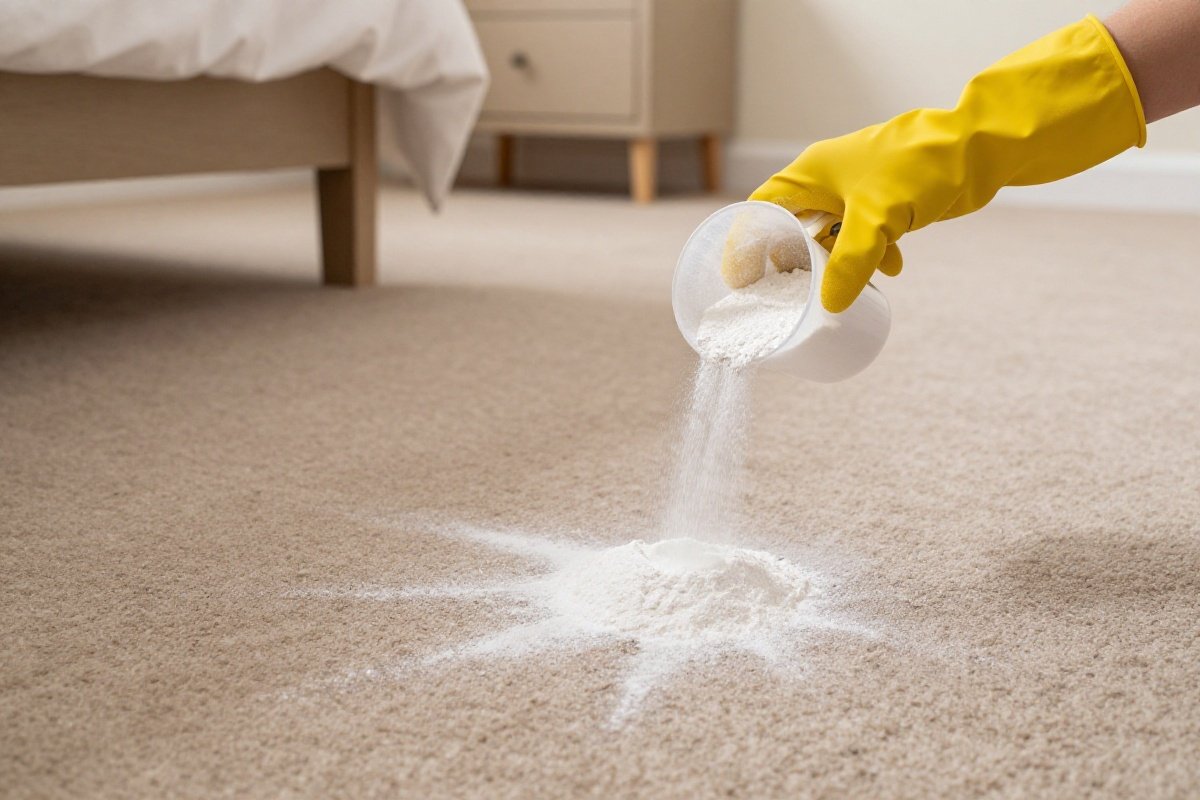
Choose your tool: A flour sifter provides the most even distribution. In a pinch, pour baking soda into your hand and sprinkle using a sweeping motion.
-
Coverage rate:
- Light refresh: 1 cup per 50 square feet
- Standard treatment: 1 cup per 25 square feet
- Deep deodorizing: 1 cup per 15 square feet
-
Even distribution: Walk methodically across the room, sprinkling as you go. Pay extra attention to:
- High-traffic pathways
- Areas near pet beds or litter boxes
- Under furniture that doesn’t move regularly
- Spots where odors are strongest
Enhancement option: Add 10-15 drops of essential oil (lavender, lemon, or tea tree work well) per cup of baking soda before application for a pleasant scent boost.
Professional Distribution Techniques
The grid method: Mentally divide the room into 3-foot by 3-foot squares. Treat one square completely before moving to the next — it prevents missed spots and keeps coverage even across large areas.
The overlap technique: Overlap each pass by approximately 6 inches when sprinkling. Gaps develop easily from uneven hand motion or inconsistent shaker output, and overlapping eliminates them.
Controlling application density: For precise control, pre-measure baking soda by room sections. A 10x12 room (120 sq ft) requires approximately 5 cups for standard treatment. Divide this into four containers (one per quadrant) to ensure even distribution across the entire space.
Step 3: Work Into Carpet Fibers
Baking soda sitting on top of carpet won’t reach embedded odors. Work it deep:
Using a Brush:
- Use a stiff-bristled brush or dry mop
- Work in circular motions with moderate pressure
- Brush against the carpet nap to lift fibers
- Continue until you no longer see white powder sitting on top
Using Your Feet:
- Put on clean socks
- Walk systematically across the treated area
- The pressure helps powder penetrate deep into fibers
Why this matters: Carpet odors live deep in fibers and padding. Surface treatment only masks smells temporarily. Working baking soda deep provides lasting results.
Alternative Working-In Methods
The carpet rake method: Professional carpet rakes (available affordably at hardware stores) feature rubber or plastic bristles that penetrate deeper than standard brushes. Rake in multiple directions - north-south, then east-west, then diagonal patterns - to ensure complete fiber coverage.
The towel technique: For delicate or antique carpets where brushing might damage fibers, lay a clean towel over the baking soda and walk across it. The towel distributes your weight evenly and gently presses powder into fibers without aggressive brushing.
The vacuum-first method: Some professionals use a vacuum on its lowest suction setting (with beater bar off) to create airflow that pulls baking soda deeper into pile. Make one slow pass, then let sit for the full treatment time before final thorough vacuuming.
Step 4: Let It Sit (The Critical Step)
Patience determines effectiveness:
| Treatment Level | Minimum Time | Ideal Time | Best For |
|---|---|---|---|
| Light refresh | 15 minutes | 30 minutes | Quick fixes |
| Standard | 2 hours | 4-6 hours | Pet areas, traffic zones |
| Deep treatment | 8 hours | Overnight | Severe odors, smoke, mustiness |
During the waiting period:
- Keep pets and children out of the room
- Run a fan to improve air circulation
- Close HVAC vents to prevent powder circulation
- Place a sign on the door as a reminder
The science: Baking soda needs contact time to chemically neutralize odors and absorb moisture. Rushing this step yields disappointing results.
Maximizing the Dwell Time
Environmental optimization: During the treatment period, maintain room temperature between 68-75°F. Slightly warm temperatures accelerate the chemical neutralization process without causing premature moisture absorption that leads to clumping.
Multiple treatment layers: For severe odor situations, consider a two-stage approach. Apply baking soda, wait 2-3 hours, vacuum, then immediately reapply and wait overnight. This dual treatment addresses both surface-level and deep-set odors in carpet padding.
The overnight sweet spot: Research shows maximum odor neutralization occurs between 8-12 hours. Beyond 12 hours, additional benefits diminish significantly. There’s no advantage to leaving baking soda on carpet for multiple days, and doing so actually increases the difficulty of complete removal.
Step 5: Vacuum Thoroughly
Removing all baking soda is essential - residual powder attracts dirt and can damage carpet over time.
Vacuuming Technique:
- Empty bin/bag first: Start with maximum suction capacity
- Slow passes: Move at approximately 1 foot per second
- Multiple directions: Vacuum north-south, then east-west
- Edge attention: Use crevice tools along baseboards
- Multiple passes: Plan for 3-4 complete passes over the area
- Check your work: Run hand across carpet - if it feels gritty, vacuum more
Vacuum considerations:
- Bagged vacuums: Change bags after baking soda cleanup - fine powder reduces suction
- Bagless vacuums: Empty canister immediately after; powder coats filters
- HEPA vacuums: Excellent choice as they capture fine baking soda particles completely
- Cordless vacuums: Check battery - baking soda cleanup requires more power than regular vacuuming
Advanced Vacuuming Strategies
The cross-hatch pattern: After initial north-south and east-west passes, make diagonal passes at 45-degree angles. This four-direction approach lifts carpet pile from all angles, releasing trapped baking soda particles that directional vacuuming might miss.
Suction power adjustment: If your vacuum has variable suction, start at maximum power for the first two passes, then reduce to medium for final passes. High initial suction removes bulk powder quickly; lower suction prevents fiber damage while collecting remaining fine particles.
The light test: In a darkened room, shine a bright flashlight at a shallow angle across the carpet surface. Remaining baking soda will reflect light and appear as tiny bright specks. This technique reveals residue invisible under normal lighting conditions.
Filter maintenance protocol: Clean or replace vacuum filters immediately after baking soda treatment. Fine powder coats filters faster than regular dirt, reducing suction by up to 40% within minutes. Models like the Dyson V12 Detect Slim feature washable filters that handle powder cleanup efficiently when cleaned promptly.
Step 6: Post-Treatment Inspection
Verify complete removal:
- Visual check: No white residue should be visible in carpet fibers
- Touch test: Carpet should feel smooth, not gritty
- Vacuum inspection: Empty canister and check - if substantial baking soda was collected, make another pass
Detailed Post-Treatment Analysis
The sock test: Walk across the treated area wearing dark-colored socks. Examine sock bottoms - any white powder residue indicates incomplete removal requiring additional vacuuming.
Moisture meter check: For areas that experienced odor problems related to dampness, use an inexpensive moisture meter (available at hardware stores) to verify the carpet is at appropriate moisture levels (below 15%). If readings exceed this, the underlying moisture problem persists despite odor treatment.
The 24-hour sniff test: Wait a full day after treatment, then smell the carpet at close range. Odors should be completely eliminated, not just reduced. If faint smells remain, repeat the entire process with extended dwell time. Persistent odors after two full treatments indicate problems requiring professional assessment.
Tips for Specific Odor Types
Pet Odors
For urine smells:
- Blot fresh stains immediately with paper towels
- Apply enzymatic cleaner first for biological waste
- Once dry, proceed with baking soda treatment
- Use maximum dwell time (overnight)
- Add tea tree oil to baking soda (natural antibacterial)
- For persistent pet stains, a dedicated carpet cleaner for pets provides deeper extraction than manual methods
For general pet odors:
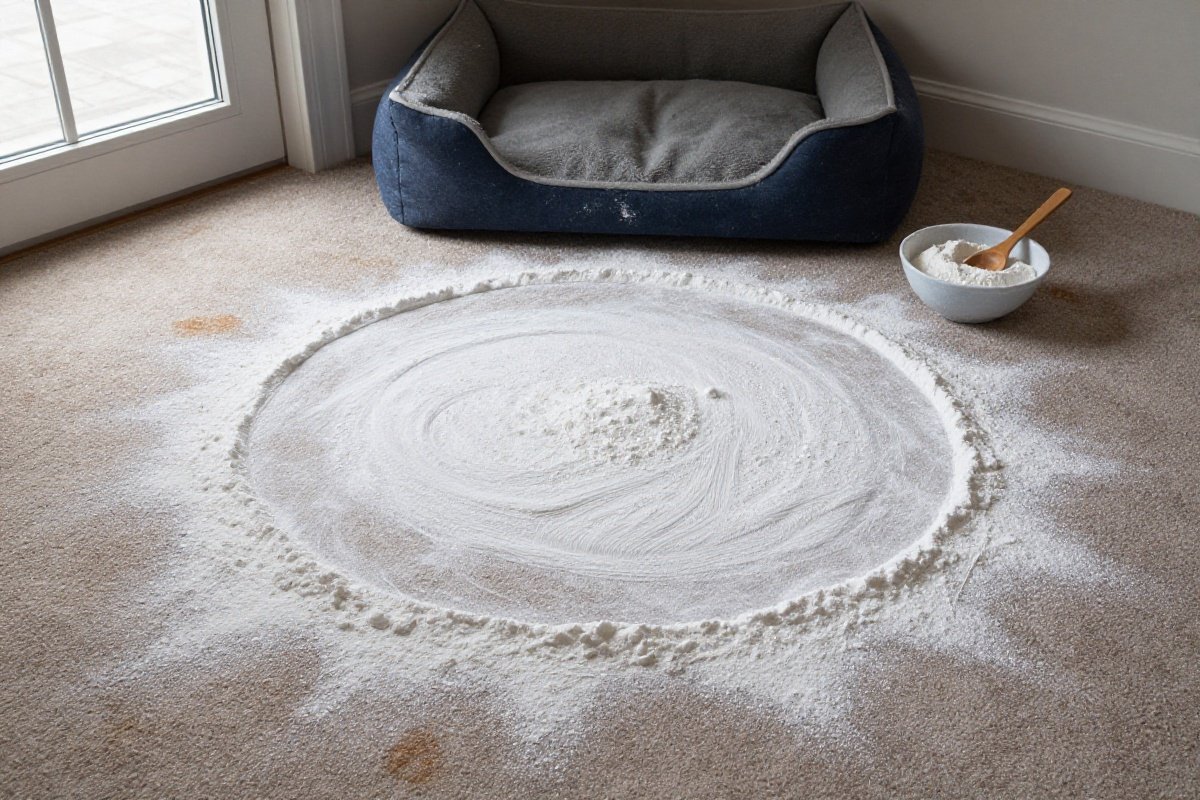
- Focus on pet’s favorite resting spots
- Treat surrounding 3-foot radius of pet beds
- Vacuum pet beds separately after outdoor shaking
Advanced Pet Odor Strategies
Enzyme pre-treatment timing: Allow enzymatic cleaners their full working time (typically 24 hours) before applying baking soda. Enzyme products contain beneficial bacteria that break down organic matter. Adding baking soda too soon can neutralize these bacteria, reducing effectiveness. Mark your calendar to avoid rushing this critical waiting period.
The black light inspection: Pet urine spots invisible to the naked eye glow under black light (UV flashlight). Before treating, inspect the entire room in darkness with a black light to identify all affected areas. This prevents wasting effort on visible spots while missing hidden problem zones.
Pet accident zones: Areas where pets repeatedly have accidents require padding treatment. Baking soda alone won’t penetrate to the padding layer. For these situations, use a carpet injector with enzymatic cleaner to treat padding, then follow with surface baking soda treatment after complete drying (usually 48-72 hours).
Smoke Odors
Smoke particles cling tenaciously to carpet fibers:
- Minimum 12-hour treatment (overnight strongly recommended)
- Charcoal enhancement: Mix 1/4 cup activated charcoal powder per cup baking soda
- Repeat treatment may be necessary for heavy smoke exposure
- Air purifier: Run HEPA purifier during and after treatment
Comprehensive Smoke Remediation
First-pass vs. second-pass treatment: The initial treatment removes surface smoke particles and immediate odors. Wait 48 hours after first treatment, then assess remaining smell. A second overnight treatment targeting residual odors typically achieves complete smoke elimination. Third-hand smoke (residue that clings after visible smoke clears) often requires this two-stage approach.
Whole-room strategy: Smoke particles settle everywhere, not just on carpet. Simultaneously treat drapes, upholstery, and walls (where possible) to prevent cross-contamination. Treating only carpet while leaving other surfaces untreated results in smoke smell returning as particles redistribute.
Musty/Mildew Odors
Musty smells indicate moisture problems:
- Fix moisture source first or mold will develop
- Maximum strength application (1 cup per 15 sq ft)
- Dehumidifier: Run during and after treatment
- Sunlight exposure: Open curtains to UV-treat area
Warning: Persistent musty smells despite baking soda treatment may indicate mold. Consult a professional for mold assessment.
Mildew Prevention and Treatment
Post-flood carpets: If carpet was flooded but dried within 48 hours and shows no visible mold, baking soda can eliminate residual musty odors. However, padding must be completely dry (under 12% moisture content) before treatment. Treating damp padding traps moisture beneath the baking soda layer, creating ideal mold growth conditions.
Humidity management: Musty odors return quickly in high-humidity environments. After baking soda treatment, maintain room humidity below 50% using dehumidifiers. Empty dehumidifier reservoirs daily - standing water in the same room reintroduces moisture that caused the original problem.
Food and Cooking Odors
Kitchen carpets and dining areas:
- Treat immediately after strong-smelling meals
- Standard 2-4 hour treatment usually sufficient
- Add lemon essential oil to baking soda for fresh kitchen scent
- Focus on areas beneath dining table
Kitchen-Specific Applications
Grease smell complications: Cooking odors containing grease particles require special attention. Baking soda absorbs grease-based smells, but the grease itself needs separate treatment. Before applying baking soda, lightly spray affected areas with dish soap solution (1 teaspoon dish soap per cup water), blot immediately, then proceed once completely dry.
Spice odors: Strong spices like curry, cumin, or fish sauce penetrate deeply. For these particularly stubborn smells, extend treatment time to 8-10 hours and consider adding ground coffee to your baking soda mixture (1 tablespoon coffee per cup baking soda). Coffee’s volatile compounds counteract spice odors through complementary chemical interaction.
Vacuum Recommendations for Baking Soda Cleanup
Not all vacuums handle fine powder equally. The best vacuums for baking soda removal feature:
Essential Features:
- Strong suction (100+ AW cordless, 200+ AW corded)
- Sealed HEPA filtration (prevents powder blowback)
- Large capacity bin/bag (baking soda fills containers quickly)
- Washable filters (fine powder coats filters)
Top Picks:
Dyson V12 Detect Slim - The laser illumination reveals microscopic baking soda residue, ensuring complete removal. Its powerful digital motor captures even fine particles embedded deep in carpet.
Shark Stratos Cordless - Features odor neutralizer technology that complements baking soda treatment. The PowerFins system prevents hair and powder clogs during extended cleaning sessions. Bissell CleanView Swivel Pet - Large dirt tank handles extensive treatments without constant emptying. Scatter-free technology prevents baking soda from being pushed around rather than collected.
Vacuum Performance Factors
Airflow vs. suction: Both metrics matter for powder removal. High suction (measured in inches of water lift) pulls powder from deep in pile. Strong airflow (cubic feet per minute) carries that powder through the system without clogging. Models balanced in both specifications outperform vacuums optimized for only one metric.
Brush roll considerations: Motorized brush rolls agitate carpet and lift baking soda but can scatter powder if suction isn’t adequate. For baking soda cleanup, disable brush rolls for first pass (suction only), then enable for second and third passes. This sequence prevents powder dispersion while ensuring deep extraction.
Bagless canister design: Transparent canisters let you monitor powder removal progress. However, fine baking soda can scratch plastic canisters over time, creating a cloudy appearance. To prevent this, empty canisters before they reach half-full during baking soda cleanup, reducing particle collision against canister walls.
Common Mistakes to Avoid
Mistake 1: Insufficient Dwell Time
Rushing the process yields poor results. Baking soda needs minimum 15 minutes for light refresh and hours for deep deodorizing. Don’t expect miracles from a 5-minute treatment.
Mistake 2: Uneven Application
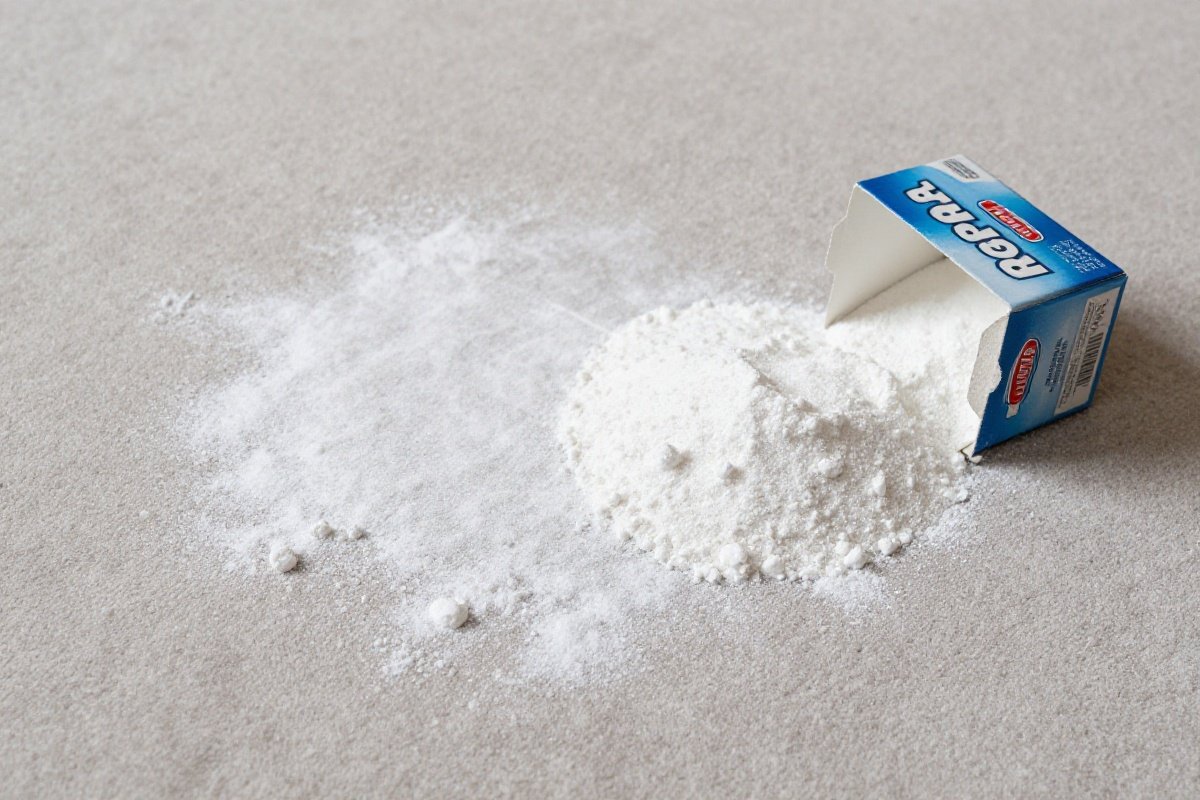
Dumping baking soda in piles creates inconsistent results. Use a sifter or shaker for even distribution. Piles left too long can absorb moisture and become difficult to vacuum.
Mistake 3: Incomplete Removal
Residual baking soda attracts dirt and feels gritty underfoot. Vacuum until carpet feels completely smooth. Multiple passes are normal and necessary.
Mistake 4: Treating Wet Carpet
Never apply baking soda to damp carpet. It forms a paste that’s nearly impossible to remove completely. Ensure carpet is completely dry first.
Mistake 5: Ignoring the Underlying Cause
Baking soda treats symptoms (odors) not causes (stains, moisture, biological waste). Address root problems first for lasting freshness.
Additional Critical Errors
Mistake 6: Over-application in humid climates - In areas with humidity above 60%, excessive baking soda absorbs atmospheric moisture and clumps before completing odor neutralization. In humid environments, reduce application density by 25% and rely on longer dwell time rather than heavier coverage.
Mistake 7: Using expired baking soda - Baking soda loses potency after opening. A box left open in the pantry for months has reduced deodorizing power. Test freshness by adding a spoonful to vinegar - vigorous bubbling indicates active product. Weak reaction means reduced effectiveness. Use fresh boxes for carpet treatment; save older baking soda for household cleaning where potency matters less.
Mistake 8: Mixing incompatible additives - While essential oils enhance fragrance safely, some homeowners add incompatible substances. Never mix baking soda with bleach (creates toxic fumes), ammonia (reduces effectiveness), or hydrogen peroxide for carpet use (can discolor fibers). Stick to essential oils, activated charcoal, or borax as safe enhancers.
Mistake 9: Neglecting furniture fabric - Treating carpet while leaving upholstered furniture untreated allows odor transfer. Odor molecules migrate from untreated surfaces back to freshly cleaned carpet within days. For complete odor elimination, treat all fabric surfaces in the room using appropriate methods for each material type.
How Often to Use Baking Soda
Maintenance Schedule:
- Light traffic homes: Monthly treatment
- Pet owners: Bi-weekly in pet zones
- Allergy sufferers: Weekly bedroom treatments
- High-traffic households: Every 2 weeks
- Smokers: Weekly treatments minimum
Cost efficiency: Baking soda is one of the most affordable cleaning supplies available, making monthly treatments a fraction of the cost of commercial carpet deodorizers or professional cleaning. Check how often you should vacuum to build a complete maintenance schedule.
Customizing Your Schedule
Seasonal adjustments: Increase treatment frequency during summer months when humidity and warmth accelerate odor development. Windows stay open more, bringing in outdoor pollutants. Pets shed more, increasing dander and associated smells. Consider doubling your normal treatment frequency from June through August.
Special event preparation: Before hosting gatherings, treat carpets 2-3 days in advance rather than the same day. This timing allows complete odor elimination and ensures no baking soda residue remains for guests to track through the house. Follow with light vacuuming the day of the event for pristine appearance.
New carpet break-in: New carpets often emit volatile organic compounds (VOCs) during the first few months, creating a “new carpet smell” some find unpleasant. Weekly baking soda treatments during the first 8-12 weeks absorb these off-gassing chemicals, accelerating the break-in period while maintaining fresh indoor air quality.
Alternatives and Combinations
Baking Soda + Essential Oils
Add 10-15 drops of your favorite essential oil per cup of baking soda:
- Lavender: Calming, pleasant bedroom scent
- Tea tree: Antimicrobial, best for pet areas
- Lemon: Fresh, clean kitchen scent
- Eucalyptus: Respiratory benefits, energizing
Baking Soda + Borax
For severe odors, mix 1/2 cup borax per cup baking soda. Borax enhances odor elimination and provides mild antiseptic properties.
Caution: Keep borax treatments away from pets and children. Vacuum extra thoroughly.
Commercial Alternatives
If baking soda alone doesn’t suffice:
- Carpet deodorizing powders (contain baking soda + fragrance + additional agents)
- Enzymatic cleaners for biological odors (pet waste, vomit)
- Oxidizing treatments for severe smoke damage
Carpet-Safe Techniques for Different Fiber Types
Different carpet materials respond differently to baking soda treatment. Understanding your carpet composition ensures safe, effective deodorizing.
Nylon Carpets
Characteristics: Most common carpet fiber, known for durability and stain resistance.
Baking soda approach: Nylon handles aggressive baking soda treatment well. Use standard application rates and extended dwell times without concern. The synthetic fibers won’t be damaged by alkaline compounds.
Special considerations: Nylon can develop static electricity during dry baking soda application. Run a humidifier during treatment in winter months to reduce static shock when vacuuming.
Polyester and Olefin Carpets
Characteristics: Budget-friendly synthetic fibers resistant to moisture and mildew.
Baking soda approach: These fibers benefit from baking soda’s moisture-absorbing properties. However, they attract oils, so ensure baking soda is completely removed - residual powder mixed with skin oils creates sticky buildup.
Special considerations: Polyester fibers crush easily under heavy foot traffic. Use lighter application rates (reduce by 20%) and gentle working-in techniques to preserve pile height.
Wool Carpets
Characteristics: Natural fiber prized for luxury feel and longevity.
Baking soda approach: Wool is slightly acidic naturally, making alkaline baking soda an excellent deodorizer. However, wool absorbs moisture readily. Use 30-40% less baking soda than recommended for synthetic carpets, and reduce dwell time to maximum 4 hours to prevent moisture absorption that could lead to mildew.
Special considerations: Always test in an inconspicuous area first. Some wool dyes react with alkaline substances, though this is rare with modern carpets. Never use borax-enhanced baking soda on wool - too harsh for natural fibers.
Silk and Viscose Carpets
Characteristics: Delicate natural or semi-synthetic fibers requiring gentle care.
Baking soda approach: Use with extreme caution. Apply very light dusting (50% of normal rates), limit dwell time to 30 minutes maximum, and use only gentle hand brushing - never aggressive brush or foot pressure.
Special considerations: For valuable silk or antique carpets, professional cleaning is safer than DIY baking soda treatment. If you proceed, vacuum on lowest suction setting to prevent fiber damage.
Environmental and Health Considerations
Indoor Air Quality Benefits
Baking soda treatment offers significant indoor air quality advantages over chemical alternatives:
VOC elimination: Unlike synthetic air fresheners that add volatile organic compounds to your home, baking soda removes existing VOCs without introducing new chemicals.
Allergen management: The fine powder captures dust mite waste and pollen particles during application. When vacuumed with HEPA filtration, these allergens are removed from your living environment rather than simply redistributed.
Chemical sensitivity: Households with members suffering from multiple chemical sensitivity (MCS) can safely use unscented baking soda without triggering reactions. Essential oil additions should be tested carefully, as some individuals react to natural compounds as well.
Eco-Friendly Disposal
Vacuumed baking soda disposal: Used baking soda from carpet treatment can be disposed of in household trash without environmental concerns. The powder has absorbed organic compounds that make it unsuitable for reuse, but it poses no disposal hazards.
Garden use considerations: Some sources suggest adding used baking soda to compost. While technically safe, baking soda from carpet treatment may contain pet dander, dust mites, and other allergens. For compost additions, use fresh baking soda rather than vacuumed carpet treatment powder.
Pet and Child Safety
During treatment: Keep pets and children away from treated areas. While baking soda is non-toxic, inhaling large amounts of any fine powder can irritate respiratory passages. The risk is minimal with proper application, but prevention is simple - close doors during treatment.
Post-treatment safety: Once thoroughly vacuumed, treated carpets are completely safe for pets and children. No residue remains to irritate paws or skin. Unlike chemical treatments requiring hours of “keep off” time, properly cleaned baking soda-treated carpet is immediately safe for use.
Ingestion concerns: If pets or children ingest small amounts of baking soda from carpet (though proper vacuuming should prevent this), the quantities are too small to cause harm. Baking soda is regularly used in cooking and as an antacid. However, visible powder remaining on carpet indicates inadequate vacuuming requiring additional passes.
Further Reading
- How to Vacuum Stairs: The Complete Guide (2026)
- The Importance of Vacuum Cleaner Maintenance
- Why Does My Vacuum Smell? 8 Causes & Fixes [2026]
Troubleshooting Common Issues
White Residue After Vacuuming
Cause: Insufficient vacuum passes, inadequate suction power, or using excessively wet carpet initially.
Solution: Make additional vacuum passes using the cross-hatch pattern described earlier. If residue persists after extensive vacuuming, lightly mist the carpet with water from a spray bottle (very light application), allow to dry completely, then vacuum again. The moisture helps bind remaining powder for easier extraction.
Clumping During Treatment
Cause: High humidity, carpet wasn’t fully dry before application, or treatment extended beyond 12 hours.
Solution: For minor clumping, allow clumps to dry completely (may take 24 hours in humid conditions), then vacuum. The dried clumps break apart under vacuum suction. For severe clumping, use a stiff brush to break up clumps mechanically before vacuuming.
Prevention: Check weather forecasts before treatment - avoid rainy or humid days. Use a moisture meter to verify carpet is below 10% moisture content before applying baking soda.
Odor Returns Within Days
Cause: Underlying odor source wasn’t addressed, carpet padding is contaminated, or subflooring has absorbed odors.
Solution: Identify the true odor source. For pet urine soaked into padding, baking soda surface treatment won’t suffice - padding replacement may be necessary. For subflooring issues, consult a professional about sealing or treating the subfloor before replacing padding and carpet.
Testing for padding issues: Lift a corner of carpet in an inconspicuous area. Smell the padding directly. Strong odors from padding indicate the need for professional intervention beyond surface treatment capabilities.
Carpet Feels Different After Treatment
Cause: Residual baking soda, changed carpet pH, or disrupted protective treatments.
Solution: If carpet feels stiff or crunchy, residual baking soda remains. Continue vacuuming until texture returns to normal. If carpet feels unusually soft or matted, fibers may have been over-brushed during application. Use carpet rake to restore pile direction and height.
Restoration: For carpets with factory stain protection treatments, heavy baking soda use (particularly with aggressive brushing) can temporarily reduce treatment effectiveness. Reapply carpet protector spray after baking soda treatment if you notice increased staining susceptibility.
Recommended Products
Dyson V12 Detect Slim
Precision cleaning and verifying complete baking soda removalThe laser detection shows exactly when baking soda is fully removed. Its strong suction ensures complete powder extraction, critical for preventing residue buildup.
What We Like
- Ultra-lightweight at 5.2 lbs - lightest Dyson with laser detection
- Same laser dust detection technology as the V15
- Whole-machine HEPA filtration captures 99.99% of particles
- LCD screen with real-time particle count and runtime display
- 60-minute runtime in Eco mode
What We Don't
- Less suction than V15 (150 AW vs 230 AW)
- Smaller 0.35L dustbin fills quickly with pet hair
- Premium price at $649 for a lightweight model
- Narrower 9.8-inch cleaning path than V15
Shark Stratos Cordless IZ862H
Pet owners combining baking soda with advanced odor controlPerfect pairing with baking soda treatment - the built-in odor neutralizer complements baking soda's deodorizing power. Excellent for pet owners dealing with stubborn smells.
What We Like
- Odor neutralizer technology
- PowerFins HairPro for pet hair
- Up to 60 minutes runtime
- CleanSense IQ adjusts suction automatically
What We Don't
- Heavier than basic cordless stick vacuums for extended overhead cleaning
- Odor neutralizer cartridge requires periodic replacement at additional cost
- Runtime drops significantly below 60 minutes in boost mode
Bissell CleanView Swivel Pet 2252
Best budget pet vacuumThe Bissell CleanView Swivel Pet 2252 delivers impressive pet hair pickup and edge-to-edge cleaning at a budget-friendly price. An excellent entry-level upright for pet owners who want strong suction without spending $300+.
What We Like
- Triple Action Brush Roll loosens, lifts, and removes embedded pet hair from carpets
- Scatter-free technology keeps debris in the cleaning path on hard floors
- Edge-to-edge cleaning reaches baseboards and corners without attachments
- Large 1.0L dirt tank reduces emptying frequency during big cleaning sessions
- Swivel steering makes maneuvering around furniture and tight spaces effortless
What We Don't
- Corded design limits mobility and reach between rooms
- Louder than premium models, noticeable in quiet homes
- No HEPA filtration - not ideal for allergy sufferers
- Plastic construction feels less durable than higher-end Bissell models
Continue Reading
Explore more maintenance & floor care content or browse our other categories.
Frequently Asked Questions
- How long should you leave baking soda on carpet?
- For light refresh, 15-30 minutes is sufficient. Standard deodorizing requires 2-6 hours. Severe odors need overnight treatment (8-12 hours). Longer contact time yields better results.
- Can baking soda damage carpet?
- Baking soda is safe for all carpet types when used properly. The only risk is leaving it too long (over 24 hours) in humid conditions, where it can absorb moisture and become difficult to remove. Always vacuum thoroughly after treatment.
- Is baking soda or vinegar better for carpet odors?
- They work differently. Baking soda is superior for dry deodorizing and absorbing existing odors. Vinegar works better for stain-related smells and sanitization. For severe odors, use vinegar first (allowing complete drying), then follow with baking soda treatment for comprehensive results.
- Why does my carpet still smell after baking soda treatment?
- Persistent odors indicate either insufficient dwell time, incomplete removal, or an underlying issue (mold, pad contamination, subfloor problems). Try overnight treatment first. If smells persist, the odor source may be in the padding or subfloor requiring professional treatment.
- Can I use baking soda on wet carpet?
- No. Never apply baking soda to wet or damp carpet - it forms a paste that's extremely difficult to remove and can damage fibers. Ensure carpet is completely dry before application. If dealing with wet carpet from spills, blot thoroughly and use fans to dry before deodorizing.
- How much baking soda do I need for a whole house?
- Calculate based on carpeted square footage. For standard treatment (1 cup per 25 sq ft), a 1,000 sq ft home needs approximately 40 cups or 5 pounds of baking soda. Purchase in bulk for whole-house treatments - warehouse stores offer 13.5-pound bags at significant savings over individual boxes.
- Can baking soda remove old stains?
- Baking soda alone doesn't remove stains - it neutralizes odors. For stain removal, treat stains first with appropriate cleaners (enzymatic for biological, oxidizing for dyes), then use baking soda to eliminate residual odors after the stain is removed and carpet is dry.
- Is it safe to mix baking soda with carpet shampoo?
- No. Don't mix baking soda into liquid carpet cleaning solutions. The alkaline powder neutralizes cleaning agents and creates difficult-to-rinse residue. Use baking soda as a separate dry treatment before or after steam cleaning, never simultaneously with liquid cleaners.
Written By
Home Vacuum Zone
Our team researches, tests, and reviews vacuum cleaners to help you make confident buying decisions.
Related Articles
How to Clean and Maintain a Robot Vacuum: Complete Guide
Learn how to clean your robot vacuum properly. Step-by-step guide covers dustbin emptying, filter cleaning, brush roll maintenance, sensor care, and dock maintenance.
5 Best Steam Mops for Hardwood Floors (2026 Reviews)
Find the best steam mop for hardwood floors in 2026. Our top picks include safe, effective options from Bissell, Shark, and PurSteam with adjustable steam settings.
How Often Should You Vacuum? Complete Guide by Floor Type & Lifestyle
Learn exactly how often to vacuum based on your home's traffic, pets, allergies, and floor type. Get personalized recommendations and discover the best vacuums for your specific needs.