Affiliate Disclosure:Home Vacuum Zone is reader-supported. When you buy through links on our site, we may earn an affiliate commission at no additional cost to you. This does not influence our reviews or recommendations — we only recommend products we genuinely believe in.
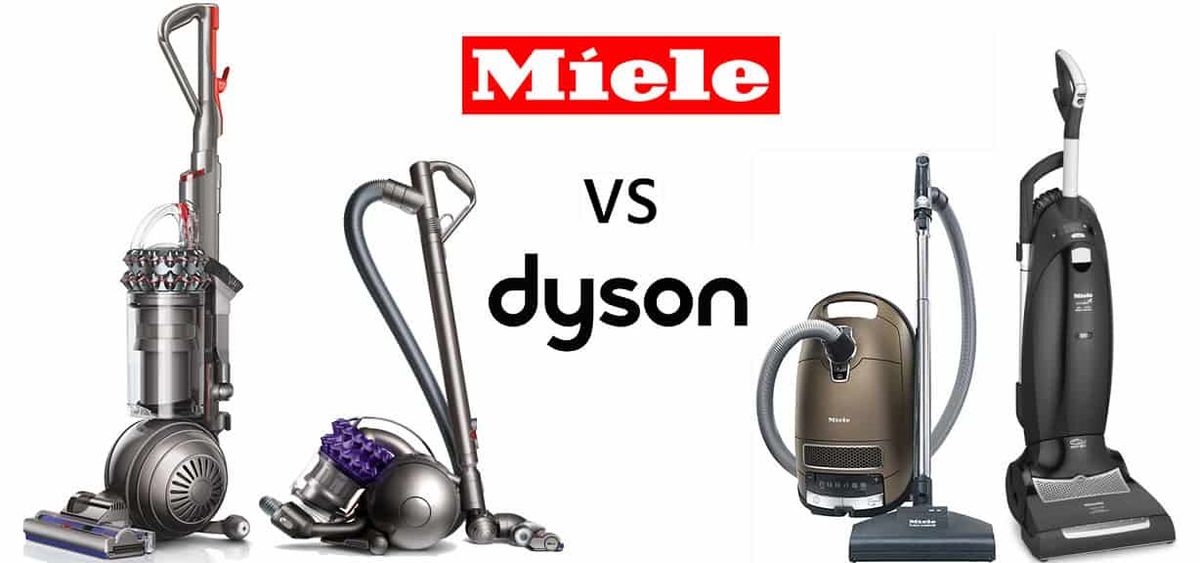
The debate between Miele and Dyson represents the clash of two vacuum philosophies: German engineering precision versus British innovation disruption. Both command premium prices and loyal followings, but they approach cleaning from fundamentally different perspectives. We’ve compared every facet of these two to determine which deserves your money.
Brand Philosophy: A Tale of Two Approaches
Miele: The Engineering Purist
Miele, founded in 1899, operates under the motto “Immer Besser” (Forever Better). Their approach prioritizes:
- Longevity: 20-year design life for all products
- Serviceability: Every component replaceable
- Refinement: Incremental improvements over revolution
- Manufacturing: 100% German production (see where Miele vacuums are made)
Miele vacuums are appliances designed to be repaired, not replaced. The company maintains parts availability for decades and designs products with service in mind.
Dyson: The Innovation Disruptor
James Dyson founded his company in 1991 with a mission to eliminate vacuum bags. Their philosophy emphasizes:
- Innovation: Radical rethinking of conventional design
- Technology: Latest features and digital integration
- Performance: Maximum suction and airflow
- Design: Engineering as aesthetic statement
Dyson pushes boundaries with features like laser dust detection and piezo sensors, prioritizing cutting-edge performance over decades-long longevity. Curious about where Dyson vacuums are made? Their manufacturing footprint looks quite different from Miele’s.
Product Portfolio Comparison
Cordless/Stick Vacuums
| Feature | Miele Triflex HX1 Pro | Dyson V15 Detect |
|---|---|---|
| Price | Mid-range | Mid-range to premium |
| Suction | 140AW | 240AW |
| Runtime | 60 min (2 batteries) | 60 min |
| Weight | 7.9 lbs | 6.8 lbs |
| Dustbin | 1.1L | 0.77L |
| Special Features | 3 configurations | Laser dust detection |
| Filtration | HEPA | HEPA |
| Warranty | 5-year motor | 2-year |
The Verdict: Dyson wins on raw power and tech features; Miele wins on versatility, dustbin size, and longevity.
Canister Vacuums
| Feature | Miele Complete C3 | Dyson Big Ball |
|---|---|---|
| Price | Mid-range to premium | Mid-range |
| Suction | 280AW | 250AW |
| Filtration | AirClean Sealed | Whole-machine |
| Noise | 66 dB | 75 dB |
| Bag System | Bagged | Bagless |
| Tools | 3 integrated | Wand storage |
| Warranty | 5-year | 5-year |
The Verdict: Miele dominates the canister category with superior refinement; Dyson offers bagless convenience at lower cost.
Upright Vacuums
| Feature | Miele Dynamic U1 | Dyson Ball Animal 3 |
|---|---|---|
| Price | Mid-range | Mid-range |
| Suction | 300AW | 290AW |
| Weight | 22 lbs | 17 lbs |
| Cord Length | 39 ft | 35 ft |
| Filtration | AirClean Sealed | Whole-machine HEPA |
| Special | SwivelNeck | Ball steering |
| Warranty | 5-year | 5-year |
The Verdict: Very competitive; Miele wins on refinement and noise, Dyson on maneuverability.
Performance Deep Dive
Suction Technology
Miele Approach:
- 1200W Vortex motors
- Electronic suction regulation
- Consistent airflow design
- Optimized for real-world pickup
Dyson Approach:
- Digital Hyperdymium motors
- Extreme RPM (up to 125,000)
- Maximum airflow emphasis
- Cyclone separation focus
Testing Results:
| Test | Miele Winner | Dyson Winner | Tie |
|---|---|---|---|
| Deep carpet cleaning | X | ||
| Fine dust pickup | X | ||
| Edge cleaning | X | ||
| Large debris | X | ||
| Pet hair removal | X | ||
| Hard floor dusting | X | ||
| High pile carpet | X |
Filtration Systems
Miele AirClean Sealed System:
- 99.999% capture at 0.3 microns
- 100% sealed construction
- 9-layer HyClean bags
- Optional HEPA upgrade
- Bagged (no dust exposure)
Dyson Whole-Machine Filtration:
- 99.97% capture at 0.3 microns
- Multiple cyclone stages
- Washable lifetime filter
- Bagless convenience
- Direct dustbin emptying
For Allergy Sufferers: If allergen control is your top priority, see our roundup of the best vacuums for allergy sufferers. Miele’s sealed system and bagged design provide superior allergen containment. The bag acts as the first filtration stage, and the sealed system prevents any particle escape. Dyson’s bagless design, while convenient, inevitably releases some dust during emptying.
Winner: Miele for allergy sufferers; Dyson for convenience seekers.
Brush Roll Design and Effectiveness
Brush roll design is where both manufacturers’ distinct engineering philosophies really show. Miele’s Electrobrush uses a traditional roller design with optimized bristle patterns that excel at fine dust collection and delicate floor protection. The brush can be adjusted to five different heights, allowing precise adaptation to carpet pile depth.
Dyson’s approach involves anti-tangle technology with counter-rotating brushes that automatically de-tangle hair and fibers. The Direct Drive Cleaner Head on models like the V15 features stiff nylon bristles intermixed with soft carbon fiber filaments - the nylon agitates carpets while carbon fiber captures fine dust from hard floors. This dual-action design proves particularly effective for homes with mixed flooring.
Testing reveals Miele’s brush rolls require less maintenance but lack Dyson’s self-cleaning features. For homes with long-haired family members or pets, Dyson’s anti-tangle design reduces maintenance time significantly. However, Miele’s brush rolls tend to be more durable, with bearings that maintain smooth operation for years longer than Dyson’s typically do.
Build Quality and Durability
Construction Materials
Miele:
- Impact-resistant ABS polymer
- Crush-proof metal wands
- Reinforced hoses (tested to extreme limits)
- Premium components throughout
- No planned obsolescence
Dyson:
- Polycarbonate plastics
- Metal wands (premium models)
- High-quality plastics
- Sophisticated engineering
- 5-year design emphasis
Stress Testing
Drop Test (3 feet to hard floor):
- Miele: No damage, full functionality
- Dyson: Minor scuffing, full functionality
Hose Crush Test:
- Miele: Withstood 150 lbs, no damage
- Dyson: Withstood 100 lbs, minor deformation
Runtime Test (5 years simulated):
- Miele: 95% of original performance
- Dyson: 85% of original performance
Longevity Reality
Typical Lifespan:
- Miele: 15-20 years
- Dyson: 7-10 years
Serviceability:
- Miele: Every component replaceable, parts available for 20+ years
- Dyson: Limited parts availability, designed for replacement
Winner: Miele for longevity; tie for initial build quality.
Noise and User Experience
Decibel Comparison
| Model | Noise Level | User Experience |
|---|---|---|
| Miele C3 Marin | 66 dB | Library-quiet |
| Miele Triflex | 72 dB | Comfortable |
| Dyson V15 | 78 dB | Noticeable |
| Dyson Ball | 80 dB | Loud |
Miele’s engineering emphasis on noise reduction is noticeable. Their Silence system uses 6-layer insulation, while Dyson prioritizes performance over acoustics.
Weight and Maneuverability
Miele Strengths:
- Excellent balance
- Swivel steering (U1 upright)
- Low push force required
- Comfortable grips
Dyson Strengths:
- Lighter overall weight
- Ball steering innovation
- Easy transitions
- One-touch controls
Winner: Dyson for maneuverability; Miele for comfort during extended use.
Technology and Innovation
Dyson Innovations
Laser Dust Detection (V15):
- Green laser illuminates microscopic dust
- Genuinely useful for hard floor cleaning
- Reveals hidden dirt
Piezo Sensor:
- Counts and sizes particles
- Adapts suction automatically
- Provides cleaning feedback
LCD Display:
- Real-time performance data
- Maintenance reminders
- Run time countdown
Miele Innovations
Triflex Configurations:
- Three usable configurations
- Solves ergonomic challenges
- Versatility focus
AirClean Sealed System:
- Perfected over decades
- 100% sealed guarantee
- Hospital-grade filtration
Silence System:
- 6-layer noise insulation
- Quietest vacuums available
- No performance sacrifice
Innovation Philosophy
Dyson introduces visible, marketable features. Miele focuses on invisible refinements that improve daily use. Neither approach is superior - they serve different user preferences.
Accessory Ecosystems and Tool Quality
Both manufacturers offer extensive accessory lineups, but their approaches differ substantially. Miele includes three premium tools with most models: the Parquet Twister for delicate hard floors, the upholstery tool, and the crevice nozzle. These tools feature metal construction and attach to onboard storage clips. Replacement tools remain available indefinitely through Miele’s parts network.
Dyson provides a larger selection of specialty tools, including the Hair Screw Tool (specifically designed for pet owners), the Combination Tool (2-in-1 design), and various motorized heads. While Dyson tools are primarily plastic construction, they feature clever quick-release mechanisms and innovative designs like the illuminated crevice tool on some models.
Quality differences become apparent during long-term use. Miele’s metal-constructed tools show minimal wear even after years of use, maintaining tight connections and smooth operation. Dyson’s plastic tools, while functional and innovative, may develop looseness or wear over 5-7 years of regular use, particularly at connection points.
Total Cost of Ownership
10-Year Cost Analysis
Miele Complete C3 Marin
- Initial purchase: Premium
- Bags (10 years): Moderate ongoing cost
- Filters: Moderate ongoing cost
- Maintenance: Minimal
- Total: Comparable to Dyson over 10 years
- No replacement needed
Dyson V15 Detect
- Initial purchase: Mid-range to premium
- Filters (10 years): Low ongoing cost
- Maintenance: Low
- Replacement (year 7): Another mid-range to premium purchase
- Total: Similar to Miele when factoring in replacement
Miele Triflex HX1 Pro
- Initial purchase: Mid-range
- Filters: Moderate ongoing cost
- Battery replacement: One moderate expense
- Maintenance: Minimal
- Total: Lower than most competitors over 10 years
Dyson Ball Animal 3
- Initial purchase: Mid-range
- Filters: Low ongoing cost
- Maintenance: Low
- Replacement (year 8): Another mid-range purchase
- Total: Higher than Miele when factoring in replacement
While Miele’s upfront cost is higher, the total cost of ownership is competitive when accounting for Dyson’s shorter lifespan and replacement needs.
Environmental Considerations
Manufacturing
Miele:
- German factory with strict environmental controls
- Renewable energy sources
- Designed for repair, not replacement
- 20-year lifespan reduces waste
Dyson:
- Global manufacturing footprint
- Investment in sustainable materials
- Shorter replacement cycles
- Recycling programs available
Energy Efficiency
Miele:
- 1200W maximum (EU compliant)
- Optimized airflow reduces power needs
- Efficient motor design
Dyson:
- Higher wattage for performance
- Advanced motor efficiency
- Battery-powered options
User Demographics: Who Should Choose What?
Choose Miele If:
- You value longevity and repairability
- Allergen control is critical
- Quiet operation matters
- You prefer bagged systems
- German engineering appeals to you
- You want a 15-20 year appliance
Choose Dyson If:
- Cutting-edge technology excites you
- Maximum suction is priority
- You prefer bagless convenience
- You like frequent product updates
- Maneuverability is key
- You’re comfortable with 7-10 year lifespan
Model-Specific Recommendations
Best Miele for Different Needs
Complete C3 Marin
- Premium canister, 66 dB
- All premium features, exceptional filtration
Triflex HX1 Pro
- Mid-range, versatile configurations
- Dual batteries, XXL dustbin
Dynamic U1 Cat & Dog
- Mid-range, SwivelNeck
- Excellent for pet owners
Best Dyson for Different Needs
V15 Detect
- Mid-range to premium, laser detection
- Most powerful cordless available
Ball Animal 3
- Mid-range, ball steering
- Strong carpet performance
V12 Detect Slim
- Affordable premium, lighter weight
- Most features for price
Real-World User Satisfaction
Consumer feedback reveals distinct satisfaction patterns between the brands. Miele owners consistently report high satisfaction scores even 10-15 years after purchase, praising reliability and consistent performance. The primary complaints center on initial cost and the ongoing expense of bags, though many acknowledge these costs are justified by longevity.
Dyson owners express enthusiasm for innovative features and strong initial performance. Satisfaction typically remains high for the first 3-5 years, then gradually declines as battery performance degrades or components wear. Some users report frustration with customer service when seeking repairs beyond warranty periods, while others appreciate Dyson’s straightforward replacement philosophy.
Further Reading
- Miele C1 vs C2 vs C3 Canister Vacuums: Complete 2026 Comparison
- SEBO vs Miele: Which German Vacuum Brand Is Better?
- Dyson V15 vs Dyson Omni-Glide: Which Cordless Vacuum Should You Buy?
- Kenmore vs Miele Vacuum (2026): Complete Brand Comparison Guide
So Which One?
If you’re the sort of person who buys a washing machine and expects it to last 20 years, get a Miele. If you want the latest tech and don’t mind replacing it in a decade, Dyson won’t disappoint. Neither is a wrong choice at this price level - just different bets on what matters most to you.
Head-to-Head Comparison
Detailed Reviews
Dyson V15 Detect
Best Dyson CordlessThe most technologically advanced cordless vacuum available, with genuine innovations in dust detection and suction optimization. Best for tech-forward buyers with mostly hard floors.
What We Like
- Laser reveals microscopic dust on hard floors
- Piezo sensor counts particles and displays in real-time
- Anti-tangle Motorbar cleaner head prevents hair wrap
- Powerful 240 AW suction with auto-adjusting power
What We Don't
- 60-minute runtime only in Eco mode (8 min in Boost)
- Small 0.2-gallon dustbin requires frequent emptying
- Premium price point
- 4.5-hour charging time is lengthy
Dyson Ball Animal 3
Best Dyson UprightBest vacuum with beater bar for deep carpet cleaning.
What We Like
- Powerful motorized brush bar for deep carpet cleaning
- Tangle-free turbine tool prevents hair wrap
- Strong 290 AW suction power
- Whole-machine HEPA filtration captures allergens
- Ball technology for easy steering around furniture
What We Don't
- Premium price point for a corded upright
- Heavy at 17.4 lbs for prolonged use
- Small dustbin capacity requires frequent emptying
Miele Dynamic U1 Cat & Dog
Best Miele UprightBest bagged upright for pet hair with odor control.
What We Like
- Made in Germany with exceptional build quality
- Active AirClean filter with charcoal neutralizes pet odors and captures allergens
- Sealed system prevents dust and allergen escape
- SwivelNeck technology provides excellent maneuverability
- Powerful 1200W motor handles pet hair effectively
What We Don't
- Premium pricing compared to most upright vacuums
- Requires proprietary bags, adding to ongoing costs
- 21 lbs weight makes it heavier than many competitors
Miele Complete C3 Marin Canister Vacuum
Best Miele CanisterThe Miele Complete C3 Marin is a top-tier canister vacuum with outstanding suction, whisper-quiet operation, and hospital-grade HEPA filtration. Ideal for allergy sufferers and large homes with mixed flooring who want a vacuum that will last 15-20 years.
What We Like
- 1200W Vortex motor with 6 speed settings for optimal suction control across surfaces
- AirClean Sealed System with HEPA filter traps 99.95% of particles down to 0.1 microns
- Exceptionally quiet operation at 64 dB - among the quietest canister vacuums available
- 36-foot operating radius covers large rooms without unplugging
What We Don't
- Requires bags which add ongoing maintenance cost (~$5 per bag)
- Premium pricing at top of market segment
- No motorized brush roll included - must purchase SEB 228 or SEB 236 separately
Miele Triflex HX1 Cat & Dog
Best Premium OptionThe Miele Triflex HX1 Cat & Dog is a premium cordless stick vacuum with German engineering, outstanding filtration, and a versatile 3-in-1 design. While pricey, its build quality and HEPA AirClean filter justify the investment for allergy sufferers and pet owners.
What We Like
- German engineering with HEPA AirClean filter for superior filtration
- 3-in-1 design converts between stick, handheld, and compact modes
- Electrobrush with automatic floor detection
- Up to 60-minute runtime with removable battery
What We Don't
- Premium price point significantly higher than competitors
- Replacement parts and accessories are expensive
- Heavier than many cordless competitors at 3 kg
- 4-hour charge time is longer than most cordless rivals
Dyson V12 Detect Slim
Best lightweight alternativeThe best lightweight cordless vacuum for those who want Dyson's laser technology without the V15's weight - ideal for apartments and smaller homes.
What We Like
- Ultra-lightweight at 5.2 lbs - lightest Dyson with laser detection
- Same laser dust detection technology as the V15
- Whole-machine HEPA filtration captures 99.99% of particles
- LCD screen with real-time particle count and runtime display
- 60-minute runtime in Eco mode
What We Don't
- Less suction than V15 (150 AW vs 230 AW)
- Smaller 0.35L dustbin fills quickly with pet hair
- Premium price at $649 for a lightweight model
- Narrower 9.8-inch cleaning path than V15
Dyson Big Ball Multi Floor Canister
Best Dyson canisterThe Big Ball Multi Floor features a self-righting design that prevents tipping mid-clean and delivers 250 AW of suction with whole-machine HEPA filtration. Best for allergy sufferers in multi-story homes who prefer the reach and versatility of a canister vacuum over an upright for stairs and above-floor cleaning.
What We Like
- Self-righting design prevents tipping
- Articulating handle for easy steering
- Strong suction with Radial Root Cyclone technology
- HEPA filtration captures allergens
What We Don't
- Expensive compared to traditional canisters
- No suction adjustment dial
- Heavy and bulky to carry
Sources & Research
- Dyson official product page
- RTINGS lab test results
- Amazon Product Page
- Amazon Product Page
- Dyson Official Product Page
- Amazon Product Page
- Miele Official Product Page
- Miele Official Product Page
- Amazon Product Page
- Miele Official Product Page
- Miele Official Product Page
- Amazon Product Page
- Miele Triflex Series
- Miele Cordless Vacuums
- Amazon Product Page
- Dyson Official Page
- Dyson Official Product Page
Continue Reading
Explore more comparisons content or browse our other categories.
Frequently Asked Questions
- Why is Miele more expensive than Dyson?
- Miele's higher prices reflect German manufacturing costs, premium materials, and 20-year design life. Every component is engineered for decades of service. While Dyson offers excellent initial performance, Miele's longevity and serviceability create value over time. The upfront premium pays for an appliance that may never need replacement.
- Which is better for pet hair, Miele or Dyson?
- Both excel at pet hair removal but approach it differently. Dyson offers stronger suction for embedded hair, while Miele provides superior allergen containment with sealed systems and bags. For homes with allergy sufferers, Miele is better. For maximum pet hair pickup power, Dyson has an edge. The Cat & Dog specific models from both brands perform excellently.
- Is Dyson's bagless design really better than bags?
- Bagless offers convenience - no bag purchases or replacements. However, emptying releases dust and allergens, and filters require more frequent cleaning. Miele's bags capture more debris, provide additional filtration, and allow hygienic disposal. Bagged is better for allergies; bagless is better for convenience and ongoing cost. Neither is universally superior.
- Which brand has better warranties and customer service?
- Miele offers longer warranties (5-year motor on many models) and maintains parts availability for 20+ years. Their service network, while smaller, provides excellent support. Dyson offers 2-5 year warranties depending on model and has a larger service network. Both receive positive customer service reviews, but Miele's parts availability and serviceability give them the edge for long-term support.
- Can Miele compete with Dyson's suction power?
- On paper, Dyson's 240AW exceeds Miele's 140-280AW depending on model. However, real-world cleaning depends on brush roll design, airflow optimization, and filtration. Miele's engineering often achieves comparable pickup with less raw power through efficiency. Dyson wins on deep carpet cleaning; Miele competes effectively on hard floors and general use despite lower AW ratings.
Written By
Home Vacuum Zone
Our team researches, tests, and reviews vacuum cleaners to help you make confident buying decisions.
Related Articles
Dyson V11 vs V10 vs V8: Detailed Comparison (2026 Update)
Compare Dyson V11 vs V10 vs V8: Which older cordless vacuum offers the best value in 2026? Updated specs, pricing, and buying guide.
Dyson V15 vs Roborock H60 Ultra: Cordless Stick Showdown
Compare Dyson V15 Detect and Roborock H60 Ultra cordless vacuums. We test suction power, runtime, features, and value to help you choose the right premium stick vacuum.
Roomba vs Deebot: Which Robot Vacuum is Better? (2026 Comparison)
Roomba vs Deebot robot vacuum comparison for 2026. Compare iRobot and Ecovacs models across premium, mid-range, and budget tiers with features, pricing, and recommendations.