Affiliate Disclosure:Home Vacuum Zone is reader-supported. When you buy through links on our site, we may earn an affiliate commission at no additional cost to you. This does not influence our reviews or recommendations — we only recommend products we genuinely believe in.
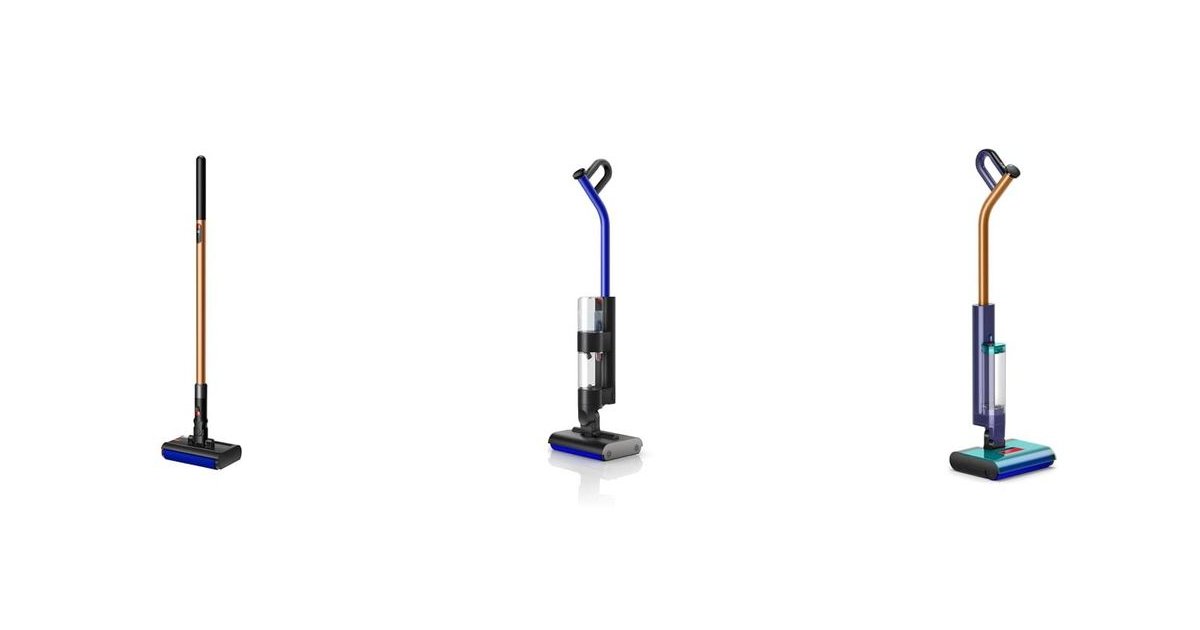
Dyson now sells three different wet floor cleaners, which is about two more than most people expected from a company that built its reputation on vacuum suction. None of these machines actually vacuum. All three wash hard floors with microfibre rollers and clean water. But they’re wildly different in size, capability, and price.
The PencilWash is a featherweight at under 5 pounds. The WashG1 is the original, tipping the scales at 10.5 pounds. And the Clean+Wash Hygiene landed in March 2026 as the new flagship, splitting the difference on weight while adding a genuinely clever hygiene system. Picking between them isn’t obvious, because each one targets a different type of home and a different type of person.
I’ve used all three. Here’s what actually matters.
Spec Comparison Table
| Specification | PencilWash | WashG1 | Clean+Wash Hygiene |
|---|---|---|---|
| Weight | 4.6 lbs (0.8 lbs in hand) | 10.5 lbs | 8.4 lbs |
| Runtime | 30 min | 35 min | 45-70 min |
| Clean water tank | 0.3L | 1.0L | 0.75L |
| Dirty water tank | 0.34L | 0.8L | 0.52L |
| Coverage per fill | 1,076 sq ft | 3,100 sq ft | 3,770 sq ft |
| Roller filaments/cm² | 64,000 | 64,800 | 84,000 |
| Self-clean cycle | No | 140-second flush | 145s flush + 30-min hot-air drying |
| Lay-flat angle | 170° | Near 180° (4.4” clearance) | 4.4” flat profile |
| Suction | None | None | None |
| Charging time | 3.5 hours | 4 hours | 4.5 hours |
| Price (MSRP) | $349 | $700 | $499 |
A few things jump off that table immediately. The Clean+Wash Hygiene costs roughly $200 less (MSRP) than the WashG1 while delivering double the runtime and a better self-cleaning system. That alone tells you where Dyson thinks the market is heading.
Cleaning Performance
All three use Dyson’s dense microfibre roller approach. Wet the roller, spin it fast across the floor, and scrub grime loose. Simple concept. Execution varies.
Dyson PencilWash
The PencilWash’s roller packs 64,000 filaments per square centimetre. That’s dense enough for everyday spills, coffee drips, and light kitchen messes. It handles sticky spots if you do a couple of passes.
Where it struggles is anything caked on. Dried porridge, muddy boot prints, sauce that’s been sitting for a few hours. One pass won’t cut it, and the small water supply means you’re working with limited ammunition.
The 8-point precision hydration system distributes water across the roller evenly, which helps with consistency. But consistency only gets you so far when the roller itself is narrower and lighter than the other two.
Dyson WashG1
WashG1 runs dual counter-rotating rollers with 64,800 filaments/cm² and a wider 12-inch cleaning path. Two rollers spinning against each other creates genuine scrubbing force, and the wider head covers ground faster.
For general hard floor cleaning across a whole house, it does solid work. Stubborn stains still need a bit of back-and-forth, but the dual-roller design gives it more bite than the PencilWash.
The four cleaning modes (Low through Max) let you dial in how much water hits the floor. Low mode for dust and hair, Max for dried spills. Having that control matters more than you’d think.
Dyson Clean+Wash Hygiene
The Clean+Wash Hygiene bumps the filament count to 84,000/cm² and adds 1,400 nylon bristles spinning at 250 RPM. That’s a meaningful jump.
Those nylon bristles attack textured grout lines and rough tile in a way the softer-only rollers on the other two can’t match. If your kitchen has textured porcelain tile or natural stone with grooves, you’ll notice the difference.
Where the Clean+Wash Hygiene really pulls ahead is its filter-free dirty water system. Dirty water stays in the floor head, never travelling through tubes or filters. On the WashG1 and PencilWash, dirty water passes through the machine. After a few weeks, those internal paths develop a smell. You know the one.
Weight and Manoeuvrability
Numbers on a spec sheet don’t tell the full story here, but they’re a good start.
The PencilWash weighs 4.6 pounds total. Only 0.8 pounds sits in your hand. That handle is 1.5 inches in diameter, roughly the size of a thick marker pen, and the thing lays nearly flat at 170 degrees. For getting under a sofa or a bed frame, nothing else compares. You can use it one-handed without thinking about it.
Jumping to the WashG1 at 10.5 pounds is a shock. It’s more than double the weight and you feel every ounce of that in your wrist and shoulder during a full-house clean. My wife stopped using it after two sessions because it made her forearm ache. Not ideal for anyone with joint issues or a low tolerance for heavy appliances.
The Clean+Wash Hygiene sits at 8.4 pounds. Still heavier than a typical stick vacuum, but the weight distribution is more balanced than the WashG1. Its 4.4-inch flat profile lets you slide under most furniture without acrobatics. Not quite as agile as the PencilWash’s 170-degree lay-flat, but close enough for practical purposes.
If weight is your primary concern, buy the PencilWash. Full stop. For everyone else, the Clean+Wash Hygiene hits a reasonable middle ground. The WashG1 does lie nearly flat (4.4-inch clearance, same as the Clean+Wash Hygiene), so it’s not hopeless under furniture. But the extra weight makes pushing it around under a low sofa noticeably less pleasant than either of the other two.
Tank Capacity and Runtime
Here’s where the three models diverge dramatically, and where your home size should dictate your choice.
The PencilWash carries a 0.3-litre clean water tank. That’s tiny. About the volume of a small coffee cup. Dyson claims 1,076 square feet of coverage, but in practice you’ll burn through it faster on dirtier floors because you’ll make more passes. For a studio flat or a single bathroom, fine. For a three-bedroom house? You’ll be at the sink refilling three or four times, which gets old fast.
WashG1 packs a full litre of clean water. Massive upgrade. Its 0.8-litre dirty tank is correspondingly generous, and Dyson rates it for 3,100 square feet. In practice, I cleaned my entire downstairs (roughly 900 square feet of hard floor) without needing a refill. Runtime is 35 minutes, which lines up well with the tank capacity.
Clean+Wash Hygiene threads an interesting needle. Slightly smaller clean tank than the WashG1 at 0.75 litres, but it covers more ground at 3,770 square feet. Dyson officially rates it at 45 minutes, but Trusted Reviews measured up to 70 minutes in independent testing — the real number likely depends on cleaning mode and how aggressively you’re scrubbing. Either way, the battery won’t die before your water runs out. Every other cordless wet cleaner I’ve tested has the opposite problem, where the battery quits before the tank is empty. Dyson got the balance right here.
One quirk: the Clean+Wash Hygiene’s dirty water tank is only 0.52 litres and it’s built into the floor head. Smaller than the WashG1’s 0.8-litre dirty tank. In practice this hasn’t been an issue because the filter-free system seems more efficient at separating dirty water, but keep it in mind if your floors are consistently filthy.
Self-Cleaning and Maintenance
Maintenance separates these three more than anything else.
The PencilWash has no self-clean cycle. Zero. You finish mopping, you pull the roller out, rinse it under the tap, wipe down the dirty water cavity, and leave everything to air dry. Takes about five minutes if you’re thorough. Skip this step and you’ll have a stinking roller within a week. I learned that the hard way during testing.
WashG1 introduced a 140-second flush cycle. Press the button on the dock, walk away, and it circulates clean water through the rollers and internals. Better than nothing, and it does keep the smell at bay longer than manual cleaning alone. But the wet internals still sit damp afterwards. Mould can develop if you’re in a humid climate and don’t use the machine regularly enough to keep things moving.
Clean+Wash Hygiene is in another league. Same flush cycle (145 seconds, nearly identical), but then it runs a 30-minute hot-air drying cycle at 185°F. That temperature kills bacteria and prevents the musty funk that plagues every other wet floor cleaner on the market. Because dirty water never enters the machine body, there’s no internal plumbing to go stale either.
The maintenance difference matters more over six months than it does on day one. Fresh out of the box, all three smell fine. Half a year in, the PencilWash needs constant babysitting, the WashG1 needs occasional deep cleans, and the Clean+Wash Hygiene mostly takes care of itself.
The Suction Question
Let me be blunt about something that confuses a lot of buyers: none of these machines vacuum.
Not the PencilWash. Not the WashG1. Not the Clean+Wash Hygiene. They don’t pick up crumbs, cereal, pet hair, or any dry debris that isn’t small enough to be caught by a wet microfibre roller. If there’s a Cheerio on your kitchen floor, it’ll still be there after you run any of these over it.
Dyson is explicit about this, but the marketing doesn’t exactly scream it from the rooftops. These are wet floor cleaners, not wet-dry vacuums in the way that a Tineco or Dreame operates. You need to sweep or vacuum your floors first, then come through with one of these for the wet clean. Two-step process, always.
If that sounds like a hassle, it might be. Competitors like the Dreame H14 Pro will vacuum and mop simultaneously. Dyson’s argument is that separating the two steps produces a cleaner result because dirty water never mixes with dust and debris inside the machine. There’s some logic to that, especially if hygiene is a priority. But it does mean owning two devices.
Worth knowing before you spend anywhere from $349 to $700 (MSRP).
Which Dyson Wet Floor Cleaner Should You Buy?
Buy the PencilWash if you live in a small flat or apartment, want something dead simple to grab for quick kitchen cleanups, and don’t mind rinsing the roller by hand. At 4.6 pounds and under a pound in-hand, it’s the only wet floor cleaner that genuinely feels like grabbing a mop. Great as a secondary cleaner. Not great as your only one. Read the full PencilWash review.
Buy the Clean+Wash Hygiene if you want the best overall Dyson wet floor cleaner. The up to 70-minute runtime, hot-air drying dock, and filter-free dirty water design make it the most complete package of the three. At $499 (MSRP) it undercuts the WashG1 while being better in almost every measurable way. For a medium to large home, this is the one. Read the full Clean+Wash Hygiene review.
Buy the WashG1 if… honestly, it’s hard to recommend right now. It was Dyson’s first proper wet floor cleaner and it showed what was possible, but the Clean+Wash Hygiene surpasses it on runtime, maintenance, roller technology, and price. The WashG1’s only advantage is tank size (1.0L vs 0.75L clean, 0.8L vs 0.52L dirty), and that doesn’t offset everything else. Maybe if you find one heavily discounted. Read the full WashG1 review.
What About the V15s Detect Submarine?
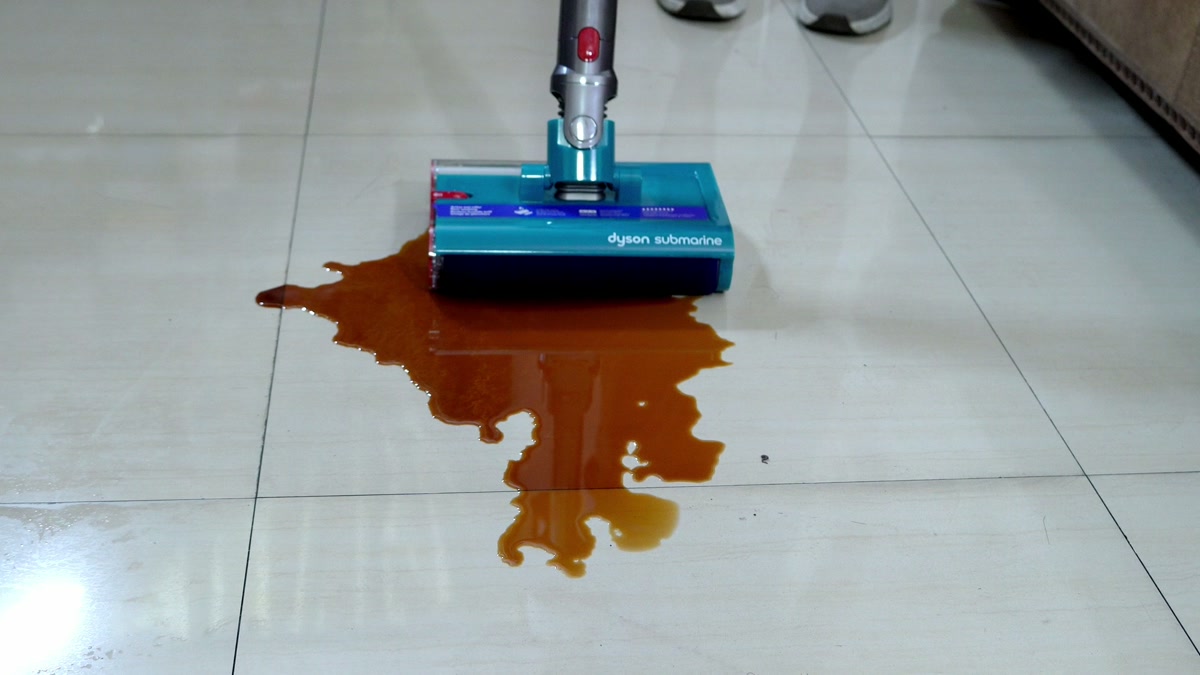
If you’ve been reading this thinking “I just want a Dyson that vacuums AND mops,” the V15s Detect Submarine exists. But it’s a completely different animal. It’s a cordless stick vacuum first, with 240 AW of suction and Dyson’s green laser dust detection, and it happens to ship with a wet mopping head called the Submarine. You can’t vacuum and mop at the same time. You swap heads manually.
The vacuum side is brilliant. The mopping side is limited. The Submarine wet roller has a 300 mL clean water tank, which covers maybe two rooms before you’re back at the sink. There’s no self-cleaning cycle for the roller, so you’re rinsing it by hand after every use. Compare that to the Clean+Wash Hygiene’s up to 70-minute runtime with hot-air drying and it’s not really a contest for dedicated floor washing. If you want a top-tier Dyson vacuum that can do a quick mop of the kitchen when needed, the V15s fits that brief. If you want something that actually cleans your floors properly with water on a regular basis, stick with the three machines compared above.
Final Verdict
Dyson’s wet floor cleaner lineup makes a lot more sense once you stop comparing them to each other and start matching them to specific needs. The PencilWash is a quick-clean tool for small spaces and light messes. The Clean+Wash Hygiene is the do-everything workhorse for people who want their floors properly clean without fussing over maintenance. The WashG1 is the awkward middle child that got leapfrogged by its younger sibling.
For most people reading this, the Clean+Wash Hygiene at $499 (MSRP) is the answer. It costs less than the WashG1, runs twice as long, dries itself with hot air, and keeps dirty water out of the machine entirely. The PencilWash earns its place as a grab-and-go secondary cleaner, especially for anyone in a smaller home who doesn’t want a heavy appliance.
None of them replace a vacuum. Budget accordingly.
Head-to-Head Comparison
Detailed Reviews
Dyson PencilWash Cordless Wet Floor Cleaner
Lightest and most portableA remarkably slim and lightweight wet floor cleaner built for quick daily maintenance on hard floors in smaller homes, but the lack of suction and self-cleaning means it complements a vacuum rather than replacing one.
What We Like
- Exceptionally light at 4.6 lbs with just 0.8 lbs felt in hand during use
- Filter-free hygienic design with separate clean and dirty water tanks
- Very quiet operation with no suction motor noise
- 170-degree lay-flat angle gets under most furniture easily
- Affordable Dyson entry point at $349
What We Don't
- No self-cleaning mode, requires manual roller washing after every use
- Struggles with stubborn dried-on stains like mud and ketchup
- Cannot clean room edges effectively due to roller design
- Does not vacuum, won't pick up dry debris like crumbs or cereal
Dyson WashG1 Wet Floor Cleaner
Largest tank capacityThe Dyson WashG1 delivers impressive wet cleaning on smooth hard floors with near-silent operation and minimal effort, but its inability to handle carpets, grout lines, or tight spaces limits it to homes with predominantly smooth flooring.
What We Like
- Excellent cleaning on smooth hard floors with dual counter-rotating microfibre rollers
- Floors dry quickly without streaks thanks to minimal moisture left behind
- Quiet operation at approximately 60 dB, significantly quieter than standard vacuums
- Lightweight and manoeuvrable at 10.5 lbs with easy edge-to-edge reach
- Effective 140-second self-cleaning cycle keeps rollers and internals fresh
What We Don't
- Cannot clean carpets at all, exclusively a hard-floor device
- Struggles with uneven floors and grout lines on textured tile
- Bulky head won't fit under low furniture or into tight corners
- Rollers need replacing every six months as an ongoing consumable cost
Dyson Clean+Wash Hygiene Wet and Dry Floor Cleaner
Best overall wet floor cleanerA genuinely hygienic wet and dry floor cleaner that cleans brilliantly and fixes the WashG1's biggest flaw with its hot-air drying dock, though the small tanks and premium price tag warrant consideration against larger-capacity competitors.
What We Like
- Genuinely hygienic filter-free design where dirty water never travels through the machine body
- Excellent cleaning performance on coffee, wine, mud, and mixed wet and dry messes
- Very quiet operation at approximately 63 dB
- Lightweight at 8.4 lbs with 4.4-inch flat profile for under-furniture cleaning
- Hot-air drying dock eliminates manual roller drying and prevents odour buildup
What We Don't
- Small tank capacities (0.75L clean, 0.52L dirty) require frequent refills in larger homes
- Edge cleaning imperfect on one side, doesn't reach flush to walls
- Can drip waste water when moving between rooms
Sources & Research
Continue Reading
Explore more wet & dry vacuums content or browse our other categories.
Frequently Asked Questions
- Do any of these Dyson wet floor cleaners have suction?
- No. All three are wet mop replacements, not wet-dry vacuums. They apply clean water, scrub with microfibre rollers, and collect dirty water, but none of them can vacuum up dry debris. You'll need to sweep or vacuum first.
- Which Dyson wet floor cleaner has the longest runtime?
- The Clean+Wash Hygiene wins easily — Dyson rates it at 45 minutes, but independent testing by Trusted Reviews measured up to 70 minutes depending on mode. The WashG1 manages 35 minutes, and the PencilWash gets about 30 minutes per charge.
- Can I use the Dyson PencilWash on a large home?
- It can technically cover up to 1,076 square feet per fill, but the 0.3-litre clean water tank runs out fast. For anything larger than a flat or apartment, you'll be refilling constantly. The WashG1 or Clean+Wash Hygiene are better suited to bigger spaces.
- Does the PencilWash have self-cleaning?
- No. You need to rinse the roller and wipe down the dirty water tank manually after every use. Both the WashG1 and Clean+Wash Hygiene have automated self-clean cycles.
- Is the Dyson Clean+Wash Hygiene worth the upgrade from the WashG1?
- For most people, yes. It doubles the runtime, adds hot-air drying to prevent odours, and the filter-free design keeps dirty water out of the machine body. If you already own a WashG1 and it's working fine, probably not worth the switch. But for a new purchase, the Clean+Wash Hygiene is the better buy.
Written By
Home Vacuum Zone
Our team researches, tests, and reviews vacuum cleaners to help you make confident buying decisions.
Related Articles
Dyson V15s Detect Submarine Review: The Vacuum That Also Mops
Hands-on review of the Dyson V15s Detect Submarine. We test the 240 AW suction, Submarine wet mopping head, green laser particle detection, and whether this 2-in-1 actually works.
Best Wet Dry Vacuums 2026: 8 Floor Washers That Actually Work
We tested the top wet dry vacuums and wet mop vacuums for 2026. From Dyson and Tineco to budget picks from Shark, these 8 wet floor cleaners vacuum and mop in one pass.
Do You Need a Wet Dry Vacuum? Honest Answer Inside
Not everyone needs a wet dry vacuum. Here's who benefits most, who can skip it, and what to look for if you decide to buy one.